And then there were ALL the people I missed out on reconnecting with or meeting for the first time, partly because when you get drawn into drinking circles it’s hard to leave and circulate because you’re having so much fun, and partly because there were SO MANY PEOPLE there and I would never have gotten to them all. I was once in the proximity of a conversation with Reader’s Choice winnerCheryl Strayed (who host Elissa Schappell aptly dubbed the Oregon literary scene’s Meryl Streep), and someone told me that creative nonfiction winnerStorm Large (who gave probably the most honest and endearing acceptance speech last night — I was utterly won over by her) had passed by my group before any of us had a chance to congratulate her. I wanted to find Scott Poole and applaud all over again his gorgeous, hilarious, comically stunning poem composed from the names of all the finalists, all the finalist book titles, and all the award category names! I wanted so much to thank fiction winnerIsmet Prcic for his beautiful acceptance speech about the nature of art — a perfect ending to the evening!
Honestly, though, I just can’t do the evening justice. If you weren’t there, you would need several different accounts of it just to get a sense of how important — and how much fun — it was. So, here are a few more versions of last night’s events:
UPDATE: the Portland Theatre Scene blog has a whole post full of gorgeous photos from the ceremony, including this one of me down in the front:
Afterward, I walked home in the quiet night, over the Broadway Bridge to cross the black Willamette, and I thought about how immensely fortunate I am. Not only to be an Oregon Literary Fellowship recipient, but also just to be a part of this writing community — to be a writer in Portland. The community here is large, and it would be easy to get lost in the crowd, but it isn’t a crowd — it is, as Mel Wells put it afterward, a family. All the writers and all the readers, regardless of genre or medium, are so supportive of and appreciative of each other. All night long, as writers rubbed elbows with writers, I never once heard someone launch into some discussion about their own work unbidden — everywhere, everyone kept asking, “So what’s your next book?” Or “When can we work together?” Or, “How can I help spread the word about you?” Even me — every person I met last night, friend or stranger, asked when they would get to read my book. (I hope my agent is paying attention to this post!)
And the thing is, this isn’t an inflating experience. I’ve never felt my ego at risk of swelling. Instead, it’s a humbling experience, a profoundly egalitarian communion of artists. And I love that.
What follows is a series of photos — just some of the photos I took — from my trip to southwest Louisiana to research the final details of my Civil War novel, Hagridden. While my book isn’t strictly, solely historical, it is set in a certain historical and regional reality, and what details echo history or geography or biology I wanted to know I’d gotten right. A lot of those details — battles, historical figures, mapped terrain — I could find in books or online (about which I’ll post next), but a lot of the important human details I needed to see or smell or hear firsthand. That’s what this trip was mostly about: to live for ten days in the world I’d written and know that what I’d written could be true.
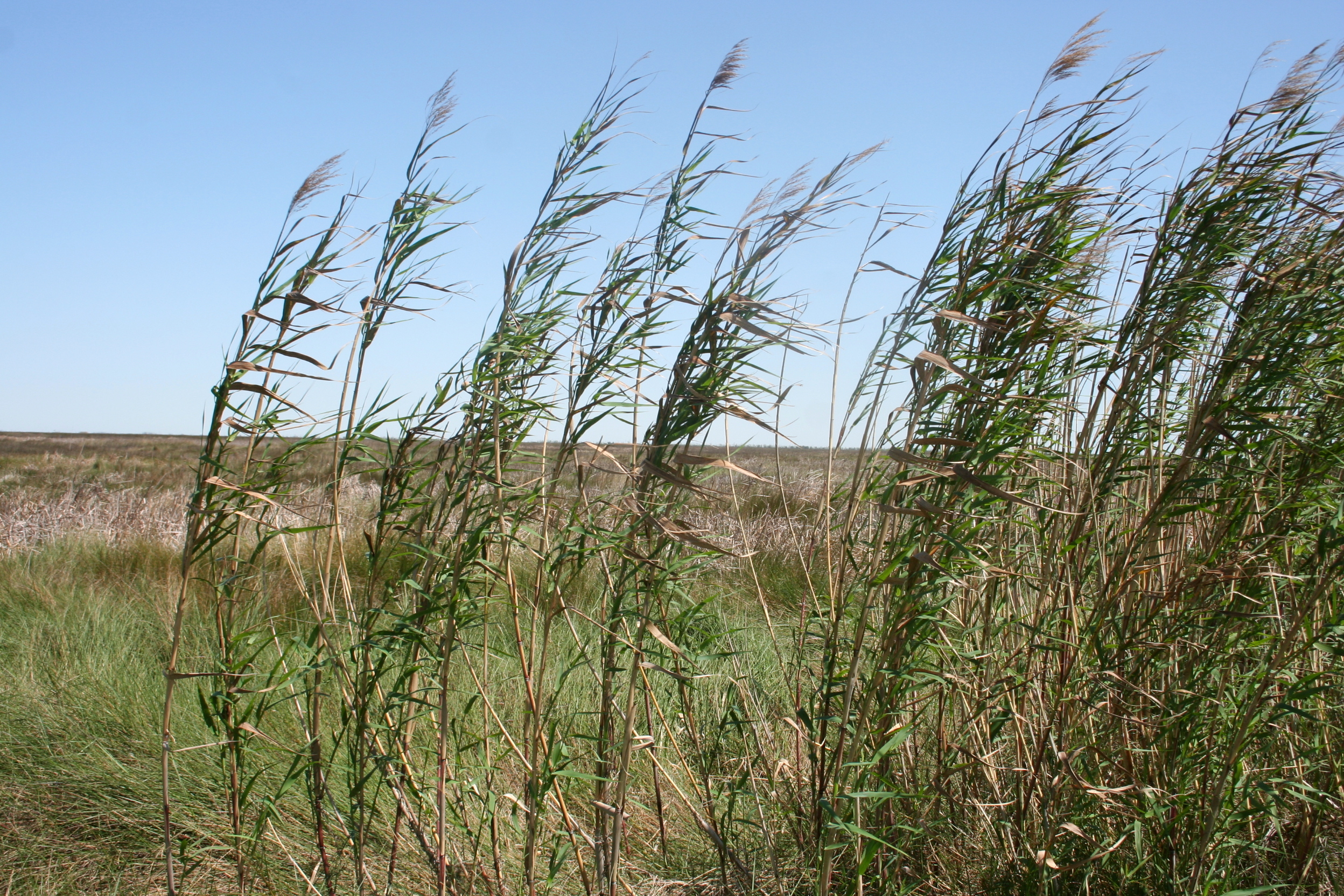
The women waited, their weapons never far from hand, but for days on end the only sound in the marsh was the wind in the rushes.
This is in the Sabine National Wildlife Refuge, in Southwest Louisiana. The Wetland Walkway trail is actually a bit farther north and east of where I imagine the women living, but the terrain and the wildlife is all the same. In the book, I refer to their home territory as, alternately, the bayou, the marsh, or the saltmarsh. This is not a mistake. In fact, much of the area that now makes up the Sabine National Wildlife Refuge is a mixture of all three: freshwater marshes farther north, saltwater marshes farther south, and the deeper pools and ponds and waterways that make up the bayous, like the water below:
[A] spectral figure emerged hat and shoulders from the rippled surface of the backwaters. He carried a long walking stick with which he plumbed the path before him, and tied to the top of the stick hung a heavy black sack. He pushed his way through the weedy murk and emerged onto the damp ground of the reed beds dripping and naked save the wide black hat on his head.
Those who knew how to discern them might have made out other sounds, the soft splash of a gator slipping from the prairie grass into the muck and water, the rustle of ducks breaking for the sky or the dip of a heron beak as it fished the shallows.
These three photos are from various spots around Cameron Parish: the Sabine National Wildlife Refuge (the gator), a small pond and bit of marsh out behind a cemetery in Cameron (the birds) and the Cameron Prairie National Wildlife Refuge (the heron).
Cypress with Spanish moss.
Bousillage: mud mixed with moss.
Cypress blocks to raise the house.
A neater, more finished version of Buford’s house.
He took the ax and the empty sack and hiked out toward the lake to foray the steamy rim, climbing over cypress knees and mucking through the mud up his calves, until he found a felled cypress trunk draped with heavy ferns and Spanish moss. He collected the moss and packed it into the sack, then he hacked away a section of the trunk and heaved and rolled it until he’d got it onto the nearest patch of dry land he could find. [. . .] With the ax he hacked several pillars a foot square and about two feet long, each tapered at one end. [. . .] At home he paced off his longest timbers and arranged a rough frame of cypress pillars every few paces. He laid the rails across the pillars and began to construct a new foundation. [. . .] By the end of the week he had the true walls framed and raised. That weekend he mixed his moss with mud from the marsh and constituted a new batch of bousillage, which he packed between the studs before he skinned the walls in tongue-and-groove siding.
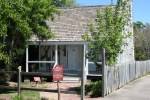
One of my favorite passages in the novel is when Buford rebuilds his house. And I was careful to have him construct as near to a traditional Cajun home as he could manage on his own. Historically, Cajuns would help their neighbors raise their homes, but Buford’s a bit of a loner, a doggedly self-reliant man, and he’s building the house in part to prove something to the girl he’s trying to seduce. So he winds up cutting some corners, skipping the traditional high-pitched roof and the attic “garçonniere” (the attic room where a family’s boys slept) and roughing together a smaller one-room version of the house in the photo above. Still, this house, in the excellent historical Cajun village of Vermillionville outside Lafayette, is a solid example of the house Buford is working on.
[T]hey reached a low-roofed hut thatched and camouflaged in the marsh reeds, the door barely tall enough to crouch through. Inside they tossed their collection onto a small but similar pile near the door, which the girl arranged hastily while the old woman stepped out the back and dipped a tin cup into a barrel of water and drank deeply, the water running in streaks down her dusty neck. The girl joined her and did the same, then they each drank again. The old woman left a splash in the bottom of her cup and tipped her head to pour the last down the back of her neck, while the girl returned indoors and braced the hut’s small door ajar then lifted a hatch in the roof with a pole and propped it open. They both collapsed panting on a rickety pallet bed with a thin lumpy mattress stuffed with grasses, the pillows toward the rear and their feet aimed at the door, the open hatch directly overhead for the meager breeze it offered.
This was the biggest and best surprise of my whole research trip. In my novel, I have the women living in a small reed hut they built themselves after they lost their regular house. I made that up — I wanted to show how resourceful and independent they were, but also how simply and desperately they had to live (and the hut practically disappears into the marsh, making them hard to find). Lo and behold, huts like that are a real thing in the bayou! They’re called palmetto houses, and they’re typical of Native tribes in the region. So, just like that, I’ve decided that the old woman is part Native and built the hut because it’s the only kind of house she knew how to build herself. (Also, the tribe I’ve decided she descends from, the Chitimacha, are known not only for these houses but also for their strong women and gender equality, which explains my character’s fierce will and refusal to cow to men.)
They took almost half an hour to drag the men to the forgotten well in the marsh, near a long-abandoned homestead where now remained only the well and a packed foundation they alone would recognize.
Conversely, this was probably the most frustrating — but important — discovery during my trip. In my novel, this well is essential to the story. Except this isn’t a well — it’s a cistern. It’s behind a mid-19th century house in Vermillionville, the historical village outside Lafayette. When I found it, I asked one of the village’s history experts about it, and he explained that most Cajuns and other settlers of the era pulled their water from the nearby bayou or built these brick cisterns to collect rainwater (much like the rain barrel the women keep behind their hut). But they never sank wells.
I’d also talked with locals in Cameron, who said all their water was city — no wells. I talked to the city water authorities — no wells.
This was a serious problem for me for a long while. But then, up in Lake Charles, I visited the central branch of the Calcasieu Parish Public Library, and I found the book The Battle in the Bayou Country, by Morris Raphael, in which I discovered this passage:
Still nestled among ancient oaks and magnolias is Dulcito, the stately mansion, located about five miles west of New Iberia, which played an important role in the Teche campaign. The big beautiful home, which overlooks ‘Lake Tasse’ (now known as Spanish Lake), was mustered into service by the Confederates as a temporary field hospital for wounded soldiers. The unique water well, said to be the deepest in the area, evidentally accommodated the soldiers from nearby Camp Pratt which was spread out over a wide area.
Aha! So wells not only are possible but existed during the Civil War!
Of course, Dulcito was a “stately mansion,” not some homestead out in the bayou. Still, the well is possible — and in my novel, the old homestead has long been abandoned, the useless well the only sign it ever existed. So here’s the story: some relatively well-off sugarcane planter built a somewhat sizeable home out in the marsh and foolishly sank a well. The well was useless, the house too remote, and eventually the planter abandoned the place, leaving behind this hole in the ground.
So there. Problem solved.
When day rose in a fog over the marsh they were awake already, resetting their crawfish traps and bringing in the wash they’d abandoned the day before.
This is behind the Cameron Motel, where I stayed while touring the area and conducting my research. It was a happy accident of nature, actually, to have this fog, not only for the photo but also because this was the second of the two days I planned to spend all day reading in the Cameron Parish Public Library. Later, it rained in successive thunderstorms. But after this, I had perfect weather the whole trip.
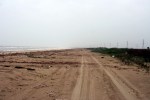
A sharp gust rocked them on their small ridge and they were awash in the dueling crash of the rustling trees back on the chenier and the crashing Gulf before them. The girl reeled in another crab and dropped it clacking in the bucket. Out on the horizon, a bank of clouds arose in shades of indigo and steel, a feathery brush drifting down from the lip to the edge of the Gulf.
This is out on the Gulf just west of Holly Beach. The actual spot I pictured the women fishing and crabbing is a bit farther west of this, where the grassy ridges are south of the road and closer to the beach. I drove down the beach that direction, but my rental car wasn’t meant for bouncing over the rougher bits of the shore, so I didn’t get quite as far as I wanted. Still, the weather was, by accident, perfect for the scene I’d written.
Around midday they turned north and entered Leesburg by the rope ferry over the Calcasieu, passing three black boys fishing from the bank with bent cane poles, and they followed the main road along the bend in the river, passing from building to building, peddling goods wherever they could: in the two shops they could find, at the livery, in the boarding house parlor. Sometimes on folks’ own doorsteps.
This is Acadian Village, also outside Lafayette and similar to Vermillionville but with rougher houses and no re-enactors. I snapped a photo because it serves as a convenient stand-in for Leesburg, the town the women visit about halfway through my novel. Leesburg was wiped out in a terrible hurricane toward the end of the 19th century, and when it got rebuilt, it was renamed Cameron — the town I stayed in during my research trip. Cameron, of course, has since been wiped out by Hurricane Audrey in 1957 and by Hurricane Rita in 2005, and was heavily damaged by Hurricane Ike in 2008. They’re still rebuilding, but, like the characters in my novel, they refuse to give up in the face of any devastation, manmade or natural.
There is an interesting detail in the passage from my book, though: the earlier drafts, all the way up until this trip, had the women crossing the Calcasieu by bridge. Today, the Calcasieu is a shipping channel, dredged deeper and wider during WWII, and can only be crossed by the Cameron Ferry. But even when it was a shallower, narrower river, it never had a bridge. I spoke about it with a researcher volunteering up at the Cameron Prairie National Wildlife Refuge, the excellent Gay Gomez. She explained about the dredging of the channel and then told me the “old-timers” would tell stories about swimming their cattle across the river. So, no bridge.
At both Acadian Village and Vermillionville, the layout of the houses mimics the bayou with narrow channels and streams. Acadian Village offers bridges over these waterways, but at Vermillionville, they added a small rope-drawn ferry, so I added one to the novel.
They both knelt in the grass and scanned the prairie about, looking for a place to hide themselves as well as the likeliest spot to find the scattered troops. The girl spied a ditch running low through the grass off to the south, and near it a stand of scrubbrush. They whispered in broken code and devised their plan, then the girl handed her cane spear to the woman and they separated. The woman slipped off toward the ditch where she lay prone with her chin in the dirt, hidden by the shadow of the tree, while the girl ran into the open prairie, loosening her skirts to fall about her legs as she scanned the flat horizon.
Late in the book, the women discover reports of a nearby battle and rush out of the marsh into the prairie to find it, hoping to cash in on the goods from whatever fleeing troops they could kill. This is very near where that encounter takes place.
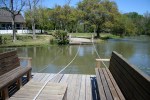
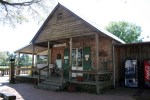
The air was damp and heavy, and their hair hung flat in their eyes but they did not need to see, so often had they come this way in the last three years. They took their time and trusted their feet, and at length they found a rotting wooden plank that led from a knee of root to a shabby boardwalk. They alit on the walk and followed its zigzagging path to the shack they sought.
The photo on the left is a covered platform in the Sabine National Wildlife Refuge. The photo on the right is an historical mercantile (and functioning gift shop) in the historical Acadian Village, outside Lafayette. Taken together, they’re a kind of reference point for the rickety lakeside shop of Clovis, the corrupt old blackmarketeer the women sell their ill-gotten goods to.
This isn’t from the book at all. But all through my trip, I visited cemeteries looking for Civil War-era graves. I was looking for anyone who was alive at the time, including people who were 19th-century “baby boomers” born during or just after the war. I found plenty, but this is the one I felt compelled to share: James D. Standfield, born March 8, 1854, died September 5, 1919 and buried in Niblett’s Bluff Cemetery, west of Vinton, Louisiana, near the old Civil War fort overlooking the Sabine.
At the foot of his grave, there is a small stone with a US flag and the initial UCV:
“UCV” stands for United Confederate Veteran. Stones like this mark the graves of Civil War veterans who fought for the South. James Standfield was a Civil War veteran. When the war began, he was 7 years old; when the war ended, he was 11.
The characters in my novel never encounter a soldier as young as James Standfield. And I don’t regret omitting that detail one bit. There were too many child veterans of the Civil War in real life; I don’t need to add any fictional ones.
A traditional Cajun house in the Acadian Village, outside Lafayette, Louisiana.
A couple of weeks ago, during the last ten days of March, I used the funds from my Oregon Literary Fellowship to travel to southwest Louisiana to research the final details of my Civil War novel, Hagridden. I stayed in Cameron and travelled all over the region, visiting libraries and wildlife refuges, touring museums and historical villages, talking with experts in history and botany, listening to locals and walking the streets and bayous and beaches.
During the coming week, I’ll be posting about the trip. Tomorrow, look for a lengthy post of photos from the trip, accompanied by quotes from my novel and some details about the research. Later this week, I’ll post a bibliography of the material I read, before and during the trip, in print and online. And then I’ll wrap things up with a kind of retrospective of the whole experience.
In the meantime, I want to thank, again, Literary Arts for giving me this amazing opportunity through the fellowship. And if you haven’t read the opening excerpt from the novel, you can find it online at SOL: English Writing in Mexico.
After this July’s release of my non-fiction ‘Tell Me (How to Write) a Story’, the next book I’m working on is going to be a collection of excerpts from novices, in first draft, which I’ll edit into first revision and last revision samples, coaching as we go through the excerpts.
I’m titling it ‘Revision for Beginners’ and I’m calling for submissions of first draft excerpts. I expect a publication date of mid 2014.
I’m looking for any 200 words from your Work In Progress.
I am NOT looking for wonderfully polished excerpts.
The goal is to have your excerpt help others learn the art of revision.
I’ll be selecting 20 excerpts, and I’ll be editing them to a first pass stage, and then onto a further round of edits.
Each round is accompanied with coaching info and the how & why the…
I have a new story online today, folks. This one’s one of the sentimental ones, a bit of a boyhood romp. (I took a break from the killings and the loneliness and the cannibalism. But don’t worry, I’ll get back to that soon enough!)
So if you feel like reliving some version of someone’s childhood, go check out “Air Enough at Last” in The Corner Club Press. Really happy to be in this one, folks! Editor Amber Forbes has been pretty cool to me, and a writer friend of mine online, Walter Giersbach, is a regular contributor, so I’ve been reading for a while.
And stay tuned! I had another story online yesterday and a third coming out sometime in the next few weeks (I think), so it looks like, per EJ Runyon’s suggestion, I’ll be doing another “all the stories in one place” recap post for April! 🙂
UPDATE: I forgot to mention: has anyone noticed the connection between this story and another recent publication? Go re-read “Potato” in The Writing Disorder and see if you pick up on it. 😉
That’s right, folks: The seventh glorious issue of Unshod Quills — and the first I had a hand in producing — is now live on the Internet! Lots of amazing poetry in this one, including a few by my pals Hosho McCreesh, Michael Lambert, and Patrick Bahls. There are also three killer personal essays (I was in charge of nonfiction, and gang, these essays are cool) and some beautiful artwork and one of the most mesmerizing short films I’ve seen in a while.
And if all that weren’t enough, there’s also a short story by me. That’s right, me. I wrote a happy little tale called “Everything Fit to Consume,” about people buying human meat in the grocery store. But it’s not about cannibalism, really — it’s about love. So eat your heart out.
There’s a lot of soul-searching going on in Jersey Devil Press this month. Romance, identity crises, innocent sexual exploration, aliens in disguise, dust devils turning young girls into motes….. Yes, we’re getting deep.
And topping it all off is cover art by returning artist Jon Snoek (full disclosure: I’m lucky to call him my brother). The painting is part of an illustrated book about a boy and his robot — which sounds a lot simpler than the book really is. It’s actually an epic journey of loss and discovery and friendship and community. But this sentimental painting is among my favorites in the whole still-in-progress book. And you saw it at JDP first, gang.
So, it’s been a whirlwind month this March. I have had five different stories published in the last four weeks, and two more coming out very shortly. So I thought, just so nothing gets lost in all the posts titled “New publication,” that I would collect March’s stories here in one post.
This cat isn’t tired of all my fiction yet. Are you?
A tiny bit of flash fiction that borrows from Goldilocks and hippie chicks. My “surprise” story in that I found out it had been accepted on the same day it appeared online. What a great surprise!
A bit of a fable, about a girl who can fly (sort of) but doesn’t really want to. It’s a metaphor. It’s also the first story I got paid cold, hard cash for! Much love to Deimos, one of my new favorite zines, for publishing it. They do cool things.
Hagridden (novel excerpt). SOL: English Writing in Mexico
This is a big deal. Not only is this in SOL, which I love, but it’s also in the same issue as Kirpal Gordon, whom I met when he visited a lit class I was taking way back in college — how cool to be in print alongside him now? — and it’s in the same issue as Natalie Goldberg. Natalie freaking Goldberg! And that’s not all: this excerpt is the first chapter of the novel that got me an Oregon Literary Fellowship, and by a very cool accident of the calendar, I’ve actually just used the fellowship funds, here at the end of March, to take a research trip down south to reinforce the details of that novel. (More on that in a future post, gang!) And, because March really is the coolest, this is also the month I signed with an agent to represent that novel. So, because Eva Hunter and the SOL gang have amazing taste, they have managed to fall right smack in the middle of a crossroads of awesomeness. Thanks, gang!
A pothead giant tortoise more than 150 years old. A scavenger who lives in a mansion next door to the most beautiful girl in the world. Tequila that costs $100 a bottle. Fresh tomatos in the garden and kudzu climbing over the fence. It’s Southeast Texas, y’all, in all its glorious weirdness. And it’s Prick of the Spindle, a truly awesome lit magazine.
The opening of my novella, with potato batteries and fistfights and dead deer heads on the trailer wall and the best uncle in the world. Maybe. The novella is the centerpiece — the refrain, actually — of my long story collection that’s still waiting to find someone cool enough to publish it, and I’m thrilled you all get to see this part of that book’s novella. And in The Writing Disorder, which is just chock full of cool things.
And coming soon….
A story about people eating people (it’s a foodie thing) and a story about a guy who falls in love with a kitchen knife. Seriously. You’re going to love this stuff! Stay tuned!
Do not adjust your browser. This is not an echo: I do, indeed, have yet another story out this month.
And this time it’s not just a story: “Potato” is actually the first chapter of my novella, In the Pulse There Lies Conviction, up now at The Writing Disorder. I’m kind of in love with this one, gang, because this novella is the central piece of my (not-yet-published) long story collection, Strangers Die Every Day. And the protagonist here, a kid known only as Kid, is one of my favorite characters ever. I feel protective of Kid, like he’s my fictional surrogate or something. He’s not me — neither as a boy, as he is in this story, nor as the teenager he is in the rest of the novella — but we have a lot in common, and I feel like we would have been good friends, even though he’s several years younger than me.
Also, regular readers with sharp eyes might notice some correlations between this first novella chapter and my flash fiction piece, “Dream with Enough Conviction.” That’s not an accident.
But read “Potato” first, before you go revisit the flash fiction. And while you’re there, maybe leave a comment (whatever you think of the story — I have thick skin), or thank editor C.E. Lukather for being so cool and publishing it.
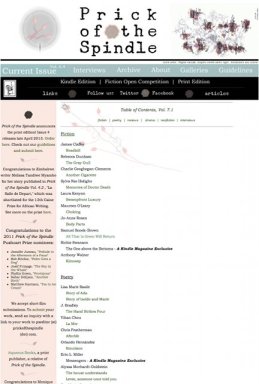
Continuing in the awesomeness of March = Sam’s fiction, I have a new story out today. This time it’s in the very excellent Prick of the Spindle, which I’ve been hankering to get into for quite some time now.
The story, “All That Is Given Will Return,” is about scavengers and marijuana dealers and giant tortoises in southeast Texas. That’s right. Giant tortoises. Named Clive. I’m pretty sure you’re going to love this one.
(And bonus points to anyone who can figure out which author/story I’m paying homage to with this one! Except for Ryan Werner, who already knows because he workshopped this one with me.)
So, huge thanks to Prick of the Spindle and editor Cynthia Reeser, who is awesome and a pleasure to correspond with. And happy reading, gang.

 Last night I had the terrific honor of attending the Oregon Book Awards ceremony here in Portland. Better still, I got to sit down front, with my writer pal Hobie Anthony and poetry nominee Carrie Seitzinger and her partner Matty Byloos. Before and after the ceremony, I chatted with fiction nominee Alexis M. Smith and double-nominee (in nonfiction and creative nonfiction) Kerry Cohen and her partner James Bernard Frost, as well as writer Jenny Forrester and Literary Arts program coordinator Mel Wells.




















 Samuel Snoek-Brown