More help for Haiti

The links just keep coming, thanks especially to my friends Rima Abunasser, Beth Davidson, and Diana Pearson.  I’m re-posting the list from yesterday, but some links are to organizations and some to lists of organizations, so I’m listing the lists first:

  • Charity Navigator (this is a kind of clearing house for reliable, reputable charities; it weeds out the scams and helps you find the right charity for your giving preferences)
  • InterAction (from my friend Rima:  “a list of legitimate organizations who are participating in the relief effort”)
  • Google (my friend Beth pointed out that Google is listing charities; you can search yourself or just follow the link she sent me)
  • BBB Wise Giving Alliance (Beth also pointed out this clearing house, “for ‘vetting’ charities”)
  • The White House (this comes directly from President Obama, via an mass e-mail he sent out; it lists all the efforts our government is taking and how you can help, and it’s where I got this web badge for today’s post)

Help for Haiti: Learn What You Can Do

Here are some individual charities and organizations:

  • International Red Cross Red Crescent (this is the main site for the joint operations of Red Cross and Red Crescent; you can donate directly here, or you can use their search tool to find a Red Cross or Red Crescent office in your home country)
  • Doctors Without Borders (they were already operating three hospitals in Haiti before the earthquake, but all three hospitals are destroyed and the medical staff are now operating out of tents and temporary shelters–they desperately need your help, and every dollar counts)
  • Oxfam (another hugely important coallition of international aid organizations)
  • Heifer International (Heifer seeks to fight hunger and poverty, and has decided to step in as a first responder in the Haiti crisis.  Thanks to my friend Beth Davidson for pointing this one out.)
  • Episcopal Relief and Development (my friend Diana says this organization “is already on the ground there and puts 92 cents on the dollar into relief work.”)
  • World Vision (my friend Rima says, “according to ABC, they’re already distributing first aid kits and and other staples in Haiti.”)
  • Save the Children (also from Rima:  “using grassroots methods like sending motorcycle teams to help people in Port au Prince”)
  • Care (Rima:  “distributing high protein biscuits they already had in warehouses in Haiti”; Beth highlighted this one, too)
  • UNICEF (a time-honored and reliable group–I used to “trick or treat” for donations when I was a kid; thanks to Beth for pointing this one out!)
  • Clinton Bush Haiti Fund (a new addition to this list; this is the organization set up by former Presidents Clinton and G.W. Bush, as the request of President Obama)

Thanks everyone for your links and support!  Keep those ideas coming, and keep the words, the money, and the helping hands going!

Haiti

I want to pause in the series on researching to focus on more important matters: Haiti. As I write this, the death toll is not yet known, and like the horrible tsunami catastrophe of 2005, we may never truly know. What we do know is that millions — that’s millions — of Haitians are injured or dying, and all Haitians, both in their homeland and living abroad, are suffering terrible, unspeakable grief.

There have been a lot of calls for prayer in the past day or so, and I’m among those people who believe that prayer, or meditation, or any other form of mental or spiritual offering can be hugely beneficial in tragedy, not only to those on whose behalf we pray but also for ourselves as well. It’s why I’m here now: I view writing as a kind of prayer, like a message in the Wailing Wall or a sutra on a prayer flag or calligraphy from the Qur’an, and I write this because I want to send my hope and compassion out into the world, on the off chance that it can help someone who is suffering, if only to know there’s someone like me who cares.

But I also believe that words alone are not going to help the people of Haiti, and I agree with all those people who suggest that action is as important as prayers — maybe, for the time being, action is more important.

I know things are hard for a lot of people the world over. Just today, as I browsed messages and status reports from friends and family, I found as many people despairing over their own hardships as I found despairing for Haiti. I have friends who have lost their jobs, or who have been seeking jobs for months to no avail; I have friends who wake each morning wondering how they’re going to feed their children. I have friends who are suffering from terrible illness, or whose family members or spouses are dying of cancer. I have friends who are fighting day after day just to retain (or in some cases earn for the first time) their basic human rights.

But I also know that there are also plenty of us who can afford to help. It doesn’t take much. When Hurricanes Katrina and Rita hit several years ago, I had students approach me asking to be excused from class for a week. They wanted to head south, down to the Gulf Coast. I said, “You have family down there?” They said, “No, I’m joining a group of volunteers helping to clean up.” I excused them from class. A couple of years later, up in Wisconsin, another group of students asked the same thing — they were driving down to build houses with Habitat for Humanity. These actions cost time, but they rarely cost money, and they have enormous impact.

I don’t yet know what sorts of actions are available to help Haitians; the Haitians themselves do not yet fully understand the terrible scope of this tragedy or what their needs will be, and the governments of the world, including my own, are scrambling to help but don’t yet know how. I hope by the end of today we can know, at least to some degree, and the help can begin. But in the meantime, I do know that one thing needed desperately is money to fund the efforts of those brave volunteers waiting to rush to Haiti’s aid. So if you can afford to, please consider donating. Some places are willing to accept anything you can spare, even if it’s only a dollar.

To that end, here is a short list of charities to consider, compiled by myself, some friends on Facebook, and one of my favorite blogs, Cake Wrecks:

  • Charity Navigator (this is a kind of clearing house for reliable, reputable charities; it weeds out the scams and helps you find the right charity for your giving preferences)
  • International Red Cross Red Crescent (this is the main site for the joint operations of Red Cross and Red Crescent; you can donate directly here, or you can use their search tool to find a Red Cross or Red Crescent office in your home country)
  • Doctors Without Borders (they were already operating three hospitals in Haiti before the earthquake, but all three hospitals are destroyed and the medical staff are now operating out of tents and temporary shelters — they desperately need your help, and every dollar counts)
  • Oxfam (another hugely important coallition of international aid organizations)
  • Heifer International (already an addition! Heifer seeks to fight hunger and poverty, and has decided to step in as a first responder in the Haiti crisis. Thanks to my friend Beth Davidson for pointing this one out.)
  • Episcopal Relief and Development (and another addition, this one from my friend Diana Pearson, who says this organization “is already on the ground there and puts 92 cents on the dollar into relief work.”)

If you know of any more than I can add to this list, or of any non-monetary ways in which we can help, please tell me — I will [continue to] update and repost the list as long as it’s necessary.

Research tip #2: Know your limits

For more on researching for fiction, go to the main research page


Sing it with me now: “To everything there is a season . . . A time to cast away stones, and a time to gather stones together; a time to embrace, and a time to refrain from embracing; a time to research, and a time to stop researching and get back to the writing . . .”

Every good academic knows there comes a point in the research process at which you have to quit looking at other people’s ideas and start working with your own. Failing to do so, you risk letting other people’s ideas take over, and what you wind up writing is not original argument but regurgitative reporting. Fiction writers, though, seem to know less about this magical balancing act and aren’t always aware when that moment comes.

The first thing you need to bear in mind as a researcher is what your skill set is, what things you know about researching and what things you’ll need help with. (If you read yesterday’s post, you know at least one thing: Ask a librarian!) Many fiction writers come from academic backgrounds and know a great deal about researching, but many fiction writers don’t. And it’s not a problem, not in terms of researching for fiction. The point is not to become expert researchers but to become excellent writers, which means we must always stay focused on the writing and not worry so much about the research. You’re not out to learn new processes (though it’s always helpful if you do learn some things along the way — see yesterday’s post), so what you want to do is work within the skills you have, find what you can as fast as you can, and then — say it with me — get back to the writing.

Maybe the only thing you know to do is jump onto Google or Wikipedia and look stuff up. That’s fine, though the Internet is notoriously time-consuming and conducive to procrastination (or, as my friend Tanya’s son Aaron brilliantly calls it, “procrasturbation”). If that’s what works for you, use it: follow a few links in, see what you can see. But if you linger too long or start clicking on too many links, shut it down and get back to the writing.

Maybe you have a small collection of standard references in your home, and you like to dive into those now and then, hit the encyclopedias or the indexes or The Dangerous Book for Boys, and read till you find what you’re after. That’s excellent. I can’t tell you how many trivia books and instruction manuals and dictionaries I’ve read over the years, and boring as it might sound, I’ve enjoyed them all. There’s some fascinating stuff out there in the world, and I love to learn. But there’s a difference between reading to write and just plain reading. Put the book down. You have a book of your own to write.

Maybe you’re well versed in complicated research methods, you know your library’s article databases inside and out, and you have personal access to the archives or the rare books room, and you head down to the library to put in some good hard research. Great. But take your writing with you — your laptop, your yellow legal pad, your lovingly worn, floppy old journal and fancy pen — and be prepared at any moment (the right moment) to drop everything and get back to the writing.

So what is the right moment? How do you know when you’ve done enough research and are ready to write again? Well, that’s a tricky question, and the simultaneously fortunate and unfortunate truth is that only you can know. It reminds me of the very short chapter on knowing when a story is finished, from Anne Lamott’s Bird by Bird: “This is a question my students always ask. I don’t quite know how to answer it. You just do.” But I call it fortunate because you get to determine this — the “right” moment depends on you.

In his book on screenwriting, Story Sense, Paul Lucey suggests that “the amount of time spent on research depends on the topic, how quickly you work, and how much background you need to feel comfortable” with writing the story. “Some writers spend months research and mulling the story, which is also an aspect of writing. The research and story pondering continues until the writer feels charged with energy and begins working out the plot.” But I think Lucey’s description is a bit disingenuous, or else he drinks better coffee than I do — I’ve never felt “charged with energy” after a long research session. I feel swollen, full of new information and unsure what to do with it all.  But sometimes I also feel driven, sometimes frantically, to get down an idea or a scene, in much the same way I’d feel driven by any flash of inspiration or sudden insight I knew belonged in fiction. It is a gratifying moment, to flash on the one piece of information you were looking for (or better yet, a piece of information you didn’t know you were looking for) and suddenly know you need to get it into writing. But I worry that Lucey’s initial image of writers sitting around poring through tomes of research and pondering and mulling ad libitum gives us exactly the excuse we need to avoid writing. Fan as I am of Hemingway’s pinching orange peels and staring at the fire routine, we don’t really need any more excuses to avoid writing, and sometimes you have to recognize that, right information or not, you’ve put off the writing long enough and it’s time to go back and just write the thing. There will be time enough for follow-up research later. Right now you need to write.

When I was working on the Civil War novel that spawned these posts, I was under the daily pressure of NaNoWriMo to pound out a few pages every day, so even though I wound up doing a little research every day, I also had to force myself to get back to the writing. In some cases this was easy: One time, I needed to find out how to defeat the Cajun folklore creature known as a rougarou (a bit like a werewolf), so I looked up the answer, found it, and moved on. Other times, I risked letting the research run away with me, like the day I looked up Civil war battles in southwestern Louisiana. I wanted to reference a particular battle in dialogue in order to set a character’s background and establish some of the real history behind my story, so I started looking up historical accounts of battles. At first I was just looking for date and place, but once I’d found several, I needed to pick one, and to pick one — I told myself — I needed to know a little about each battle.  So I started reading. After a while I’d narrowed my battles down to two or three I could use, but then I decided that the only way for my character to talk about the battle effectively was if I knew that battle from the inside, so I tore off searching for first-hand accounts, letters and diaries from Civil War veterans, and newspaper reports contemporary to the battles. Before I knew it, I’d spent hours and hours reading, and I was started to feel overwhelmed. Worse, I hadn’t written more than a few dozen words for the day. There was no magic trigger, no a ha flash of inspiration. There was only the weary realization that enough was enough, and it was time to get back to the writing. So I dropped everything, picked a battle at random, and dropped a single reference to it in a line of dialogue, and I moved on. I’m glad I did the research I did because it’ll be easier to find again when I go back and fill in the details.  But the point that day was to write, and my mind told me when I’d finished with the research.

Determining the moment you’re ready to get back to the writing will take a certain degree of self-awareness, which means that you’re going to have to practice this a lot. Research and write, write and research, back and forth, until you can figure out that delicate balance. It’s a lot like meditation, what Buddhists and psychologists call “mindfulness” training: you need to learn what your mind is doing, learn to notice when you’re getting distracted from your goal, which in this case is always the writing.

In one version of mindfulness meditation, the meditator is supposed to focus on his breath. He notices when he breathes in; he notices when he breathes out. That’s it. Sometimes, he counts the breaths in order to remain focused on the breathing, but this becomes tricky, because it’s very easy to use that as a crutch, to stop focusing on the breathing and start focusing on the counting. And the counting is not the goal — the goal is breathing, and the counting is just a tool to facilitate the breathing.

The same is true with writing and research. We must begin with writing and we must end with writing. Sometimes we need the tool of research to help facilitate the writing, but the research is not our goal, not our purpose — we are doing the research only so we can continue writing.

This is easier said than done, of course, because for some people, research is a fantastic crutch. In a blog post on WordPlay, author K.M. Weiland explains one reason she quit writing exercises is because they became a good excuse to not write: “It’s much easier to scribble away on exercises that don’t matter, rather than buckle down and work on that tough scene opener.” I’m a fan of exercises myself, just as I’m a fan of research, but Weiland has a point — we can sometimes allow what started out as work to become a distraction from work, and research is especially nasty about this. Paul Lucey himself admits this, following up his idyllic image of pondering, intense writers hunched over their research with the warning that “in some cases the research can go on for so long that it becomes an excuse for avoiding writing.” Try reading anything interesting on Wikipedia and you’ll quickly see what I mean. You reading something interesting and it points you to something else, some other related tidbit, so you go read about that, which links you to a different article, and soon your “research” has snowballed into “not writing” and you’re spending all day browsing useless information that won’t wind up helping anything. So you have to force yourself back to the writing.

Jack Kornfield, Buddhist and psychologist, in his chapter “Training the Puppy” from A Path with Heart, puts it like this:

In this way, meditation is very much like training a puppy. You put the puppy down and say, “Stay.” Does the puppy listen? It gets up and it runs away. You sit the puppy back down again. “Stay.” And the puppy runs away over and over again. Sometimes the puppy jumps up, runs over, and pees in the corner or makes some other mess. Our minds are much the same as the puppy, only they create even bigger messes. In training the mind, or the puppy, we have to start over and over again.

This is true for everyone’s mind, not just meditators. Your mind is a puppy, and it’s squirmy and restless and playful as hell.  That’s fine.  Let it play — we are creative writers, after all. But don’t let it make a mess.  In researching for fiction, we have to learn what our own limitations are, we have to discover — through practice — that in the end we can only research so much, and we have to remind ourselves to return to the fiction over and over again, because that is what we’re really doing: We are writers, and we need to write. Listen to your mind, and when it says “A ha!” or “Enough,” let go of the research, and get back to the writing.

Of course, one way to cut down on your research time is to skip the books and go straight to the sources — to cultivate connections with experts and to learn from people on the street—but that’s for tomorrow’s post. . . .

[EDIT: I’ve postponed the entry on sources to focus on the dire need in Haiti — please read tomorrow’s post for more information.]

Research tip #1: Marry a librarian

For more on researching for fiction, go to the main research page


I’ve been hanging out in libraries since I was a kid, and I was a regular at my town’s public library during high school. My first year of college, I was commuting 40 minutes to school and had a huge gap between classes my first semester; with no dorm room or home to return to between classes, I did the only thing that felt natural to me and I hung out in the library. A lot. Sometimes six hours a day. And I wasn’t sleeping in there—I was reading books, not just fiction but nonfiction too, usually researching arcane and ridiculous subjects in addition to my serious scholarly pursuits. My habits didn’t change when I met the woman I would later marry, because she took a work study job in the library, which just meant I hung out in there more.

So I got to know a lot about libraries and librarians. I knew the card catalog inside and out (that’s right—we still had one when I was in college, though they transitioned to an online system before I graduated). I knew the vertical files and the atlas room. I’d been inside the archives and even the dim basement storage affectionately nicknamed “the catacombs.” The librarians and library staff all knew me by sight; most knew me by name. And I knew where to look for most kinds of information (or thought I did at the time), and I had already learned the most valuable lesson of research: when in doubt, ask a librarian!

(That bears repeating: ASK A LIBRARIAN!)

I didn’t set out to marry a librarian, really. But it makes a lot of sense that I did marry one, and it was one of the best decisions I ever made. Better still—and I say this objectively, based on a lifetime of hanging out in libraries and chatting with librarians, as well as on a professional career understanding my own research needs—I was lucky enough to marry one of the best librarians I’ve ever worked with. I know that if I have a pressing research need, I can call or text or e-mail my wife, and she can find the answer. Most of the time, she’ll find more information than I was even looking for, or better information than I was looking for, and more often than not, she’ll have pointed me toward that information by the end of the day. More than once she’s tracked down truly arcane information I’d spent two whole days looking for, and I swear (I’m not making this up), she’s found it inside of five minutes.

Librarians are like that, or the good ones are, anyway. It’s what they’re trained for; it’s why they have advanced degrees (technically speaking, you cannot claim to be a librarian without at least a masters in library science). And it’s why, if you plan to focus on your own writing without getting too bogged down in research, it’s going to be a good idea to marry a librarian.

Okay, I know. There are only so many librarians in the world, so maybe you’re not going to be fortunate enough to marry one. But you can still make friends. I was friendly with all the librarians I worked with long before I fell in love with one, and they were always helpful, because any good librarian will view his or her job as a service profession. Sure, all librarians collect information, and it’s a small step from collecting to hoarding, and yes, most librarians have some professional obligation to preserve and protect the information they collect. But for most librarians, the main reason they’re collecting and preserving that information in the first place is so we, the public, can use it. That means their primary concern on any given day is to help you find the best information in the fastest, most painless way possible. So if you can’t marry a librarian, make friends with one.

And don’t say you don’t know any librarians! Head to your nearest library and meet one. Walk up to the reference desk. Say, “Hi, are you a librarian?” (The person on the desk might be a staff member or a student worker, so it’s helpful to ask.) If they say yes, tell them, “I’m a writer, and I’m going to need a lot of help doing research.  I don’t need any help right this second, but I wanted to meet you so I’d know where to come in the future.” Smile when you say this. Offer to shake hands. Bring the librarian chocolate. And thank the librarian, frequently and sincerely.

But meeting a librarian isn’t enough. To get the most out of the relationship—and out of your fiction—you also have to . . . say it with me now . . . ask a librarian. Which means you need to know what to ask.

I said in the previous post that the first step to writing historical fiction is to write the fiction. Get a story down, or at least an outline. Have some sense of where you’re going with this piece.  Put in your share of “butt in the chair” time. Because the best way to get the most help out of a librarian is to know what you’re looking for in the first place, and to know what you’re looking for, you need to start the writing.

But let’s say you’ve got a draft started—or even just an outline. Let’s say you’re writing about the 19th-century grave robbers known as “resurrectionists” (as did the delightful Hannah Tinti, in her novel The Good Thief), and you find yourself stuck in a passage about the process of robbing graves. So, first things first: Do the research yourself. Librarians love it when you’ve made a little effort on your own, because any good librarian, like any good detective, is going to start with the simplest solutions, which means that if you’ve eliminated some of the basic steps of research before approaching a librarian, the librarian will be able to move that much more quickly to the really juicy stuff you couldn’t find on your own. These basic steps will depend on your own skills as a researcher (see tomorrow’s entry for more details), so I won’t go into those here.  Your process is your own.

But let’s say you’ve now done a little of the preliminary work yourself, you’ve looked where you can think to look and found some good stuff but you want more.  So you get in touch with the librarian. Personally, I love libraries—I view them as sanctuaries, academic temples worthy of the highest reverence—and I prefer to physically visit the actual buildings when I can. But this is the digital age and librarians—who are by definition as up to date as anyone can be in the Information Age—are happy to work with you over the phone, via e-mail, or even in a chat session. (While working on my Civil War novel, I started looking for information on the bayou in the mid-1800s, and I e-mailed the community library in Cameron Parish, Louisiana—which was all but wiped out by Hurricane Rita back in 2005—and the librarian there was not only quick to respond but provided me with some extremely helpful information. Shout out to the wonderful Dede Sanders!) The capabilities will vary by library, but the process is the same regardless of the medium you choose.

What will happen is what my wife (and any other librarian) calls the “reference interview.” And, like any interview, you should come to it at least a little prepared, which means whatever work you’ve done until now you should be prepared to describe to the librarian. Gather those materials, or at least remember what you have managed so far on your own, and then contact your librarian. (My wife recommends calling or e-mailing and making an appointment. “We love people who make appointments!” she tells me. “Also, you might find out there’s a subject specialist—especially at big public libraries or academic libraries—if you inquire about appointments.”)

First, tell the librarian, as specifically as you can, what you’re looking for. As my wife says, “We would want the same thing from a fiction writer as a person who is without a job and needs to look for job resources: a clear understanding of what they need to find out. That’s really what it boils down to.” In our example, you could tell the librarian that you’re looking for information on resurrectionists, but that’s an awfully broad term, and unless the librarian asks you to be more specific, you could wind up with information on early Christianity, modern religious cults, body snatchers, zombies, even a Massachusetts rock band or a German metal band. So it’s best to be specific: “I’m writing a book on grave robbers in the 19th century, who were sometimes called ‘resurrectionists,’ and I’m trying to find out what processes they used to steal body parts.”

Then you explain what you’ve done so far. “I’ve looked on Wikipedia using these search terms . . . .” “I checked the card catalog and used these search terms . . . .” “I tried searching article databases in journals of medical history, using these terms . . . .” (It’s always good to explain what terms you’ve used, because in my experience, the librarian will almost always come up with one or two terms you hadn’t thought of, and they’re usually better terms.)

From here, the librarian will probably ask you a series of questions to help narrow down the search (Are you looking for general info or for specific info?  Are you writing about a particular country or geographic region? Are you interested in the legal aspects at all, or the medical aspects, or just the digging up of bodies? And so on . . .). My wife puts it like this: “Lots of times, patrons [that’s us] don’t know what they want to know, so we have to ask a series of questions to get them—and us—to a point where we both know what we’re looking for.”

Also, my wife says, it’s helpful for patrons to know what format of info they’re wanting—books, articles, web sites, etc. If we’re writing an historical account of grave robbing in the 19th century, for example, we would probably want some contemporary accounts, so we could tell the librarian that we’re interested in memoirs about grave robbing, if any exist, and probably some 19th-century newspaper articles that report on grave robbing.

You should expect to work with the librarian as much as possible—it isn’t exactly fair to just dump a load of research in a librarian’s lap and then sit back and twiddle your thumbs—but like any good professional, sometimes the librarian will want to dive into the research themselves or confer with other librarians, and you should also give these professionals the space they need to work. Besides, that will give you some time to get back to the writing (always go back to the writing!) while you’re waiting on your information. (Research should never be an excuse to stop writing, but more on that tomorrow.) Most importantly, never approach a librarian expecting an answer then and there. (This bears repeating, too: Never approach a librarian expecting an answer then and there!) I mentioned earlier that my wife, brilliant professional that she is, is sometimes amazingly fast at finding information.  But only sometimes—there are limits to how fast some information can be found, and good research is like good cooking: it takes time, and it’s always best to be patient. No matter how long a librarian takes to track down the information, just remember that it’s faster than you were finding it on your own.

Finally, expect to learn something. A librarian’s first goal is to help you find information—not to simply give you information. That means that at the end of a search, the librarian will probably explain how they found the information. (If they doesn’t, ask them.) Pay attention to this, and take notes if you need to. What they’re doing is teaching you how to find similar information on your own the next time, so as you progress in your novel, you will be able to do more and more of the research for yourself. We researchers, my wife says, should learn to “feel more confident about starting out next time.” The librarians, she adds, are “here as guides, not crutches.”

Now that you’re learning to feel more confident as a researcher, check out tomorrow’s post about knowing your limits!

Re-researching fiction: The new, expanded edition!

For more on researching for fiction, go to the main research page


A while ago I wrote a blog entry on the research I was doing for my NaNoWriMo novel, a twisted little Civil War novel set in southwestern Louisiana during the last of the war years. At the time I was just counting some of the cool things I’d learned while writing the first draft of that book, like how to build an Acadian shack or what sort of bait to use when catching crawfish, but I also made a few comments on the apparently contradictory act of researching for fiction. Then a friend of mine, Midwestern rock star and fellow writer Ryan Werner, started a conversation about writing with a friend of his (we writers are a molecular bunch, clustering together in little clumps of “I know someone who knows someone” and hoping something alchemical results). This friend of Ryan’s is thinking about writing an historical novel and wondered if Ryan had any thoughts; what Ryan thought is that he despises research (I’m euphemizing — Ryan was a bit more emphatic than “despises”), but then he remembered my blog post, and he sent me an e-mail asking if I might elaborate. So here we are. Now you know who to blame.

There’s a lot of good advice out there. There’s a lot of bad advice, too, and half the time the good advice sounds almost identical to the bad. What works and what doesn’t depends on what sort of writer you are and on what sort of researcher you are, so like anything in fiction writing, no one tip or exercise is going to solve your writing problems for you. You live and you learn — or, more accurately, you learn through living, through the practice itself.

That said, it often does help to get a few pointers at the outset, a kind of nudge in one direction or another, and who cares if it’s the right direction, because at least you’re moving.  So over the next several posts I’m going to start discussing a variety of tips, some of which work for me, some of which don’t — but they worked for someone, so maybe they’ll help you, too.

But first, some general advice:

The first thing any writer of historical fiction needs to do is sort out his or her priorities, and I promise you, no matter what sort of writer you are, your first priority is to write. That means now. Start a draft, even if it’s terrible, even if you’ll wind up chucking 99% of it. There is an old and oft-quoted (and oft-disputed) axiom in the writing world, that we should write what we know. On the surface that sounds antithetical to researching for historical fiction — if you don’t know it in the first place, some purists would have it, you shouldn’t bother looking it up. But what that axiom really means is that you should stay true to your own vision, and whatever time period you’re writing about, it will inevitably conform to your world view now.

Or, I’ll put it another way. There’s a long-standing critical truism that all science fiction, however distantly futuristic it pretends to be, is a commentary on contemporary times (Philip K Dick’s A Scanner Darkly, which I’m reading now, is not so much a novel about the drug culture of a near future but a commentary on the drug culture of the times Dick wrote it, just for example). But there’s an adverse example, too:  In Jorge Luis Borges’s excellent short story “Pierre Menard, Author of the Quixote,” we read about a contemporary author who, having read Cervantes’s Don Quixote, sets out to write a modern version of it.  Instead he winds up recreating the text verbatim, so that Pierre Menard’s Quixote is utterly indistinguishable from the original. Yet — the story tells us — critics rave about the genius of Menard’s version because it has become a reflection on all that has changed in the centuries since the original Quixote was written. In some respects Borges is poking fun at the pomposity of academia, but there is a more serious point underlying this, that any historical fiction we might write today must become relevant to contemporary readers and therefore must reflect a contemporary perspective, however accurate or inaccurate the resulting historicity might be.

So it is always a good idea to begin by writing cold, without research. Get the story down, however sloppy or short or inaccurate, and then go back and correct the historical details through research. If you begin with the research, you will wind up writing a report, which no one — not even college professors — really wants to read. But if you begin with the story, you will have something engaging and exciting to build the historical details into, and that’s what will make for good fiction.

Tomorrow:  Tip #1–Marry a librarian!

Counting beans (now with more numbers!)

I’m not one for math–anything more complicated than my checkbook and I break into a sweat, and even the checkbook is a chore I’d much prefer to avoid–but I have always been fascinated by numbers.  Ask me to prove anything with them and I’ll freak out and slip into a coma, but ask me to play with them?  I’m on board.  I love numerology, I love our planet-wide obsession with the number 12 and all its variables, I love counting the years I’ve been married (a little more than 8 ) and the years I’ve known my wife (almost 13), the number of chapters in, say, For Whom the Bell Tolls (43; the events in the Metallica song based on the novel take place in Chapter 25).  Before there were the loads of obsessive explanations and musings that exist online today, I once wrote a lengthy and absurdly complicated essay unpacking the mathematical gymnastics of the numbers in LOST (4 8 15 16 23 42), not for an assignment or even a public blog but just because I was fascinated by them.

Right now I’m knee-deep in revising a novel that has long frustrated me, including numerically.  For complicated symbolic reasons I won’t go into right now, I have divided my novel into 3 “Books” and a total of 12 chapters.  But as soon as I’d got through a 1st draft of this thing, I noticed how lopsided it was–the 1st 4 chapters, making up Book 1, took up nearly 1/2 the novel, relegating Books 2 and 3 each to just over a 1/4 of the text.  Consequently, what should be the last 2/3 of the book move along far faster than the 1st 1/3 and feel rushed, sloppy, and amatuerish, while the 1st “Book” is sluggish, equally sloppy, and amatuerish in an entirely different way.

One of my goals in revising this novel was to tighten up the 1st 1/2 and expand the 2nd (by which I mean tighten up the 1st 1/3 and expand the other 2/3–such is the confusing nature of math and/or my novel).  Today I checked my page count:  In the 1st 2 chapters I have managed to add–not delete–a full 20 pages to my novel.  Right now the total count sits at 293, yet, just a few pages into chapter 3, I am currently working on page 92.  By page count, I am 1/3 of the way through my novel, but by chapter count, I am just over 1/6 through.  I’m not saying all the chapters or all the “Books” have to be of equal length, but I’m a fan of balance if not symmetry, and I’d like each section of the book to carry similar weight.  Which means, if I’m going to pull that off in this revision, this novel is going to have to wind up a little over 500 pages by the time I’m done, with the bulk of the extra 210+ extra pages showing up in chapters 5 through 12.  Or I’m looking at yet another revision to follow this 1, in which I strip out all the fat from Book 1 and clean it up like I’d originally intended.  Which might be what I have to do.  Not just for the sake of the numbers, but for the sake of the prose as well.


UPDATE: I’ve finished revising (for now) all of Book 1.  As it stands right now, Book 1–the 1st 4 chapters–total 141 pages, out of 298 (that’s up from an original page total of 271).  The word count for Book 1 is around 43,000; the word count for the whole novel, so far, is 91,300.  So, by chapter count I’m exactly 1/3 through the book.  But by page count and word count, I’m almost 1/2 (47% by either page or word count).

The good news:  if 141 pages is what roughly 1/3 of the book is supposed to look like, I’ll only have to add 125 pages to round out the last 2/3, which is considerably less than I was first counting on, and 400+ pages actually doesn’t sound too unreasonable for a novel of this sort, though if a final revision can squeeze that down to, say, 350, I’d be happier.

Is there anybody out there? Sensory deprivation and creative writing

I’m currently (and rapidly) revising my second novel, which also served at my dissertation and which is set in an afterlife, with a dead narrator and a whole mess of dead characters.  The harderst part, I think, is the opening, the first third of the book, because at heart the novel is a roadtrip adventure story and I’ve always struggled with getting my narrator out on her journey in a way that doesn’t feel hackneyed or forced.  In my revisions, her impetus for setting out is still a bit hackneyed and forced but it’s starting to make more sense.

One of the things I’m trying to do with this novel is adhere (very loosely) to Buddhist concepts of the dying process as laid out in the scriptural text Enlightenment on Hearing in the Intermediate States (mostly known by its shorter title Bardo Thodol and, to Western audiences, as “The Tibetan Book of the Dead”).  I’ve already walked my narrator through the first three cycles of death described in Yangchen Gawai Lodro’s The Lamp Thoroughly Illuminating the Presentation of the Three Basic Bodies–Death, Intermediate State, and Rebirth (as translated by Lati Rinpoche and Jeffery Hopkins), but in my dissertation drafts I let my narrator effectively skip the fourth cycle, in which she loses all sensory perception and effectively dissolves into her after-life existence.  This is a profoundly difficult thing for me to describe, of course, since I’m still alive and still tied to my sensory perceptions.  The closest thing I could imagine to such an experience is a float tank or sensory deprivation chamber, but I don’t have access to such a device.  So, how to describe what my narrator experiences?

Winter here in the Middle East is impossibly mild, temperatures lullingly comfortable during the day, and I’ve been leaving the air conditioning off most days.  So I decided to take advantage of the weather and I created a kind of sensory-deprivation experience for myself.  Using the audio-editing software Audacity, I created a 20-minute track of white noise.  Then I took my laptop into our guest room (also known as my meditation room, where my Buddhist altar shares space with a fantastic little futon from IKEA), and I lay back on the futon.  I’d shut the windows to block any distracting breezes.  I donned an airline eyemask and a pair of light headphones plugged into my laptop, I covered myself in a thin blanket, and I started a recording program to document anything I might say out loud.  I put myself in the mindset of my narrator, then I started the white noise, and I simply lay flat for 20 minutes.

The result is not earth-shatteringly profound, but I did have some fairly vivid visions of things my narrator might experience, and as they occured I described them aloud.  On the recording, I sound bizarre–sometimes simply bored, sometimes stoned, and toward the end flat-out asleep, which I might have actually been–I catch myself snoring on the recording–but I remain in character throughout, and the text I dictated, though brief and strange, has resulted in some interesting and usable prose for the novel.

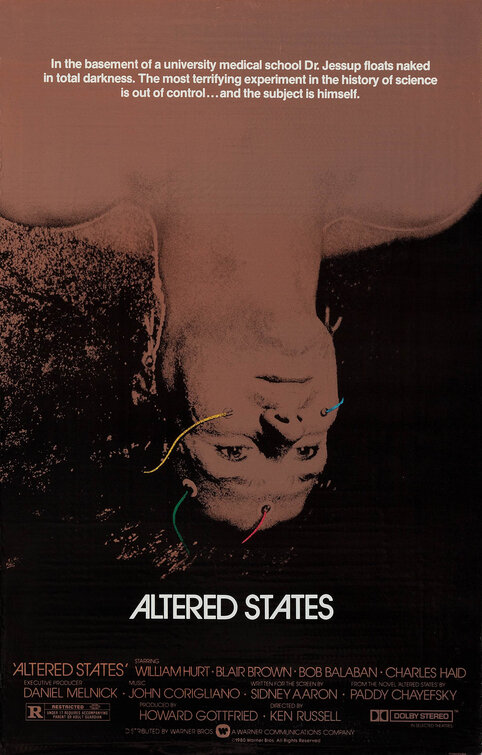
I’ve been intrigued by sensory deprivation since watching the 1980 movie Altered States, but now I’m wildly curious.  Word online is that float tanks are common features at spas these days, and though I’ve yet to come across one, I’m going to start asking around.  Who knows what else I might wind up writing?

And now, a word from our sponsor: Some of Jennifer’s thoughts on Vienna

The list from the listmaker. I love making lists, yes, but I don’t feel the pressure Sam feels of having “the” list. Maybe that’s why I like Family Feud so much – it’s all about the list that’s true in the moment. So looking back on our Vienna trip, what are the things/events/activities that stand out in my mind right now?

  • Coming across the painter painting a copy of a painting of a painter painting in the Kunsthistoriches. We had been dutifully looking at the history of European art and winding our way to the center (in my mind at least) of the collection, the lone Vermeer. Vermeer has been my favorite artist for as long as I can remember, and I love, absolutely love, that I got to see that particular painting, Allegory on the Art of Painting, as the center of a kind of real-world, ironic tableau.
  • The pastries. Sam loves his coffee – and I did like the Viennese specialty, the mélange – but for me, it’s all about the pastries. The apfelstrudel (with real cream!), the sachertorte, the doughy, chocolate-filled dumplings covered in powdered sugar and strawberry sauce. And best of all, the total unapologetic, unabashed attitude toward pastry – why would you deny yourself something sweet?
  • Our spur-of-the-moment decision to have dinner one night by picking out some delectable goodies in the Christmas Market in the Maria-Theresia square. Spicy and seasoned potato wedges, complete with its own tiny fork; the above-mentioned chocolate-filled dumplings; a cup of glühwein. Bliss.
  • The transportation. Absolutely the best transportation system in the world. And it all has to do with the attitude of Austrians, I think. Why wouldn’t you have a reliable, cost-efficient, and on-time system of buses, trams, trains, subways, and airplanes? It just makes sense. And it does, and it works, beautifully.
  • The library at the Benedictine monastery and abbey in Melk. I try to make it to at least one library in the different places we visit – so I was really thrilled to visit one of the most beautiful libraries in the world. It was odd, though, to see all these incredibly old volumes all encased in matching 18th century gold-leather bindings, and all stacked up by height on these carefully managed shelves. A part of me loves that – order reigning supreme – but another part chafes at the thought of destroying all those individual covers and bindings and mashing them into this homogenous, monochromatic front. And most librarians usually dislike being asked questions like, “Where’s that blue book?” so organizing by something so arbitrary as height – rather than by author or by subject – just doesn’t feel natural to me at all now. But then, I’m probably overthinking it. It’s a beautiful library – and it feels like a library in a monastery should, with hidden hinges (bookcases that hide windows behind, so from the outside, the library matches the grand ballroom design!) and row upon row of books and a spiral staircase leading to unseen extra rooms (12 in total).
  • Being mistaken for natives – by natives AND by tourists!
  • The gorgeous coats and boots. The first day, I didn’t see any other footwear other than flat-heeled boots. And the women – from teens to elderly ladies – are so chic. I remember on one subway ride, I couldn’t take my eyes off this older woman, with her white hair artfully arranged – she had on knit gloves that had stripes of different shades of purple; a purple knit hat, kind of like a loose beret; a dark purple wool coat; grey slacks and suede boots; and a lavender scarf. Fabulous!
  • Discovering Schiele and his version of Cubism. I’ve never really gotten into the Cubism art movement, but I love how Schiele kept on experimenting and made a kind of internal cubism – his shapes of humans and buildings and trees were recognizable as what they were, but they were made up of different shades and colors that echoes the Cubism movement. Fascinating. And he painted some memorable trees. I love trees and almost always tend to include them whenever I get hold of the camera (whenever Sam relinquishes the camera strap!).
  • Watching Sam light up with joy when he discovers something he likes – which are almost never the things that I expect or particularly like myself sometimes. This is an everyday occurrence, really, but it’s especially fun while travelling. Example: Sam taking tons of pictures of the black bears (!) while on the trail bridge at the Schönbrunn Zoo.
  • The total ease of an old European city. Go down a side street, filled with charming cobblestones, and you come across a lovely, tiny park in the middle. You spy a lovely, centuries-old building, with a modern glass bit perching on top. You visit a tiny sliver of a museum – in this case, the Römaner Roman ruins museum – that has done the best it can with a very limited space (really, about 12 feet wide, 3 stories tall) and presented artifacts in a modern, engaging way with kids’ activities and a walk-through basement of Roman ruins. Really fascinating to see how modern Viennese lifestyle fits so snugly around its history. It’s quite inspiring to see and feel the atmosphere and energy of a city that’s proud of its heritage, and proud of where it’s going. Viva Vienna!

Vienna: final thoughts (almost)

Day 7 and final thoughts:

We woke early our last day in order to enjoy a full breakfast and take our leisurely time getting out to the airport. On our way into the city, aboard Vienna’s CAT train, we’d flopped wearily into the nearest seat and leaned against the windows to watch the countryside flash by, and so we missed out on the views from the upper deck of the train. Heading out to the airport on our last day, we made sure to climb the narrow stairs to the upper floor, where we enjoyed fleeting streaks of little Viennese suburbs, the pitched roofs and yellow-painted walls flying by but somehow noticeably serene.

The flights home were trying, especially for Jennifer, who has a knack for accidentally winding up in conversations with the people next to her. It helped that both ladies Jennifer talked with on our two flights back were terrifically pleasant, and Jennifer had good conversations the whole way back, but it also meant she never got to sleep on the planes. Consequently, we both were tired—and Jennifer doubly so—when we finally waddled through our front door at 12:30 in the morning, and we didn’t bother unpacking at all. Instead, we grabbed the cats for some fur therapy and then promptly fell asleep.

Jennifer is a dedicated list-maker. It’s part of her job, of course, to be organized, but she’s so good at her job because she’s naturally organized anyway. So it’s never any surprise to me when at the end of a day on vacation she’ll ask, “What were your top five favorite things about today?” Our first full day back, as we unpacked and sorted through our souvenirs, she upped the ante: “What were your top ten favorite things about our trip?” I’ve enjoyed these sorts of lists myself ever since reading Nick Hornby’s High Fidelity, which is chock full of Top Fives, though I admit I often hesitate to call my lists “top” anything, lest I inadvertently leave something out or shunt something into a lower order of memory where it doesn’t necessarily belong. (Unlike Jennifer, I’m a chronically disorganized person and fear lists because I’m certain to leave something out or put something in the wrong order or include something absurd, and I’m constantly second-guessing myself.) Still, it’s a fun game to play, and it frequently serves us well as a way to concretely root certain parts of our trips to memory. Favorite moment during our two trips out to Dyersville to the Field of Dreams farm: Literally disappearing within three steps of entering the corn field (that’s no movie magic—you really do just vanish). Favorite historical site in Scotland: The hill fortress atop Dunnydeer where Jennifer and I ate a secluded picnic lunch amid the brisk winds and the tumbling castle walls.

Favorite moments in Vienna?

Walking pretty much anywhere. It’s a beautiful city, and the tightly compact Innere Stadt is perfect for leisurely strolls day or night. Popping down a narrow cobblestone street and emerging into a hillside clad in stone stairs leading to a looming Renaissance church is a treat on any occasion, but it was the normal state of affairs pretty much anywhere we walked in Vienna as well as the few old towns and villages we visited along the Danube valley, which meant nearly every walk was beautiful.

The Friedhof der Namenlosen. Actually, bizarre and morbid though it sometimes was, I enjoyed the Viennese fascination with death and their elaborate efforts to celebrate it in their cemeteries and churches, but the Friedhof der Namenlosen was a deeply reverential experience for us both. Here were the graves of people no one knew, people who’d washed up anonymously on the industrial shores of the Danube Canal with no one to vouch for them or pay for their burial, yet the Viennese saw fit to cultivate a beautiful and solemn little cemetery to allow these poor lost souls some rest, and even today, some seventy years after the most recent burial there, people continue caring for the cemetery. Every year a group even comes out to hold a candlelight vigil and float a huge raft of flowers out into the Danube as a memorial to the nameless folk buried there. It’s a beautiful thing.

The coffee. To be honest, I think the coffee here in the Middle East is better—stronger and more flavorful—but what I loved about Viennese coffee was its abundance. I’ve been a fan of coffeehouse culture ever since discovering it in college—I love the intellectualism, the artistic and cultural vibrancy, and the democratic blending of social strata that have long been the hallmark of the traditional coffeehouse experience—and Vienna literally invented the coffeehouse. When we sat down in the Café Benno on our last evening in Vienna, after spending several minutes browsing the Kaffeemuseum inside, it felt almost like a homecoming or a kind of pilgrimage.

The museums—all of them. At the end of our trip Jennifer and I agreed that the Belvedere was probably the best museum we’d visited, and indeed it was the brightest, best designed, and most visitor-friendly museum (in one room they invited visitors to scream as loudly as they could just to hear the echoes off the high vaulted ceiling), and it contained some of the most impressive and unique art we’d seen. But then I remember that we’d said the same thing about the Leopold when we first emerged from it, and though the Kunsthistoriches Museum was dark and oddly arranged and I’d been disappointed in the coin collection there, it held some phenomenal pieces of art, including the most singularly thrilling art experience of the whole trip: seeing Vermeer’s “Allegory on the Art of Painting” and watching a painter practice a copy of it, as though the allegory had come to life. Every museum we entered was more impressive than the last, it seemed—and even if I only count the major museums, we still barely managed a quarter of what Vienna has to offer, and that’s not even accounting for the dozens upon dozens of smaller, specialized museums in the city.

Talking with Jennifer. This doesn’t seem fair, really, to include in a list of favorite memories on vacation, since we talk to each other all the time anyway, but travelling does something for Jennifer and me. We’ve always been able to talk about anything at any time and still, after almost thirteen years together, we find ourselves amusing and intellectually stimulating. But on vacation we really get rolling, having long intellectual conversations over breakfast or cracking each other up on subway trains. Talking to my wife is one of my favorite things about being married to her, but it’s also always one of the highlights of our vacations.

And so it seems only appropriate that tomorrow, my wife will join the conversation and offer her own final thoughts (in list form, of course!).

Until then….

Vienna: Day 6

Day 6

Thursday, December 3, 2009

We have had as solid a last day as I could have hoped for, made all the better for its spontaneity—while we knew the handful of things we wanted to fit in today, we weren’t sure we’d get around to them all or in what order we’d do them, but in the end we managed everything we’d planned as well as an impromptu trip, and we picked up a few last-minute souvenirs. Then, to crown our day and our vacation, we went to a recommended vegetarian restaurant down near the Schönbrunn and not only had a good meal in a delightfully atmospheric restaurant but also got to experience Viennese long-form dining at its fullest, spending (not entirely willingly) a full three and a half hours at dinner.

Which put us back at our hotel late, meaning we started packing late, meaning I have precious little time left for this entry and will have to revisit the last few days in a final mammoth entry later. But such is the nature of vacation—sometimes this sort of leisure writing makes way for other forms of leisure, and especially in my case I usually wind up tidying up the recounting in the days following vacation, which has actually served me well over the years, because it gives me a chance to relive our adventures and solidify my memories.

But the memories would be far less worth having if they didn’t include Jennifer, so I think I’ll set this aside for now and join my wife for our last hours in Vienna, because that’s really the point in all these travels anyway—to have our adventures together.

2:40 am


Day 6 follow-up:

Jennifer and I had been wanting to drop by the Hundertwasserhaus since our friend Steve Bowman recommended everything Hundertwasser-related, but I’d been waiting for a bright sunny morning to see the multicolored building at its best. On the other hand, we’d come to Vienna for some much-needed cold fall weather, and while the first few days were cool but sunny, the latter half of our vacation was exactly what we’d hoped for: overcast, windy, and quite chilly. Which meant that when our final day in Vienna dawned gray and cold, we shrugged and decided to head out to the Hundertwasserhaus anyway, because it was now or never, and we definitely didn’t want to miss this childish delight.

From what I’d read of Hundertwasser, the guy seems rebelliously whimsical, bored as he was with the austere blocks of concrete that seemed to dominate Austrian architecture during the first half of the 20th century. His reaction is almost excessively in the other direction—he refused to draw straight lines, splashed every surface he could find with all manner of incongruous colors, and seemed to revel in mixing artistic style almost at random. He’s like a child who all his life have been using eight crayons to bubble in the little black outlines of a coloring book and suddenly, for Christmas, receives a pad of blank white paper and the big box of 128 Crayolas and a pack of glue sticks and glitter and told, “Have fun, kid!” The result is a delight, as much fun to behold as it must have been to create, and Jennifer and I had a lot of fun just walking around the building. But our favorite find—Jennifer’s discovery, actually—was not officially connected to the building at all. Across the street, as a diversion for overly curious tourists (the Hundertwasserhaus is still a private apartment complex, and the residents get a little weary of people like us poking around their homes), Hundertwasser’s admirers have set up a kitschy little souvenir boutique, and outside, on an arrow pointing into the shop, Jennifer found a sign reading “Toilet of Modern Art.” It seemed somehow simultaneously a legitimate directional sign and a comment on the effusive art-related souvenirs found within (or even on the art itself).

Our last day seemed a day for catching up on things we didn’t want to miss, because after Hundertwasserhaus, we hopped on a series of trams and worked our way over to the Upper Belvedere. We weren’t sure we’d get over to it this trip. But on our tour of the Danube valley our fellow travelers raved about the art collection there so enthusiastically that we decided we had to fit it in. Besides, as impressed as we were with the Klimts on display at the Leopold, we knew the grand prizes were at the Belvedere: Klimt’s “The Kiss” and “Judith I.” Plus, Jennifer had fallen in love with Schiele’s art, and the Belvedere boasted a healthy collection of some of Schiele’s best as well.

Klimt’s work was indeed phenomenal to behold in person. I have always loved “The Kiss,” though of course I’d only ever seen it in art books and poster shops and on postcards. Seeing it in person illuminates the true depth of the painting, the most intriguing aspect of which is the way it plays with light. I had always assumed that Klimt’s highly detailed figures wrapped in very flat, stylized cloaks and clothing was a means both of trapping the figures in two-dimensional space and of showing off the human form, alive against that flat, dead surrounding. And indeed from one angle this is precisely how it looks, and the effect in person is even more striking, because you can see the fine brushstrokes and textures in the figures. (The Belvedere also displays some of Klimt’s unfinished works, which reveal that he liked to paint his human being fully and in great detail before swathing them in flat clothes, as though in process he wanted to acknowledge the living person underneath the painted clothes.) But then you move to the other side and catch the painting in the light, and something interesting happens: The muted gray and pink fleshtones of the human form recede to the background as the gold and silver paints of the clothing catch the light and flare up in almost religious illumination. The paintings wind up looking like the negatives of themselves, the colors and their effects transverse to produce an opposite painting every bit as powerful as the original. For an artist who was so fond of playing with dimension and perspective, and who was so technically proficient, this cannot be just an accidental trick of the light, and it was wonderful to discover.

After a light (and somewhat disappointing) snack at the Belvedere’s café, we headed back into the Innere Stadt to try for the Stephansdom catacombs we’d missed a few days earlier. I was a bit disappointed that I wasn’t allowed to take photos in the catacombs, and our guide seemed almost bored with his own tour, but the catacombs were precisely what I’d hoped to see. They aren’t as extensive or, indeed, as grisly as the vast catacombs under other European cities, but they were somber and cold and rife (literally) with the history they represented, particularly in the mass plague graves where the stale odor of rot lingers like wet leaves in the shallow-roofed corridors, the blackened shreds of ancient clothing like burned paper still visible among the disheveled piles of ribs, thigh bones and skulls. When we emerged out a back stairs into the gray daylit square of the Stephansplatz, we all were a bit relieved to be among the living (and, smartly, the tour waits to charge your fee at the back door, jokingly threatening not to let you out until you pay!).

To celebrate and, as I’d wanted to do our first trip to the Stephansdom, to complement our subterranean tour with an elevated view of the city, we headed north across the Danube canal to the Prater, the giant park filled half with deep wild forest and half with a glittering old amusement park. It was once the private hunting grounds for the Imperial family, but in the 18th century the Emperor gifted it to the city as public grounds and it quickly became the most popular spot in Vienna, great for family picnics, casual hikes, and—very soon after it become public—a fun fair full of old-fashioned games and rides. It remains so today, and while it was sparsely populated on the chilly autumn afternoon when we went, it was still a fun place to be. We’d come, of course, to ride the giant Reisenrad, the Ferris wheel made famous in movies like The Third Man and our beloved Before Sunrise. We hopped aboard and road our circuit more or less quietly, observing the city as though in farewell, and when we descended from our red railroad-like boxcar, we were ready for a quiet coffee in a traditional Viennese coffeehouse to wrap up our afternoon.

Jennifer had the terrific idea to head out to the Café Benno, where there is a small but recommended Kaffeemuseum. I’d read about it in one of our tour guides but wasn’t sure we’d be able to fit it in, but now, in search of coffee and wanted to get in the best of Vienna before we left, Jennifer insisted it’d be worth the trip out of the city center to find it, and indeed she was right. The now-traditional Viennese coffeehouse is a modern but charming hybrid of traditional coffee shop and hip bohemian pub, and the Café Benno seems the perfect embodiment of that ideal. The wood-paneled walls are covered in quirky, coffee-related décor like antique signage and various coffee-making apparatus as well as loads of pop art and posters. Best of all, they serve a special version of the Viennese café mélange (a small coffee something like a mix between a cappuccino and a latte, but in a double-espresso-sized cup); the Benno mélange comes topped with cinnamon smiley face!

The big treat for me, of course, was the Kaffeemuseum, really just a broom closet stuffed with display cases, but the displays were excellent and included coffee urns and pots from all over the world (including Persia, Turkey, and Morocco), every variety of bean grinder ever invented, and several bizarre and ingenious brewers, some with multiple hoses and gears that looked something like alien torture devices or machines for milking cows. There were also displays of coffee bean varieties, coffee containers, and coffee cups, and a few very cool displays on early coffeehouse culture and the near-vitriolic outcry against the evils of coffee (and the equally vehement supporting ads and editorials promoting coffee and coffee culture!). I loved every inch of that tiny “museum”!

After coffee we headed back to the hotel to change for dinner, which we’d arranged to eat at the hip and highly recommended Hollerei Vegetarian Restaurant (where we also had a discount thanks to our Wienkart, a special promotional card for visitors to Vienna). We’d been hearing, too, about the leisurely dining in Vienna, how you can—and should—spend hours in any Viennese café or restaurant and shouldn’t expect anything approaching “fast” service from a Viennese server. So far we’d avoided that cliché, partly by asking for our bill early in the meal, but on this night we wound up in a restaurant slammed with two large parties and only two servers on staff, one who was learning the ropes her first day on the job and the other who was training her. So we spent a full three and a half leisurely hours nibbling, chatting, and waiting around, and it was very, very late by the time we got back to the hotel.

We packed, we searched the room for any sundries we might have left lying in the closet or behind the desk, we set our alarms, and we collapsed. We’d done our share of walking through Vienna and beyond, and the day ahead was all sitting—on a subway, on a train, in an airport, on a plane….. Still, reluctant though we were to leave this beautiful city, we knew we’d nearly exhausted it and ourselves, and would leave the next morning satisfied that we’d done all the Vienna a person can manage in a week. It was a stupendous little holiday and we can already add Vienna to our list of favorite cities in the world.

Saturday, December 12, 2009

10:47 p.m.

(Tomorrow: Final thoughts and things I missed!)