Hagridden’s birthday and the Burning River West Coast Tour

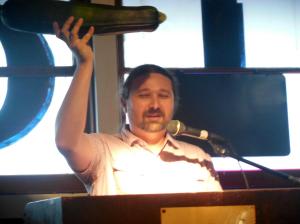
A few days ago, Hagridden turned 1 year old. It’s walking around and eating solid food and everything. (More tomorrow on Hagridden at one year old!) To celebrate, I took the novel on the road, joining Hagridden‘s older, smaller half-sibling, Box Cutters, and my sunnyoutside pressmate Christopher Bowen on his Burning River Prose and Poetry Tour up the West Coast.

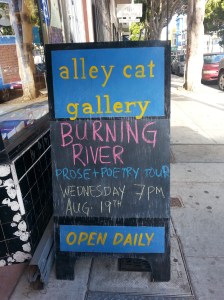
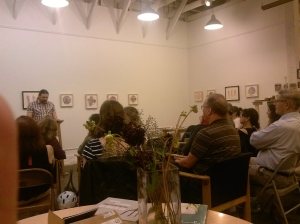
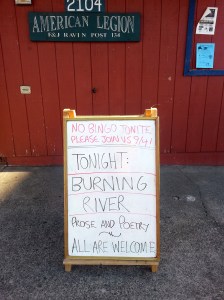
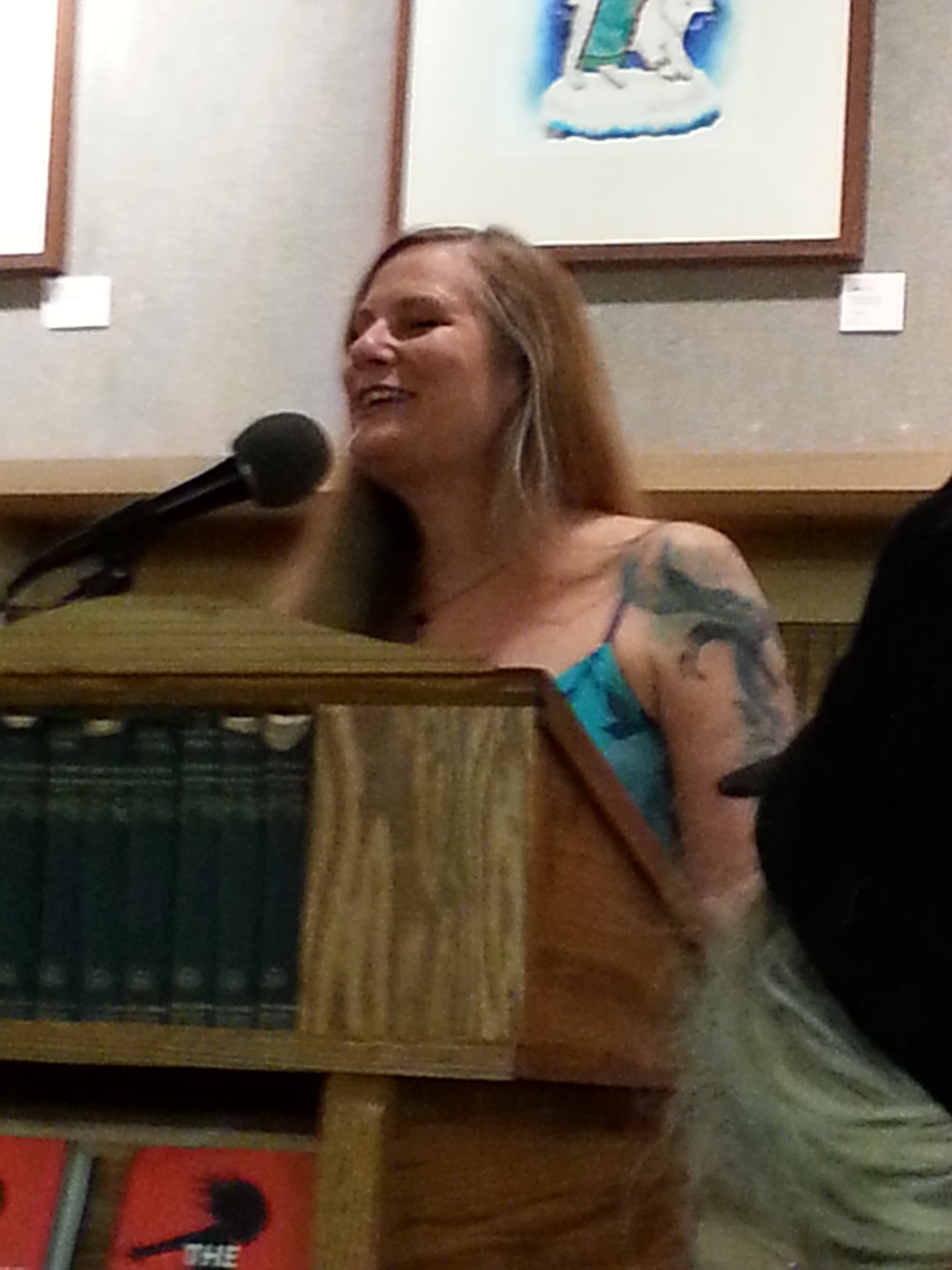
Chris started in LA with Chella Courington and Jane Rosenberg LaForge, then he and Jane drove up to San Francisco and I took the train down to meet them and fiction writer Linda Lenhoff for a reading at Alley Cat Books in the Mission District. The next day, Chris and I drove back up to Portland for a reading here, at the American Legion Post 134.

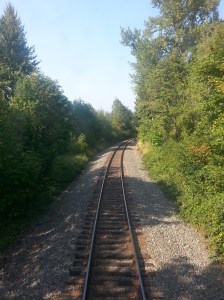
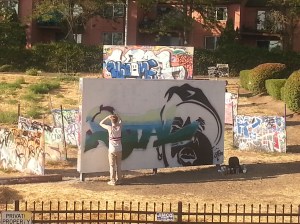
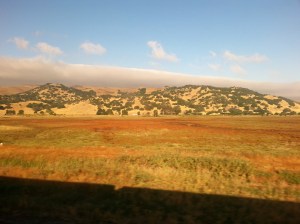
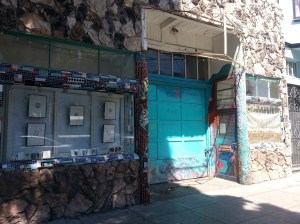
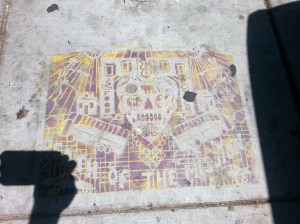
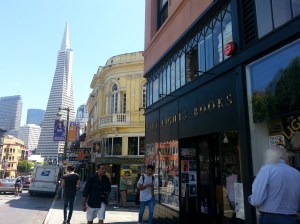
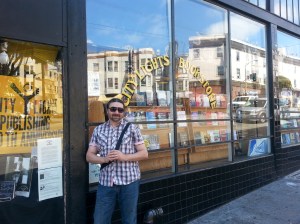
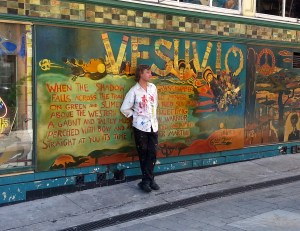
Below are a handful of photos from the readings I was at, in San Francisco and Portland, as well as as a few shots while on the rails/road. After the pics, look for links to books by all these authors!

The readings

The trip to San Francisco

The authors and their books

Christopher Allen, We Were Giants (sunnyoutside press)

Chella Courington, Southern Girl Gone Wrong (FootHills Publishing)

Jane Rosenberg LaForge, An Unsuitable Princess (Jaded Ibis), The Navigation of Loss (Red Ochre Press), Half-Life (Big Table Publishing), After Voices (Burning River)

Linda LenhoffLatte Lessons, Life a la Mode (Amazon)

John Carr Walker, Repairable Men (sunnyoutside press)

Gayle Towell, Blood Gravity and Broken Parts (Blue Skirt Press)

Samuel Snoek-Brown, Box Cutters (sunnyoutside press) and Hagridden (Columbus Press)

Miscellaneous storytelling

A couple of years ago, while undertaking a heavy revision of Hagridden, I used the funds from my Oregon Literary Fellowship to take a research trip to the Louisiana bayou. While I was there, I also spent some time with my family down there, and my uncle Brad, who had recently been clearing out his storage, gave me a large stack of papers and photos and odds-and-ends he’d inherited from my grandmother, who’d inherited it from her mother, and so on. My uncle wasn’t even sure exactly what all was in the stack or if I’d want any of it. But I’m a family-history packrat and love poring through anything related to my forebears, so I eagerly wrapped the whole bundle in a cloth and packed it in my suitcase.

When I got home, I had so much Hagridden-related material to get through that I stashed the bundle on a bookshelf next to a shoebox of my grandmother’s old letters and carried on with my routine. But yesterday, looking for some research material on the book I’m currently writing, I found that bundle again and, glad for the distraction from work, sat down to sift through the papers.

Folks, call me a nerd, but this stack is an absolute trove!

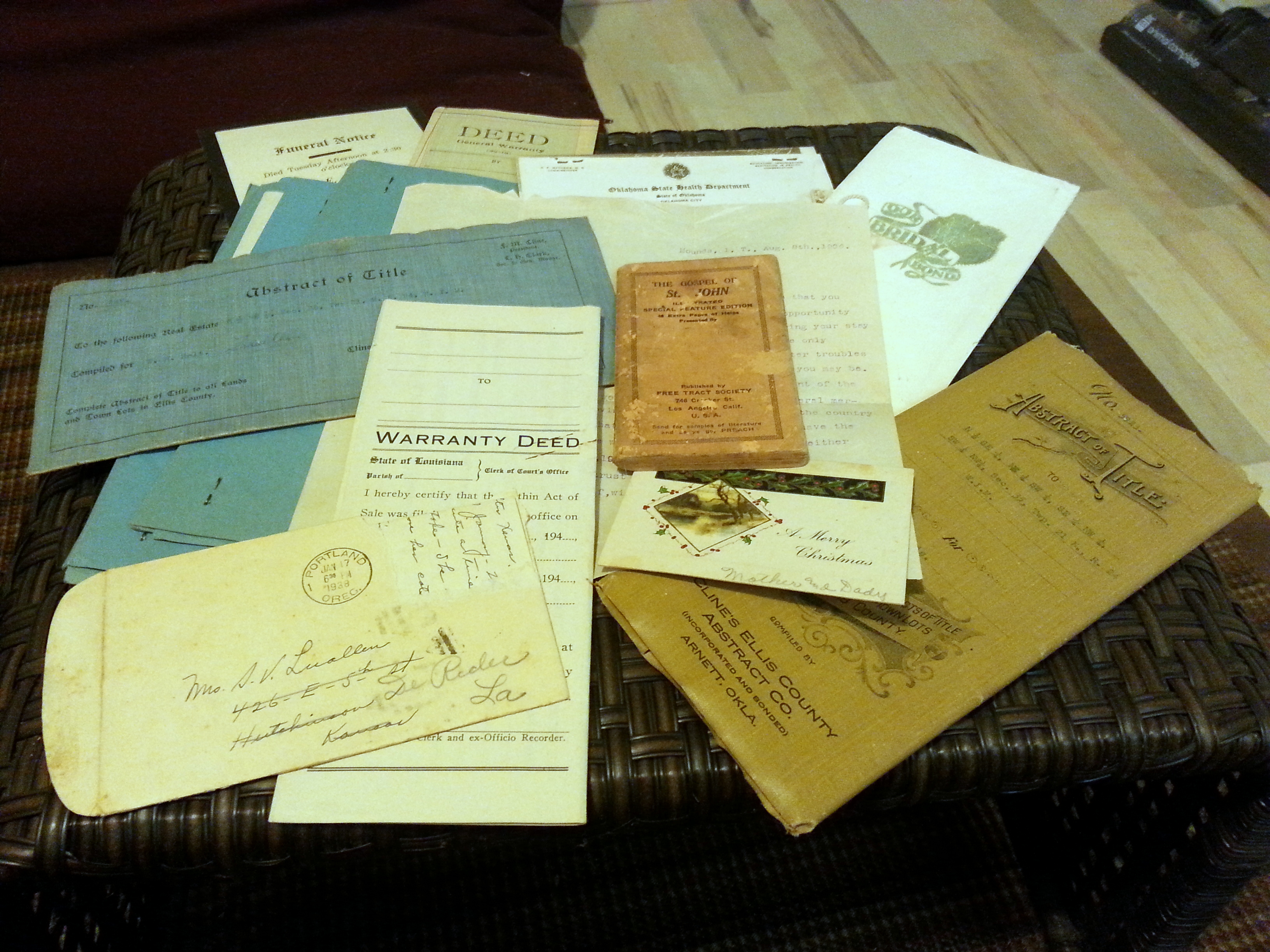
20150817_113115

Among the documents in the stack, I found a tiny old Christmas card; a funeral notice from Quanah, Texas, from 1930, a pocket-sized Gospel of St. John from 1917; a pair of marriage certificates and a sheaf of obituaries; two fascinating letters, including one addressed to my great-great grandmother from her sister who lived here in Portland (!); and an entire lineage of family land deeds stretching clear back to 1909, including a Homesteaders claim filed in 1911.

This all sounds like fairly boring fare, and on the surface, it is. Most of it is just bureaucratic paperwork or long-ago family ephemera. But I love details, because for me, story lives in the gaps between seemingly dull details like this, and this stack of pages is chock full of story!

Let’s start with the Homesteader land deed, just becauseI geeked out when I saw the signer authorizing the claim: William H. Taft, President of the United States! I know, he’s not our most glamorous president, but a family friend gave me a Presidents trivia book when I was a kid, and the items in that book I found most fascinating (after the stories of Abe Lincoln) were the stories about Taft. And here I have his signature on a Federal document connected to my family. Wild!

Digging through those deeds, I started putting together a picture of my great-great grandparents, who, it turns out, were quite modern for 100 years ago! In fact, the very first land title I have in this stack, from 1909, was signed over to my great-great grandmother, who, though married eleven years at the time, still bought a parcel of land in her own right — her name is on the title. She bought 40 acres for $800, the land abutting a lot her husband bought that same year, but these 40 acres were in her name. A couple of years later, my great-great grandparents took out a mortgage on a different plot of land (presumably to finance some other investment), and they are both named on the mortgage, husband and wife alike. (They paid off that mortgage in two years, so apparently the investment worked out.)

None of this was written down in narrative form, by the way. This is something I’m putting together from a series of deeds and financial documents, with a marriage certificate tossed in for context. This is the way I piece together stories.

Also cool (for purely personal reasons): that great-great grandfather is named Samuel, the only other one in my recent(ish) family history (though I wasn’t named for him), and he was a dentist. That means that though there are only two Samuels in my family, we’re both “Dr. Sam”!

Speaking of Dr. Sam: I also found this 1906 letter, addressed to my mother’s grandfather and typed by Dr. Sam’s brother-in-law, and the language in it is fascinating.

20150817_113746I love the idiosyncrasies of the spellings and neologisms (“Nethiew,” “congradualtions,” “circumstancuated”) as an indication of character, and for the same reason, I love some of these lengthy, word-packed sentences — that whole first paragraph is, amazingly, a single sentence! There’s also a wonderful blending of familiarity and formality in the tone (“I trust that my small offering will appear acceptible to you. I subcribe myself, with lots of love, Your Uncle”) that seems so much a part of this time and place. For a writer of historical fiction, letters like this contain a lot of clues to the actual human beings who lived back then, to the ways they wrote and possibly spoke.

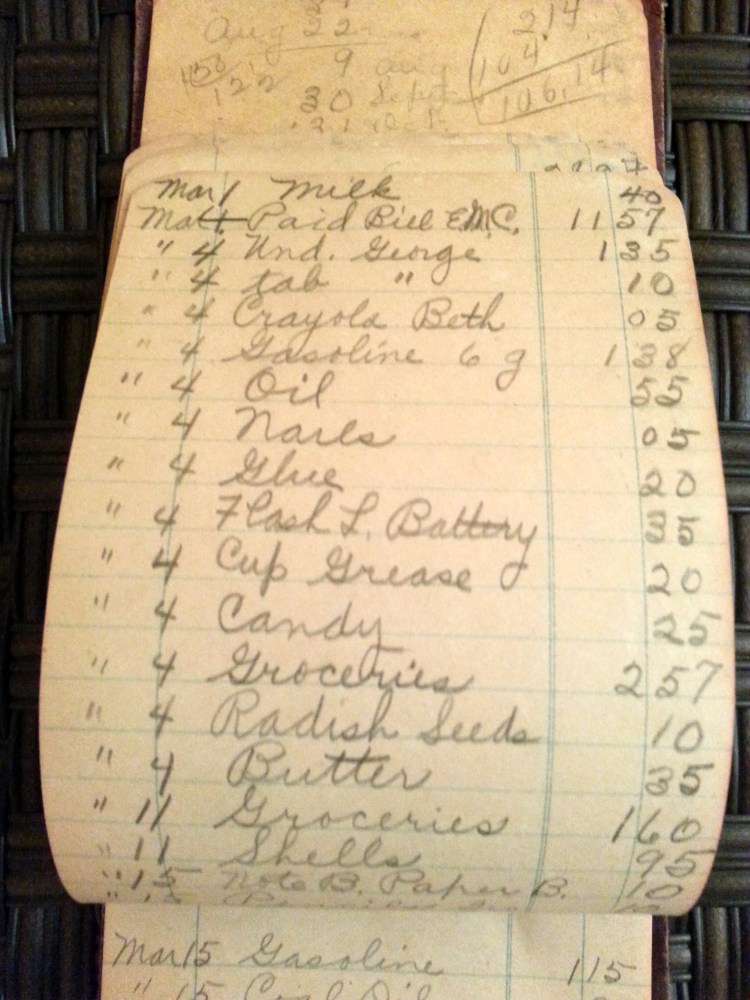
And then there’s my favorite document, a budget book from my mother’s great-aunt Beth, from a year spanning 1919 to early 1920. This, too, is one of the least interesting things you’d ever want to read unless you’re a writer or a historian or some related profession, but for this writer, it’s invaluable.

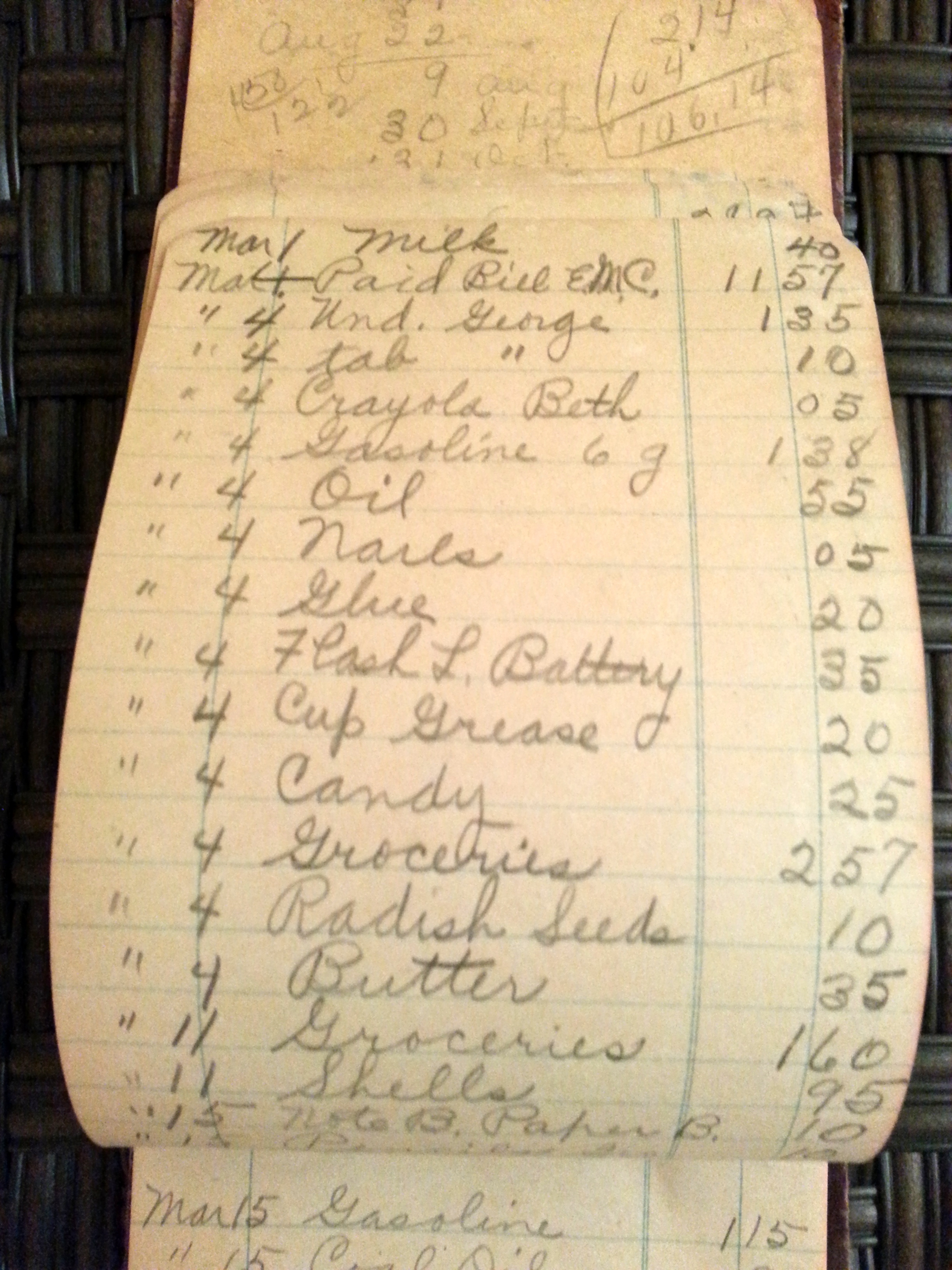
Take, for instance, the pages and pages of what are effectively shopping lists with prices:
20150817_113435

Thanks to just this page in the budget book, I know — not in a cold, abstract way but from a human perspective — that in Oklahoma, in March 1919:

  • Crayola crayons cost five cents (the original eight-color box had been around for only 16 years at this time, and apparently, the price hadn’t changed since its introduction)
  • a cup of grease (probably lard?) ran twenty cents
  • candy was a quarter (which was probably a LOT of candy, but the women in my mother’s family have always been known for their sweet-teeth)
  • six gallons of gas would run you $1.35 (that’s 22.5 cents a gallon)

I also know that some folks didn’t buy radishes — they bought radish seeds (ten cents) and planted the radishes themselves. I also know that a person — or this person, anyway — was likely to buy all these things in a single shopping trip.

There are also bills paid, the occasional lumped shopping trips (Mar. 11, “Groceries,” $1.60), and the rate at which someone might top up the gas tank (eleven days, Mar 4. to Mar. 15).

But the budget book also includes some other treats for the keen eye:

20150817_113515

I was reading this page aloud to my wife and she stopped me to ask, “What are Post Toasties?”

Answer: they’re one of the first ever breakfast cereals, created in the early 1900s by CW Post to compete with the original, Kellogg’s Corn Flakes. And here in my great-great aunt’s budget book, in January 1920, she didn’t simply write down “cereal” or even “breakfast cereal” — she used the brand name. That’s a telling detail!

And note immediately below that: “Rub No More.” I knew the Post Toasties name on sight, but I had to look up Rub No More. Turns out it’s a soap or “washing powder,” and again, my great-great aunt didn’t simply write “soap” — she used the brand name.

This isn’t always consistent — sometimes she simply lists products by type, like hand lotion or engine oil — but the budget book is full of old brand names: Silkatum, Laxalets, Pepsodent, Grape Nuts, Tuffie Tube, Krumbles.

None of this, alas, is in the right time period for my current novel, and I really need to stop digging through it. But I keep thinking how valuable all this is, who are the people who lived these lives, and I’ve realized something: Hagridden is set in the last years of the Civil War in Louisiana, where I have family. My current novel is set during Reconstruction in Texas, where I have family, with several key chapters set in Arkansas, where I also have family, and the opening scene takes place in 1900. So why not eventually write a novel set in the ‘teens and ‘twenties in Oklahoma, where I was born and where I had family? No idea what the story would be, and I can’t stop to figure it out yet because I need to finish my current book first (though, truth be told, I have a couple of ideas). So I’ll have to set aside all these tantalizing tidbits for now and stay focused on my current work.

But folks, this is the stuff I live for: looking into old lives through the least likely but most intimate of lenses, these old, forgotten papers and miscellanea, and crafting stories about them in my head.

Sewanee books!

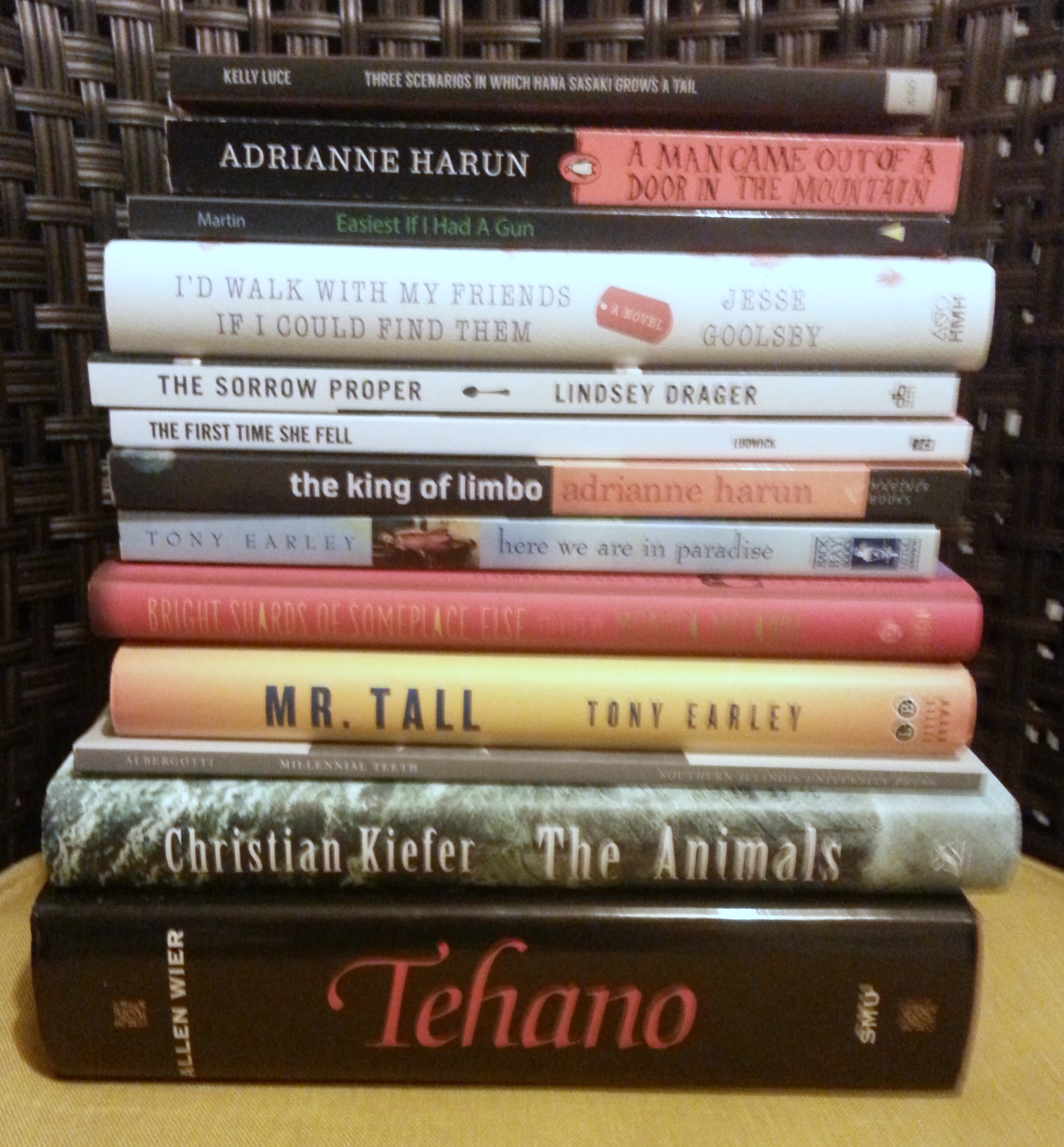
20150810_172713

Today, my book haul from Sewanee Writers’ Conference arrived by mail, and I immediately stacked them for a photo so I could share with y’all the fantastic books I’m looking forward to reading the remainder of this year.

I’ve listed them below in the order they’re in on the stack, with asterisks next to members of my workshop group (and double asterisks for my faculty), and I’ve linked you to the books online so you can order copies of your own.

And you should. Because these folks are amazing!


hana-sasaki-cover-final

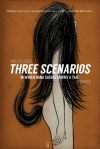
*Kelly Luce, Three Scenarios In Which Hana Sasaki Grows a Tail

9780670786107

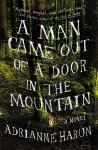
**Adrianne Harun, A Man Came Out of a Door In the Mountain

00022

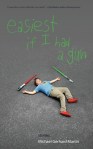
Michael Gerhard Martin, Easiest If I Had a Gun

9780544380981_lres

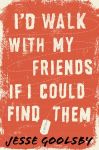
*Jesse Goolsby, I’d Walk With My Friends If I Could Find Them

Drager+-+The+Sorrow+Proper+-+Final+Cover

*Lindsey Drager, The Sorrow Proper

CRCover_Ludwick_TheFirstTimeSheFell

*Caleb Ludwick, The First Time She Fell

0618257977_lres

**Adrianne Harun, The King of Limbo

591f2154c8cb5adb7287012868bab519

Tony Earley, Here We Are In Paradise

McFawnCVRfinal.indd

Monica McFawn, Bright Shards of Someplace Else

9780316246125

Tony Earley, Mr. Tall

212-6069-Product_LargeToMediumImage-thumb

Dan Albergotti, Millennial Teeth

9780871408839_300

Christian Kiefer, The Animals

510A01854HL._SX331_BO1,204,203,200_

**Allen Wier, Tehano


What_Happened_Here_coversunshineaway_detailAlso, not pictured here are two other books related to Sewanee that I’d gotten prior to the conference: my friend *Bonnie ZoBell’s What Happened Here, which I’d bought at a reading Bonnie did here in Portland a while back; and M.O. Walsh’s My Sunshine Away, which he workshopped at a previous Sewanee Writers’ Conference and which my mother-in-law (unaware of the connection) had gifted me shortly before I learned I’d been accepted to the conference this year.

The Jersey Devil does 69

jdp cover aug 2015Oh, come on. It’s Jersey Devil Press‘s sixty-ninth issue. You know I had to go with that title on this post.

Oddly, we don’t actually have any particularly sexy stories in this issue, unless you count a certain farmer’s weird obsession with his chickens. Instead, we have eeriness and death in the form of cross-dimensional travel, the afterlife, mermen, a scorpion assassin, specters on their unearthly commutes, and a shout-out to the actual Jersey Devil.

And a frog with its brain exposed. In a jar.

Because that’s how we do summer.

And if the issue looks a little strange to you, try coming at it upside-down. I hear that’s a pretty good position  . . . for reading. 😉

Sewanee quotes

There was so much genius floating around at the Sewanee Writers’ Conference that, even after I’d limbered up and gotten into a handwriting-workout routine, I still couldn’t write things down fast enough. (Seriously, the Alice McDermott craft lecture blew away the whole conference — several people remarked that it felt like getting a whole MFA in one hour.) But I did capture a notebookful of gems, fantastic quotes and a few paraphrased comments, and I’ve arranged and shared a selection of them here.

* * *

On the writing life:

“Smitten by make-believe, I never quite returned to real life.”

Allen Wier

“The call to write does not respect background or experience.”

Allen Wier

“Mostly you write to find out what you have to say.” 

Richard Bausch

*

On the reluctance to write and the rush to publish:

“Authors rush to publish because they’ve been working so long.” But it’s better to remember that these things take time, and it’s better to put your best work out there.

Kathy Pories, senior editor at Algonquin Books

“The thing you’re doing [writing] is incredibly hard,” so give up any idea that the work will suddenly all make sense. It won’t — it keeps getting harder, and so you have to keep working harder. And this is a good thing, because “it gets harder because you know more.”

Richard Bausch

*

On what makes great writing:

“There are only two stories: a man goes on a journey and a stranger comes to town. Voice is what makes a work memorable.”

Kathy Pories, senior editor at Algonquin Books

“The moment you try to institutionalize art, it ceases to be art.”

Allen Wier

“Literary theories will not make a writer write.”

Allen Wier

“Memory is dramatic present tense. You create it as you remember it.”

— a workshop comment from Allen Wier

“There’s flint and stone, but I don’t quite have a spark here.”

— a workshop comment from Allen Wier

“Language is the writer’s only tool — we really don’t have anything else — but our language contains within it our entire experience of the world.”

Alice McDermott

“A good story needs only a good storyteller.”

Richard Bausch

Fiction deals in truth, but it’s not the truth of philosophy but the truth of experience — “the kind of truth that stays true.”

Richard Bausch

*

On poetry:

“In poetry, you can stop the line and still say something.”

Maurice Manning

“Not every poem has to be dire and filled with tragedy.”

Maurice Manning 

*

Best line of the whole conference:

“Quit freezing it in the amber of your confounded intelligence.”

Richard Bausch on getting hung up overthinking one’s writing

Sewanee memories

I have so many wonderful, wonderful memories of my nearly two weeks up “on The Mountain” at Sewanee Writers’ Conference. If I were a more disciplined memoirist, I could get a whole book out of those twelve days. But here, I have time only for these too-brief blog posts, so I’ll save my amazing workshop group and the craft lectures and the parties and the tours and people and the love and the creativity and so much more for forthcoming posts. Here, now, sitting at home still smelling of airports, I have time only to share a handful or so of the memories that stand apart from all the regular glory that is Sewanee. These are the things that make the place feel magical. These are just some of the many, many memories I am going to cherish the rest of my life.

* * *

At my first breakfast, eager to meet new people, I asked to join a table and realized I’d inadvertently sat down with fiction faculty Christine Schutt and poetry faculty Charles Martin and Daniel Anderson (who teaches at OU in Eugene). Soon, we were joined by poetry faculty A.E. Stallings, followed shortly by journalist John Psaropoulis, whose voice I recognized immediately from NPR but who I didn’t know is married to Stallings. I have to admit, I felt more than a little star-struck, but everyone was so open and friendly the whole conference that the nerves soon passed.

*

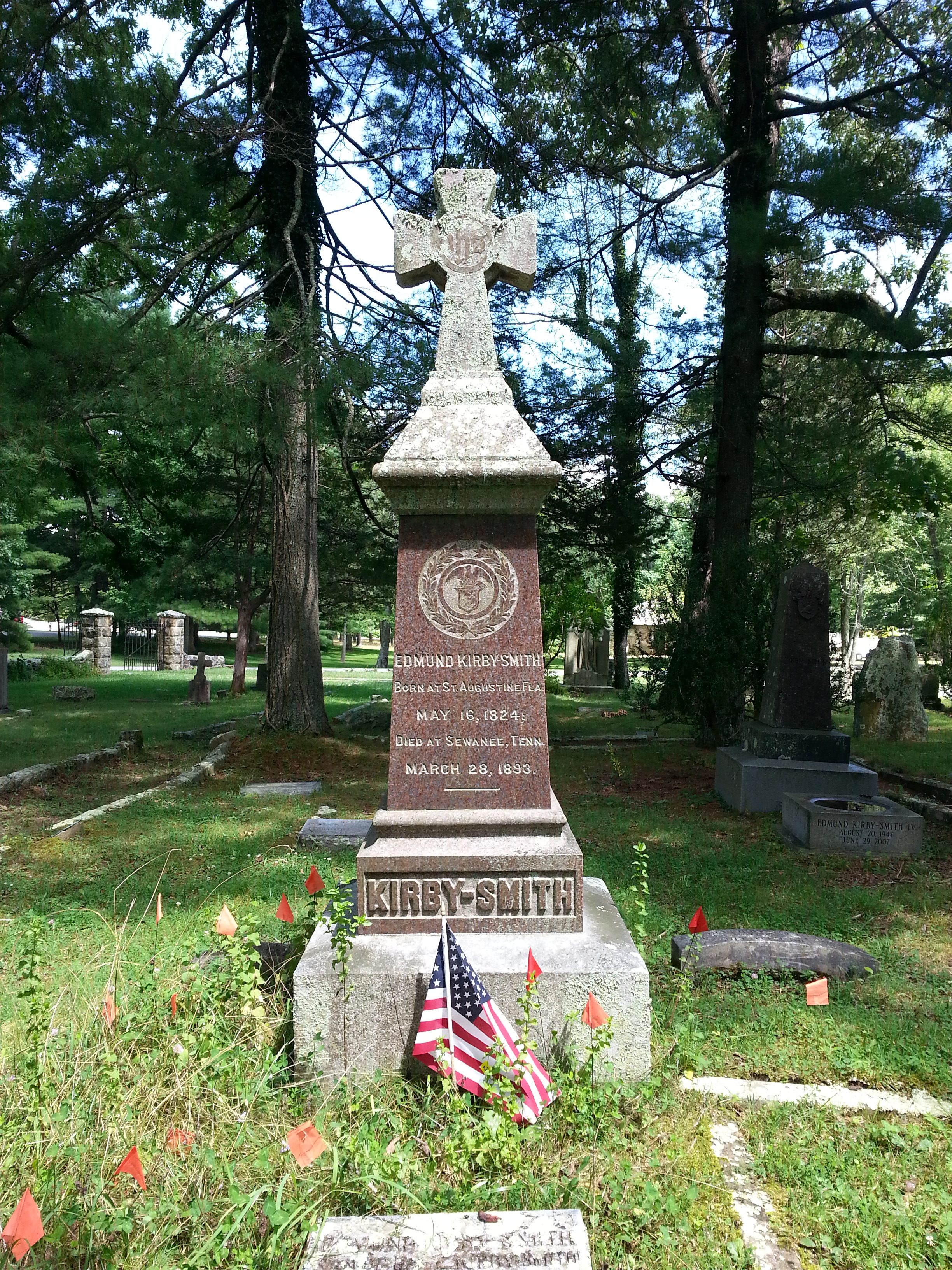
20150724_141422As soon as I had some free time, I walked the cemetery on campus. I love cemeteries and walk them whenever I can, righting fallen flowerstands and brushing the dirt from headstones, reading names aloud just so those names could be spoken in the world again. In this cemetery, I discovered (as I should have already known) that Confederate General Edmund Kirby Smith is buried at Sewanee. He went into academia after the War and finished his career at Sewanee, and his whole family is honored at the school. Kirby-Smith (it’s not usually hyphenated in the literature but it is on all the tombstones in the cemetery) gets a name-drop in Hagridden:

This rebellion is entirely crushed, the woman read aloud. God Amighty.

Look here, the girl said, pointing. Says Jeff Davis is heading this way, says he’s heading for Texas. The war ain’t over yet then, is it?

Can’t you read, girl? The generals done surrendered. Jeff ain’t gonna fight the war hisself.

Kirby ain’t surrendered yet, Clovis said. And it’s true they’s still some men over in Texas might hold out awhile yet. They might aim to set theyselves up a country of they own again, it’d be just like them.

I wound up reading a bit about Kirby-Smith at Sewanee, and I plan to make a larger reference to him in my new novel just as a personal reminder that I workshopped this new book near Kirby-Smith’s grave.

*

IMG_5154
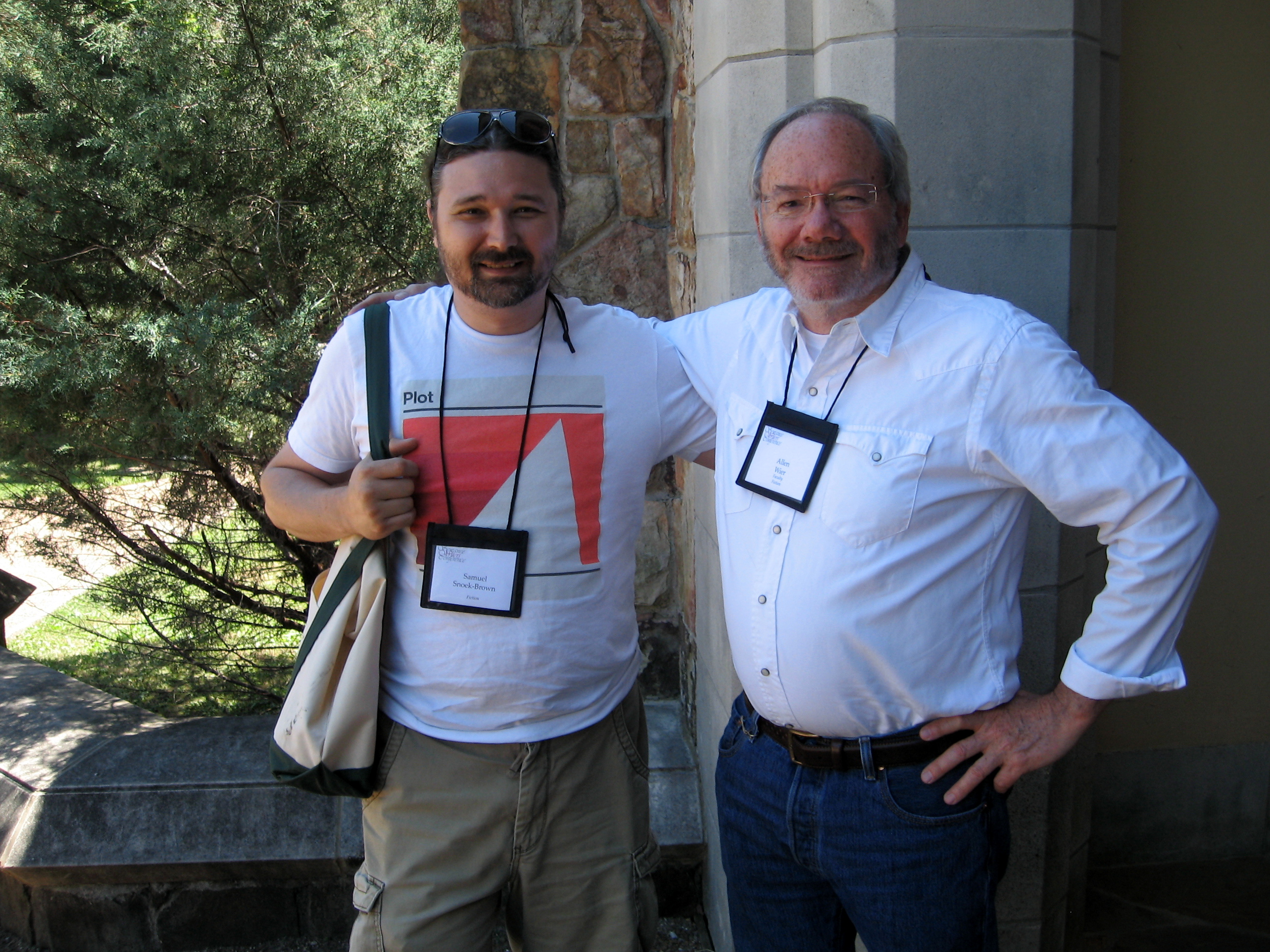
Me and Allen Wier on the last day of our workshop.

One of my favorite memories is rocking on the porch of the Sewanee Inn while Allen Wier and I discussed Texas history and novel-writing in the morning sun. And later, drinking with Allen at the French House and listening to stories about his flight school. In fact, listening to Allen Wier tell stories in general. That man knows how to spin a yarn!

Allen was tremendously helpful in his comments on my novel, giving me both concrete suggestions on particular aspects of the book as well as larger structural ideas and, most importantly, the confidence and motivation to move forward on the book. I went into Sewanee with a second draft of this novel, having tossed almost 100 pages and started over. I was feeling good about the new direction I was taking, but I couldn’t see far enough into the novel to know if I was on the right track.

Allen showed me the long view, and now I’m eager to get to work.

*

One day on the way to a meal, I spotted a guy cruising around campus in an original WWII Jeep converted for civilian use, painted black, a pair of dogs in the backseat. I commented on it to the friends I was walking with and the guy pulled across the lanes and parked, facing oncoming traffic, smiling. He saw me point and thought we might need to talk to him. We told him we were admiring his Jeep and he sat there, his Jeep idling, telling us its history (he inherited it) and showing us some of its unique features, like the rack in the folded-down windshield where you could store the poles for the canvas top. He never uses that top, so instead he keeps a pair of walking sticks bolted into the compartment for those days he just feels like pulling over and going for a hike. In the back seat, his two dogs watched us, the younger strapped in by a leash and the older dog, who knew better than to jump from the moving Jeep, lazing on the seat beside him.

*

At a social event, I played a game of croquet with my fellow UNT alum Caitlin Pryor, author Christian Kiefer, poet Annie Rudy, my fellow Portlander Natalie Serber, and Sewanee Writers’ Conference poetry faculty member Sidney Wade. It was hard work, considering that each of us played the game with a drink in one hand. I had a pretty commanding lead for the first half of the game, but Sidney Wade rallied on the route back to the first stake and she smoked us all.

Sewanee‬ croquet team. ‪(Thanks to pal Caitlyn Pryor, far-left, for making sure this photo happened and for letting me share it.)

*

Sammy is truly a wonderful human being. I love this man.

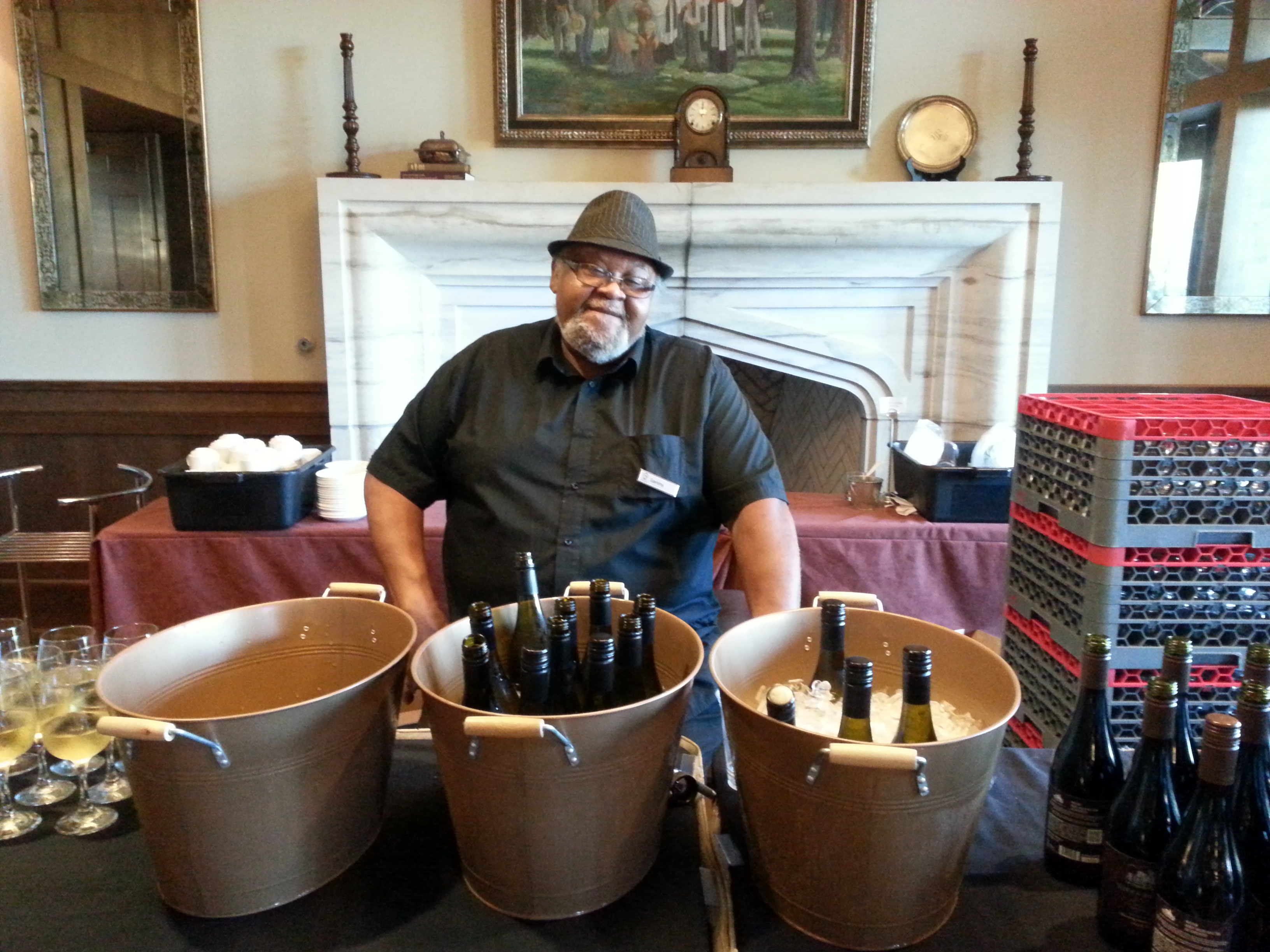
I befriended Sammy the bartender, whose smiling face and lovely voice always greeted me on wine nights and at parties. He served me my first two Tennessee whiskeys at a cocktail party at the vice-chancellor’s house, and he served me my last glass of red wine at the final dinner of the conference. He also once gifted me a half-full bottle of red wine leftover from a social event.

*

One afternoon on a light day, I joined a pair of poets for a swim in the quarry, though “swim” is probably too vigorous a term for sunning like a lizard on a huge mossy boulder covered with just a few inches of water. Later, poetry faculty Maurice Manning arrived with his family and joined us on the boulder. Like it was any other day.

*

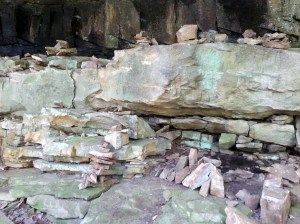
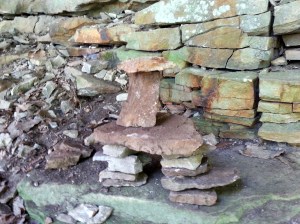
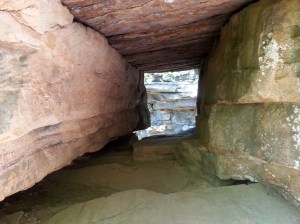
The conference organized several hikes, all but one of them at the unholy hour of 6 am (Allen Wier, a night owl like me, joked more than once that it’s dangerous to leave the house before 10 am because gravity doesn’t work until mid-morning). I skipped all those, much happier with my sleep, but finally, on the second Friday, I got away by myself and hiked nearly five miles out to the Memorial Cross and then along the Perimeter Trail, the path skirting cliffsides and, one time, literally carving through a boulder. The stretch I hiked also passes under a light waterfall, just a thin shower dropping in cool splashes from an overhang, and I stopped to run my hands under the water and wet my hair. Later, I also crossed a creek so shallow I walked out into the bed and up to a series of thin cascades over the rippled sedimentary rock. And in the shade of one cliff overhang, a rubbleyard of flat stones splintered off the cliff has inspired hikers to practice stone-stacking, and I left a delicate stack of my own.

*

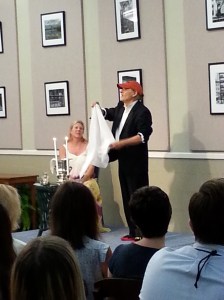
The conference also included a handful of unexpected performances by faculty members, including a magic show from Tim O’Brien and a song composed by Steve Yarborough and Tony Early and played by the Franklin County Ramblers: Tony singing his lyrics while Steve and poet Maurice Manning play guitar. There was also the amazing table-read of Dan O’Brien’s memoir play in which Dan O’Brien was joined by actor Dan O’Brien. No relation! They even looked the same — and Actor-Dan was reading the part of Playwright-Dan. It was surreal.

*

April Christiansen, Caitlin Pryor, Chad Abushanab, and Annie Rudy composing a limerick while Alice McDermott passes by in the background

At dinner on the last day, I found a group of my poet friends collaboratively composing a dirty limerick for a limerick contest. I joined them just to listen in and laugh, and then, as they read the draft aloud, Alice McDermott walked past in the background and overheard the limerick and cracked up.

*

Realizing around midnight that I needed to leave the last Sewanee party if I was ever going to finish packing and be rested enough for the trip home, I hugged friends goodbye, and then, as I started walking up the drive to my dorm, the band started playing John Denver’s “Take Me Home, Country Roads.” The moment was so perfect, so bittersweet and sublime, that I broke into sobbing and laughter at the same time.

Out of office: Sewanee 2015 and a new novel excerpt

maxresdefaultSo, I’m packing up and preparing for my trip to the Sewanee Writers’ Conference. It’s an odd feeling, a bit of nerves and a bit of excitement, like going away for summer camp. Which, in many ways, I suppose this is: it’s camp for writers, where instead of crafts we have workshops and instead of smores we have alcohol and instead of telling stories around campfires we tell stories in classrooms. (I do plan to do some hiking, so there’s that camp experience, too.)

I’ve been pre-reading my workshop-mates’ material this past week, and I’ve been thinking a lot about my own novel I’ll be workshopping with them — in truth, I’ve been more than thinking, I’ve been working on it — and, as promised, I thought I’d share some of that novel with you before I head into my writers-conference hiatus from the blog. But I decided not to share with you what I’m workshopping, mostly because I don’t know what that material is going to look like on the other side of this writers’ conference. And besides, you’ve already seen an early draft of some of it from last year’s NaNoWriMo.

So, as a treat (because I’m going to be gone from the blog for so long), I’m offering you a first look at new material, rough-draft stuff that I’m not workshopping these next two weeks, words no one has ever seen yet. You’re the first. Because, readers, I like you.


He thought they might deploy to the east where the real war occurred, and in the first weeks the troops he trained with wrote home with zeal about marching across their new nation or perhaps even boarding a troop train, but Craven wrote letters only to himself and mailed to his own home in a pretense so to avoid any questions, and in his letters he wrote the truth: that his outfit seemed determined to stay put. They drilled and played cards and a gunsmith sawed off a length of Craven’s barrels to better suit his shotgun to horseback. They’d heard for months of trouble to the north, in bloody Missouri, and after near a year in camp they marched north to join another command, but as they entered the Ouachita Mountains fighting broke out amid a wooded valley tightly surrounded by foothills and steep ridges. The only sounds were of gunfire and distant cannonshot and Craven whispered to the man beside him, “I thought there’d be more excitement among the men,” but he received no reply. As the powdersmoke collected in the valleys like acrid fog, Craven realized he has lost his regiment.

He drew his shotgun and leveled it into the smoke and he fired at shadows, both barrels so he bruised his shoulder as when he was a boy. He managed to pack another load in each barrel but the action was frenzied and he lost a fistful of waddings and dropped his horn so he had to dismount to retrieve it. Afoot, he ran into the haze firing again. He’d no idea if he hit anything or anyone. He knelt as men ran past and he reloaded but this time lost several nipples and someone loomed from the haze before he’d time to fix the second nipple. So he put his fists around the twin barrels and swung the shotgun like a club, but by then the man had departed or died by someone else’s shot. Craven saw his horse several paces off, dancing uncertainly and wheeling its wild-eyed head, and Craven ran back to it, leaned against it with one arm around its neck and the other sheathing the rifle. He reached across the saddle and drew from the saddle-scabbard his big Colt, checked the chambers. He remounted and cocked the hammer but he held his fire until a great gray shape loomed out of the smoke and in a panic he shot off one round into the flank of a horse that screamed and galloped sideways away from him then fell. Craven walked his own horse up on the fallen animal where it flailed on the ground trying to regain its legs, but if it ever held a rider the rider was gone now. Craven could see that the horse was beyond hope and he tucked his pistol into his belt and drew his shotgun again and dismounted again and pressed the barrels against the forehead of the horse and fired, and he didn’t bother to reload.
Men ran about in the shroud and a round passed his head so close his ear rang and he cocked and fired his pistol, the recoil of it surprising him and sending his arm high. In his panic he cocked it again and fired into the ground just from nerves. His horse had jogged sideways several paces and was turning circles unsure where to go, what to do, and as he made his way back to it, it stepped away from him at pace. He chased the horse for two full minutes through the battle, firing shots in all directions as he went, until he cornered the horse at a copse of trees and managed to calm it enough to lift himself into the saddle and there he stayed, stroking his horse’s neck.

He could still hear the voices of men but knew not which side any man fought for, and when he heard someone shout Every man for himself! he left the skirmishing to seek higher ground. When he found it, the battle had moved on without him, around a hillside and off in some direction he could barely discern.
Craven rode south for half an hour, his horse galloping of its own accord until they were clear of the smoke and then it slowed itself to a trot and Craven let it move at its own pace. When the horse stopped, it was at a kind of road, more a cart track, perpendicular to their path and, seeing no other trail to follow, Craven sat the horse and studied the track. He picked at an ingrown hair on one cheek and listened to the gunshots echoing indistinctly among the jagged hills, then he looked to the sky as though to determine the time though the overcast light showed him no news. He untucked his pistol from his belt and replaced it in its scabbard, checked his pack and the pouches at his belt just to reassure himself of his gear, then he rubbed his horse’s neck a few minutes and finally chose east and rode on.

After an hour he came on a house and stopped in the cart track to study it. He rode up and hitched his horse to the fencerail and dismounted inside the yard, but as he approached the house a small woman with streaks of gray in her bunned hair flew from the house, her skirts nearly tripping her as she waving her arms at him. She came close enough to call to him in a hoarse whisper that a gang of Yankee soldiers were in her home, taking leave of her stores. Craven looked back to his horse, the sheathed shotgun there, the pistol, imagined charging in after the men to rescue this woman, but he remembered the shotgun was yet unloaded, and how many rounds he’d left in the pistol he couldn’t recall. Instead, he turned and jumped the fence, from the bottom rail directly into his saddle, and he wheeled and spurred his horse so fast he pulled down the fencerail he’d hitched to. Behind him the shouts of men pursuing. He gigged his horse bloody, trying to put some distance behind him before the Yankees had time to mount and clear the fence after him, and soon he was far past the cart track and through a small creek and charging up a shallow hill.

Craven reined in near the crest and checked his pursuers to find them fast closing, nearly to the creek already. He spurred his horse and at the top of the rise spied a nearby bit of woods, which he aimed for and entered just as he heard the Yankees splash into the creek. The woods were small but dense and rose in uneven slopes from the base of a foothill. The fastest route of escape would have been to ride the other side of the ridge hard downhill, using the momentum to aid his speed, and Craven reasoned the Yankees would reckon the same, so he rode a few hundred yards then cut a sharp line to the north, uphill into denser woods. It was slow riding but he soon found that in the fallen leaves his slower pace was muffled and he brought his horse up near a thick copse and ducked under the overhanging branches with his cheek to the mane and from the saddle he listened, half to the heavy breath and heartbeat of his horse and half to the sound of the Yankees. Sure enough, the gang of pursuers, whose numbers he never knew, went pounding over harder earth downhill, and soon he could hear them no more.

He caught his breath and calmed his horse, checking the gouges from his spurs and hugging the horse’s neck in apology. He wished he had an apple to offer and he scanned the trees in hopes of some fruit but found none. He looked down the hill again, knowing his escape was lucky and possibly temporary, for once the soldiers were out of the woods they’d see him missing from the open prairie and, if they were mad enough, they might turn around and retrace their path to find him. So he continued uphill until he found a cabin built into an overhang, three clapboard walls wedged under a stone shelf.

It looked so ramshackle he thought it might be abandoned, but in the waning light he made out a thin smoke from a stovepipe built crooked out the wall and around the lip of the rock, and soon thereafter a man emerged and, spotting Craven, called into the shack for his partners. Two other men exited, one of them holding a rifle on Craven. Craven drew his pistol, but neither man challenged the other as Craven dismounted and stood beside his horse to let the men approach. Soon they were close enough that Craven could recognize the rifle as a small yagger, a Mississippi rifle, and Craven lowered his pistol and greeted the men.

“I’m looking for McCorkle’s men,” Craven said, “a company of Arkansans and Texans, passing along the main road headed north to join General Van Dorn.”

The shack was on the east side of the hill so the last of the day’s light was failing rapidly, but Craven could see well enough to note the change in their demeanor. Still he saw no reason yet to take them for anything but deserters or men trying to avoid the war, and he pressed his case.

“Each man must follow his own conscience, and I don’t intend to bring y’all into it if you’ve no mind to join. I just need the road, if you could point me in the direction.”

But the man holding the yagger pressed its barrel into Craven’s chest and cocked the hammer, and each of the three men stood shaking their heads.

“You have wandered into the wrong camp, Reb,” the rifleman said, and another man took Craven’s pistol off him while the third grabbed the reins of Craven’s horse.


Want to know what happens next? Sit tight, gang — I’ll write the rest of this novel as fast as I can! And except for a (slimly) possible photo post or two, I’ll see you all again in two weeks!

Sewanee 2015

maxresdefaultFolks who pay attention to my Facebook page or my Twitter account might remember that a couple of months ago, I announced I had been accepted to the Sewanee Writers’ Conference in Tennessee. I’ve been hyperventilating over my good fortune since then, excited about the opportunity to work with and learn from amazing writers, to hone my craft and develop my current novel project, and — perhaps most of all — to spend ten solid days focusing on nothing but writing and the writing community.

Of course, I’ve also had work to do in the meantime: I’ve been fleshing out the story of the novel I plan to workshop there, I’ve been dipping into yet more research for that novel, and I’ve been reading work by some of the workshop faculty.

I’ve also been in touch with a few friends who’ll be at the conference as well, including Bonnie ZoBell (author of the story cycle What Happened Here), poet Caitlin Pryor, and poet Ash Bowen (Caitlyn and Ash are both fellow alumni of the creative writing doctoral program at my alma mater, the University of North Texas, and Ash — a Sewanee scholarship recipient this year! — is a former classmate of mine).

And, of course, I’ve been in touch with writer friends who’ve attended Sewanee before, getting tips on how to manage the onslaught of creative energy over the dozen days of the conference. (My favorite conversation was between two friends, one who suggested I bring my own linens and a mattress pad to guard against the bare-bones bedding of the conference dorm rooms, the other who told me not to bother because, as he put it, “Sheets are for sleeping. Who sleeps?”)

51XXaT9QCEL._UY500_This week, I’ve been finalizing plans: going over the daily schedules (which are chock full of readings, lectures, and panels, and that’s when we’re not in workshops or at social events!), working with Sewanee’s university bookstore to make sure that Hagridden is in stock at the conference (it will be!), and going over my packing list (I’m not far into that yet, but I know for certain I’ll be packing my new “Plot” tshirt from Out of Print).

I don’t plan to post from the conference much, unless something exceptionally exciting happens. I might toss up a photo-heavy post or two, but I’m going to be so focused on my own writing and the work of others that I doubt I’ll have the time — or the mental energy — to blog while I’m there. So except for those potential few posts, you can expect a couple of weeks of silence here on the blog, and in my other social media like Facebook and Twitter.

But don’t worry: before I leave for the conference, I’ll post a short excerpt from some of the new novel material I’ll be workshopping. And as soon as I’m back, you can expect a deluge of words and images here on the blog. So stay tuned, gang!

Ellen Urbani’s novel Landfall and your book club

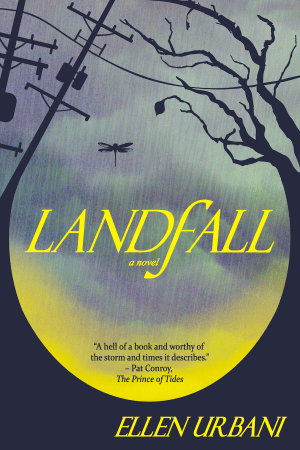
Landfall-Cover-FINAL-web-sizedAwhile back, I had the privilege of getting an early peek at Ellen Urbani’s much-anticipated forthcoming novel, Landfall. Set in the midst of Hurricane Katrina, the novel is not so much about the storm but about the maelstrom of our human lives and, specifically, the sudden collision of two pairs of women, mothers and daughters, black lives and white lives, privilege and poverty. It’s a beautifully written story (you can read my blurb for it at the publisher’s website), and you’ll want to read it when it arrives in your bookstores this August.

But if you belong to a book club, you have an opportunity to enjoy more than the novel! Urbani and Forest Avenue Press are promoting a “50 in ’15 Challenge” — they’re looking to find at least one book club in each of the 50 states to host Landfall, and in return, book club members will get a range of cool extras: autographs, invitations to special Landfall events, a chance at discussing the book directly with the author (by Skype or possibly in person!), and an exclusive prologue to the novel only available to participating book clubs!

They’re calling it the “50 in ’15” because they’re looking to sign up 50 book clubs this year, but you don’t have to read it this year — you can put it on your calendar for 2016, so long as you sign up in 2015.

To get in on the fun, contact the author directly through her website, ellenurbani.com, before midnight on Dec. 31. And tell her I said hi!

11054302_854355051325889_6999027109917228031_o

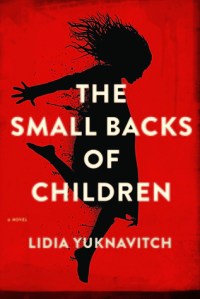
Lidia Yuknavitch launches tshirts, and also her new novel, The Small Backs of Children

Last night, at Powell’s City of Books, the people of Portland, OR experienced magic.

When I say the people of Portland, I don’t literally mean the whole city, but I very nearly mean it. For those not in the know, Powell’s famously takes up an entire city block, and last night, our literary crowd climbed to the fourth floor and then consumed the whole floor. Some folks arrived more than four hours early; I arrived 45 minutes early and already it was standing-room only, eager fans pressed up against the stacks and winding down aisles. By event time, there were so many people trying to pack into the floor to witness this literary event that they started spilling down the stairwell, and eventually Powell’s had to close the doors to avoid breaking fire safety regulations.

20150708_192212

It was 90 degrees outside, the umpteenth day in a brutal weeks-long heatwave, and inside, it felt nearly as hot, but none of us minded that much because we were all in the midst of literary magic.

Her name is Lidia Yuknavitch.

Girl playing in forest

Last night, Lidia (I hope I can call her that — we know each other a little bit) launched her latest book — her second novel — The Small Backs of Children.

The bit she read was wonderful, a beautiful and haunting attention to a girl’s inner life in the midst of trauma and, later, a fascinating break to focus on the author: that’s right, the story of the “author” (not Lidia but kind of Lidia) is woven into this book as well. It’s not quite Vonnegutesque (it’s both more and less intimate, very much a narrative of the author’s inner life but told in the third person) but it reminds me a bit of that, like somehow Vonnegut-meets-Austen in terms of the perspective but all Lidia in terms of the voice.

“Yuknavitch uses language in a way that is so sensual it is almost sexual,” writes Genevieve Hudson for The Rumpus. “Her fierce verbal affronts, filled with invented words and portmanteaus, not only bring meta-fiction into the writing, it also creates the subversive sound bites that give her writing its unique contour. This is the Lidia stamp.”

When I got home, I couldn’t help but open the book and read the first few pages; it was hard to put down and I wound up reading the first chapter and part of the second. Then I whipped open my laptop and started working on my own novel; my favorite authors are the ones whose books inspire me put them down and write my own, and Yuknavitch is definitely on that list.

20150708_194054Of course, Lidia being Lidia, we couldn’t just celebrate her book. First, we had to sing happy birthday, because a friend of hers in the audience had a birthday yesterday as well, and Lidia likes to give her spotlight to others as often as she can.

Which she talked about at length, both before her reading and after, during the Q&A, which wasn’t really a Q&A but, at her request, just a conversation. (Some people asked how she was feeling, commented on how much they liked her tattoo, told her how they thought she was magic and they love her, to which she replied, “You’re magic too!” and “I love you, too.”) She talked about how, whenever she manages to pry open a door to some new opportunity, or to some new way of seeing the world, or to some new way of making art, she wedges her foot in that door and tries to hold it open for as many people as can get through. Which is something she says often, and to great applause.

She talked about the community of art and writing, the communal act of it, the shared experience of it. She talked about how we shouldn’t be trying to “transcend” others with our “special” experiences — we should be sharing our experiences so we all know — writers and readers and everyone — we all know that we aren’t alone.

She talked about love and creating and passion, about writing deep into the well of personal trauma, at least so long as it’s just for you, and then you can figure out what others need to hear.

She talked about her belief that we keep with us little pieces of every person we meet, and so “when something good happens to me, it happens to WE, too.”

She talked about moving on from one writing project to another, especially considering the deep emotional and creative investment demanded of our writing. She talked about the people we have to become to write the stories we have, or the stories we have to write to cope with the people we truly are, and then she spoke one of my favorite lines of the night, regarding putting your work out into the world and letting it go: “You shed a skin you don’t need anymore.”

After the conversation, her son gathered an armful of rolled black tshirts printed with the bright red cover of the novel, and he launched the tshirts into the crowd, who threw their arms in the air and shouted like they were at a sporting event or a concert, which, essentially, we were: before Lidia arrived, a few friends of mine tried to start a wave (though it was already too hot for many folks to participate), and when Lidia took the podium, the first thing she did was invite us to all join in singing (that birthday song I mentioned).

Then Powell’s opened the autograph table and by the time I’d gathered my satchel and hat from under my chair, the autograph line had wrapped clear to the back of the room and was starting around the back wall. Again, Powell’s takes up a whole city block, so within half a minute, Lidia had a line more than a block long.

And she smiled at every person she met, hugged many of them, took photos . . . .

Because she is magic.