Writer’s Notebook delayed till tomorrow

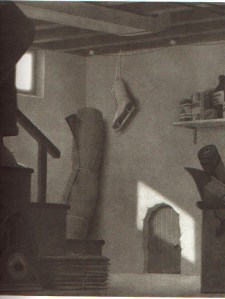
Cover of "It's My Birthday"
Cover of It's My Birthday

Just a quick note, readers: I’m putting off the Writer’s Notebook until tomorrow. It’s not because I’m lazy or — as has been the case lately — because I’m busy. It’s because today is my birthday, and I’m not doing anything that looks like work.

Except fixing dinner, because I do the cooking around here.

So there. I’m having my cake and eating it too!

See you here tomorrow with this week’s Writer’s Notebook entry. 🙂

Photo blog 63

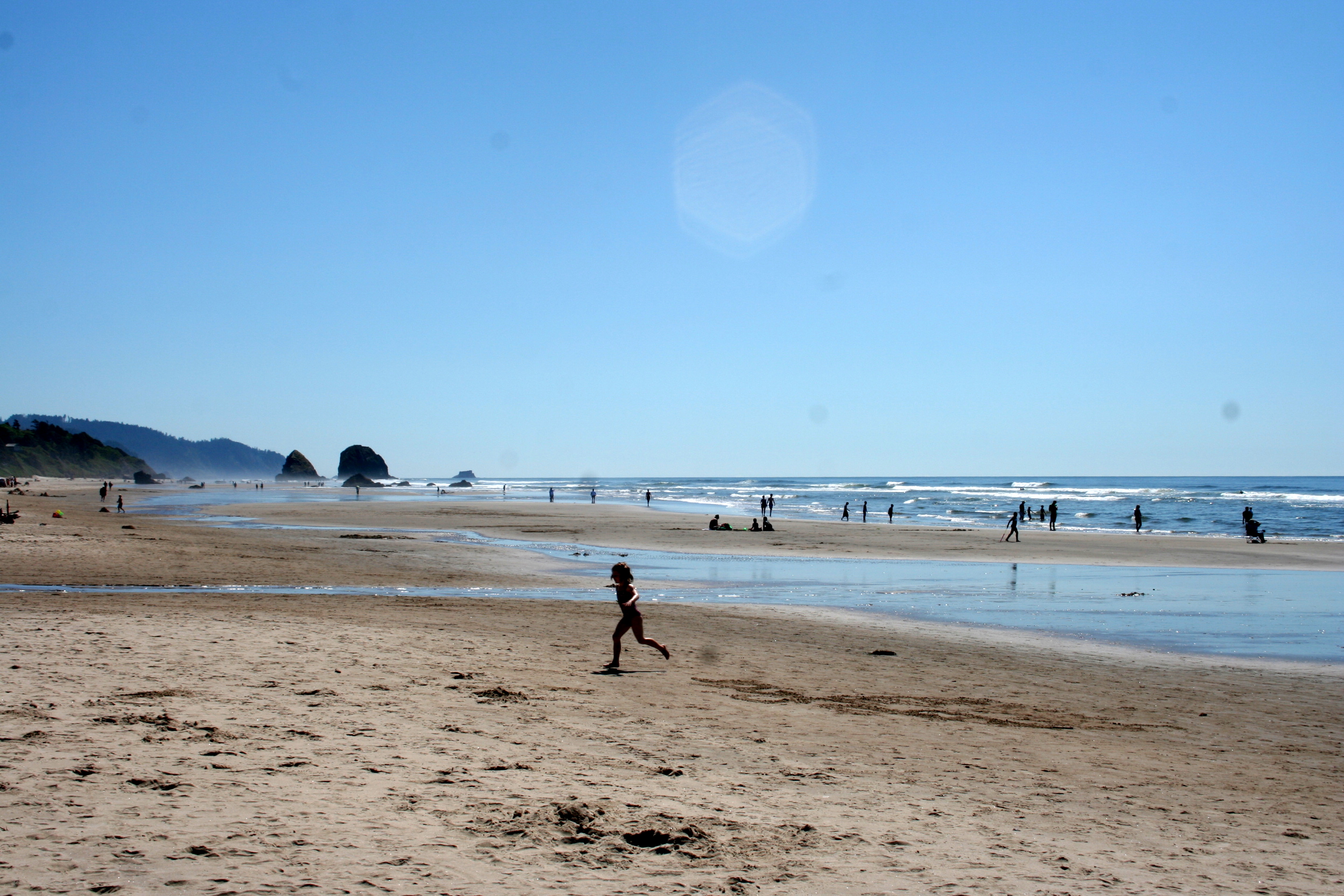
“Free.” Children running, Tolovana Beach, Oregon, 10 August 2011.

Daily Show: Borders Goes Out of Business

The Daily Show‘s correspondent John Hodgman suggests that to save bookstores from closing (as Borders has recently done, we might try altering the in-store “entertainment”:

Vodpod videos no longer available.

‎”Instead of hosting ‘readings’, why not host exciting live ‘writings’? Bring the author in, tie him to a desk, and make him write a novel to order.”

He’s joking, but you know what? I kind of like that idea. I remember how thrilling it was to watch a painter practice his craft by copying Vermeer’s “Allegory on the Art of Painting” in the Kunsthistoriches Museum in Vienna a couple of years ago. I know — we were literally watching paint dry: How exciting could it have been? But to see the process unfold right there in front of us was fascinating, and while I can’t imagine watching an author furiously scribble away at an entire novel would be very engaging, I think about that poet in Before Sunrise, sitting on the bank of the Danube, scribbling poems for passersby in exchange for spare change, and I kind of like the romance of the idea. Imagine going into a bookstore — or any venue — and giving an author an idea, even just a character name or a title or a first line, and then wandering the stacks for a few hours, picking up an interesting book or two, and when you return to the author, she hands you a short, custom-made story, written right there on the spot just for you.

I should totally try this.

America’s Next Top Author (and other fantasy programs for book lovers) (via Here’s To Us)

You know we all do this. I’ve actually filled notebook pages with ideas like this, and just the other day I was remarking to a fellow educator how I occasionally fantasize about precisely this sort of “Project Runway” / “Design Star” / [name your reality show] approach to a writing classroom. It would never work academically, but I’d sure as hell love to see it on TV.

Check out the post — this is a fun one! 🙂

America's Next Top Author (and other fantasy programs for book lovers) Think about it: in the realm of American TV, we have reality contest shows for just about everything, whether it's cooking, modeling, singing, or navigating ridiculous obstacle courses and falling into giant tubs of mud and/or shaving cream. And that's not even mentioning the realm of non-competitive reality programming à la the Kardashians. Here's my question–why don't we have anything for writing? My solution is "America's Next Top Author." Cu … Read More

via Here's To Us

A Writer’s Notebook: one-sentence stories

The other day, some friends of mine and I were celebrating a new story by a writer friend of ours, Riley Schultz. Which is nothing new — I am lucky to know enough writers that I get to celebrate new fiction quite frequently. But what makes Riley’s story particularly noteworthy is that it is only one sentence long.

If that sounds too short to qualify as a story, check out Riley’s, over at Monkey Bicycle. It’s really good!

And if, having checked out her story, you think writing those things is easy, try writing one yourself. I did.

He felt the blood in his fingers and the hot bruise deep in his abdomen and his skull on the pavement, the gravel digging into his scalp, and he knew these moments were his last, which is why he determined to notice everything for the last time: the sidewalk pressing against his elbow so the bone pinched his skin, the way the blue of the sky looked darker in the center as though it were farther away than the edges, the tag of his t-shirt poking into the nape of his neck, the nearby whine and creak of his fender as it expanded and warped in the flames, how cold his feet felt, then his knees, then his forearms, and the distant cry of sirens, the time that had passed, and that would pass, everything past, everything gone, everything here, everything his, everything him.


At dinner, a blind date in a shoddy Italian place off Main Street, they watch each other eat, the fingers on the flatware, the tongues that reach for each forkful and lick the underside just before the lips close over the tines, the spare hand resting on the tablecloth, reaching, reaching.


On the way home I saw the cat again, hiding in the scrub and trash near the dumpster, and for the first time I stopped and bent at the knees, held out one hand and softly snapped my fingers, made a kind of clicking, chirping sound with my tongue against my cheek, glad for someone at least to talk to and to touch, but the cat backed under the dumpster, out that opposite end, and disappeared down the alley.


The scree of crickets near—a toad like a statue. Hop! into the leaves.

You may have heard of these before. Hemingway allegedly wrote the most famous one, a mere six words in length: “For sale: baby shoes, never worn.” Lately, there seems to be a smallish vogue for the mini-genre, with stories popping up on Monkey Bicycle and One Sentence, and a whole series of “Six-Word Memoirs” published in (and later collected into books by) Smith Magazine, as well as a series on NPR.

When I read Riley Schultz’s story, I thought it looked like fun, so I decided to give it a whirl. Working in a whole story in just a single sentence, though, isn’t something you can do on the fly. You need some sense of completion, some sense of plot, some sense of character. How to get all that with only a single period?

I started with author Lori Ann Bloomfield’s idea of the “prose haiku,” a three-sentence story exercise she wrote about over at her First Line blog. But three sentences is too many for this exercise, and in my verbose style, it lends itself too easily to overly long sentences like my first attempt.

So I returned to Monkey Bicycle and reread some of the stories there, and I noted — whether it was intentional or just a fluke of Internet coding, I don’t know — that many of the sentences looked broken into lines, like poetry, which gave me the idea to start with poetry. So I looked into my old (bad) poetry files to see if I had any single, abandoned lines I might adapt as a one-sentence story. That’s where the middle two attempts come from.

Finally, I returned to the idea of haiku, for the brevity yet completion of an idea, and I took a crack at one last attempt, which essentially is just a haiku without line breaks.

All in all, these are four pretty shoddy examples, but I’m having fun with them.

One thing I have noticed in trying these out: as with very short poems, it seems the title is a key element in the one-sentence story, much more important here than in longer stories. I might even try pairing this exercise with the title exercise I hope to try next week, and see what happens. But more on that later….

Photo blog 62

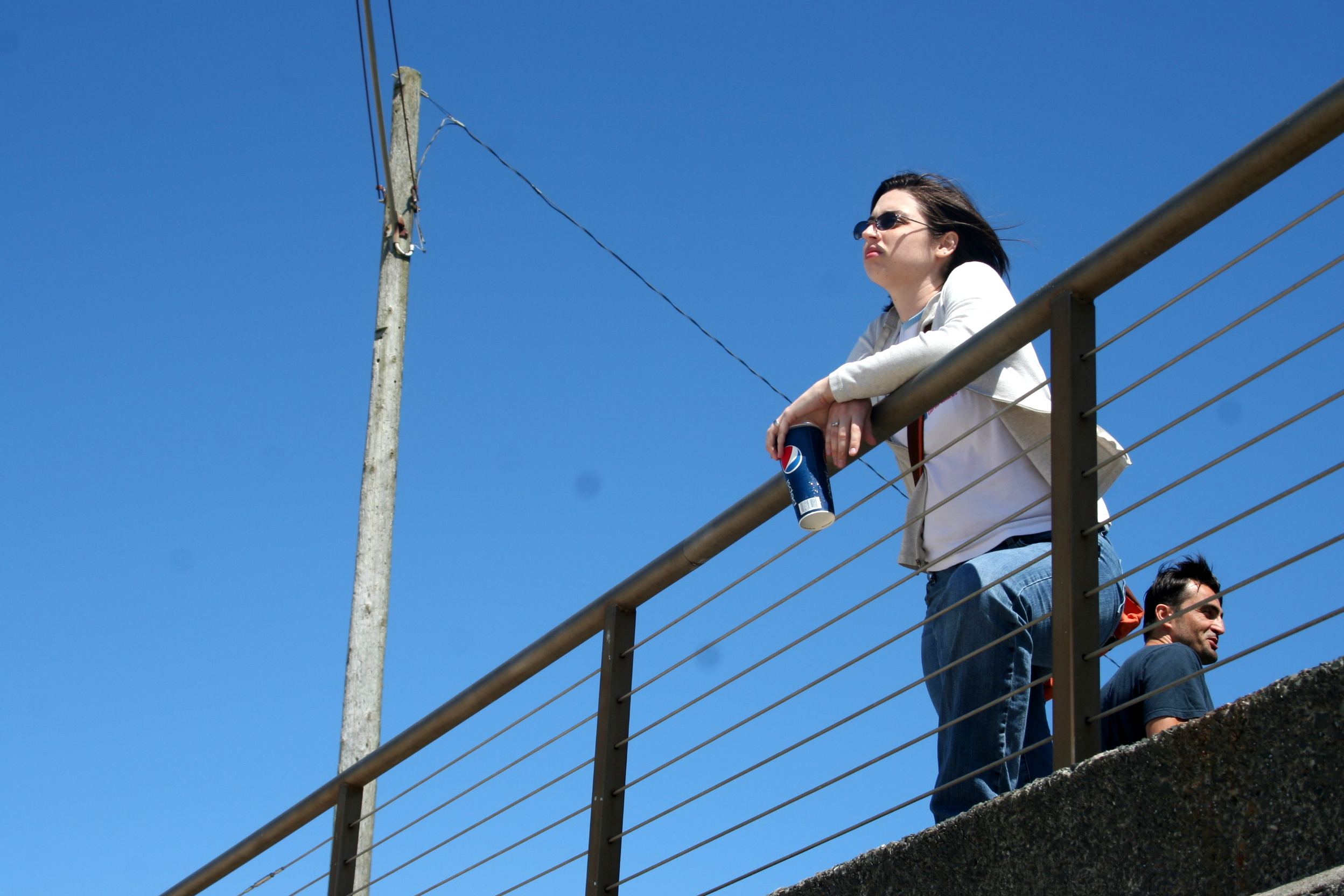
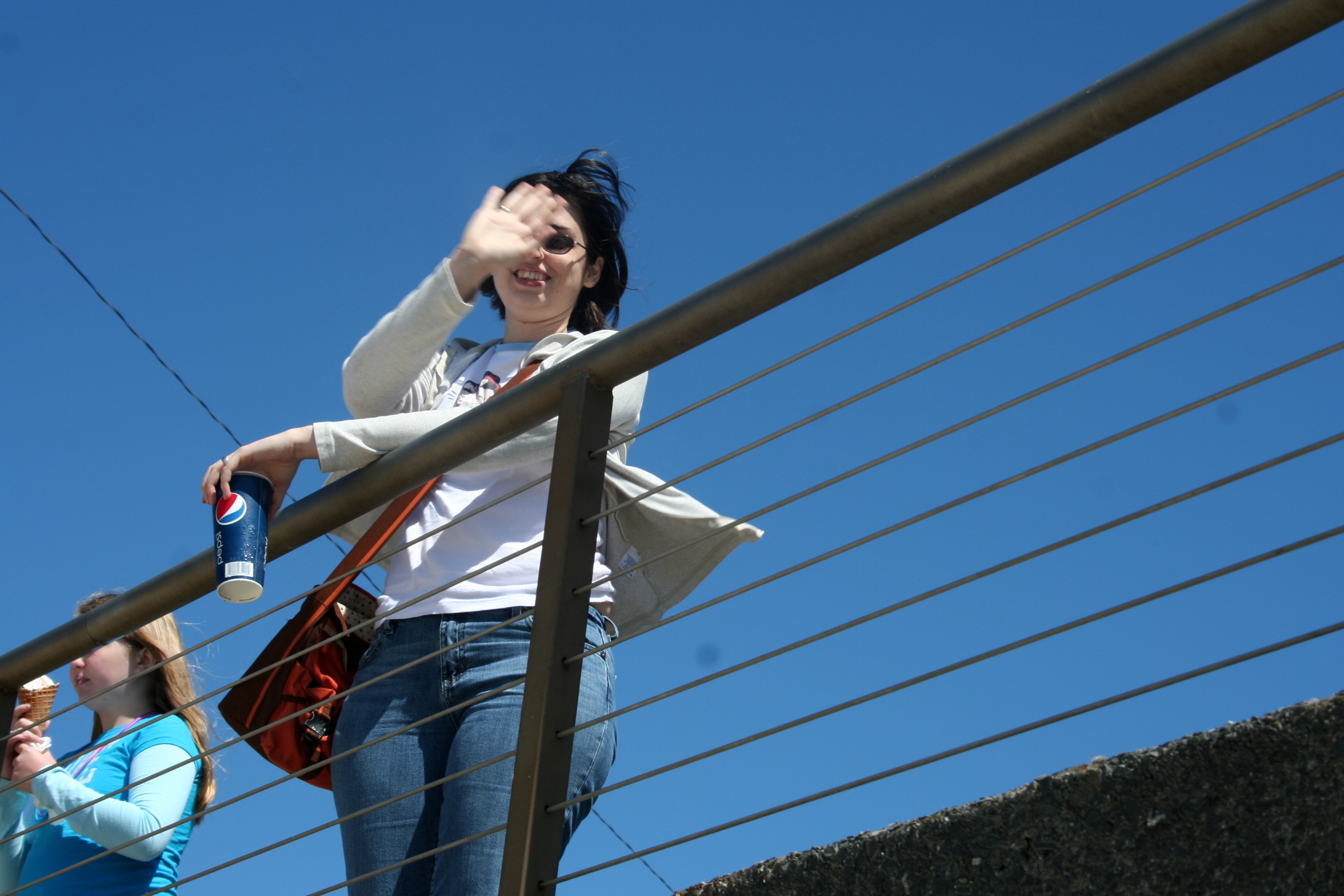
“Gazing/Gazed.” My wife watching the Pacific Ocean (and catching me watching her), Cannon Beach, OR, 10 August 2011.

A Writer’s Notebook: query plot synopsis

So, first some notes:

I’ve skipped a couple of weeks of the Writer’s Notebook, not because I haven’t been working but because I’ve been working on writing not really suited to the Notebook. I’m in a place right now where I have a lot of finished work I want to get into print, and it feels like a more productive use of my time to focus on submissions — and occasional revisions, if they prove necessary — than on new writing.

Of course, I’ve posted revision exercises before, but I’ve shied away from them lately for two reasons: 1) there are only so many ways to demonstrate revision, and most of them involve lots of lengthy text for comparing old drafts to new, which makes showing you revision work difficult and/or repetitive; and 2) the revisions I’ve been working on lately have been of work I’m actively submitting, and I don’t want any posts here to interfere with a story’s chances for publication elsewhere.*

So I’ve been in hiding, busy but secretive.

It occurred to me today, though, that I might share some of what I’ve been up to in the form of plot synopses, which is what appear below. As I usually do, I’ll explain the “exercise” (such as it is) after the Notebook entry, or you can skip to it below. For now, just bear in mind that these story synopses are for three published stories and one unpublished story, all from the same collection.

A Few May Remember

Sharon receives a letter mistakenly telling her she’s dead and decides to make a joke out of it with a fake funeral, but she soon regrets it as she struggles to keep her secret — her pregnancy and subsequent miscarriage — from her husband Mark.

Counting Telephone Poles

Jacob’s obsession with James Dean and Abraham Lincoln lead him to abandon his girlfriend, Chen, and embark on a suicidal road trip to Washington, DC, where he plans to drive a rented Porsche to a fiery, glorious death.

Kamikaze

When Neal learns the tragic story of his obnoxious friend Holly’s botched suicide attempt, Neal is scared Holly might try to kill himself again — and terrified that he will somehow be responsible.

Barefoot in the Guadalupe

Mark hides his lament for a dead girlfriend from his wife, Sharon, while avoiding his marriage through his new friendship with Tommy, until Tommy nearly dies as well and Mark knows no way to cope except to run.

One of the (many) things I’ve been working on lately is sending out my collection of closely linked short stories — or my novel-in-stories, if you want to think of it that way — and to do that, I’ve had to write probably my least favorite document: the query.

I dislike the query for two reasons. First, I am my own worst salesman. I don’t much care for bragging on myself, and I’m usually too close to my own work to know the difference between confidence and arrogance, between self-marketing and a big brass trumpet full of BS. I try to walk the line, but it isn’t easy. If I ever figure it out, I’ll post about it here.

The second reason I dislike queries is the necessity of the plot synopsis. This is an even less rational hang-up, I admit — I write plot synopses of other people’s work all the time, and presumably I ought to know my own work better than anyone else’s, so the synopsis ought to be a walk. But I have this flighty, self-indulgent protectionist attitude that if I could sum up my story in a few sentences, I would have just written a few sentences. In other words, I want the work to speak for itself, and whittling it down to a handful of plot points always feels to me like butchery, like I’m carving away all the joy and mystery and beauty of the thing and reducing what I had hoped was a piece of art to merely a commodity.

Which it is. I’m trying to sell this thing, after all!

So eventually I have to buckle down and reduce the stories (which is a word I like better when I think of it as a cooking term: “reducing” is the process through which a sauce grows not smaller or less interesting but thicker, denser, richer, and more flavorful), and that’s what I’ve been trying to do here.

There are all sorts of great tips for doing this, but the one I found most useful was the “beginning / middle / end” method. Because every story has all three of these elements, it’s relatively easy to state what each is in a sentence. And once that happens, you have a neat little three-sentence summary of your piece.

Another way to think of this process: You’re stating your main character and setting, the conflict, and the resolution — which also are (usually) present in every story.

Of course, this sort of reduction gets trickier with a dense little short story, and for a collection, even one as tightly interlaced as mine, it’s difficult to find a single conflict/resolution to describe. So I had to write a mini-synopsis for each story,and with so many of those in the collection, I then had to reduce each three-sentence paragraph to one or two sentences.

The goal when pitching a whole collection (I’ve learned) is to then further reduce all those mini-synopses to a single paragraph highlighting a few representative stories, which is what you actually see on the backs of story collections in the library or book store.

Take, for example, this book-jacket description from Debra Monroe’s beautiful collection A Wild, Cold State:

Set in rural Wisconsin, these interwoven tales run the gamut of moods and textures, ranging from the warmly nostalgic “The World’s Great Love Novels,” in which the young narrator observes the extreme compromises adults make in the name of love, to the hard-edged and gritty “Crossroads Cafe,” in which a waitress searches for tenderness, though nothing in her life so far suggests that tenderness is available.

Eventually, I wrote a similar paragraph for my whole collection, but as I said, it’s out on the market now and I don’t want to post too much while it’s under consideration. So I’ve included these early single-story synopses just for the exercise of it.

Got any other great tips for writing queries or synopsizing your own work? By all means, leave a comment — I’d love to learn more!


* A good tip for writers with personal blogs: The rules are changing as rapidly as the Internet, and there is a growing tolerance of work appearing on personal blogs. But personal blogs are also becoming more prevalent and more visible, meaning what once was some poem you scribbled in a digital version of your diary is now getting so many hits online it’s practically a self-publication, and many magazines and journals are viewing blog-posted creative work as self-published, and therefore previously published. And many simply won’t accept previously published work, even if it only appeared on your blog. I’ve posted sketches and short passages from my ongoing work here in the Notebook, but I’ve always been careful NOT to post whole pieces unless I don’t mind later sending them to reprint-friendly publications. And there are plenty of those to choose from if you still want to post your fiction or poetry online. Just be aware that you might have to declare such work “previously published” in the future.

Photo blog 61

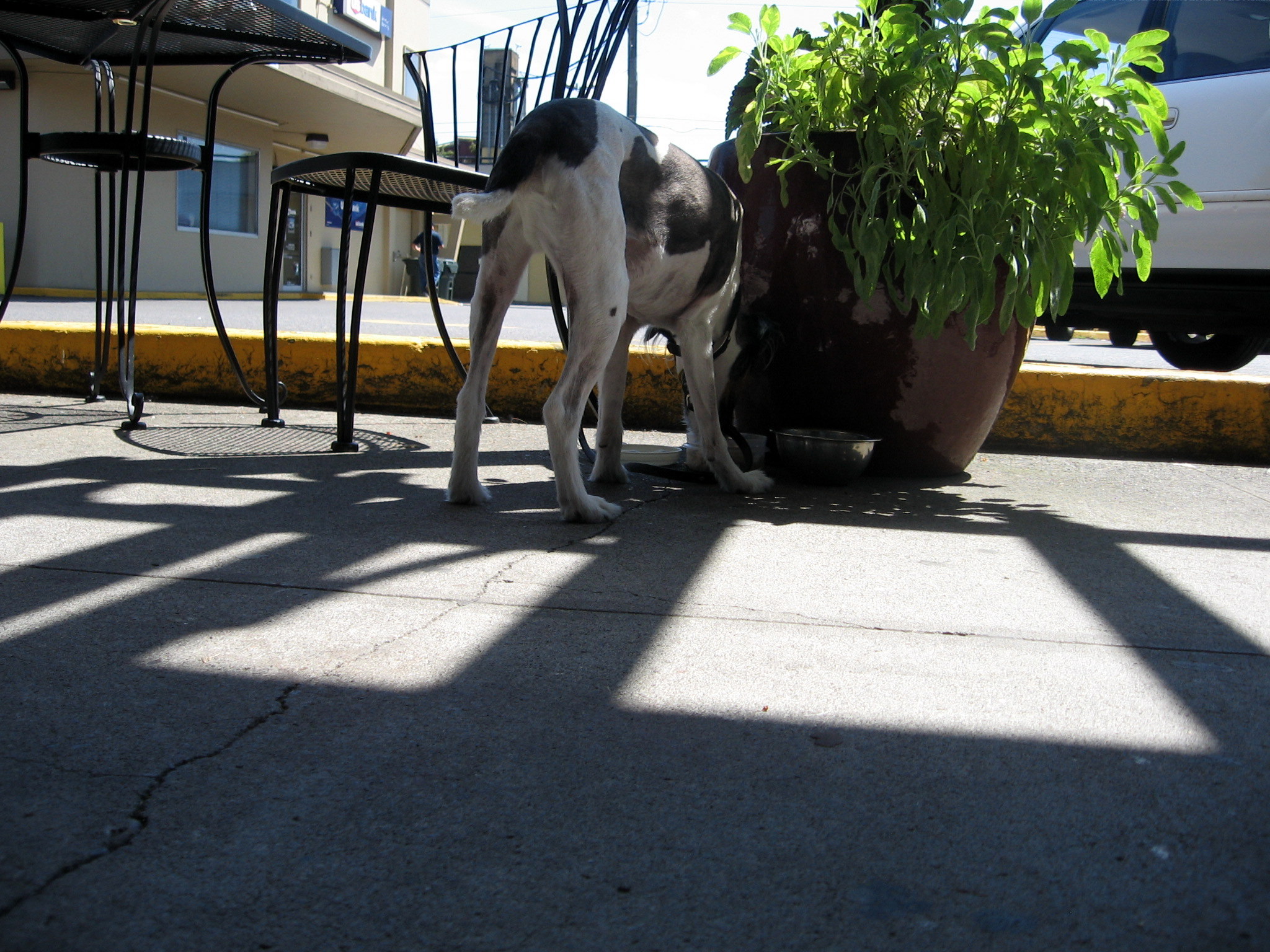
“Love.” Woman feeding home cooked treats to her blind dog at a café, Portland, OR, 22 July 2011.

Not really a new publication

Uninvited Guests. "His heart was pounding. He was sure he had seen the doorknob turn."

Remember back almost a year ago when I wrote a little story based on Chris Van Allsburg’s “Uninvited Guests” from his book The Mysteries of Harris Burdick? It was for a Writer’s Notebook exercise,* and it turned out to be a lot of fun.

Anyway, I’ve always enjoyed that story and I like revisiting it now and then. I don’t think it’s a great story, but I think it’s a fun story, so I posted it (the site calls it “published”) on StoryStar.com, just to  give it a wider audience.

StoryStar is kind of fun, in that is promotes writing for the sake of writing rather than writing for the sake of art, and frankly, I think one aspiration is as good and beneficial as the other. That makes for a bit of a mixed bag on the site, in terms of quality, but the cool thing is you get to vote for the stories you love and bump them up the queue until they get featured on the home page’s “marquee.”

So if you have a soft spot for my little story the way I do, head over there and vote for it. And check out some of the other fun stories while you’re there. 🙂


* Actually, remember when I used to do Writer’s Notebook entries every week? Yeah, I missed last week, and I haven’t posted yesterday’s yet. That’s because I’ve been more focused on revising some existing stories and submitting stories and my story collection, which means (bad Sam!) I haven’t been doing any new writing the last couple of weeks. No excuse, but I’ll be back next week with a new Notebook, I promise.

Photo blog 60

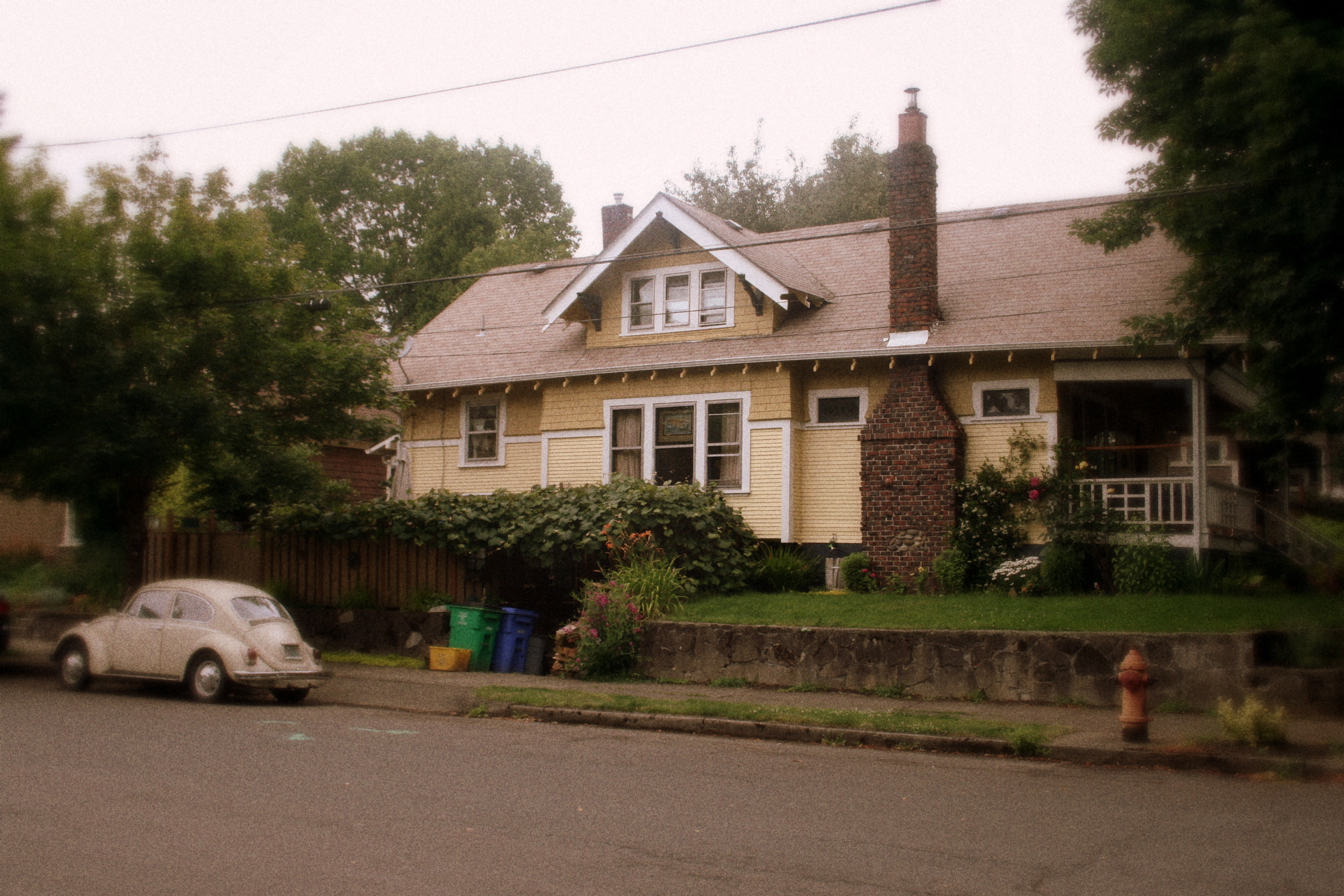
“Old and new.” Houses in northeast Portland, OR, 22 July 2011.