
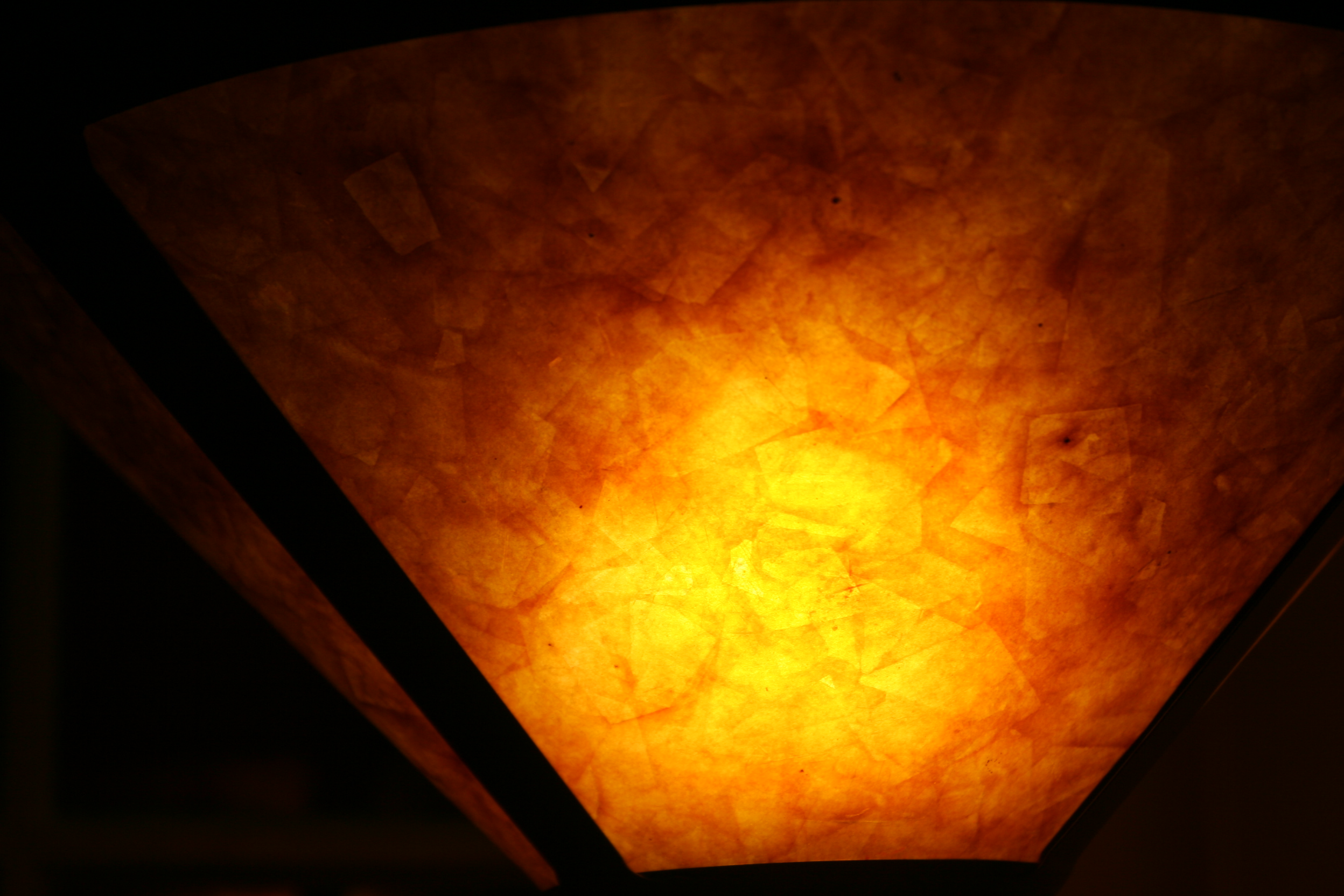
 The refrigerator gurgles and hums, the soft vibrato of the compressor like a brook on rocks; somewhere upstairs a neighbor runs their kitchen tap and the water rains down the building’s pipes, and I hear the gentle rumble of bare feet on wood floors; the hard disc of my laptop whirs as it awakens like a bird winding up to a long mating call. The amber lampshade the color of a sunset.
Photo blog 59
Small stone, Vol. 2, #22
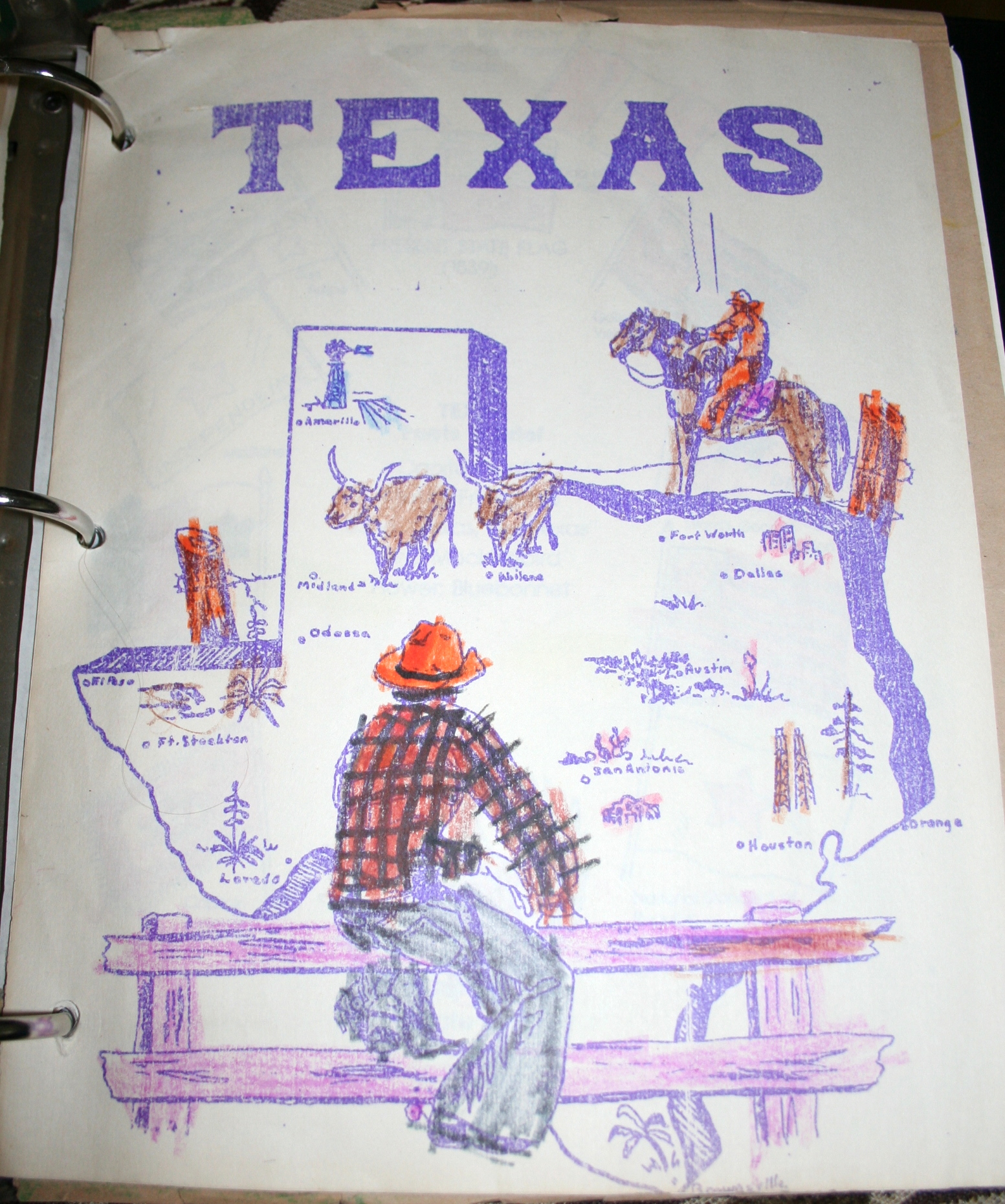
 Cold like a bullet, it rolls between my tongue and the roof of my mouth, that tiny jagged crown where the stem once was pressing a rough circle into my palate. It is so ripely firm it will not burst until I break it with my teeth. Then, oh! the tang and natural sugars, that succulent gritty pulp, the skin spreading flat to skin my mouth, that small explosion of rainwater, the taste of shadows.
A Writer’s Notebook: The Writer’s Toolbox, sentence sticks
So, last week I let Jamie Cat Callan‘s The Writer’s Toolbox help me start a story. It was about John, an architect from Minnesota who is feeling guilty over abandoning his elderly mother in order to stalk the woman he’s secretly in love with. Don’t ask me — the Toolbox came up with this story. But that’s where I stand, and I figured this week I’d let the Toolbox also get the ball rolling, so I chose a different exercise to begin drafting. I’ll explain it below. First, the silliness I’ve produced so far.

John stood in the center of his living room, his lights off, his binoculars to his face. From here, he could watch her through the window and she would never know — no glint on the lenses, no silhouette on parted curtains. Just John, free and open in his room, hidden in the dark, standing before her as though she’d asked him to. And there she was, in her own apartment across the way, gleaming in the bright light of her overhead fixture, standing before John as though he’d asked her to. Which, in his daydreams, he had.
But not in his nightdreams. Those, he remembered, were for his mother, and the race to save her from some unseen evil he could never quite track down. The nightmares were childish, and in fact he often saw himself as a young teenager in them, his legs thinner, his belly flat, his hair short-cropped and sleek, unless he was running through empty city streets or gliding supernaturally over a wide desert canyon, at which times his hair was longer and blew back from his forehead as he pursued the evil man-creature who had taken his mother from him and hidden her away.
He lowered the binoculars and shook his head. He would have laughed at himself if he’d found it funny, but he’d been having the dreams too regularly for too long to think them anything but terrifying or pathetic. Today, he found them puzzling, because he didn’t often leave his fantasies of the girl across the way in favor of these nightmares. They’d never come together in his head. But today, he stood looking down at the binoculars, absently turning the focusing dial back and forth, the lenses extending and retracting, trying to think how he’d gotten the two fantasies confused.
He’d met the girl for the first time last Tuesday. He’d found her in the lobby of the building they shared and she’d asked him the most peculiar question.
….
The lemon sherbet that melted all over the counter

I know, that last line comes out of nowhere, but I’ll explain in a minute. First, here’s what I’m doing:
The Writer’s Toolbox includes three sets of popsicle sticks, each with lines written on them. One set is labelled “FS” for First Sentence, another is “NS” for Non-Sequitur, and the third is “LS” for Last Straw.
The idea is that you pick up the fistful of FS sticks and draw one at random. This sentence will become the first line of your story. Mine came up “There I was, just standing there, when what I really wanted to do was forbidden,” but I wasn’t feeling very first-person about this character, so I switched it to third, and in doing so, the whole structure of the opening changed. That’s okay. These aren’t rules — as with any good writing exercise, you’re allowed to play with the sentences you get, because the point is just to start writing.
So I’m rolling along, but just to keep things interesting, I don’t want to get too comfortable with my flow. Several weeks back, Tom Franklin was in town doing a reading from his novel Crooked Letter, Crooked Letter, and during the Q&A he mentioned that in his experience, whatever he thinks is the right direction for his stories to take is usually wrong, so he winds up taking his stories in places he’d never have expected. This is the point of the second batch of sticks in the Writer’s Toolbox: the Non-Sequitur sentences throw a surprise into your story and steer you down a completed unexpected path.
Mine was “On Tuesday she asked me the most peculiar question.” (Again with the first-person!) So I tossed in a bit of transition and away we go.
Except I’m not going there yet. Maybe next week. I’m not sure this story will ever be any good, but it still feels fun, so I’d like to follow through with at least a draft.
In the meantime, I thought I’d go ahead and draw that last stick, just for fun. The Last Straw is supposed to be a catalyst for conflict, something that sets off a dramatic arc in the story. Given what I have so far, I have no idea why lemon sherbet melting on a counter is going to be a problem. Though I just thought of this: maybe John sneaks into the girl’s apartment, decides to “taste her” by digging in her fridge and eating some of her sherbet, but she comes home early and he has to escape out the window, but he’s left the sherbet out and she finds it melting on her counter and knows someone’s been inside, and now John is panicking….
That’s the fun of these exercises. They tend to cause a lot of problems, but when they work, they force you to come up with creative solutions to the problems they cause.
Anyway, tune in next week and see where things go.
Not-so-new publication
 Back in the spring of 2010, I published a story in the online literary magazine Temenos. Later, they decided to select from their spring and fall issues to produce a small print anthology for that year, but time and budgets being what they are, it took a while to finish the project. I’d quite forgotten they even planned one, yet today two contributor’s copies turned up in my mailbox. Seems my story was selected for inclusion in the anthology. Which is awesome.
Also awesome: a former classmate of mine from grad school down at the University of North Texas, poet and palindromist Michael Constantine McConnell, published an essay in the same issue my story appeared in, and sure enough, his essay, “Alleys,” was also included in the anthology.
I also noticed a poem by Daniel Ames, who also published a couple of poems in volume 8 of Tonopah Review (I had a story in volume 5). And there’s a poem by CL Bledsoe, whose name I’ve been coming across a lot lately (he published a minichapbook with Mud Luscious Press, who helped launch the career of Molly Gaudry, whom I recently interviewed about her project The Lit Pub, which I’ll be writing about extensively in a few weeks…).
Times like these, I really enjoy just how small — let’s say, cozy — the writing world can be. Some might call it insular; I call it familial.
NOTE: Today’s Writer’s Notebook might not turn up online until tomorrow. But hang on. It’s coming.
Photo blog 58
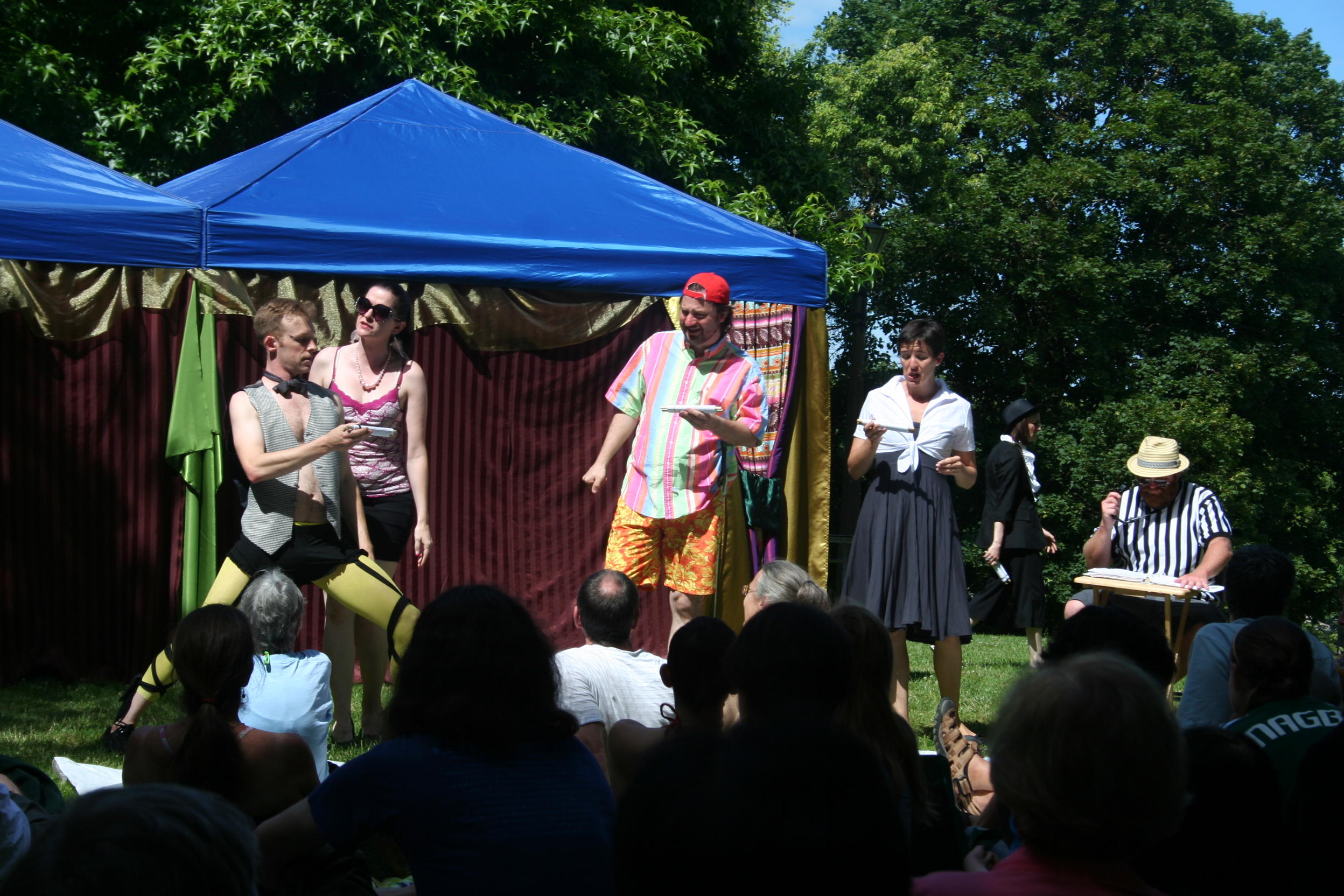
(For anyone who doesn’t have all of Shakespeare memorized — I had to look this up, too — the title is taken from the play, Act 3 scene 4, which this photo depicts. For more info, check out Portland’s own Original Shakespeare Practice Festival online.)
Small stone, Vol. 2, #21
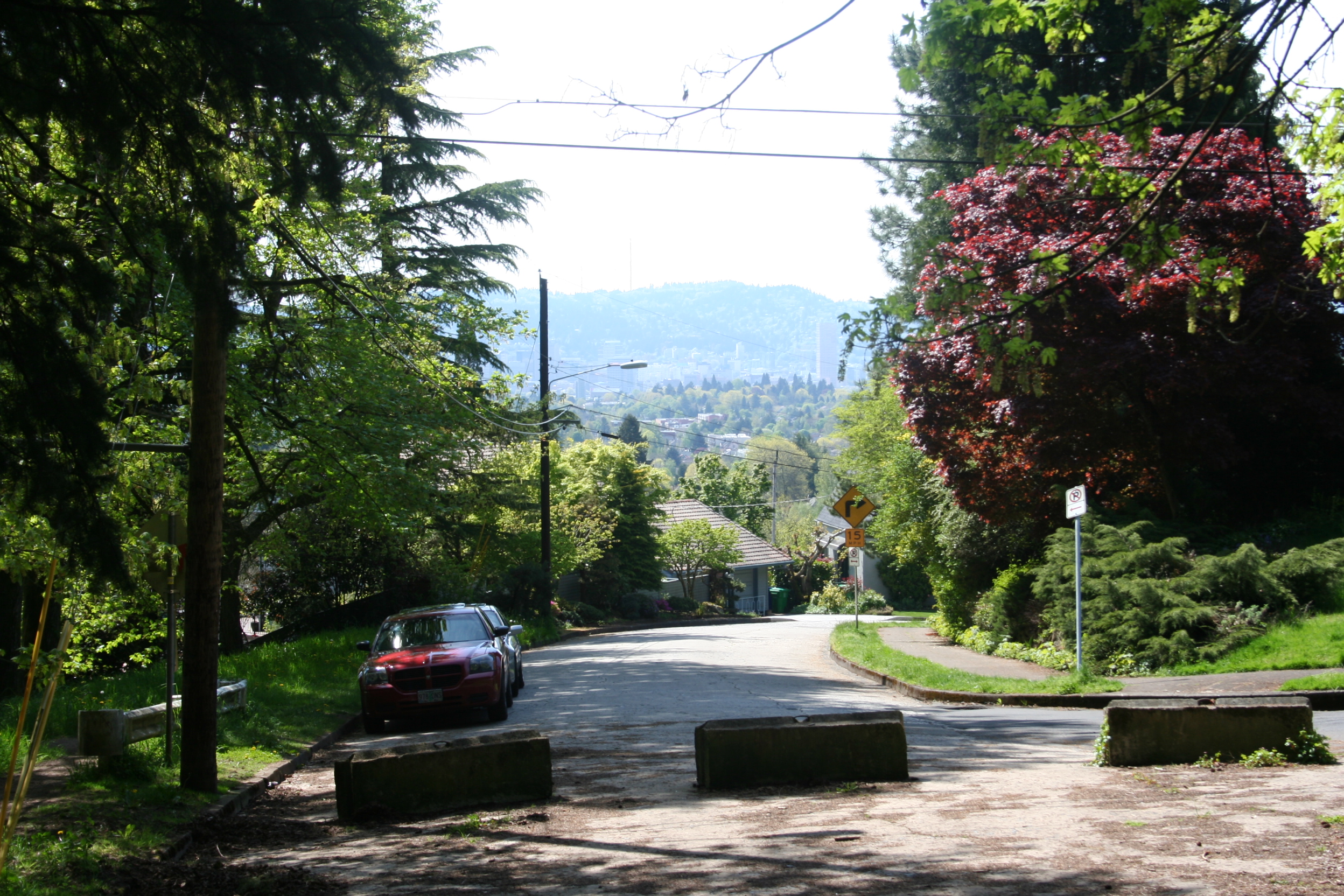 Dappled light, breeze through the parted lips of the driver’s window, soft voice of NPR whispering on the radio. Midday lullaby.
A Writer’s Notebook: The Writer’s Toolbox, Protagonist Game
I’m going to do this next Writer’s Notebook exercise in two parts. This weekend, I’m just getting down some basic ideas, and over the coming week, I’ll develop these ideas into a draft and toss it up next Friday.
What appears in the Notebook this week are notes from an exercise in Jamie Cat Callan‘s delightful The Writer’s Toolbox, but as usual, I’ll wait and explain the exercise below.
Protagonist: John, the architect from Minnesota (lives in Chicago) — Paunchy, pallid, with waxy blond hair and a red nose. Early arthritis. Fond of cheap sweatshirts and hard-soled houseshoes he can wear outdoors.
Goal: To save Mother (from what?) — he has recurring dreams about some faceless evil entity kidnapping his mother and luring John into a trap. . . .
Obstacle: the woman in 3B — when he wakes, he calls his mother and keeps thinking of taking time off to visit her but he’s secretly in love with the woman in 3B and fears if he leaves he’ll miss his chance with her, even though he never talks to her
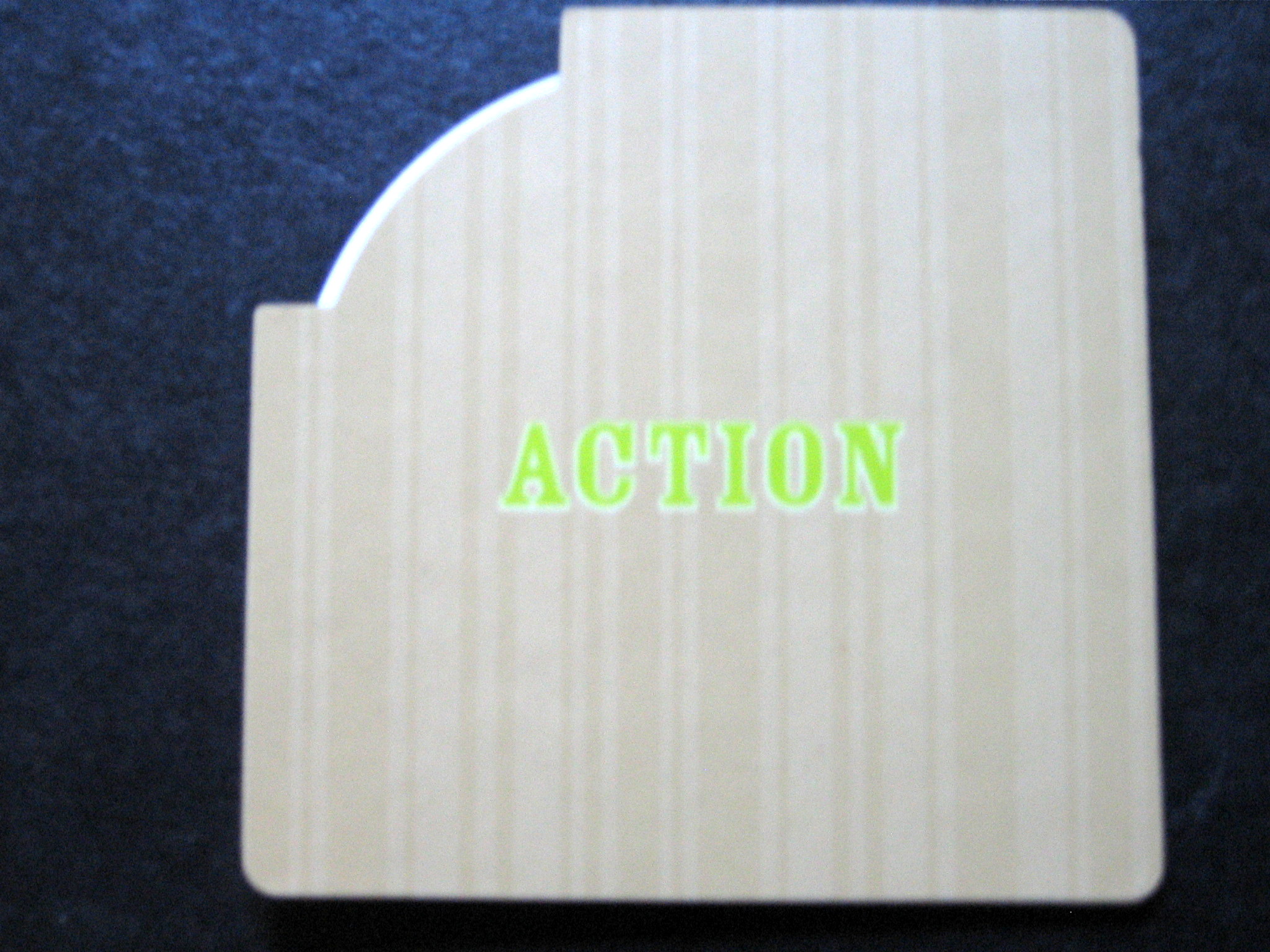
Action: Takes up stalking (!)
 Callan’s The Writer’s Toolbox is full of fun exercises and, unlike traditional books of writing games, hers actually take the form of games and puzzles: the Toolbox is a literal box with sentence fragments on sticks, a deck of sensory cards, and — what I used in today’s exercise — a set of spinners that help you choose, at random, different story elements to build a story.
There are four spinners, which, according to the exercise in the accompanying book, you spin in a particular order to construct a story.


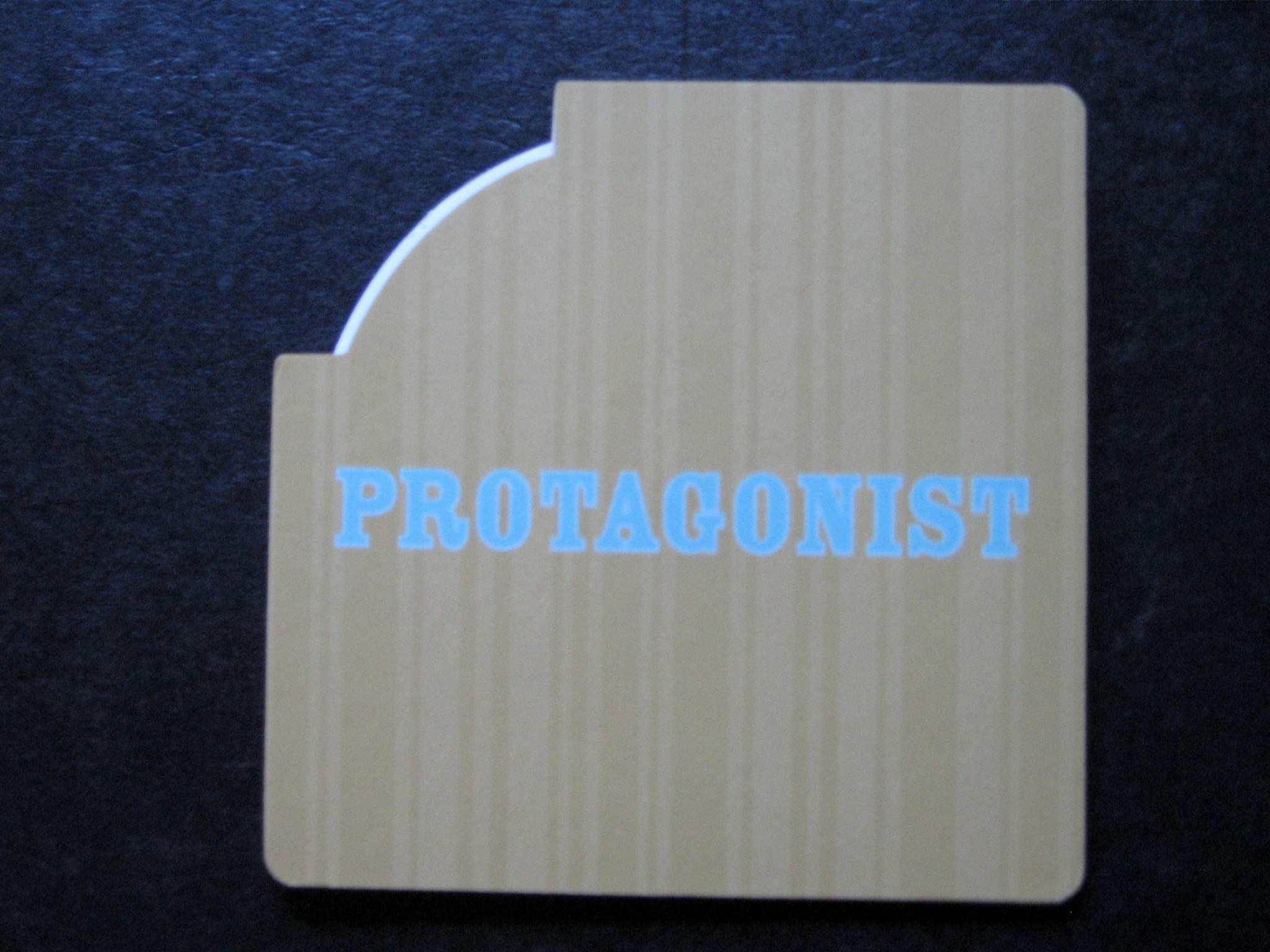
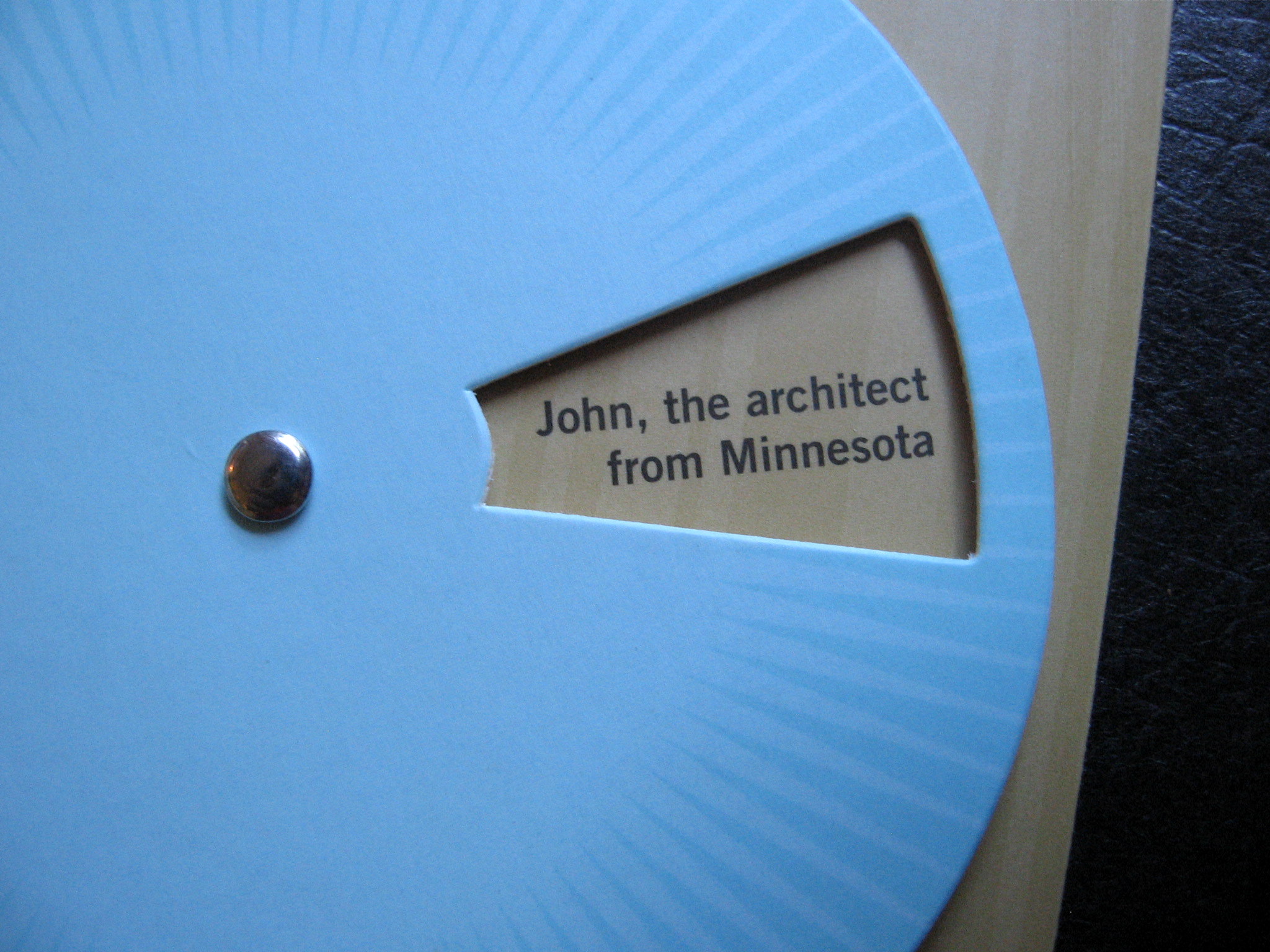 You start with the protagonist, of course, which in my case came up “John, an architect from Minnesota.” I paused at this point and filled in some character details, just picturing who and what this guy is. I took “from Minnesota” to mean that he’s no longer living there, which is why I moved him to Chicago — still the Midwest, but a place he might make a life. Also, Chicago’s famous for its architecture, so I figured that was a logical place for him to wind up. And I decided to make him a pretty sad sack because pathetic guys are more interesting to me.
Next, you spin the “goal” spinner to find out what John wants in this particular story. This spinner helps set the conflict and suggest a story arc. I got “to save Mother,” which doesn’t really tell me much. To save her from what? How to go about doing it? Why does he care? I noticed that “Mother” is capitalized, so I took that to mean John is a bit of a mama’s boy, not quite Norman 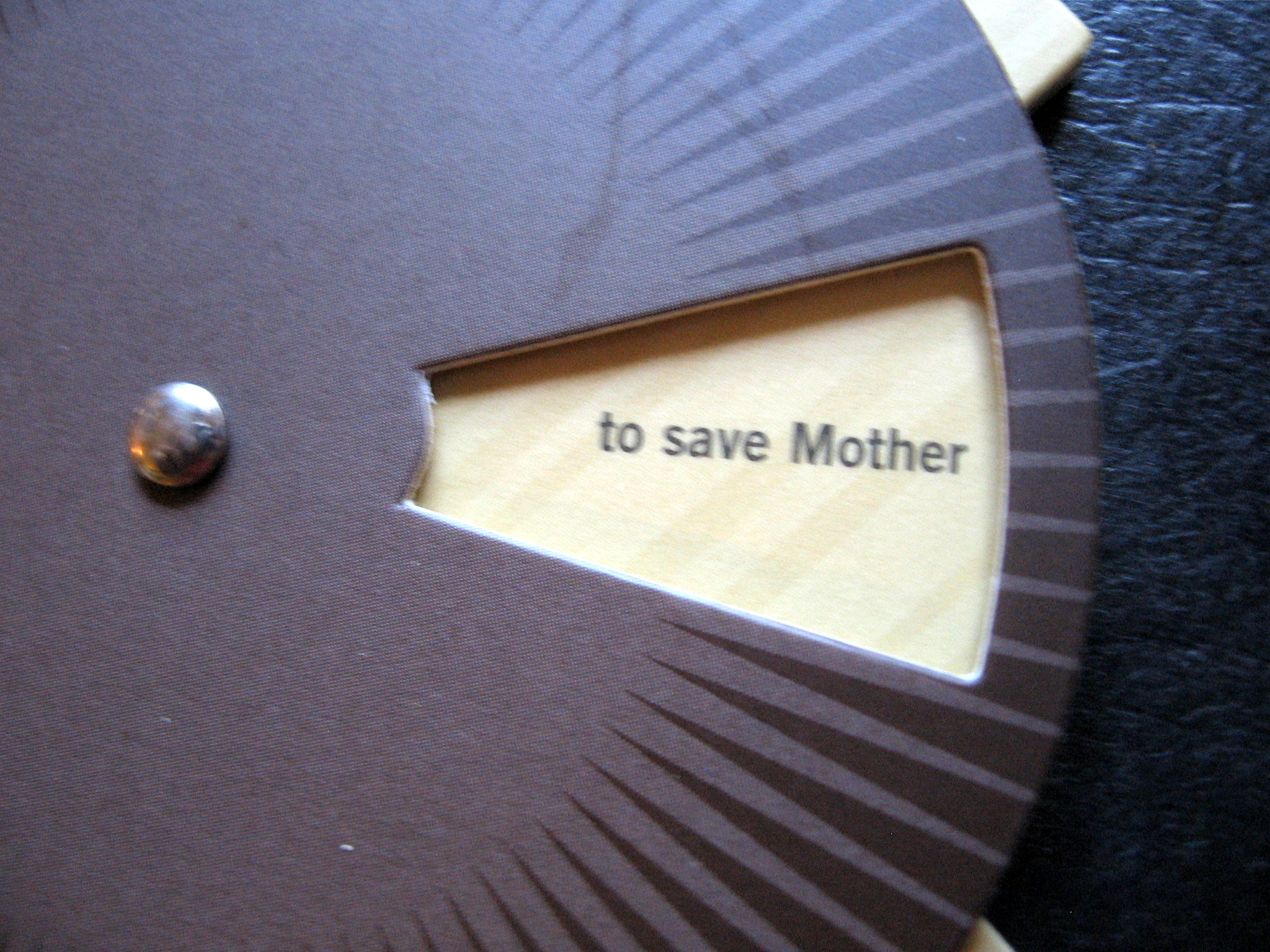 Bates material but definitely very devoted to his mom. I thought about going down the illness route (save mom from cancer or something like that) and the finances route (save mom from the evil bankers), but it’s been done. Maybe save her from a swindler? Nah — too melodramatic.
When I was a kid, I used to have recurring dreams about having to save my mother from harm, exactly as I describe in the exercise notes above, and I’ve never used it in a story. Those dreams were very vivid and harrowing in my childhood, some of the worst nightmares I had, but looking back on them now they seem quite silly. Which felt perfect for John. So there’s his goal.
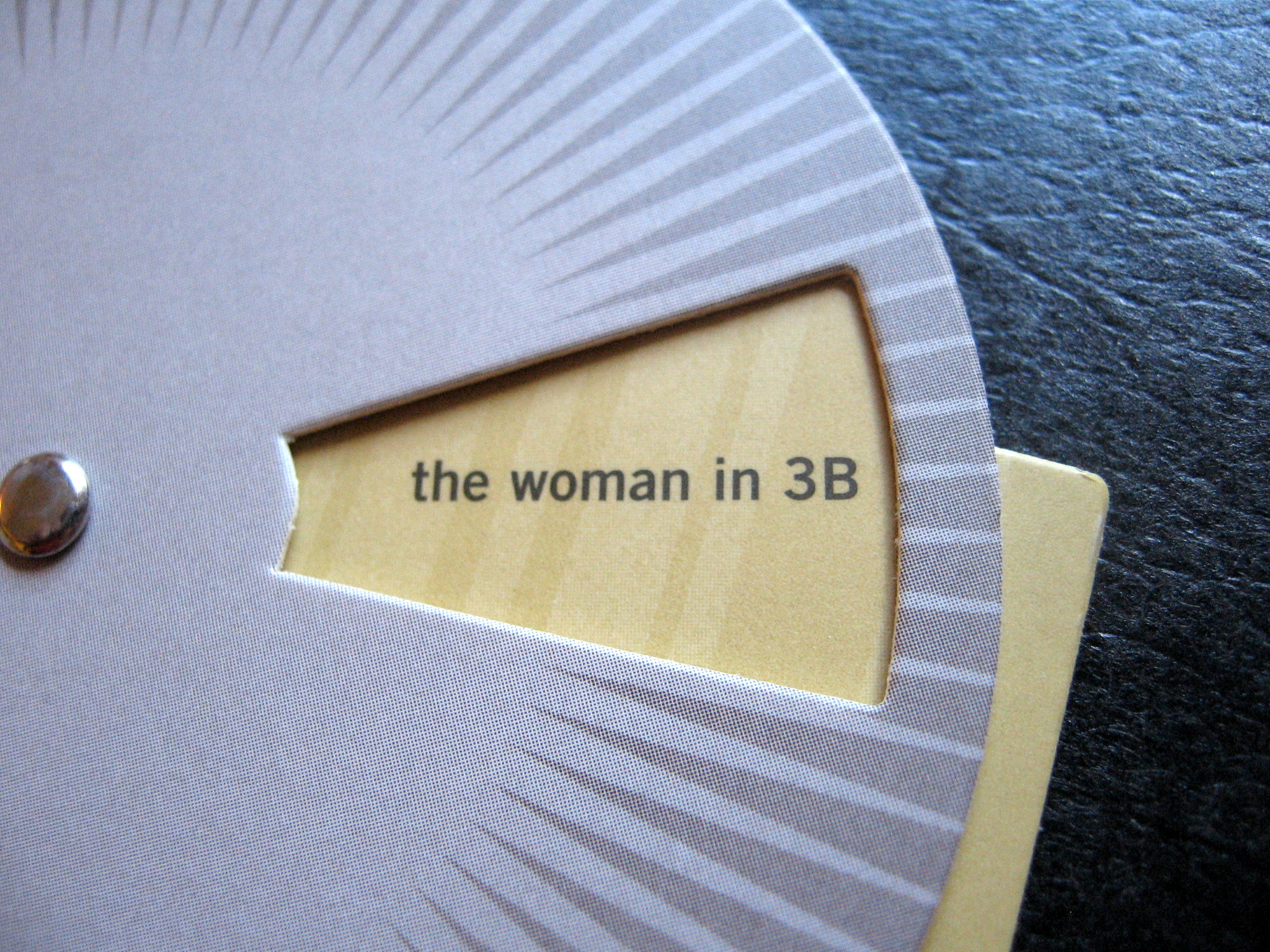 Next, I spun the “obstacle” spinner, which tells me what will get in the way of John’s goal, what he has to overcome in order to accomplish his goal. I spun “the woman in 3B,” which, in stories about a mama’s boy out to rescue his mother, makes WAY too much sense. Who better to threaten John’s relationship with Mom than some woman he’s in love with? But John is a pathetic guy, and a shy guy, so he’ll simply love her from afar. In fact, I haven’t described the woman in 3B yet because, thinking like John, she’s barely even a person — she’s more an idea he’s fixated on.
Anyway, so there’s my problem: John loves his mother and keeps having bad dreams about needing to rescue her, and he thinks maybe that’s his guilty subconscious telling him to get his butt back to Minnesota to visit his elderly, ailing mother, but there’s this woman he’s obsessed with, and his obsession won’t let him leave home. A story that’s been done before, but I’m enjoying the character and the process, so maybe it’ll bear fruit. Besides, the best way to distinguish this story from others is in HOW John will overcome his problem. Which is why I spin the last spinner, labelled “action.”
The action John is supposed to take, according to the game, is “take up stalking.”
 Seriously!?
Now things are getting interesting. There’s no telling yet where this will lead John, or how stalking the woman in 3B will help him visit his mother and/or stop his recurring nightmares. But I’m intrigued, and I’m looking forward to finding out as I play with a draft this coming week.
Come back next Friday to see where this story goes. See you then!
Photo blog 57
Small stone, Vol. 2, #20
 Flag-themed fruit breakfast, bald eagle through a waterfall, grilled cheese and lemonade for lunch. Frisbee in the park surrounded by bikinied sunbathers and stocky, muscle-flexing softball players. A cramped bus ride, fireworks over the river downtown, freaks and drunks and street-preachers at the bus stop, tired crabby Americans all the way home.
Exactly as it should be.
 Samuel Snoek-Brown