
Photo blog 16

Sometimes you just write. This is what I wrote. There is no particular exercise, but I’ll explain below where this comes from.

He didn’t mow the hay field, or rake it into rows or bale it into the wide wheels, bound in plastic, that baked in the sun now. But he owned the aftermath, the flight of buzzards reeling overhead, the dark fog of flies swirling over each chopped body: rabbits who’d poked their heads from their burrows as the mower blades passed, fawns bedding in the thick grass, sometimes a neighborhood dog. He would walk out among them, visit each like a grave, squat to wave away the flies and remove his hat a moment, close his eyes. He said no prayers, no curses, no words to himself. He held his breath against the decay. He’d wipe sweat from his brow with the back of his wrist, the bowl of his hat open to the field, then he’d stand and walk on. Body to body. The neighbors thought he was inspecting the bales scattered in the sun, and he never told them otherwise. He thanked the dairy farmer for each check; they shook hands and told each other jokes.
In a few days, the buzzards would leave, the grasses would grow.

The other night, I was reading Neil Gaiman’s graphic story collection The Sandman: Endless Nights. The harrowing story about Despair is composed of 15 “portraits,” a graphic-fiction variation on “Thirteen Ways of Looking at a Blackbird,” each piece a graphic short-short. Some of them are barely two dozen words long. Most of them are unsettling at best–a few of them are downright heartbreaking. And the series of short-shorts got me thinking about how much I love writing short-shorts, so I started thinking about what I might do to start one, just for fun.
I left my reading chair at my in-law’s and looked out the back window at their vast field, high with pale yellow grasses baked dry in the Texas sun. My in-laws have a friend who runs a dairy farm, and they let their friend cut and bale the hay in their field so he can feed his cows. Often, just for the experience of it, my father-in-law helps with the mowing, raking, and baling, and as I was standing there looking out the back window–through which we’d all watched a small herd of deer cross the field just the night before–I remembered what my father-in-law had told me about the animals that sometimes get caught in the process, cowering in the grasses and killed for their trembling uncertainty.
I don’t know if this is scene or a story (hence, the title); it certainly isn’t finished, either way. It’s just an idea. But it’s a start of something, and maybe some day I’ll develop it.
Whatever it turns into, if anything, it felt good to write it. Sometimes, it just feels good to write, period.
A week ago, I wrote a quick post asking you all to think good things for the author of Literary Rejections on Display, who was this close to landing an agent.
Well, the well-wishing worked, folks!
Crack open a bottle of whatever you please and join in the celebrations. This is a victory for us all. 🙂

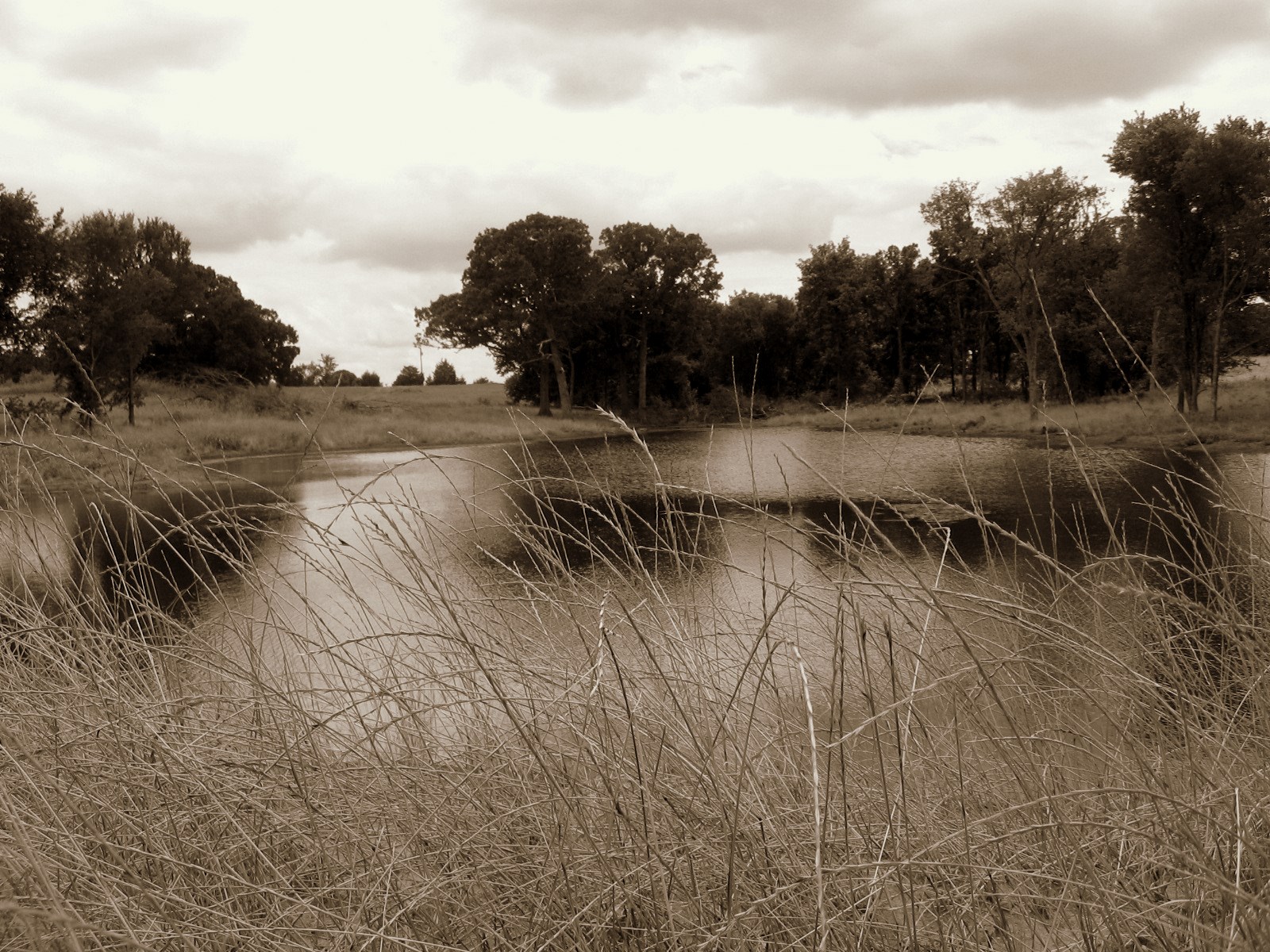
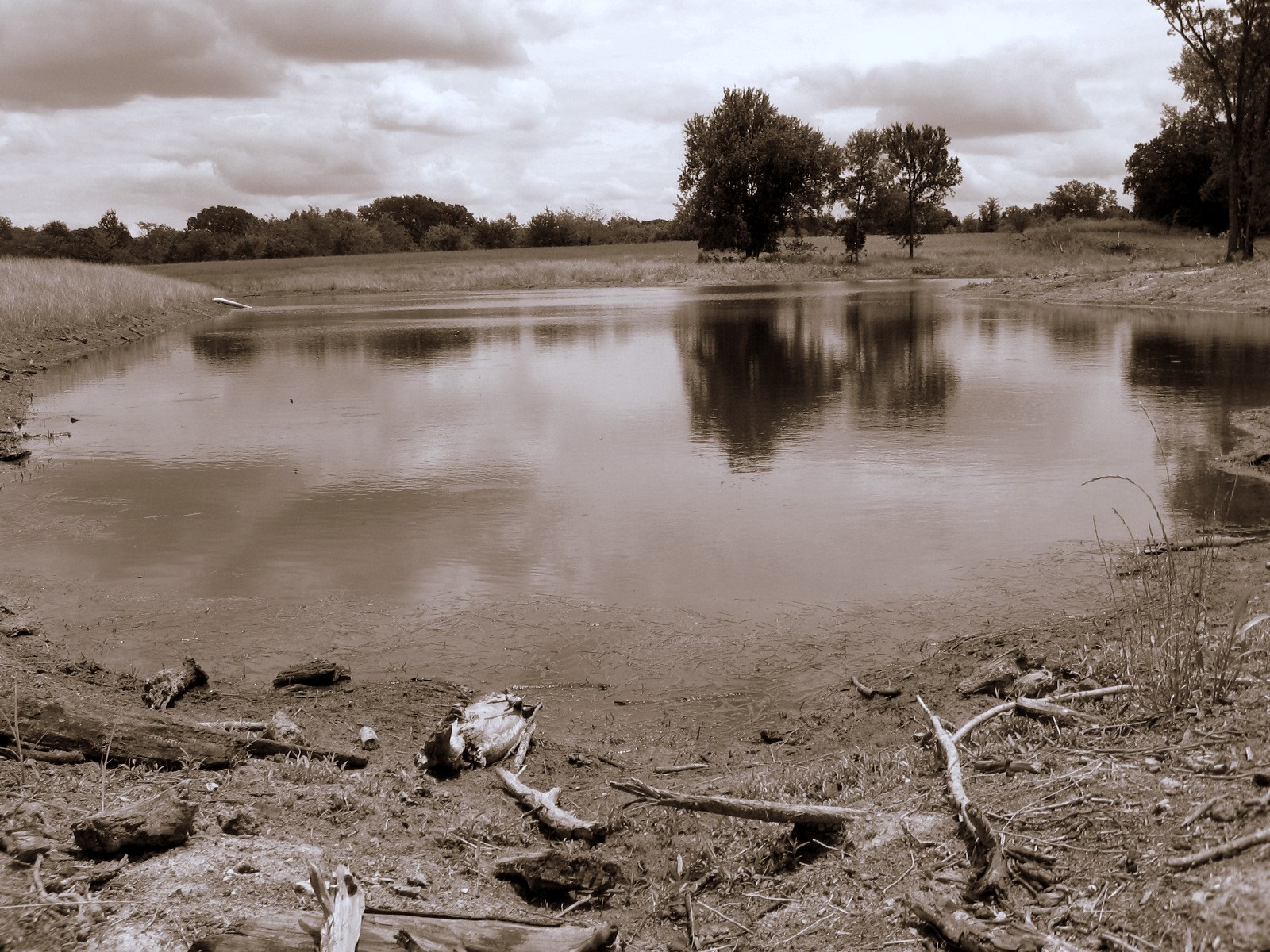
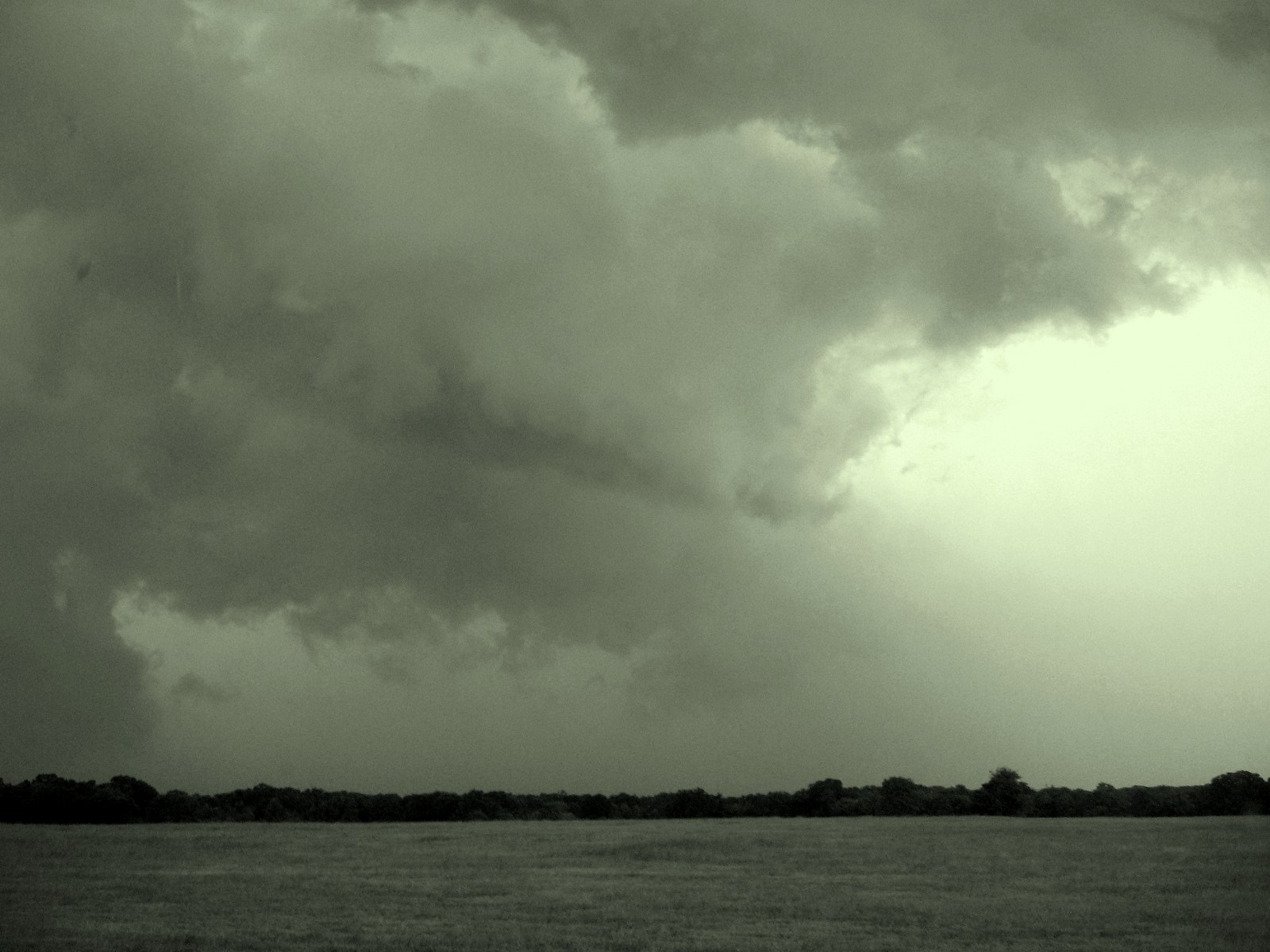
“The Calm Before.” Hopkins County, TX, 6-8 July 2009.
I’m reading news of the massive, tragic flooding in Pakistan and Afghanistan. I’ve posted in this blog before about terrifying natural distasters (though with the way we’ve altered our environment and the weather patterns of this planet, I wonder how long it’ll be before we stop calling these “natural” disasters), but I’ve missed posting about plenty of others. It becomes overwhelming, I know, to consider the plights of so many people, so far away, so frequently. How much more can we give? How much more can we feel?
Never enough.
But never nothing.
If you haven’t already given your maximum affordable donations this year, please consider looking up ways to help those in Pakistan and Afghanistan. (I won’t report a list of charitable organizations because most of the reputable ones have been working on these distasters all along, so their names will turn up on previous posts about Haiti and Chile; however, in this case, the Red Crescent Society would be a terrific starting place for donations.) If you can’t afford to give any more financially right now–and I know we’re all pretty strapped these days–please spread the word to people who can. Write letters of support. Or just keep reading the news–don’t turn away.
Sometimes, just knowing there are people out there in the world who care can be help enough for someone suffering.
This is a fairly old-school, simple exercise, but it’s one I keep returning to again and again. But as usual, more on that below.
I’ve never seen the skies in other vast states, like, say, Wyoming or Montana, but I’ve seen skies in California, skies in New York, skies in Wisconsin and Florida. And it seems to me that the movies and the novels are right: There is something unique about the skies in Texas. There is an expansiveness up there, a sense that the blue above is wider than the ground below. Of course, Texas is large and diverse enough that the skies vary by region: I remember how close and intimate the heavy sky over southeast Texas felt when I was a kid, so different from the high, flat blue spreading over the wide, flat plateau of the Panhandle when I was in grad school. But my favorite skies here are certainly those over the Hill Country. They seem to dome over the hills, following the contour of the ground they cover. Maybe it’s an illusion, a kind of 3-D effect created when the heavy cumulus clouds float halfway between the earth and the high, wispy cirrostratus clouds above. Certainly, the effect is strongest in the late spring and summer. But then, I remember growing up here, the receding horizon in fall stretching out like a film effect; I remember the iron dome of winter feeling wider than the earth itself. I used to complain that Texas was too big, that any state you couldn’t drive across in one day was a state you couldn’t escape. But I was looking at the roads when I thought it. Looking at the skies in Texas, you realize how small the state is, how small you yourself are. The skies over Texas are the biggest thing in a state that prides itself on big–they are daunting but beautiful; they inspire awe; they silence you. You lie on your back and look up into the clouds and you feel a sense of vertigo, like you’re falling upward, rushing into the infinite blue but the clouds never getting closer. You could lie there forever. And in some sense, you do.
All I’m doing here is straight description, a bit of freewriting focused on sensory descriptions and impressions of the outdoors. I have found in my reading that some of my favorite passages in any literature–fiction, nonfiction, or poetry–describe the natural world. Cormac McCarthy’s descriptions of mountains and storms are astounding, no matter how recycled they sometimes feel. Bill Roorbach’s treatise on snow or his thrilling and beautiful scenes of spring violently exploding through the deep Maine winter steal my breath every time I read them. The stark simplicity yet dense richness of traditional haiku still me, and nothing drives me to try writing poetry more than their clean, religious depictions of the outdoors. So when I want to write and don’t know what to work on, I often turn to descriptions of nature.
It helps, of course, that I’m in Texas right now, visiting family for the summer. Say what you want about this state (and I’ve said plenty), but Texas is a hell of an inspiring place, and there’s always something to write about here.
If you’re as big a fan of Literary Rejections on Display as I am, you’ve probably been following with some excitement the unfolding good news for our anonymous blogger: Over the last several weeks, he/she has been getting not just a nibble but a hard tug on the line for a novel she/he has been shopping around for ages. Things are looking very, very good indeed for that book, and this weekend, the interested agent is planning to read over the latest revisions to the book. Because our friendly LRoD author knows as well as we do that agent-nabbing and publishing are often as much about luck as about talent, he/she isn’t afraid to get a little superstitious and ask for our collective prayers/well-wishing/”collective mind-meld of good and positive and hopeful thoughts.” And because I believe in literary good karma, I’m not at all shy about spreading the word and hoping for the best for a fellow writer.
Care to join me?

I just received an e-mail telling me one of my short stories made the shortlist for finalists in the short-story category of the Faulkner Wisdom Competition (run by Pirate’s Alley Faulkner Society down in New Orleans).
Then, immediately after that, I received another e-mail that I made the semi-finals for the novella category of the same competition.
This is fantastic news! Not an outright win, per se, but both results place me fairly high up the totem pole. Some great, positive results for two stories I’ve long had a soft spot for.
Persistence pays, people. 🙂
This exercise requires a quick explanation up front, but I’ll explain where it comes from and what I’m doing with it below.
The prompt itself is this: Brainstorm or free write around one or all of the following words: glass, willow, tile, edge, ring.
Few of the houses have glass, because the scale is small enough — and the rock so difficult to manipulate — that fitting each tiny window would be nearly impossible for a layman. The window’s on the city courthouse, for instance, would be roughly the size of a fingernail. Cutting a frame for such a window is intricate work, but it’s certainly possible with patience — each house in the vast model city has frame for all the windows, however small. Cutting the glass for such a window is also delicate work, but that, too, is possible even with the tools available to lay hobbyists, though because of the fragility of the glass the task of cutting windows is often more tedious than cutting rock frame. (Often, for models of this scale, home crafters use microscope slides etched and snapped into shape, but anyone who remembers high school science class knows how easily those slides shatter under hasty handling.) Besides, Ford explains, because the houses are all rock and are mostly unfurnished indoors, the glass windows are unnecessary anyway. And he likes knowing that every home, every business, every government building is open to him.
***
Out along the edges of Ford’s clearing, the trees give way to a wide, flat grassy area dipping into the dusty ribbon of a dead creekbed, scrub brush and small cacti — prickly pear, desert willow — spotting greens and browns among the yellowing summer grass. It looks like the Texas prairie that existed here before the cedar trees invaded half a century ago.
***
For sidewalks, Ford uses half-inch mosaic tiles; front walks to houses use 3/8-inch tiles, known to mosaic artists as “Tiny Tiles” (that’s the official designation). He also uses the Tiny Tiles for edging along gardens, standing each tile on end and pushing it gently into the dirt. “Those disappear a lot,” he says. “Just get swallowed up or carried off or washed away, I don’t know what all. I keep a couple dozen bags on hand, each bag 450 tiles or so. It’s important to have backups.”
***
I point to Chen’s decolletage, the heavy bead-chain there that disappears into her neckline. “Dog tags?” I ask. She says no; she reaches into her shirt and holds the end of the chain in her fist a moment, as though meditating on a rosary, then drops the chain back inside her shirt. She won’t discuss it. Later, I drop my pen her direction — an old ruse — and when she bends to retrieve it for me, the chain slips loose. There’s a heavy class ring on the end of it. “Boyfriend’s?” I ask. She glares at me a moment, then sweeps the ring and chain into her shirt and hands me my pen. “Used to be,” she says. It’s the last she’ll say about it, but I noticed as the ring dangled there that the inscription on one side read BHS. Boerne High School. It was a man’s ring.
I found this exercise over at Heather Wright‘s blog The Write Words; the most recent entry was about writing prompts. When it came through my RSS feeds, I knew I had to use it for this week’s Notebook.
I’m still working on the Ford story, obviously. At this point, the story is more or less writing itself, though I’m still doing research for it in the background, just in case. Today’s Notebook is also a bit of “just in case” writing — I don’t know if any of these details are necessary to the story, but I have them now if I need them. They’re the sort of details you can add into a story to create richness and depth, but they’re also the sort of details you could wind up cutting later to tighten up a story. We’ll see how long they last. One interesting outcome of this exercise, though, is that I wound up writing a detail for an important secondary character, the first time I’ve directly dealt with her. I still don’t know if this micro-scene will wind up in the story, but it’s got me thinking beyond Ford for a change, which is good for the story.

 Samuel Snoek-Brown