Gang, if you want to read something truly innovative, check out Ryan Werner’s “shattered novella” Soft.
“Shattered novella” is what Ryan’s calling it, but really, it’s hard to know what to call this thing other than art. It is a novella, in the sense that it’s a unified narrative spanning a long period and covering a lot of pages, but it’s a novella in the form of a microfiction cycle, in the sense that each chapter stands alone as a tiny glimpse into these lives. But they’re barely even glimpses, really — even “microfiction” feels too large for these moments. They’re more like (as Will Crain points out on Corrective Lenses in “Our Chapbook Could Be Your Life: An interview with Ryan Werner“) tweets or Facebook statuses, but I worry that’s selling the book short. Soft isn’t at all that glib or gimmicky. “It was always more ‘Amy Hempel meets Steven Wright’ for me than ‘Facebook status,'” Ryan says in the Corrective Lenses interview, “but it’s definitely nice that how I write has dovetailed with how people receive information these days. I’ve always liked tiny things or, conversely, big things made up of a million tiny parts.”
It’s a stunning project and well worth checking out.
Here’s a blurb that’s not really from Nick Hornby (it’s one of the “fake blurbs from real authors that you may treat as fact if it’ll make you buy my goddamn book”):
I shared a Facebook status Ryan Werner wrote one time. It was about the Rick Derringer song ‘Rock & Roll Hoochie Koo.’ This book is about music and girls. Really groundbreaking stuff, I’m sure. — Nick Hornby, author of High Fidelity.
(True story #1:Soft really is about music and girls. True story #2: Ryan and I really did once engage in a brief Facebook exchange with the real Nick Hornby, and it really was about music.)
Last week, my publisher offered Hagridden for free on Kindle, and in those few weekdays, more than 500 of you grabbed a digital copy of my book! That sudden momentum rocketed Hagridden up through the overall Kindle ranks, and y’all drove Hagridden to #1 in the War genre for Kindle books (it is set in the Civil War, after all).
And if you’re one of those 500+ new readers from last week — or if you’re one of the hundreds of existing readers who’ve bought Hagridden or borrow it from your library — I hope you enjoy the book. I hope you tell friends you enjoyed the book, and maybe buy them a copy as a gift. I hope you tell your local library to put a copy on their shelves. I hope you tweet about it (use the hashtag #Hagridden), and maybe head over to the book’s Facebook page and share that with your social media pals.
And whenever you get a chance, hop online and review it on Amazon, or in Goodreads, or wherever you like. Loved it or hated it, either way — readers like to know how other readers are responding to the work, so you’re helping folks out when you leave a review. And small-press publishers, who aren’t just in this for the dollars but actually care about producing art, like to know how their work is being received out there.
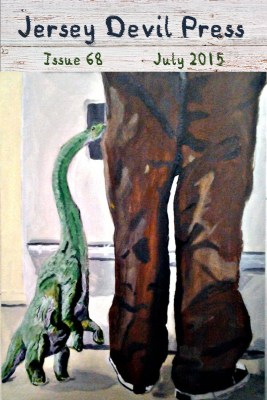
So how does Jersey Devil Press celebrate? The AMERICAN way! We ride wild mutant hogs, swallow bees, practice a little alchemy, hit the nudie bar of the undead, and build really big walls. Just like our Founding Fathers did.
I’ve been posting about this on Facebook and Twitter since yesterday — and loads of kind friends and fans have been sharing the news as well — but in case you hadn’t heard:
That’s right: it’s Fourth of July Week, and for this week only, my independent publisher, Columbus Press, has given everyone the freedom to download the Kindle edition of Hagridden for zero money. You don’t even have to pay taxes!
(See what I did there? Happy Fourth, Americans!)
So if you haven’t read my novel yet, now’s your chance. Loads of folks have already downloaded their copies, and they’ve helped launch Hagridden to #1 among war-genre novels on the free Kindle store (and, as of this post, we’re nearing the top 500 overall!). HUGE thanks to all those readers!
But I’ve been asking two favors of folks who download the freebie, just to show our thanks to Columbus Press:
When you finish the book, leave a review of it somewhere. On Amazon, or in Goodreads, or on your blog. Wherever. Loved it or hated it, either way — readers like to know how other readers are responding to the work, so you’re helping folks out when you leave a review. And small-press publishers, who aren’t just in this for the dollars but actually care about producing art, like to know how their work is being received out there.
And if you get the free ebook of Hagridden and love it, maybe buy a hard copy, too. It doesn’t have to be right away. It doesn’t even have to be for yourself — you can buy it as a gift and share that book you liked with a friend. You also don’t have to buy the hard copy from Amazon; in fact, I’d encourage you to buy one from your local indie bookstore or, if you shop online, from Powells.com. But however and whenever you decide to get a hard copy, it’d be a nice gesture to my publisher.
When I was in grad school, I once participated in a group presentation on Vonnegut’s Slaughterhouse-Five. I forget what all the group as a whole wound up saying, but I remember clearly that my first instinct was to focus on that famous first chapter, where the author of the book (Vonnegut himself?) explains why and how he went about telling this story about the bombing of Dresden in WWII and poor Billy Pilgrim coming unstuck in time as a consequence.
I was interested in the narrative device of opening with a metafictional prologue like that, with the voice that Vonnegut establishes in that chapter, with that chapter’s relationship to the author’s later appearance in Billy Pilgrim’s story. In order to sort those issues out, I realized I would need some kind of outline for my part of the presentation, and in a flash of insight, I realized that the text itself had provided me with one. It’s right there in Chapter 1, in the author’s own words:
The best outline I ever made, or anyway the prettiest one, was on the back of a roll of wallpaper. I used my daughter’s crayons, a different color for each main character. One end of the wallpaper was the beginning of the story, and the other end was the end, and then there was all that middle part, which was the middle. And the blue line met the red line and then the yellow line, and the yellow line stopped because the character represented by the yellow line was dead. And so on. The destruction of Dresden was represented by a vertical band of orange cross-hatching, and all the lines that were still alive passed through it, came out the other side.
I didn’t have any wallpaper handy, but I popped out to the local Walmart and picked up a roll of contact paper. (Close enough, I figured.) And I borrowed my wife’s (then-fiancée’s) crayons from her art set, and I recreated Vonnegut’s own outline.
I’m sad to say that I don’t know what happened to it. I know I kept it, but where it’s gone in all our various moves in the 15 years since I drew it, I can’t recall. (That’s okay: grab some crayons and make your own!) But I was thinking about that graph today, and about Vonnegut’s famous “shapes of stories” lecture, and about story arcs and plot points and outlines.
This coming week, I have set aside my writing time for outlining my new novel. It’s the one I’m taking to workshop at the Sewanee Writers’ Conference next month, and while I know where the story is headed and I’ve written and revised and thrown away a handful of outlines already, I’m still trying to figure out how to juggle the various narrative lines I’ve created.
(Okay, these Scrivener notes aren’t “outlines” as one might normally think of them, but it’s how I work on the computer.)
Then, on Friday, I got the current issue of Poets & Writers, and I found the “Literary Life” article by Benjamin Percy, “Preparing for the Worst: The Negatively Framed Outline.” (I’m sad to say the article isn’t available online, but get thee to a library or bookstore and look on page 23 of the July/August 2015 issue of P&W.)
Before this week, I’d been leaving off the outline and focusing on producing content, on letting the story evolve at its own pace and getting to know at least one of my characters as I explored his backstory on the page. I’d been playing out the organic line and seeing what came of it, and I’ve been getting great results — this character is really coming to life. But I was also thinking about the story to come, watching it recede the closer I got to it, like a dolly zoom in a horror film, and I was wondering just how big this book was going to get. How much content I was going to wind up producing only to throw it away later.
I was feeling the need for some sense of order, and then I read the Percy article in P&W, which opens with this sentence: “When I talk about the bloody business of writing fiction, I sometimes reference the act of mapmaking, blueprinting, planning out a story before beginning it.”
And I remembered Vonnegut’s crayons. I remembered Bill Roorbach’s “mapping the story” exercise (a couple of weeks ago, I was in Google Maps plotting the towns where the early action is set; I even got into GIMP and designed the floorplan of a character’s home, just to orient myself). I remembered my old screenwriting course in grad school, the lessons I learned about three-act structure and climactic moments and turning points in the plot.
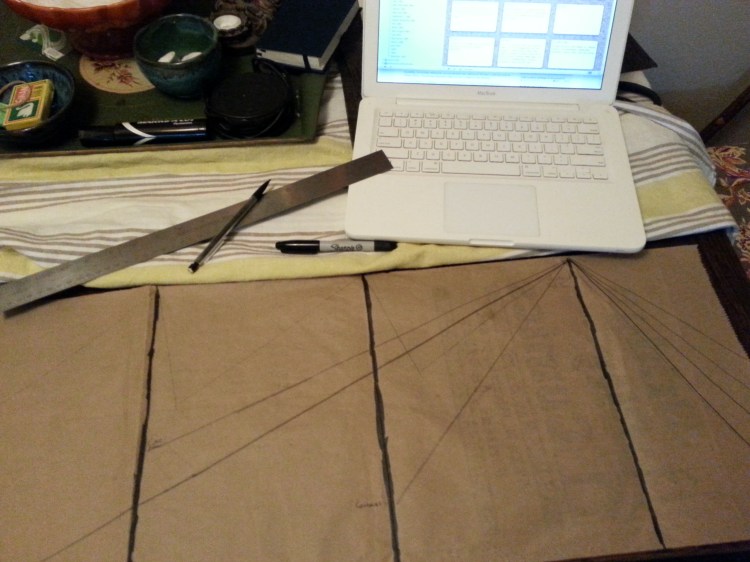
So today, ahead of schedule, I found a brown paper bag from my local comic book store, I slit it open longwise and spread it out, and I started drawing an outline (the image below isn’t clickable, because it might contain spoilers — zoom in at your own risk).
It’s not terribly colorful at the moment — I’m just working with pencil and black Sharpie — but it’s a version of something I’m toying with. The longest line is the protagonist, and he’s following the classic story arc of a long rising action toward a climactic moment, followed by a fairly rapid denouement.
The second line picks up at the first turning point and shows the arc of a secondary character, a lowly member of the protagonist’s gang who I’m planning to use as a kind of “Greek chorus” figure, chronicling the events from other perspectives. But he’s also a human being who plays a role in the events of the story, so he gets an arc, too, albeit a shorter one.
The third line is the antagonist, whom we’ll probably meet before the midway point in the story but I’ve put his introduction there for the time being because that’s when I think he’ll become a major, active force in the story. (Thanks, too, to author Ben Boulden — my cousin! — for pointing me in the direction of a historical figure who has become the basis for this antagonist. Another thing I’ve figured out ion the past week or so!)
You’ll notice that all three lines rise to the same climactic moment, everyone’s story coming to a head at once. That doesn’t mean they have the same climax — I’m hoping for some layers here — but in terms of story, there is one major event that’s going to occur in the vicinity of the 3/4 mark, and everything will unravel from there.
What’s less obvious are the pencilled-in mini-arcs, a rising and climax and falling action in each quarter of the chart. There are several other characters I’m working with in this book, and they’ll all have their arcs, too, some of which will be tied to the main arc but some of which will rise and resolve in tighter, more contained subplots. Those are some of the things I’ll be working out this coming week.
One other thing I’ve been thinking about is the relationship between external and internal conflict, and that’s probably where I’ll start breaking out colors. For this, I’m returning to a familiar favorite, Jesse Lee Kercheval’s Building Fiction. Her discussion of how to balance internal and external conflict and her concrete advice on bringing each to its own climactic moment (or “crisis action”) is fantastically practical:
External conflict is always resolved by a visible crisis action, no matter how small that action may be. Readers must be able to see the crisis action. It must happen in the external world of the story, like the runner winning the race or Cinderella sliding her foot into the slipper. [. . .] If exterior conflicts are resolved by an exterior crisis action, it is equally true that interior conflicts are resolved inside a character or in some secondary reflection of a character’s internal thoughts, such as dialogue or analysis by a narrator or author. If Cinderella’s internal conflict is Am I worthy of love? then the internal crisis occurs when she decides to put her foot in the shoe and risk being recognized and loved by the prince. The crisis is the moment she decided to act. [. . .] Either way the internal crisis takes place inside a character, and that leads to the external crisis action.
I’ve long known what the main external climax, or crisis action, is going to be in this novel, and I’ve known a few of the minor external crisis actions, too. But the internal crises are trickier, and it’s one reason I was setting aside plot and just exploring character the past few weeks: I was trying to get inside to find the motivations and internal conflicts.
And that brings me back to the Percy article in P&W. The title, “Preparing for the Worst,” is a reference to the worst-case scenario for characters: “If you know your higher-order goal, and if you know your character’s weaknesses, the calculus isn’t complicated.”
Percy then launches into an analysis of Raiders of the Lost Ark: We find out in the opening sequence that Indiana Jones has a mortal terror of snakes. Later, as Indy gets involved in the main plot, Percy argues that while Indy’s main goal is to find the Ark, he’s doing so mostly to prevent the Ark from falling into the hands of the Nazis. So, about two-thirds or so into the film, where does he find the Ark? In a pit full of asps. And once he hoists the Ark up out of the snakepit, he discovers that the Nazis are there waiting. They steal the Ark and seal Indy in the pit.
He has lost the Ark — and he might lose his life to the thing he fears more than a firing squad: “Snakes. Why did it have to be snakes? Worst-case scenario: check.
I started thinking about my protagonist’s worst fears, the main internal conflict I had discovered over the past few weeks, and I realized that the main crisis action actually had nothing to do with that internal conflict. So how to bring his internal conflict to a reasonable crisis point? I played Percy’s game, and based just on the few dozen pages I’ve written about this character’s backstory, I found his worst fears and realized how I could connect those to his situation at the external crisis point. So the internal and external conflicts can get resolved not at the same time, not through the same action, but at least in concert with each other. And, exactly as Kercheval suggests, the internal crisis point is going to lead to the external crisis point.
It’s been an illuminating couple of days, folks, and it’s all been focused on the thing I struggle with most: plot. But with Percy’s “worst-case scenario” exercise and his “Negatively Framed Outline” article, combined with Kercheval’s layered story arcs of external and internal conflict and Vonnegut’s crayons and story shapes, I’m beginning to see the bigger picture on this new novel.
I have a couple of blog posts I’ve been working on lately, including one about the difficulties of writing my new novel and a new addition to my Research for Fiction series. I had planned to finish and post at least one of those today.
But instead, I want to devote today to justice and equality in America.
This has little to do with writing or teaching, the usual purviews of my blog. But it has everything to do with humanity, and it’s too important a moment in our nation’s history to leave unremarked here.
We have a long way to go, America. We probably will always have a long way to go. But the march of progress goes on, and today we made a huge stride.
Many thanks, again, to David S. Atkinson for reviewing Hagridden last August — and here is a whole list of his other great reviews of books by writers I love, like James H. Duncan’s What Lies in Wait; the anthology Choose Wisely: 35 Women Up To No Good, edited by H. L. Nelson and Joanne Merriam; Jon Konrath’s The Memory Hunter; Jen Knox’s Don’t Tease the Elephants; Ryan Werner’s If There’s Any Truth in a Northbound Train; Bonnie ZoBell’s What Happened Here; and a whole shelf-ful of others. Check them out!
Do you read my reviews? Maybe you don’t even know I write book reviews. Maybe you should check them out. Here’s all that have gone live in the last year:
It’s over, folks. At long, long last, the Texas Rising series is finished.
But hang in there, because I still have to write about this last episode, which I’ve done more or less in the order it was presented us, mostly because of some problems I want to point out with both the narrative and the historical chronology.
So, here we go.
We open, weirdly, not in Texas but in New Orleans, at the “Absinthe House,” a kind of brothel/drug den. A second screen tag tells us that two months have passed since San Jacinto. Sam Houston is inside the Absinthe House, in his underwear, vomiting, a passed-out whore underneath his bed.
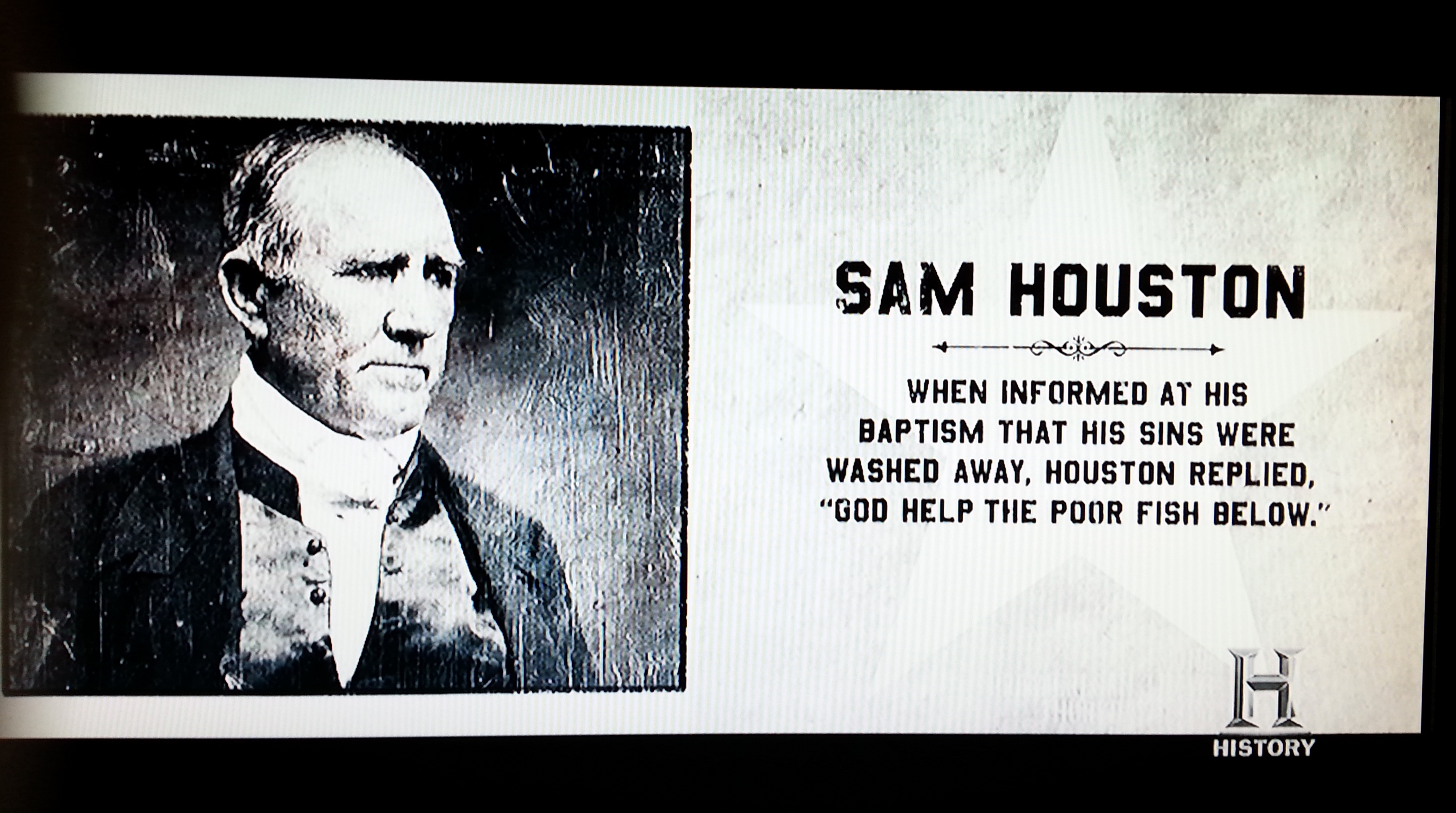
Most of the character cards at the end of the series were thin or bizarre, but I liked this one on Sam Houston.
I started this series praising Bill Paxton for doing the best he could with this poorly written role, but in some respects, by the end I’m afraid I have to reverse my praise: Paxton has a few fun moments in this last episode, but his performances have become increasingly rote, almost disinterested. If the phone had been invented in 1836, he’d be phoning it in. Conversely, I find myself praising the writers for being willing to show Houston in all his disgusting bodily failures — his drunkenness and whoring and wounded leg — and his willingness to leave Texas to its own devices now that he’s won the war. That’s not to say the writing is any good, but at least they aren’t lionizing the star of their televised revolution. It’s something.
Shortly after we see Houston at his weakest and most debauched, we see a sickly but no less courageous Deaf Smith and his Rangers at what might be — what is certainly being presented as — their most heroic: in a fairly effective, if standard, rescue sequence, the Rangers not only defeat the rough “garrison” of Mexicans who kidnapped and have been abusing Emily West, but they also outwit a much larger, more organized Mexican force riding in from the desert and the Rangers make off with a small herd of horses. All to a by-the-numbers-but-halfway-decent musical score overlaying the action.
I wonder if this is meant to represent Deaf Smith’s final action in Laredo, when Smith and his Rangers accomplished much the same feat (though not involving Emily West in any way). Of course, the Laredo action occurred not a few months but almost a year after San Jacinto, though since when has Texas Rising been concerned with facts or chronology? Case in point: For some reason, later in the episode when Smith finally dies, Houston not only personally eulogizes Smith at the funeral, but Houston was actually present at Smith’s deathbed. In reality, Smith died in late 1837 in Richmond, Texas, and Houston (sort of) eulogized him not in person but in a letter (which, strangest of all, the series quotes only a single line from!) not to Smith’s wife or family but to a woman (not Emily West) that Houston was courting at the time.
Did you catch all those inaccuracies and inconsistencies? (Because there’s more to come related to this sequence . . .)
Anyway, I’m sad to report that Jeffrey Dean Morgan, like Paxton, has been reduced to mostly a one-note performance by this last episode, though he still manages to do a lot with that single note.
Long story short (oh, that I wish that was so), the whole kidnapping and rescue setup from the previous episode gets resolved inside of twenty minutes, which means that, as I feared, we have a lot more padding to go.
A lot of that padding rests in Victoria, where the Texas Rangers decide to celebrate their victory over Mexico and where, for some reason, they subsequently spend most of the rest of this episode. But more on that in a minute.
One good thing that happens in Victoria is that Lorca rides to town, asking after the widow Pauline Wykoff — remember her? The sole survivor from the Comanche attack a couple of episodes ago? Lorca is trying to find her, and Empresario Buckley (of all people) points him toward the homestead.
Absurdly, the rescued Emily West is also there, helping the widow Wykoffcare for Deaf Smith, who — again, absurdly — is on his deathbed from tuberculosis. (Just to clarify: Smith died in Richmond, not outside Victoria, and he died in the home of a man named Randal Jones, not a fictional widow named Wykoff. But I suppose we have to keep at least some of these invented loose ends connected to the historical figures, so, fine, now he’s dying near Victoria at the Wykoff homestead. Whatever.)
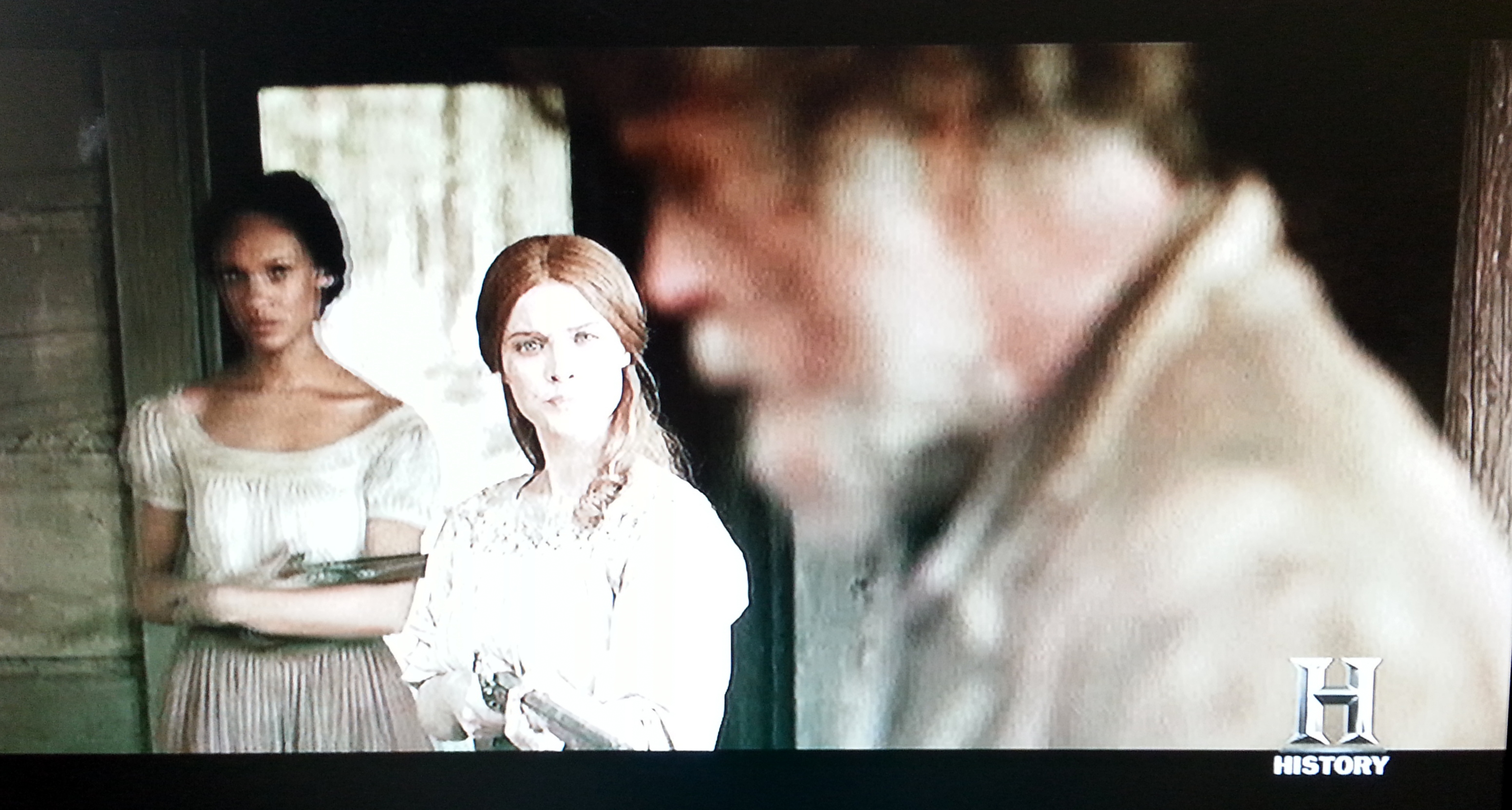
What’s interesting is that, when Lorca arrives, we at last get a piece of genuinely decent writing. He rides up and the widow meets him on the porch with her rifle raised. Emily West stands behind her, backing her up with a cocked pistol. It’s a nice show of strength that plays on scene from the previous episode when the Victoria townswomen quietly and bravely took up arms.
Do NOT fuck with these women.
And as Pauline Wykoff holds the mounted Lorca in her sights, he makes her a speech:
“I am corrupted by war, unrecognizable to myself. An ugly man. I feel kinship with you.”
Pauline Wykoff says, “You’re saying I’m ugly?” and Lorca quickly demurs, feeds her a line about how beautiful she is. Then he continues his speech:
“In your suffering, I see love. In mine, hatred. Your pain, it draws light into the world. My pain repels it.”
Pauline lowers her rifle and considers him a moment, then says simply, “Pretty words.”
Pretty words indeed.
Honestly, it’s a silly, indulgent scene. The dialogue is overwrought, the kind of thing you’re never supposed to commit to the page because human beings don’t talk that way. Who among us ever really uses “pretty words” in our daily discourse?
But at least there seems to be some effort behind this writing, some attempt at beauty in the language that has mostly been lacking from the wooden dialogue and grandiose speechmaking and awkward exposition of this series.
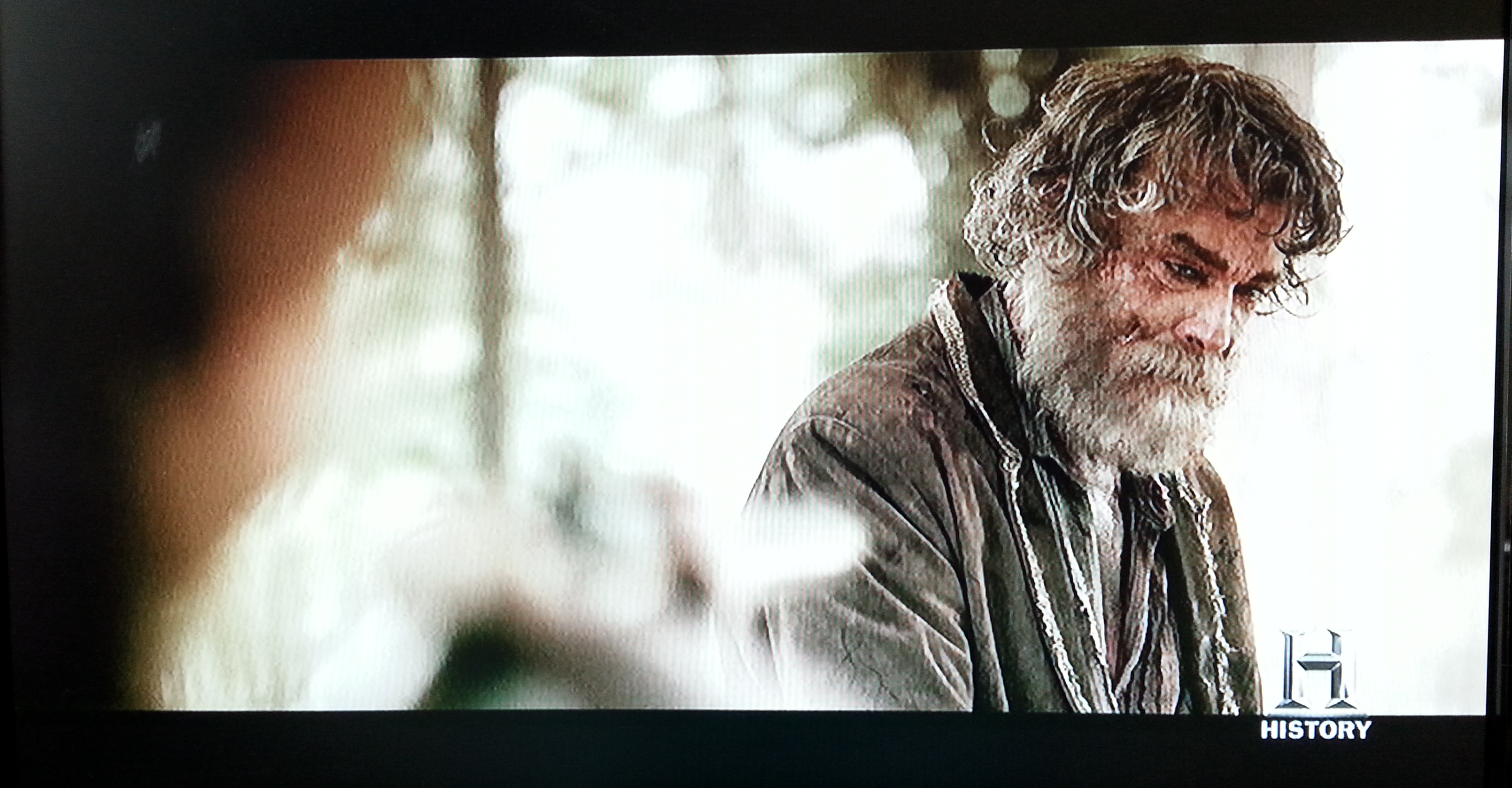
This is a man in pain.
And, truth be told, Ray Liotta does his most effective bit of acting in this scene. One might argue that it’s his most affected bit of acting, and I won’t disagree, but I did genuinely find it moving. And Sarah Jones, as Pauline Wykoff, matches him moment for moment, a constantly shifting facial expression and some excellent hitches in her voice, a wonderful acting counterpart for Liotta. I especially liked the guardedness in her shaking but courageous voice as she warns him, “You ain’t come calling, have you? ‘Cause I ain’t ready for that.”
The actual content of Lorca’s speech is pretty empty — he’s certainly right about his own inner ugliness and darkness, but I haven’t really seen anything in Wykoff that would suggest love in her suffering or some magical light in the world. And how Lorca could know all that having just ridden up on her (when he asked about her in Victoria, he didn’t even know her name), who can say.
But just as a piece of writing, I enjoyed it.
What follows — Lorca’s cheap unburdening of himself by handing Wykoff his blood money and asking her to do good with it — nearly ruins the scene. But as he rides away she asks his name, and his breakdown in the saddle, sobbing his true name (Tom Mitchell) is yet another bit of solid acting from Liotta.
And the climax of the scene, where Wykoff invites Lorca (now Mitchell) to supper and he accepts a wash and shave from Deaf Smith’s Tejana wife — is a quietly powerful moment.
You can see him struggling with his trust issues . . .
. . . but look how vulnerable he finally lets himself be. And look how kind Guadalupe is to him.
Sadly, these few minutes of good television are immediately undermined by the series’ return to corrupting history as Houston frees Santa Anna from his POW camp and claims to have “arranged an invitation to Washington” to meet with US President Andrew Jackson.
In truth, the United States claimed Santa Anna as a prisoner of war (by what legal right I’m unclear on; perhaps Houston did have some hand in that part of it), and while Santa Anna did meet once with Jackson, he remained a prisoner in the United States for six months.
This is the kind of license I would ordinarily excuse — even appreciate — in a series like this. But by now I’m weary of the unnecessary changes and manipulations of fact, and what might have been creative license in moderation has become either ignorance or abuse in abundance.
And it gets worse.
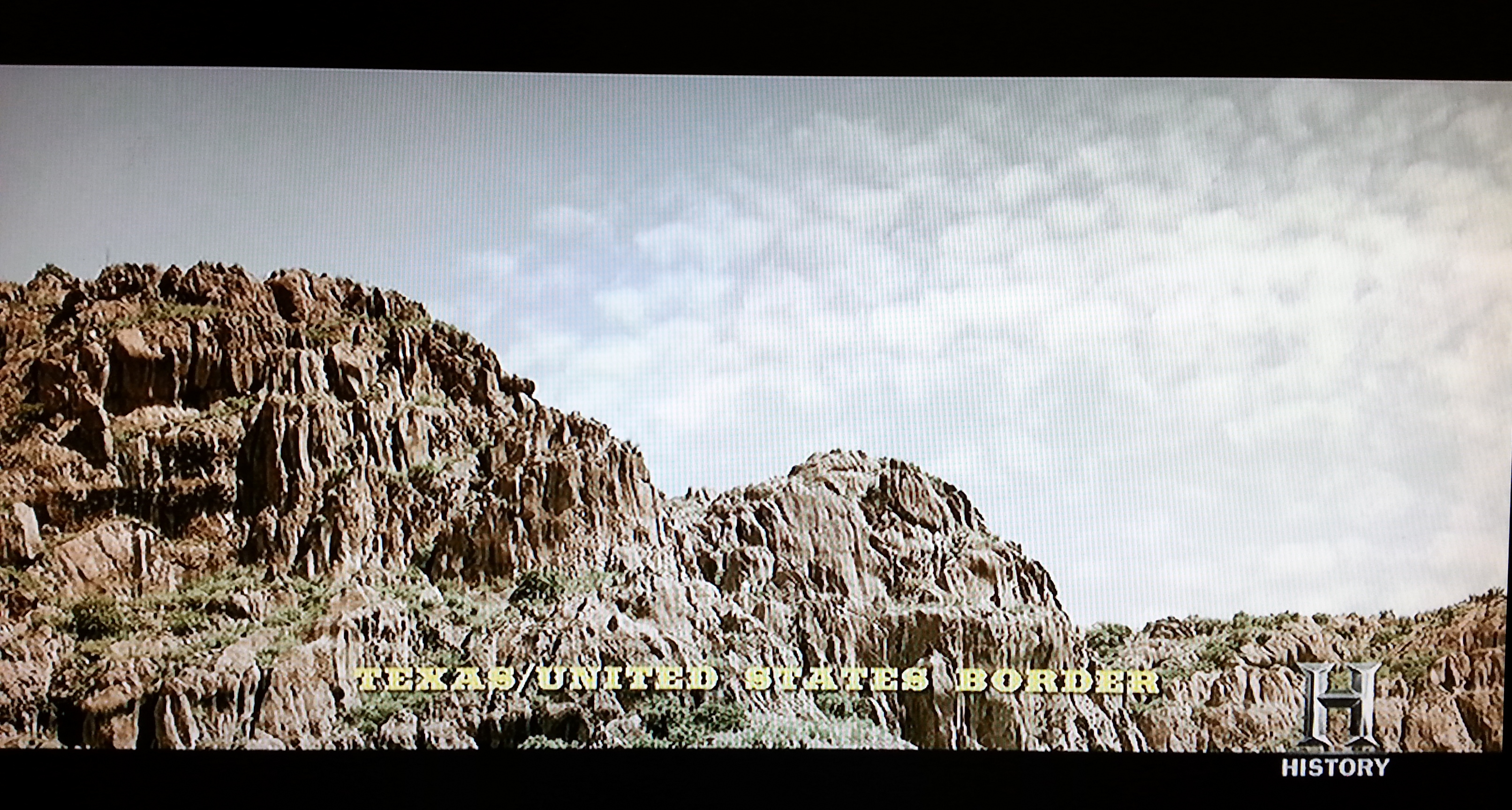
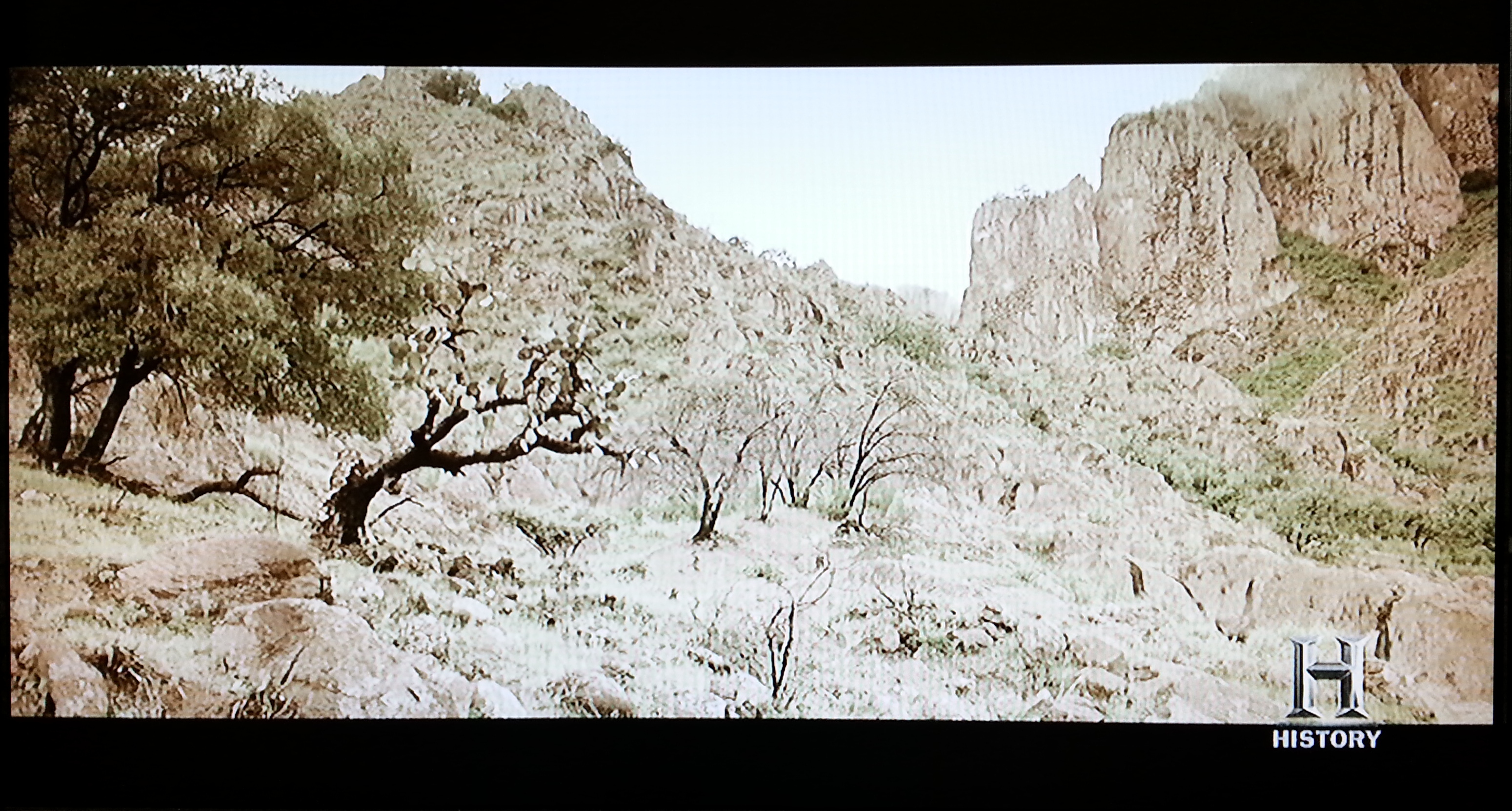
The Texians transport Santa Anna to the United States, apparently planning to hand him over at the Texas border with the United States. And so we get an establishing shot, complete with location tag: “Texas/United States Border.” And it’s all Mexican mountains.
Texas/US border, you say?
Look. I’ve said over and again how much the geography of this series irritates me. But this is genuinely appalling. Let me explain: When Texas first gained its independence from Mexico, the new Republic shared precisely one border with what was then the United States. To the west and south was nothing but Mexico and the contested territory between it and Texas. To the north, sovereign Indian territory. The only border with the US was to the east, where the Sabine River separates Texas from Louisiana.
Even Wikipedia knows their history better than History.
That means the only border this could be is somewhere along the Louisiana border.
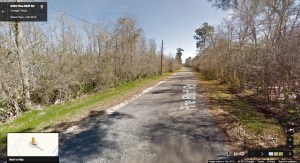
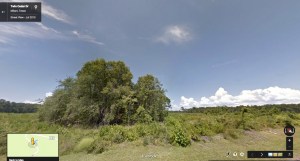
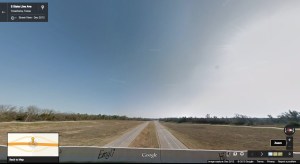
Here are three screenshots from Google Street View along Texas side of the Louisiana border today: the flat southeast coastal woods of Orange, Texas; the flatter eastern river woods of the Sabine National Forest; and the flattest open plains of northeast Texas at Texarkana.
Near Orange, along the southeast Texas border
In the Sabine National Forest, halfway up the east Texas border
Near Texarkana, on the northeast Texas border
You won’t find any mountains like these in East Texas.
I’m not buying it.
But wait — it keeps getting worse.
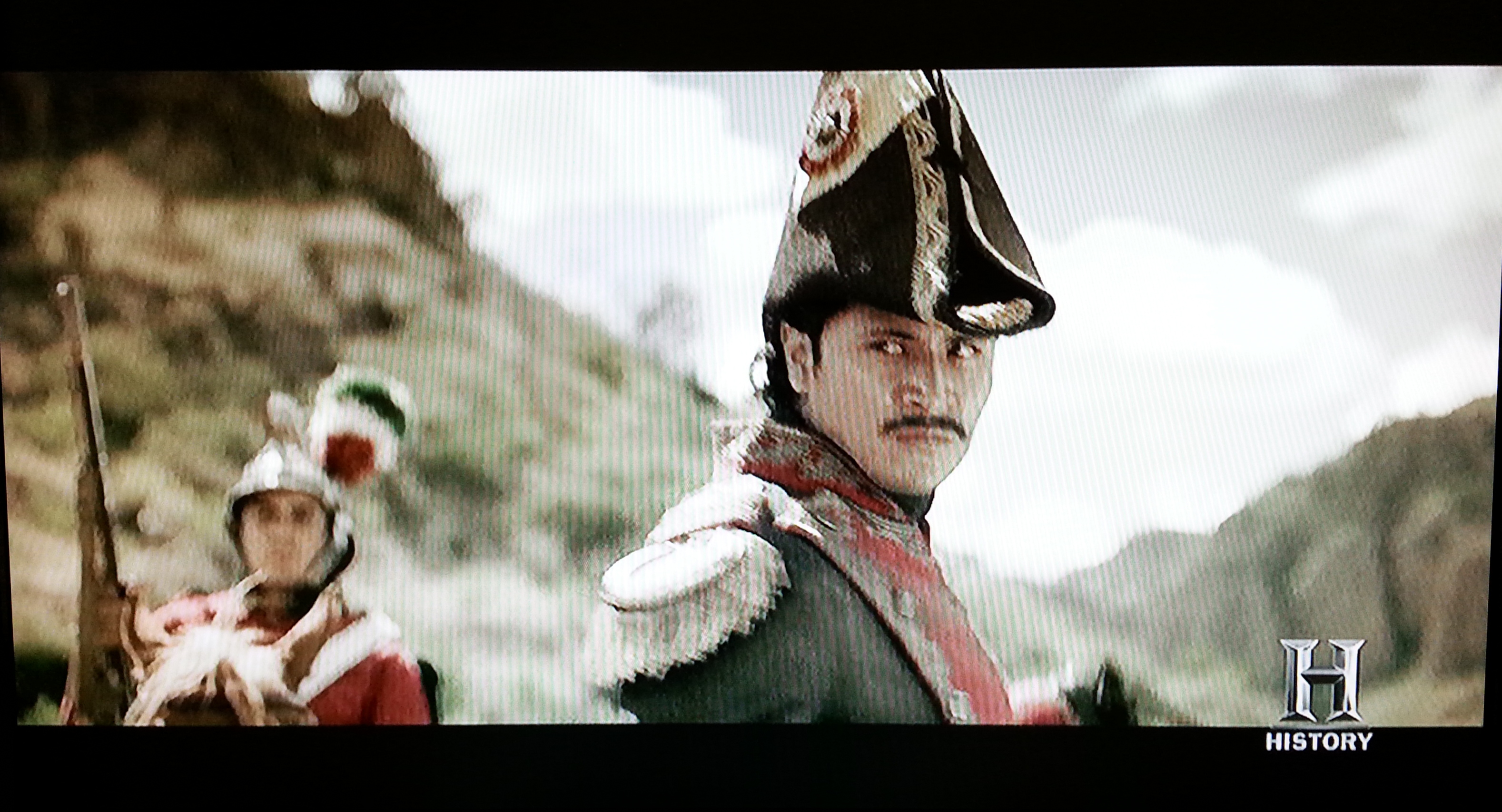
Portilla looks surprised to even be in this scene.
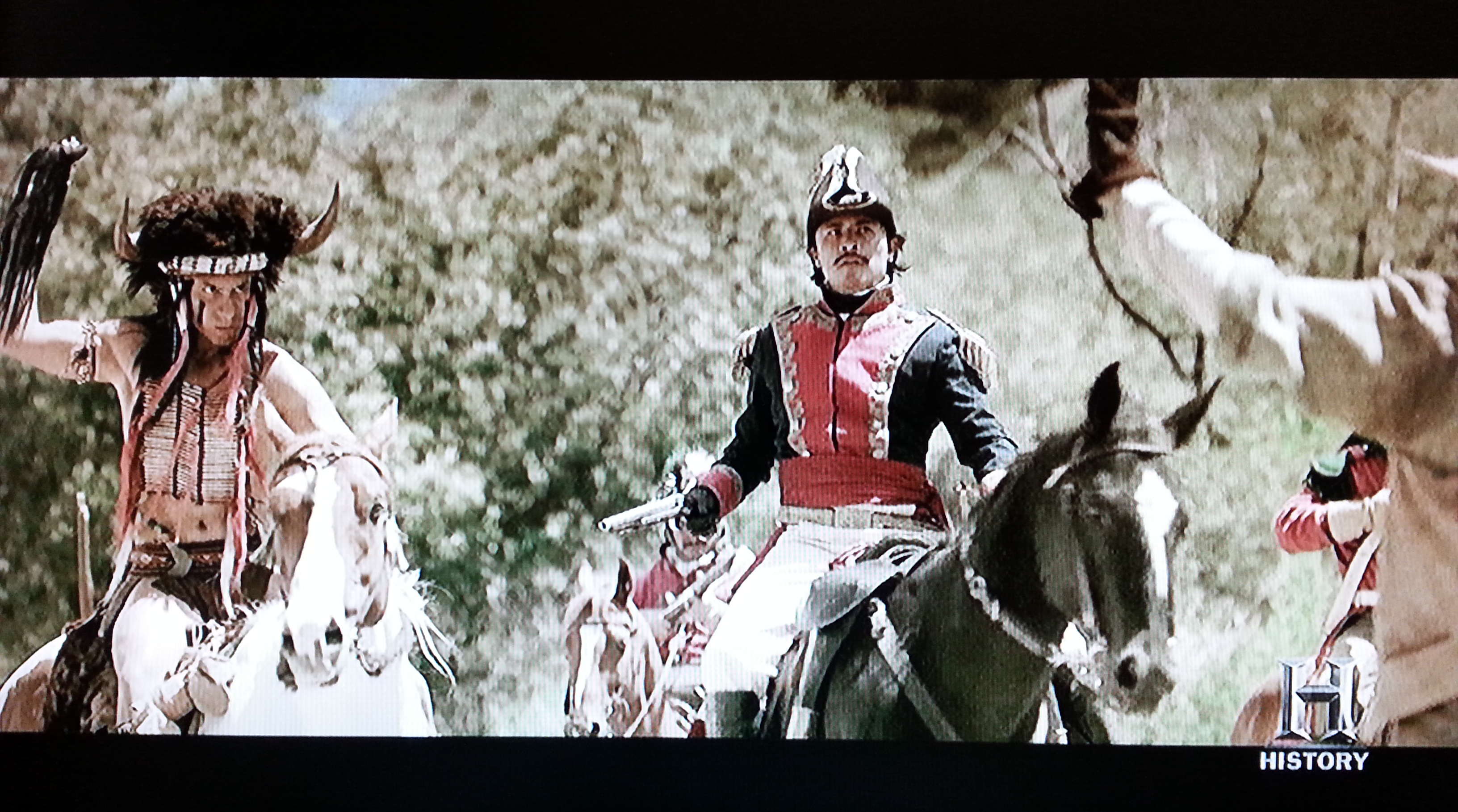
At this border, in an event I can’t find any record of, a surprise Comanche attack reveals itself as a rescue attempt by Santa Anna’s right-hand-man, Lt. Colonel José Nicolás de la Portilla (whom the cast list names simply as “Portilla,” reducing this infamous historical figure — who had a hand in the execution of prisoners at Goliad — to the role of mere sidekick). I get that the series might have wanted to show the cooperation between some of the Comanche and Santa Anna’s troops during the revolution, but 1) they’ve had plenty of opportunities to show that actual cooperation in the previous four episodes, and 2) this never happened. According to the Texas Handbook, following the defeat at San Jacinto, “José Portilla was sent by Urrea to the detachment under the command of Vicente Filisola, and he participated in the retreat of the Mexican army after San Jacinto.” So, retreating to Mexico, not attempting to rescue Santa Anna at the US border.
Portilla looks pretty pissed that his role got changed so much.
It’s like the writers at History forgot that any of this was, in fact, history. They just skimmed a few Wikipedia entries to gather a cast list and then made the rest up as they went. Which, honestly, is fine with me — we fiction writers do that all the time, and I built a whole novel of fictional people around historical events in the South. (It’s called Hagridden.) That’s why we call what we write fiction.
But I think it’s safe to say that whatever claims to historical legitimacy this channel had earned with their fine productions in the past, they’ve squandered it all on this series and most folks are simply dismissing them now, the way TLC has long abandoned any sense of being “The Learning Channel” and MTV hasn’t played actual music on television in decades. Now, History isn’t history, it’s just “story” — and bad story at that.
Because, that’s right, it gets worse.
Remember the Empresario Buckley subplot in Victoria? How he’s some ruthless villain twisting his mustache and committing cruelty and fraud against his population? Have you been wondering how the series would finally wrap up that sideshow?
Seems Buckley is an even bigger sonofabitch after Texas becomes a Republic, as he reneges on his deal with the widow Wykoff and forecloses on her homestead, then claims the freed Emily West as his new “indentured servant” (a thin Texas euphemism for slave at the time) and carts her off to work in Victoria.
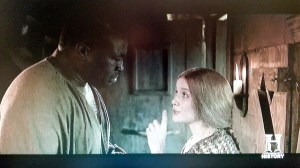
Actually, at first he tries to take Pauline Wykoff’s actual slave — that’s right, our beautiful, fierce, survivor heroine owns a slave. Not a Texas “indentured servant” — a flat-out slave. His name is Nate, and he’s the one who rescued Pauline Wykoff from the Comanche attack. I haven’t said too much about him because he hasn’t had much to do — and that’s part of the problem. I might have missed someone, but by my count, there are exactly three African-Americans in this entire ten-hour mess: Emily West, her brother who gets killed literally in the first five minutes, and Nate the slave, who spends most of the series either laboring on the farm or frantically shouting “Miss Pauline! Miss Pauline!” every time anyone approaches the home. This is no criticism of the actor, Amen Igbinosun, because I’m sure he’s just doing what the director told him to do, and he does it well. But we’re talking Miss-Prissy-level bullshit here.
Anyway, Buckley tries to confiscate Nate, and Wykoff declares that he can’t take Nate as property because she just freed him and he’s no longer a slave. Which (for some stupid reason) is how Emily West winds up volunteering as Tribute to become Buckley’s slave instead.
After this all gets settled, Nate — burbling like a scolded child — comes pleading to “Miss Pauline” and asks why she freed him. And she promises him that everything is okay, he’s really still her slave but they’ll just keep it a secret. And he thanks her for it.
Folks, I can’t even with this.
We are talking about the only prominent African-American man in the whole series and he’s not only stuck in the role of slave (which, fair enough, because this was Texas and Texas was eager to be a slave state, independently or in the Union) but his character, infantile and desperately dependent on his masters, is actually grateful for this. And this is the ONLY representation of slavery in Texas we get. There are no counterpoints, no other characters to compare this with, no mention of slavery in Texas beyond that initial execution in episode 1 and this portrayal.
That’s some bullshit, folks.
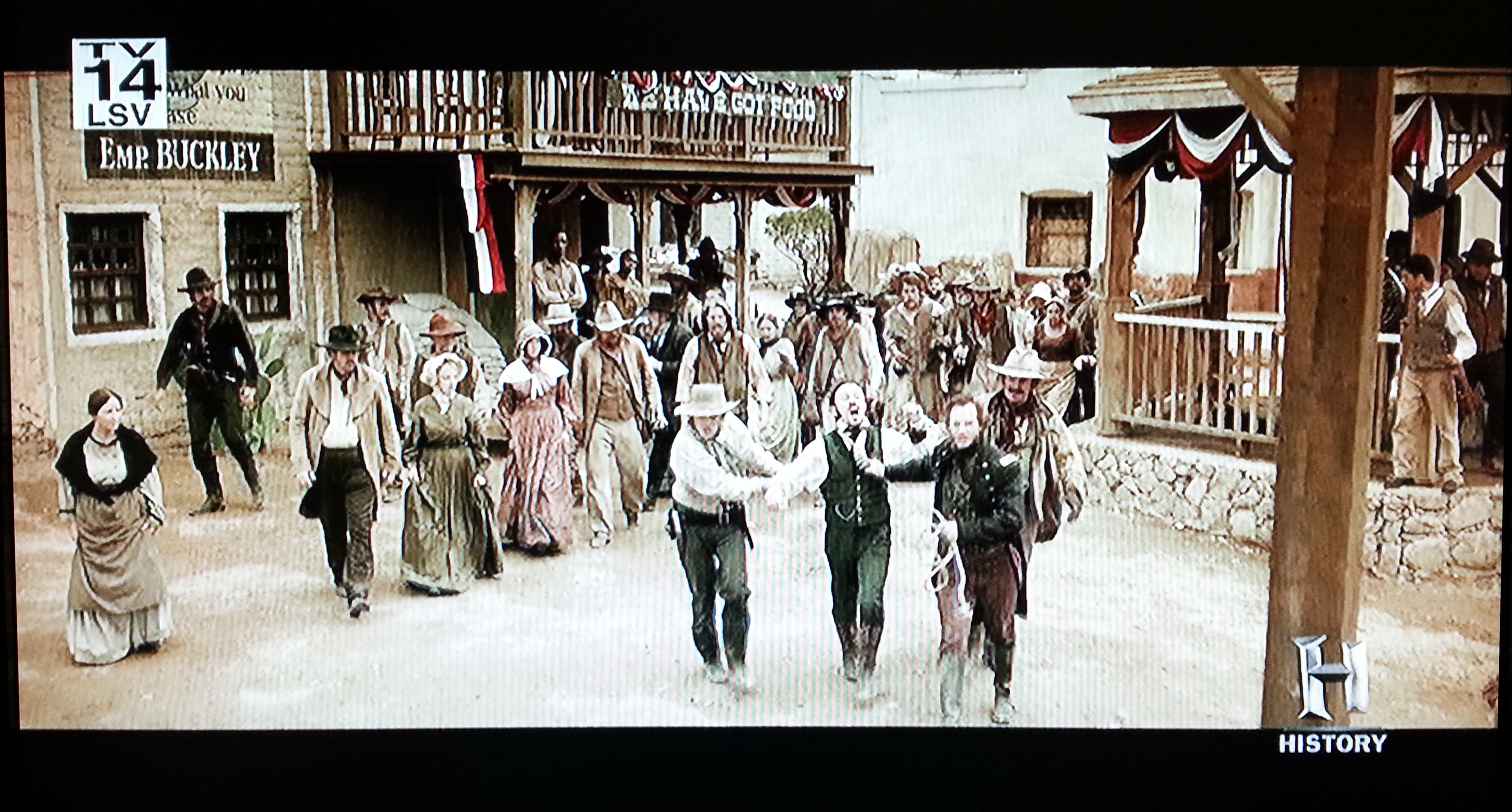
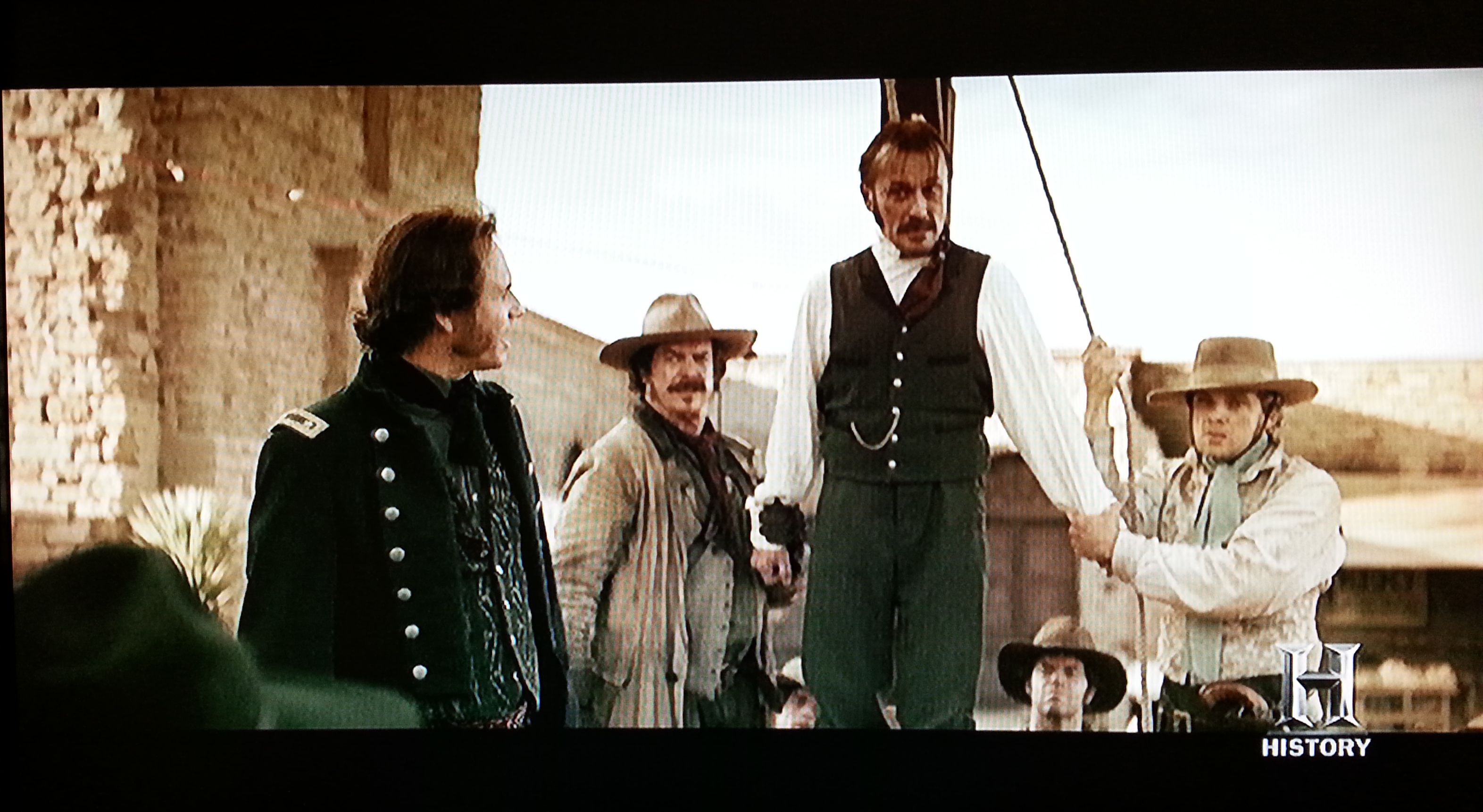
But wait! We aren’t finished with the stupidity yet! Because, meanwhile, the menfolk ride again to Emily West’s rescue (so much for the strong women in this show) and Sam Houston himself arrests Buckley and strings him up in town in a mockery of Buckley’s own “frontier justice.”
So far, sexism aside, this is all good fun, and while not historically accurate, we’re dealing with an invented figure here anyway, so there’s no real harm.
Until Houston, publicly before the gathered crowd, offers a stay of execution to Buckley in exchange for “retribution. You will give your hotel and saloon to Mis Emily West in recognition of her heroic sacrifice in capturing the tyrant Santa Anna and liberating Texas!”
Oh for the love of god.
Look. There is a hotel that bears her name: the Emily Morgan Hotel. (Some accounts of Emily West give her last name as the name of her former slave owner, James Morgan.) That hotel is in San Antonio (it’s “the offical hotel of the Alamo”), not Victoria. And even on the hotel’s own website, they dispute this version of West/Morgan’s history:
While the loss of the battle [of San Jacinto] is officially attributed to the overall carelessness of General Santa Anna, the folk legend of Emily Morgan’s role in the battle began to grow, with portrayals of Emily ranging from a sweet young girl who distracted the general with a simple dance to a cunning and clever vixen who drugged the Mexican army’s leader as he slept.
So that “heroic sacrifice in capturing the tyrant Santa Anna and liberating Texas” is, at best, folk legend — and in this case a legend in service of advertising the hotel.
As for the hotel itself and West/Morgan’s role in Texas following the battle (also from the hotel’s website):
Not much is known about Emily Morgan’s life after the end of the Texas Revolution; after several disputes over her status as a “free black” — her papers confirming this were lost when she was captured by the Mexicans — it is believed she returned to her home state of New York.
So, that side story where she volunteers as an indentured servant to help free the widow Wykoff? Fine. It’s a fanciful creation that we can add to the legends about her if we want to. But this setup for West being some kind of hotelier and independent businesswoman in Texas, widely acclaimed by those highest in Texas office as a key savior in the Texas Revolution and, afterward, snuggling up with Houston himself as they renew their (fictional) love affair? (He even proposes to her. If you want to believe that.)
Well, that’s kind of hard to do all the way from New York.
(Get a rope.)
After the Emily West nonsense, there’s a celebration in West’s new saloon, where a bunch of the Rangers and veterans reconvene for the first time and — you guessed it — we return to the bank robbery plot from two episodes ago.
Or, sort of.
What actually happens is that one of the rowdiest of the would-be robbers drunkenly tussles over a pistol and accidentally shoots the love interest of that weak romance plot I’ve been ignoring, and in the confusion, the shooter sneaks away. So I suppose the bank robbery in Galveston is off.
Sure enough, a half-hour later in the episode and weeks or months later in the timeline, a Louisiana man bursts into the same saloon where all the Rangers are still sitting around playing cards (do these guys not have jobs anymore?) and accuses the Cajun Ranger of being a horse thief. The Rangers rush to his defense, but the Cajun confesses so instead they all chip in to reimburse the victim for his stolen horse.
“What matters is what we do from now on,” fake-Indian Billy Anderson declares, and someone else jokes, “I guess it’s a good thing we never robbed that bank.”
Another Ranger says, “What bank?”
Exactly.
After the commercial break, we’re back in the saloon watching gamblers drop antes, one of which is Wallace’s stolen bracelet that Hays, in the saloon, recognizes. And we finally get some closure on the whole Hays and Wallace “stolen goods” subplot from three episodes back.
And that rowdy would-be bank robber who shot a girl and fled town, he discovers a woman drifter asleep in his camp, and she likes to drink hard and live hard, and they settle into the campsite to get drunk together. So, looks like all our loose ends are getting happily-ever-afters.
Even Pauline Wykoff and Lorca — sorry, Tom Mitchell — flirt.
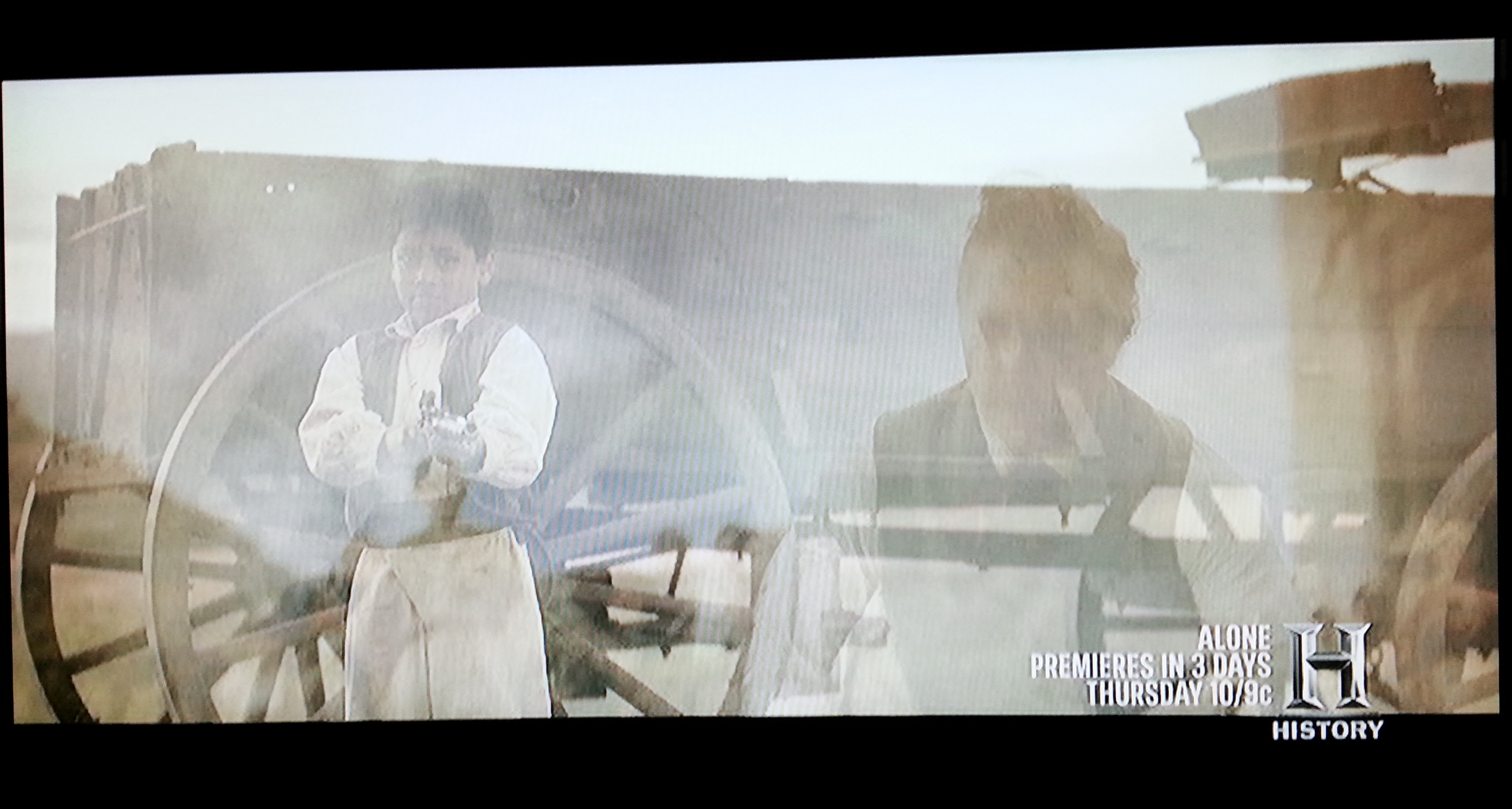
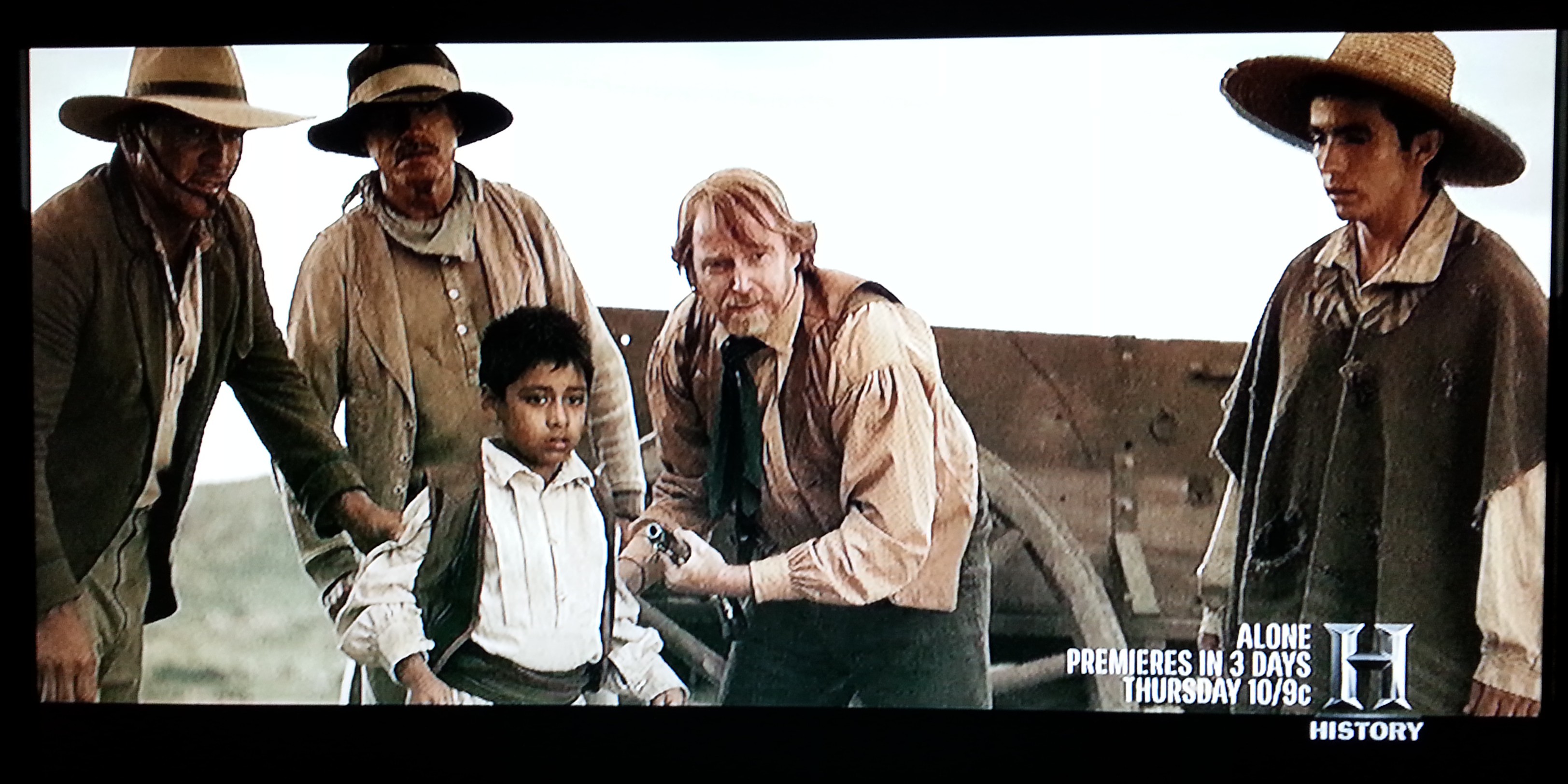
But then a young Tejano boy recognizes Mitchell as Lorca and murders him.
*sigh*
As Lorca lies dying, he calls his young killer to him and holds the boy’s hand. “I understand,” he tells him.
This kid’s gonna have issues.
Adios, Lorca. I’m gonna miss you.
I suppose it says a lot about this whole series that with a history as rich as Texas’s, with a narrative as stuffed with heroes and deep-rooted motives both political and personal, the most compelling character with the strongest story is the most self-confessedly fictional.
Because, as I said, History just didn’t know what to do with the history, so they focused all their attention on the invented.
So, RIP Tom Mitchell. There’s still 20 minutes or so left in the episode, and we’ll miss Ray Liotta for all of them.
Because the ending . . . .
I think they saved the worst for last.
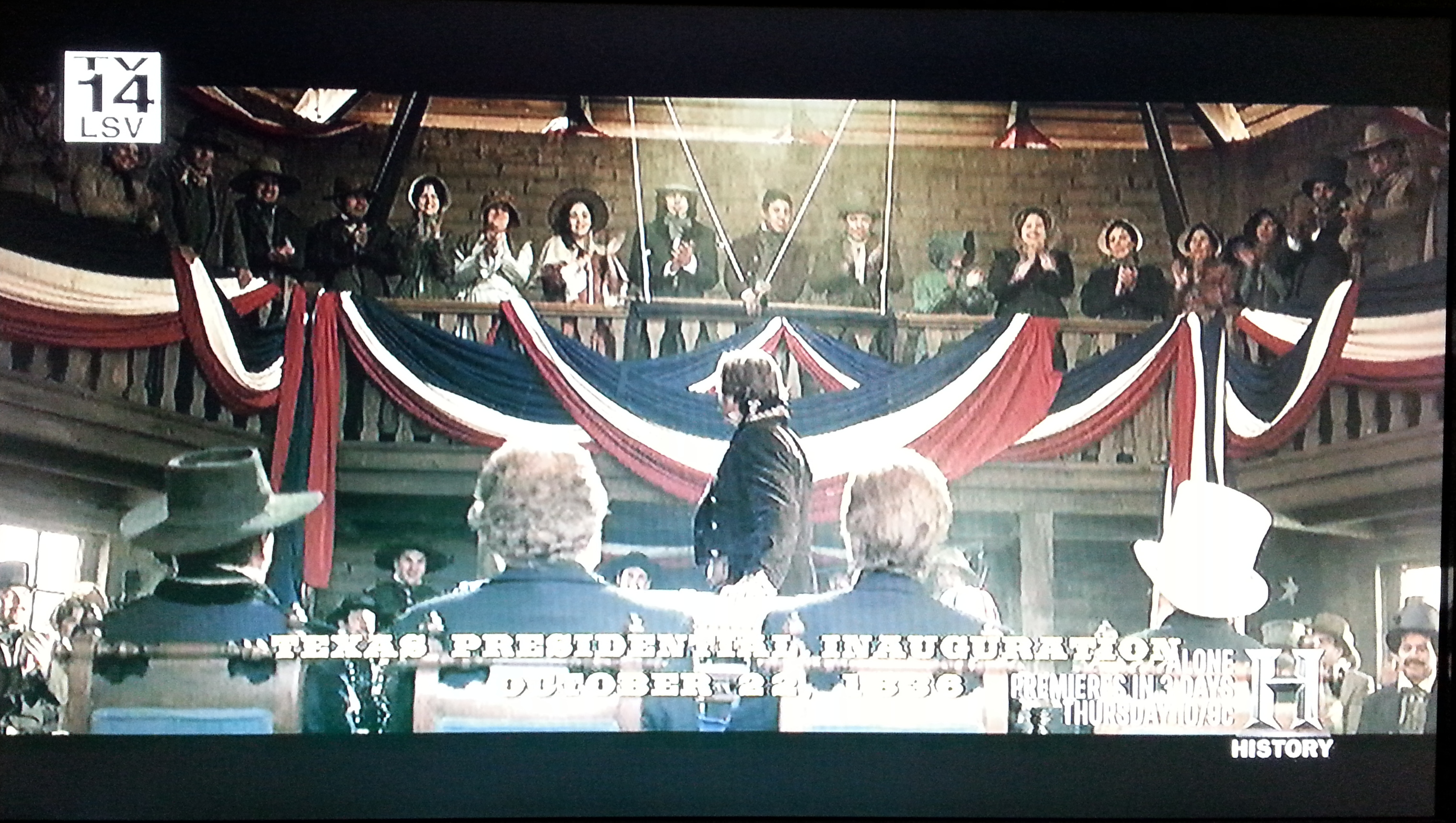
Remember how I mentioned earlier in this recap that folks are trying to get Sam Houston to help lead Texas? That was mostly Thomas Rusk, and fairly early in the episode he entreats Sam Houston to run for president. Houston says he has no interest in politics — he declares he plans to vote for Stephen F. Austin.
More than an hour later, there’s an abrupt trio of intercut scenes: a Comanche war party warning against the coming of more land-greedy white folks, a triumphant return to Mexico for Santa Anna, and the inauguration of Sam Houston.
I guess Sam Houston’s endorsement of Stephen F. Austin didn’t count for much.
First: When did this happen? The screen tells us October 22, 1836, which is correct — though this is more than a year before real-life Deaf Smith dies, and we’ve already seen that on screen.
But more importantly, the only other time we ever saw any screen reference to Houston’s service in Texas political office was more than an hour before this, and he was swearing it off entirely. Nowhere in this episode did we ever see Houston change his mind. Nowhere did we see a swell of public support urging him to run (he won in a landslide with 79% of the vote.) Nowhere did we see his campaign against Stephen Austin — nor, for that matter, his fraught, politically contentious relationship with Mosely Baker, who has eaten up a bit of screen time this series and who was in real life a thorn so troublesome in Houston’s side that Baker tried to impeach Houston.
I’m not saying I wanted a political drama, but good grief, for all the time we wasted on loose ends from invented subplots in this episode, surely they could have spared a few minutes to transition from Houston the weary retired general to Houston the politician and President.
More troubling is this moment’s intentional matching with the other two crowds of riled, cheering citizens, the Mexicans and the Comanches.
In fictional Mexico, the fictional Santa Anna trudges up steps in defeat, telling his compatriot that he’s been beaten and now he must face an angry crowd. Instead, he is celebrated, and he gleefully tosses his hat into the mob and begins his plans to re-invade Texas.
In real Mexico, the real Santa Anna returned a disgrace. He did resume his role as President, but the Mexican Congress stripped him of much of his authority until a European invasion gave Santa Anna the excuse to seize much of his power back, after which he ruled off and on as a dictator and today is so reviled in Mexico that one dare not even speak his name in public.
And finally, there are the Comanches. It’s troubling enough that they spend most of this series either whooping on horseback or standing around on mountains whooping into the air. Here, at least, their warrior leader Buffalo Hump is given some vaguely accurate lines, because he’s right, the White people are coming, and it’s going to be horrible. They will have to fight back against the onslaught of White expansionism.
But for both the Texas inauguration scene and the Mexico return scene, the music is swelling, horns and guitars in a patriotic lilt. For the Comanches, the music is jarringly discordant, full of low notes and an ominous undertone. Judging solely from the music, the Texians and the Mexicans are proud, triumphant people; the Comanches are a savage, dangerous threat to them both.
And this has been one of my biggest problems throughout the series. The first is the geography; the second would have to be the flat-out, unapologetic racism this series shows, earlier toward African-Americans and here toward Native peoples.
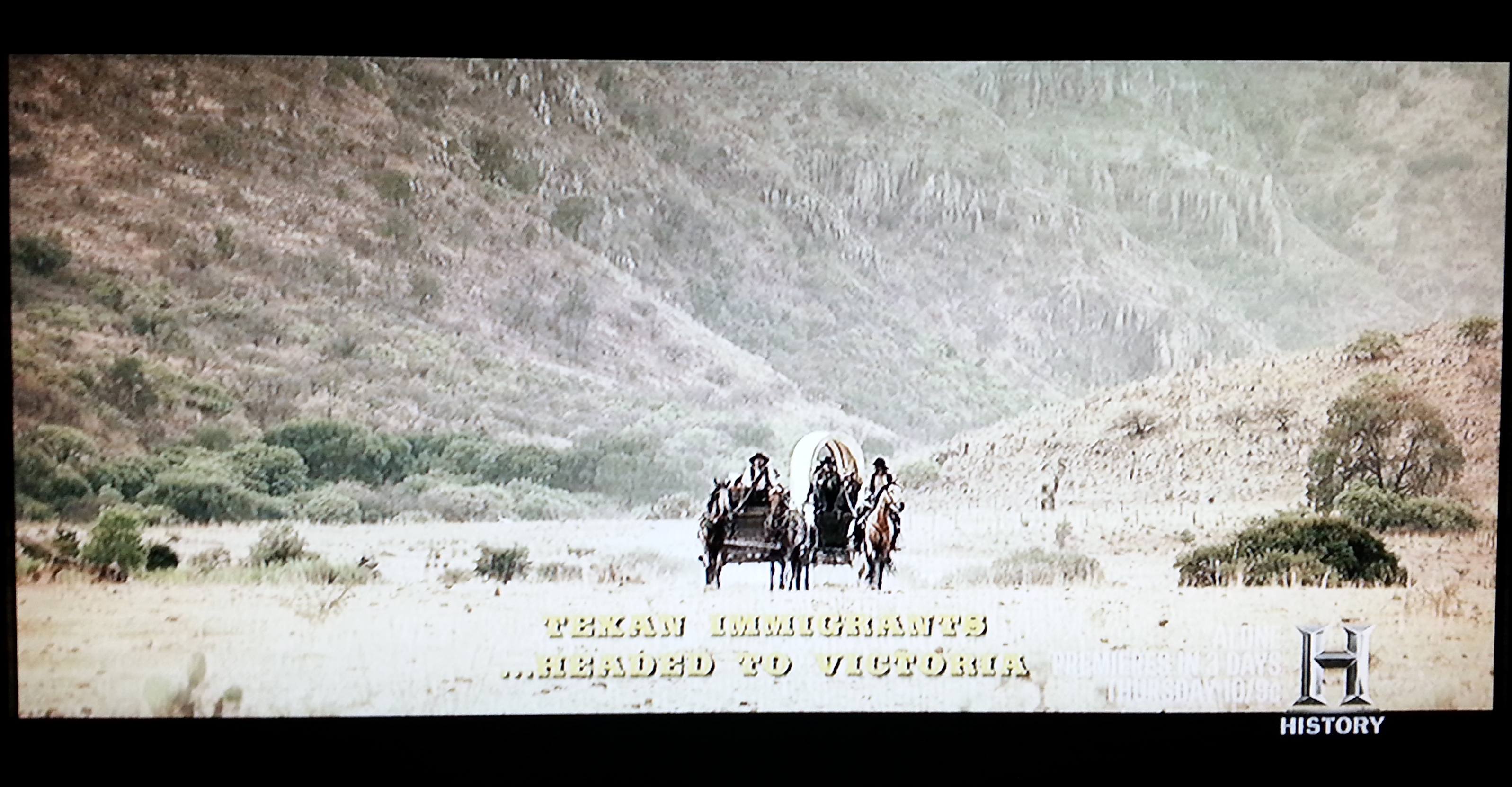
This is reinforced in the very next sequence, the very last scenes of the series, when a gang of Comanches — unprovoked — attacks a pair of immigrant settler wagons. A rider escapes to warn the town, and the Rangers mount up and ride out to the rescue.
Watch out, White people! There are scary Indians around! Because, you know, it’s their land. (Actually, this is Mexico. Stupid geography!)
This is true enough. The Texas Rangers did battle Natives for decades and, as I’ve noted before, it’s what Hays and Wallace especially were most notorious for.
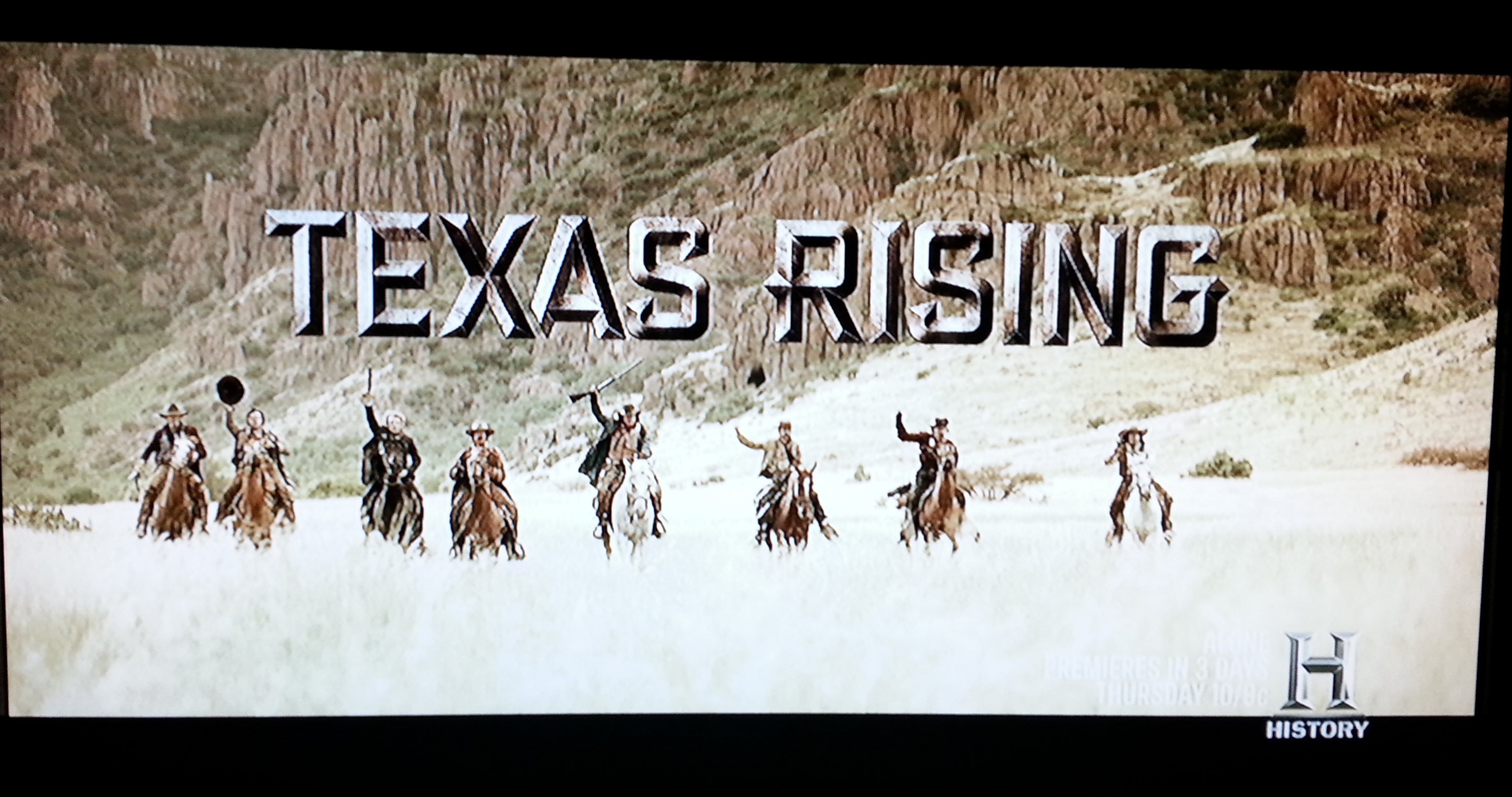
But literally the final shot of the series is a freeze-frame of cowboys ahorseback, rifles and pistols in the air, as they ride “heroically” off to kill Native Americans.
Texas Rising toward what? Another threat of their own making? *sigh*
That’s the legacy this show wants to leave us with.
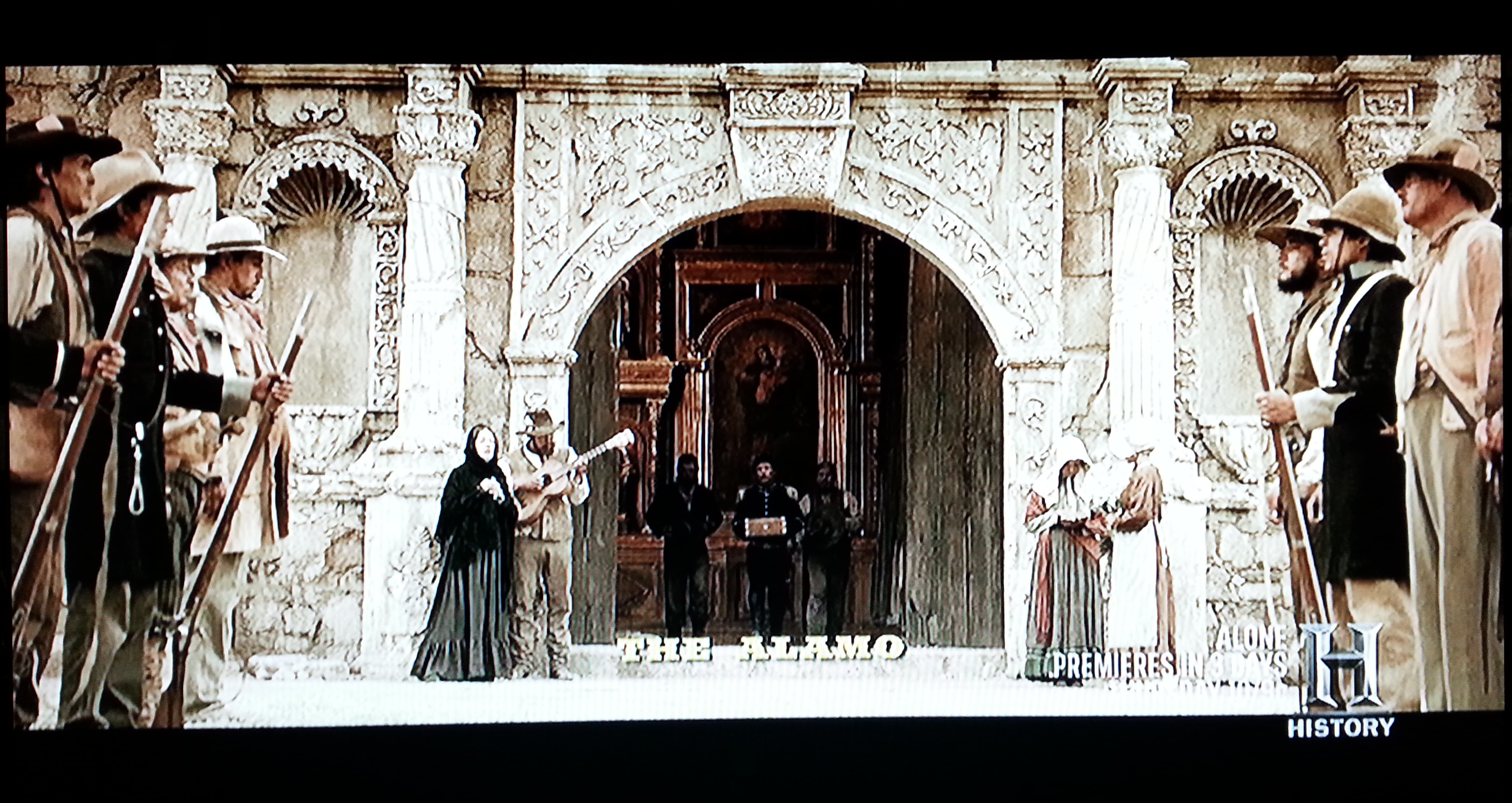
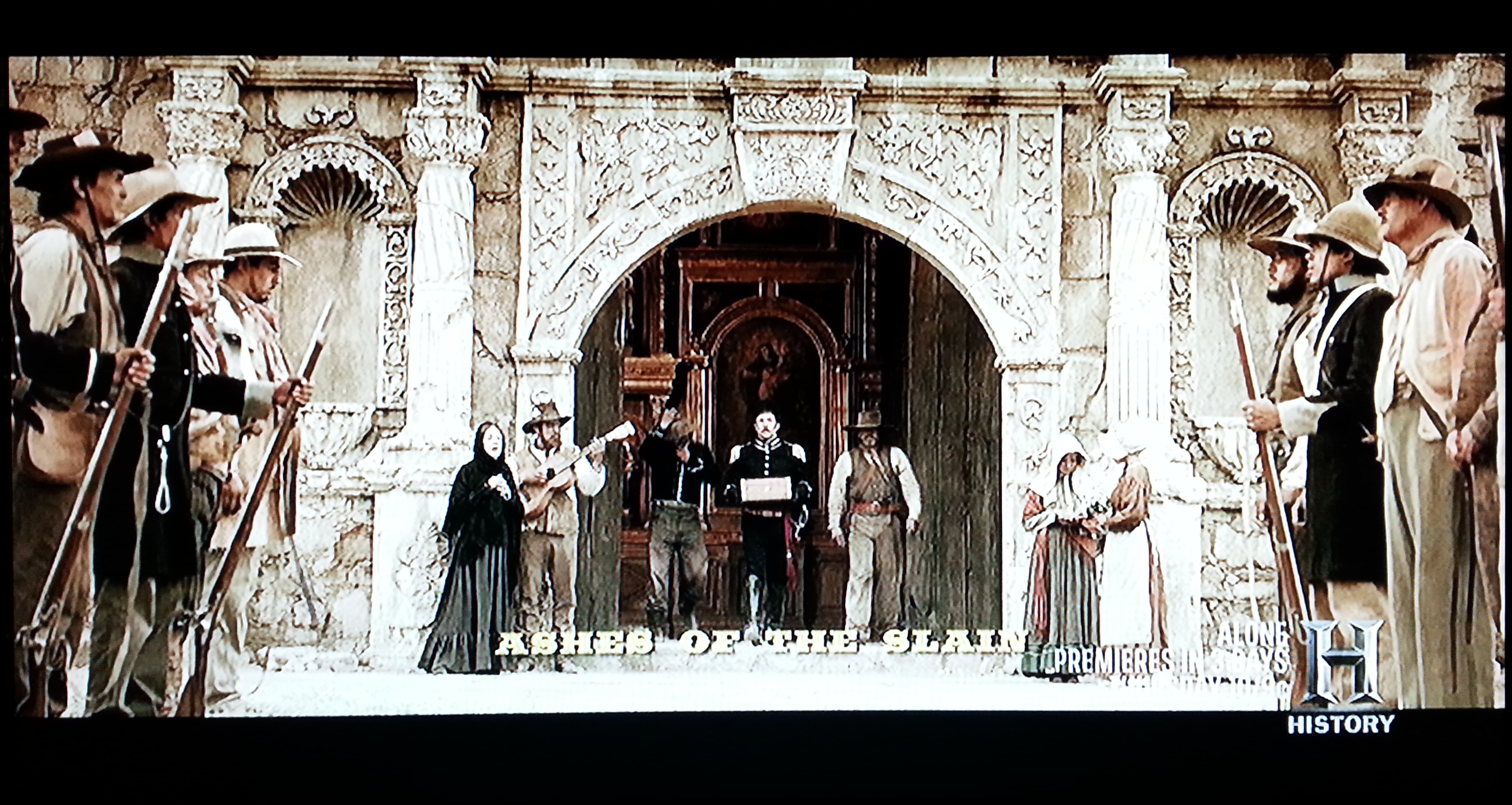
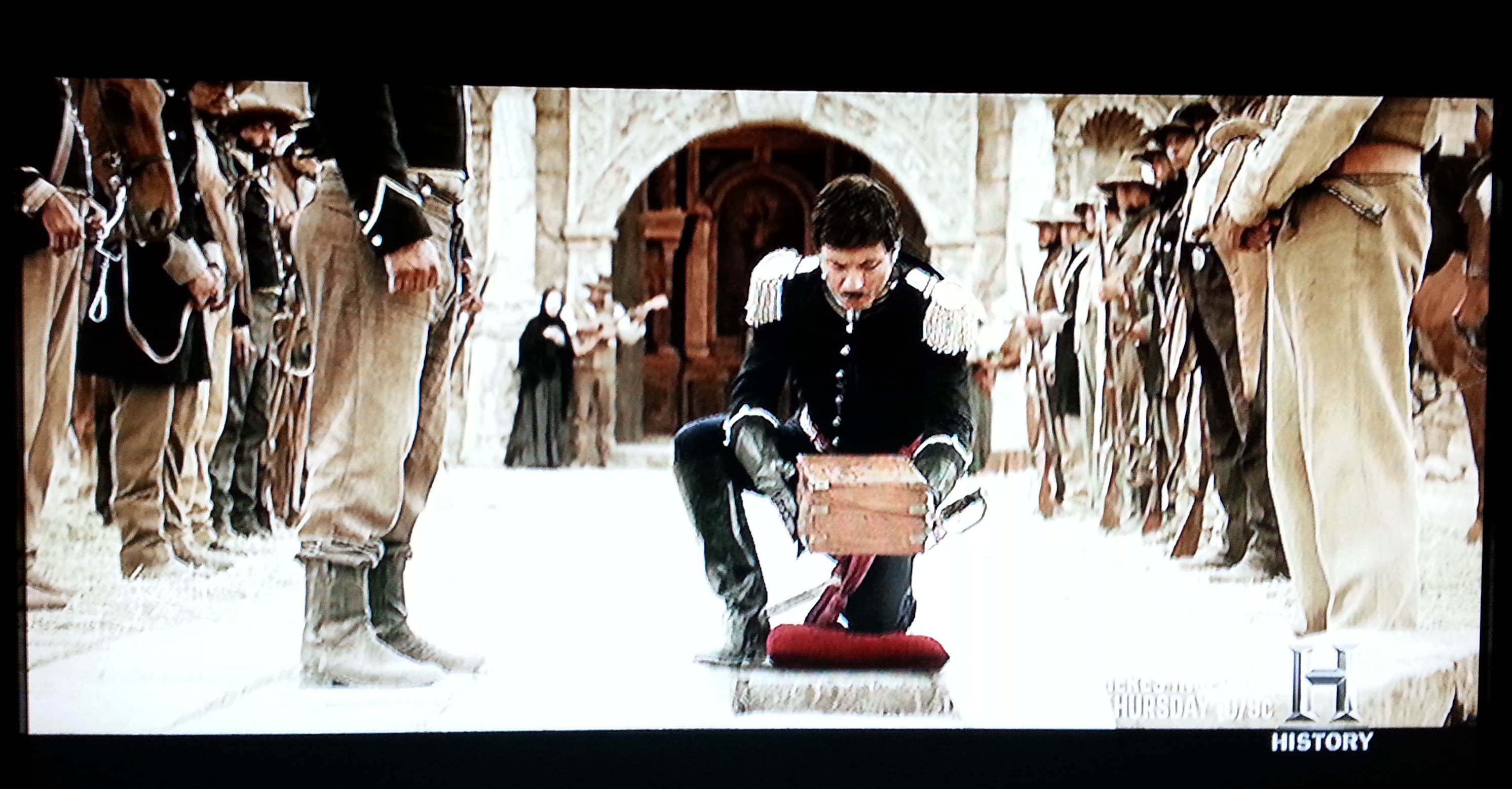
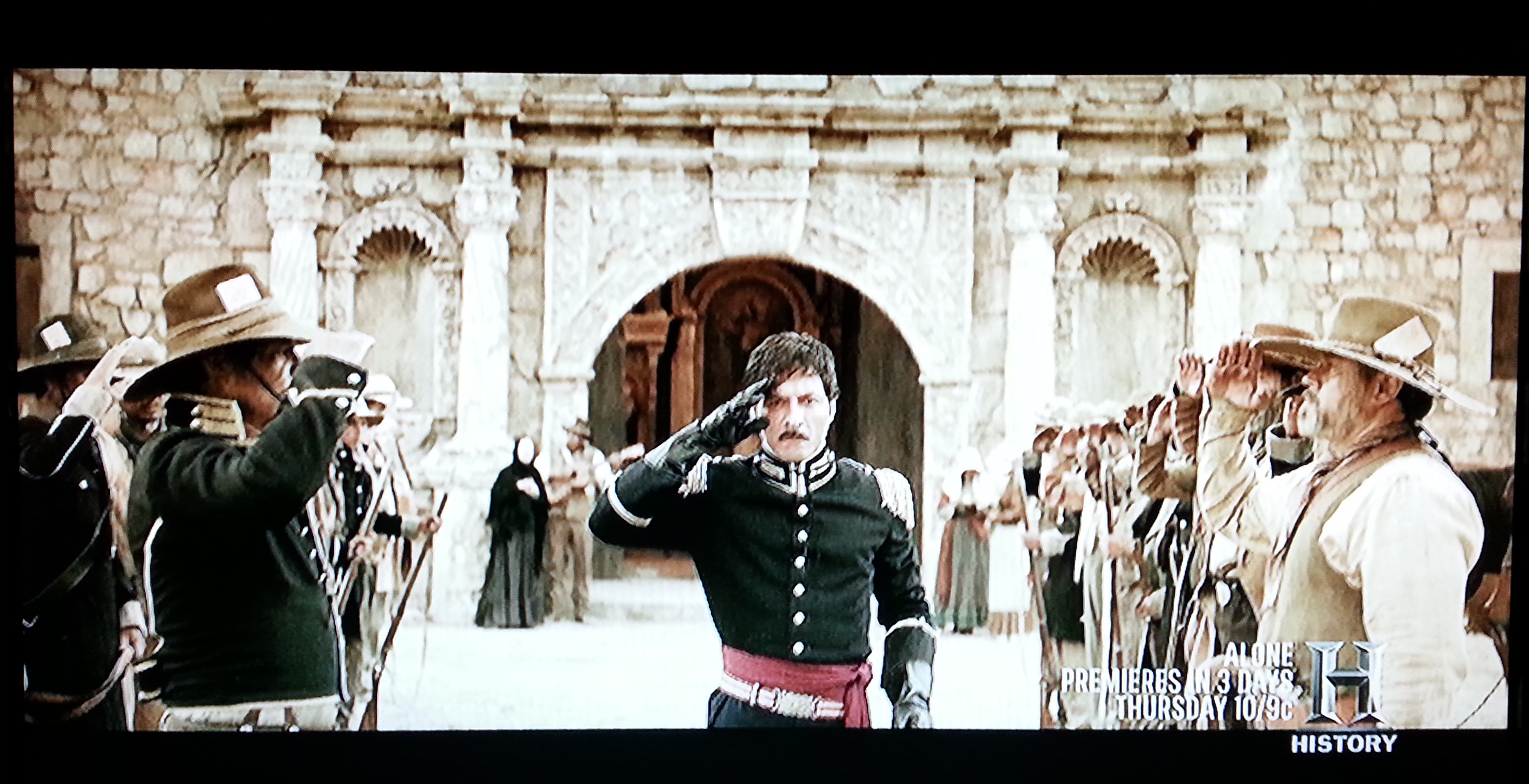
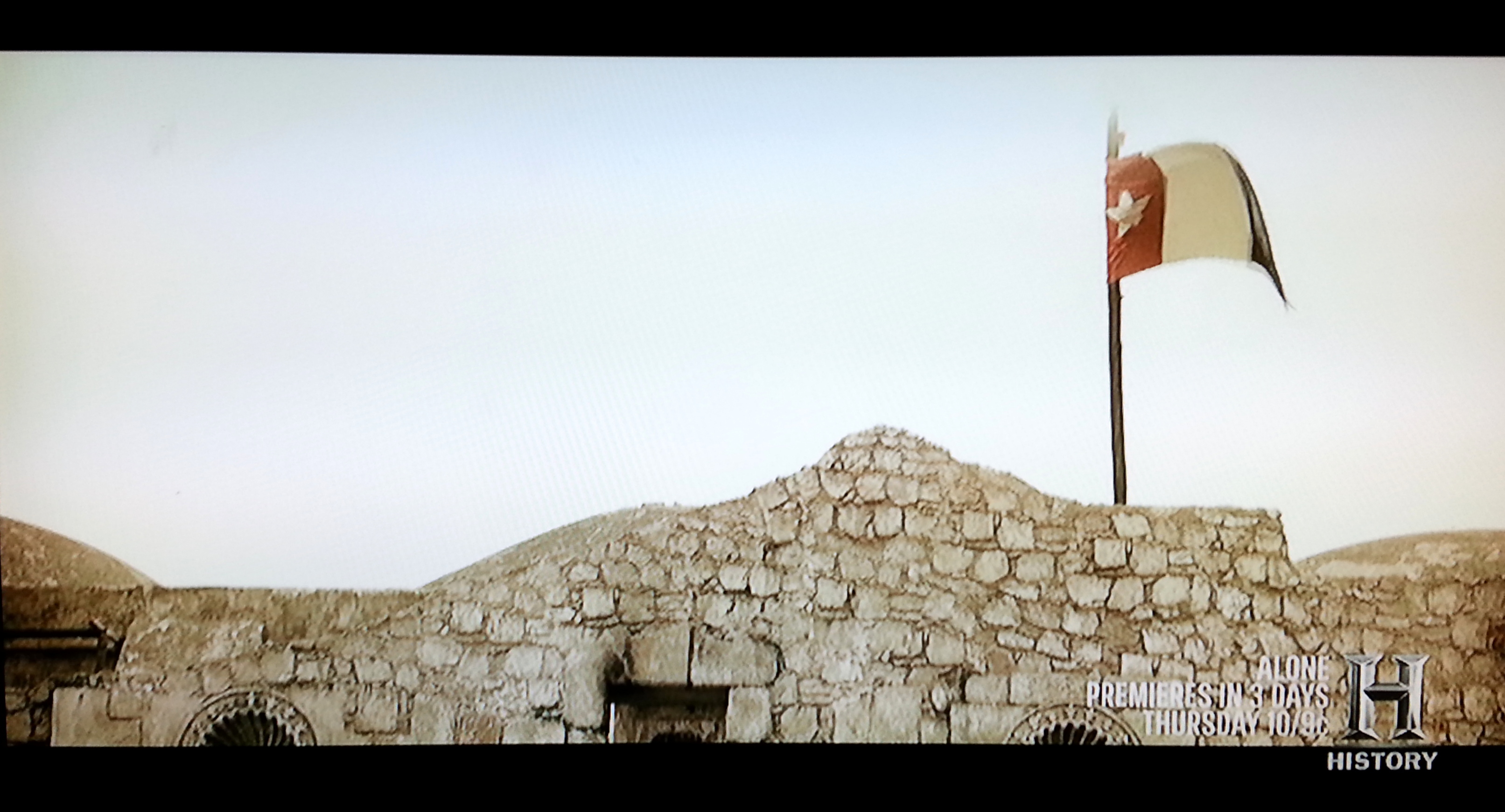
But I don’t want to end there. Because the legacy we’re supposed to have is the Alamo. Remember the Alamo? Because we’re supposed to. Even though they never showed us the battle there. Even though the aftermath was over in minutes and the whole thing reduced to a war cry that Texians shouted once or twice an episode, if at all.
Don’t worry. The show remembered, too. It happens near the end, immediately after all this inauguration/return of Santa Anna/Comanches Rising stuff but before the final Comanche attack. Like it’s wedged into the only place the show could find to put it. An afterthought.
It lasts a total of 54 seconds (I timed it.)
It’s this:
That’s not the Alamo, which was a simple Spanish mission converted to a fort — never this ornate.Those aren’t the ashes of the slain.These are the ashes of the slain. Or, more accurately: “A crypt in the San Fernando Cathedral purports to hold the ashes of the Alamo defenders. Historians believe it is more likely that the ashes were buried near the Alamo.”That’s not where the ashes were buried. According to newspaper reports at the time, Seguín buried the ashes in an unmarked grave in a peach grove.But that is Juan Seguín, who really did return to the Alamo to collect the ashes and bury them.
For a series that began by ignoring the battle of the Alamo — or, rather, worked from the premise that the massacre at the Alamo was important enough to provide the crucial rallying cry for Texians everywhere, even to this day, but wasn’t important enough to actually show on screen — the least they could have done was to end on this scene. It would have been a way to finally honor what the Alamo represented in the Texas war for independence and what it continues to mean to Texas’s sense of itself today. And this shot, a Tejano soldier who’d fought for Texas independence saluting the dead as well as the new Texas Republic flag, would have made a powerful final moment in the series.
What could have been.
If only History wasn’t so busy playing Cowboys and Indians.
Tonight, the final episode of Texas Rising airs, and yes, exhausted though I was after even the first episode, I am sticking it out to the end and I’ll blog about it tomorrow.
In the meantime, my posts so far attracted the attention of the Wall Street Journal, and ten days ago I had a lengthy and wonderful phone interview with WSJ reporter Ana Campoy. This past Friday, her article on the series appeared in the newspaper, and in addition to one of my comments, she quotes a range of other writers, Texans, Texas historians, and filmmakers about the flaws in the series.
So I thought I’d share a few of those comments as we head into the final stretch here:
One of the first things Campoy notes in her article is one of the first things the series got wrong and one of the things I’ve been continually complaining about: “The action, which took place in 1836 in Texas’ verdant prairies and coastal plains, is shot in the more dramatic desert mountains of Mexico.”
Later, in the comments on the article, one reader named Robert Hutchings agrees: “The geographical inaccuracies were especially hard to take. While some parts of Texas does have buttes and mountains, the area where that war was fought is mostly flat with some forest.”
Amen, Campoy and Hutchings.
James Crisp, a university professor of Texas history, also expressed a frequent complaint of my own, that the show never needed to fabricate or manipulate story as much as it did when Texas has such a rich existing history, which, Crisp says, is “more poignant than the invented stuff.”
And he’s not the only educator to complain: Debbie Ratcliffe, from the Texas Education Agency, hasn’t even watched the series, but she did chime in long enough to tell us that her husband quit the watching the show “because he found its historical inaccuracies ‘so maddening.'”
(Campoy asked me in our interview why I’ve kept watching it, as have several of my friends online. I can’t really excuse sticking with the show except that, once I’d pushed through the first two episodes, I felt like I might as well suffer through to the end. Besides, I told Campoy, thinking about the accuracies and inaccuracies in this series has served as a good reminder for me to honor the history and the people in my own fiction as I write my new novel, also set in Texas and haunted by this revolution.)
Another commenter suggests (as I have) that the main problem with all the inaccuracies and fabrications isn’t the show itself — TV will do anything in the service of, well, not a good story, but at least a story that might sell advertising. As Ronald Wong comments, “If this were on any station but the History channel I would have no issue. The series which I have watched is just a fictional account of history jazzed up for today’s TV viewers. If it gets a few people interested enough to read and study the incredible impact the real Texas Rising had on American history that will be a good thing.”
Speaking of that real history: one thing I didn’t speak to much in my interview with Campoy was the Tejano role in the story, because at the time of the interview, the series had only got through the third episode and we’d not yet seen what an amazing character Juan Seguin would get to be in episode 4. I’m glad, then, that Campoy did get some comments on that subject from Texas historian Andres Tijerina, who pointed out that the Tejanos “play a more prominent role in the few tidbits of Texas Rising he has caught than in any other film on the subject he has ever watched.”
Don’t know why Google is a month late in alerting me to this, but I’m thrilled to get a reference in Sue Fagalde Lick’s write-up on the Compose writing conference I participated in at Clackamas Community College last month. Good to know my workshop was helpful!

 Gang, if you want to read something truly innovative, check out Ryan Werner’s “shattered novella” Soft.
 And you can buy the whole book now from Passenger Side Books. Or, if you’re in the Midwest or on the Eastern Seaboard, you can buy it directly from Ryan himself when he’s out on book tour this month.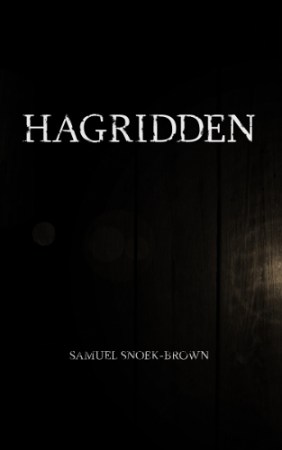






 Samuel Snoek-Brown