We interrupt our regularly scheduled programs….

The current logo for We're Experiencing Techni...
Image via Wikipedia

My computer is on the fritz and is down for maintenance for the next few days, so I’m going to have to skip this week’s Photo blog and Writer’s Notebook.  (I’ll still be writing, I just won’t be able to post it on Friday.)

First thing next week, though, I’ll get both those posts up and backdated to fit in their normal post dates, so stay tuned.

NaNoWriMo Conclusion

Well, it’s official:  I’ve “won” NaNoWriMo,” with a final word count of 51,879 words.  Fewer than last year, but many more to come if I expect to finish the story itself.  Still, I’m glad to be finished with this frenzied marathon, because the whole experience has, as per last year, energized my writing, and I’m eager to move onto other projects I’ve kept on hold while writing this novel.

Not to skimp on the excerpts, I’m going to include here one final piece from the novel–in fact, the last words I wrote, though not necessarily the end of the book itself–complete with the “notebook page” frame of the Writer’s Notebook entries:

Julian was no longer the penumbra of the eclipse, he was the eclipse itself.  There was a dark, hollow moon between the sun and the earth, and Julian was inside of the moon.  He had crawled inside of the cave without being quite aware of what he was doing.  For all he knew he was dead, and he was descending into a tomb.  For a while, he hoped that this was the case.  And then he hoped it wasn’t, not because he didn’t want to be dead but because it felt far too appropriate: a vampire descending into a grave, something Lucius would approve of.

He wondered for a bit if he had died and this was perhaps a rebirth.  He was descending not into a grave but into a womb.  If it was the case, he had found himself a mother who was cold and emotionless.  The placental fluids that surrounded him smelled of stone and salt.  The uteral walls were hard and ungiving, and in his embryonic development his mother had never extended him an umbilical chord.  He had no means of sustenance.  He was drying up, withering away.  His would be a stillbirth.

It went like this for weeks.  But they could not have been weeks, surely.  All that nonsense from the church about prolonged life and bodily immortality.  There was simply no way he could survive without food or water for as long as he felt he had.  But there it was.

He lay there so long his mind left him.  Time itself ceased.  He himself ceased.  Everything drifted away.  He dissolved into the darkness.  He could not feel his body anymore because he did not have a body.  He could not use his mind anymore because he did not have a mind.  There was only darkness, and it was him.

When his mind did begin to function again, it functioned in hallucinations.  He heard things he could not possibly hear:  Drops of water miles away; rumbles of thunder miles above; shifts in tectonic plates from the a million years before, working their way up through the rock in tiny echoes that he alone could detect.

When time ceased to exist, it ceased to have any measure; suddenly he was eternal in the purest mathematical sense.  There was no beginning to Julian, there was no end.  He had been for all the time, so he was aware of all time.  He could feel from the darkness around him how the earth had formed and how it would end., not as a premonition but as a mathematical certainty, built into the structure of everything around him.  He thought of those perpetual motion machines on executive desktops, of steel ball striking a row, and another ball, four, maybe six balls away, jumping away from the line and swinging out.  It had nothing to do with magic or predictions.  The motion itself at the beginning made the motion at the end inevitable. In this way, he could feel in the stone he lay on how the formation of that stone led, inevitably, to its deformation.

Gradually, though this super-logical process, his mind returned to him in an awareness purer than any he’d ever experienced.  Here was the truth:  He had not died.  He had not dissolved.  He was not nothing.  He lay on the stone floor of a cave, deep within the earth.  Deprived of sight, everything else improved, so that he could feel tiny tremors, he could hear the smallest sounds, he could smell particles in the air.  He still had no sense of time, but he must have been here for days, not weeks or eons.  He had no t died, but he was surely dying.  And as he thought about this, he felt calm.  It was the right thing, the right time.  Everything he had done in his life, everything that had occurred to lead to his life, his conception, his genetic condition, the fact that his parents had abandoned him, the way his adoptive parents had raised him, the way he had handled his condition, his meeting with Portia, his confrontation with the Church, all of it, led, inevitable, like balls striking balls, to his death.  This was the only only outcome; it was the correct outcome.  He had no only to wait.

And now, as last year, I want to thank all my friends and family who kept me going through the month, especially my NaNoWriMo buddies ladyslvr, DutchWag, BrandyAZChase, deedum, and E. L. Hostetler. (Special shout-out to DutchWag and deedum, who are winners already themselves, and to ladyslvr and BrandyAZChase, who are very close to finishing!)  Also, gigantic thanks to stout_chap, our regional coordinator for the Middle East WriMos.

Also, super-special thanks to my wife, who has been extraordinarily patient with my writing regime both this year and last and is both my most enthusiastic cheerleader and my greatest resource (the books she brought me from the library were invaluable this month).  Couldn’t do any of this without you, sweetheart!

And now, that’s that.  On to other writing, and I’ll see everyone (I hope) in April for ScriptFrenzy!

A Writer’s Notebook: NaNoWriMo update #4

So, as promised, I’ve been tinkering a bit with the book since I returned from vacation, even adding some new scenes, but I haven’t updated the word count because most of the new text is still in my voice recorder and most of the changes have been internal, meaning that part of the word count hasn’t changed much.  When I submit the final text for confirmation, probably on November 30, I’ll post a recap and a final word count here.  Look for that next week.

In the meantime, another excerpt:

We vampire are energy feeders, and this is the primary means by which to identify each other.  Blood drinking is a pleasure, but not all vampire desire the blood nor do any vampire need the blood, and it is not a reliable marker of your Kindred.  We have certain secret signs and symbols we use to identify the initiated, but these, too, have become imitated or stolen by the mortal world and adopted in their fantasies of an immortal lifestyle, so only the initiated can recognize the true signs from the false.  The most reliable indication that you have met a fellow vampire is the exchange of energy on the psychic, empathic, or pranic levels.

Most vampire grow up in isolation and so know only what it feels like to feed and to perceive the loss of energy in others.  When you met a Kindred, you yourself will feel the pull of energy.  You may experience a sudden plummet in physical energy, you may become suddenly and inexplicably depressed and despondent, you may feel dizzy or even drunk or drugged.  The air will feel cold against your skin, or you will feel numb to temperature and touch entirely.  You may feel aged.

Your first task is to shield yourself from further draining.  The simplest method is concentration.  Find a focal point on which to fix your gaze—a soft light or a soothing color work particularly well—and focus all your attention on that spot.  Block out the rest of the world, all other sensory experience; doing so, you will also block the conduit of your energy to the vampire.

This is easily circumnavigated, however, especially by an experienced vampire, who need only distract your concentration and/or return your attention to themselves.  The most effective technique, for beginners, is to form a protective circle:  Holding your hands in front of your navel, touch your index fingers to your thumbs in two circles, and then interlink the circles perpendicular to each other, like links in a chain.  Visualize yourself within a sphere of white light.  Chant, either mentally or aloud, “I am protected from harm, my energy is contained within.”  Repeat this chant until you feel your energy returning.

This is a more visible defense and is therefore a signal to an experienced vampire that their attack has failed, and it can result in physical confrontation is the energy attack was aggressive.  But with practice, this defense is quickly accomplished and difficult to break through purely vampiric needs.

Once you have defended yourself against further draining, you should respond to the vampire you have found.  If the attack was intentional or aggressive, you should attack in return, either through your vampiric talents or physically if necessary.  Do not run.  You are vampire, and though our destiny is the immortal ultralife, mere survival is not our goal, and those too weak to pursue their vampiric gift should be weeded out.  If you are the weaker of the two in such a confrontation, and you lose, you do not deserve your vampiric birthright.  If you are the stronger and best your attacker, it is up to you whether or not to show mercy.

If, however, the energy attack was intentional or even unconscious, as they often are, you should greet your Kindred by way of an energy exchange.  Drain a little energy, gently, from your newfound Kindred, just enough to let them know that you, too, are vampire—and just enough to replenish the energy taken from you—and then offer energy by intentionally sending out your good will.

If your Kindred is new and uninitiated, do not approach them immediately.  Watch them, observe whether or not they are worthy of pursuing their destiny.  If you have been formally initiated and serve a master, seek permission to approach this new Kindred.  Only when you are sure this vampire is worthy of deeper knowledge may you approach this virgin and explain what we are.

Toward the end of this marathon of writing, I started experimenting with alternate ways to tell this story.  At first I was just trying to work in background information by doing character interviews and sketches and such, but as I fed this into the text I began to wonder if I might try a kind of multimedia approach to the novel, including not only the straight, third-person narrative I’d been writing but also news clippings, interview transcripts, and excerpts from the “vampire bible” that the cult leader Lucius wrote, the book Portia Lynn gives Julian to read.  This excerpt is an example of that.

It’s not a new idea, of course:  Stoker himself made brilliant use of news clippings, transcribed phonograph journals, medical reports, and so on.  (I’ve recently been reading a nonfiction book about the fidelity of the various film adaptations of the novel Dracula, so I’ve had Stoker’s work and his style on the brain lately.)

Part of me wonders if this is a lame digression from the initial style of the novel, which I really liked at first.  But another part of me thinks that style was running out of steam, and toying with elements like this excerpt kept the writing going, so I half-wonder if this might be a way to approach a rewrite of the book, perhaps even taking it further to include such miscellany as sketches (literal, pencil-drawing sketches), notes and to-do lists, even a vampire’s shopping list.  We’ll see.  Unlike last year’s novel, this book is still very embryonic, so it still has a lot of room for experiment.

Photo blog 31

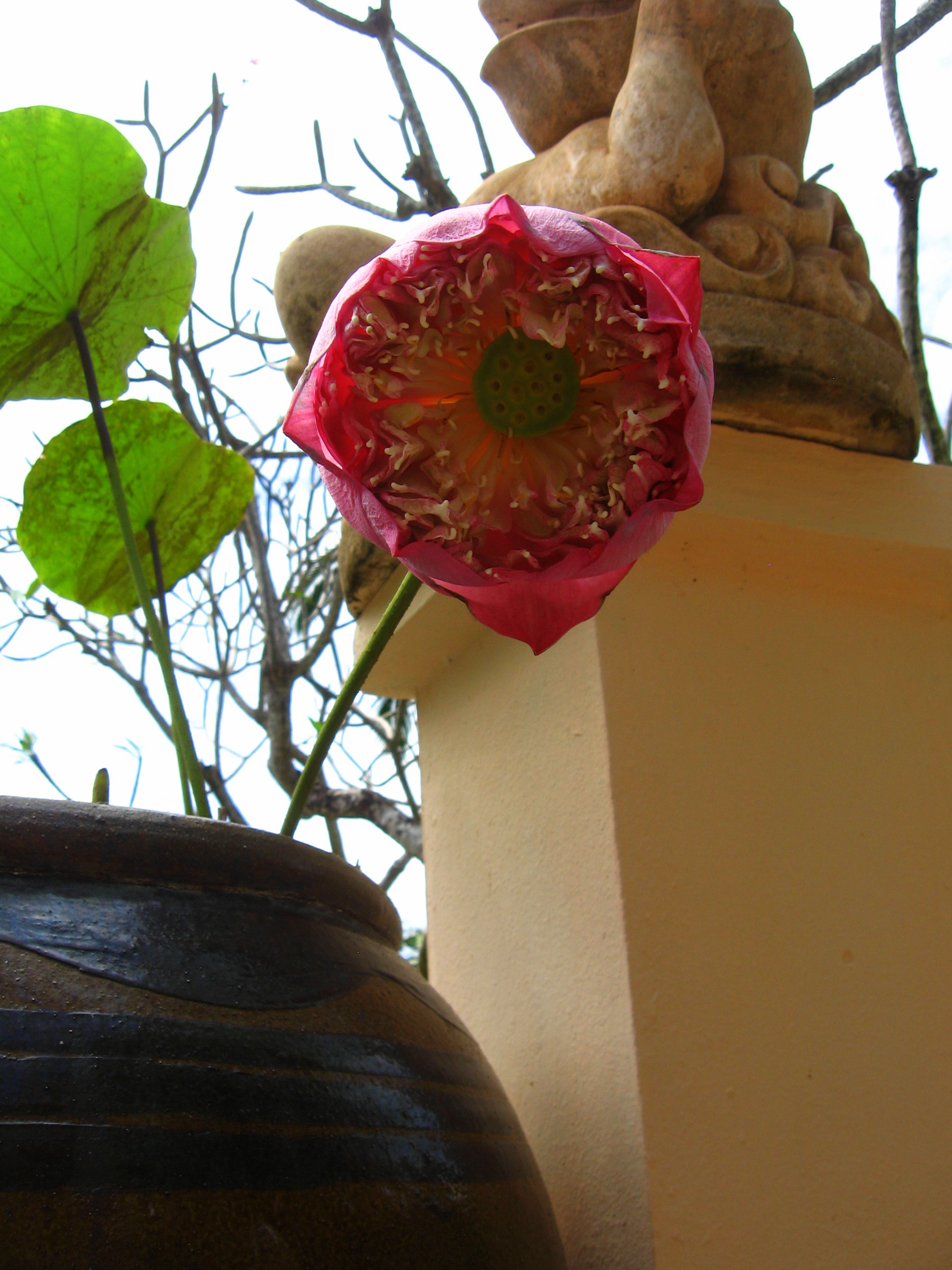
“Sip of water, breath of light.”  Flowers in Thailand, Bangkok and Kata (Phuket), Thailand, 16-20 November 2010.

Nancy Drew short story contest

1966 cover of the revised version of The Secre...
Cover for the 1966 re-release of the first Nancy Drew mystery, The Secret of the Old Clock (image via Wikipedia). To celebrate Nancy's 75th anniversary, Her Interactive released a retro video game version of The Secret of the Old Clock, which places Nancy--for the first time in the video game series--back in the 1930s where she started!

I am proud to say that I am a HUGE fan of Her Interactive‘s Nancy Drew video game series.  (I’m slightly less proud to admit that I actually dreamed about the games last night–seriously.)  I confess I’ve never read any of the traditional books, though I have read the first half dozen or so of the new graphic novel series, but I am unabashedly addicted to the video game series.  The cool mysteries, fun puzzles, great dialogue, and eccentric and creepy (often very creepy!) characters make for outstanding entertainment.  (Nancy Drew herself is a fantastic character to play.)  Better still, the stories require the player to actually think.  It isn’t all hand-eye coordination and quick trigger fingers, or mindless rearranging of cards or gemstones or color-balls (though some of the weaker puzzles do involve mindless rearranging of puzzle pieces).  Most of the games require a fair bit of logic in order to beat them, and the best games are downright intellectually challenging.

But even that isn’t the best part of the games.  My favorite aspect of the Nancy Drew games are the stories.  You remember those Choose-Your-Own-Adventure books my generation grew up with?  “The werewolf leaps for your throat….  Do you duck and grab your silver crucifix?  Turn to page 23.  Do you close your eyes and pray?  Turn to page 62.”  Those stories were always pretty lame, but they were interactive–they involved the readers in the storytelling process.  They were like role-playing games for the very young, and in fact I did wind up playing RPGs in high school, though they were never as solitary and never felt as intimate as the Choose-Your-Own-Adventure books.  Video games were the next logical step in interactive storytelling, but they often lacked personality or the imaginative engagement that reading provided.

The Nancy Drew games have managed to engage my creative centers in ways I haven’t really felt since those days of ducking werewolves as a kid.  When I play those games, I feel like I become Nancy Drew, not merely playing a character but using my own brain to direct a story and drive character development.

Which is why I was so happy today to discover a story writing contest on the Her Interactive blog.  The awesome people over at Her Interactive know their work is as much about storytelling as it is about video games, so they’re sponsoring a writing contest, the prize for which is a collector’s boxed set of their most popular games.  I’m not going to compete (my wife and I own all the games already, except for #2; I’ve played it, but I don’t own a copy–they need to release that one for digital download already!), but I thought the contest was so cool I had to share it here.

Check out their blog post for yourself, but the short version of the contest is this:

The story should be your own original work, with a max word count of 1,000 words.  You also have to incorporate three specific quotes from some of the games (the quotes appear in the blog post).  The deadline is December 10.

Like I said, I don’t plan to compete, but just for fun–and once NaNoWriMo is finished–I might use this as my writing exercise for the first Writer’s Notebook of December.  So stay tuned…  for danger!

A Writer’s Notebook: NaNoWriMo update #3

Well, it’s (un)official:  Last Saturday, after two marathon writing sessions and just one day after last week’s update, I passed the 50,000-word goal.  That’s seventeen days early, and two days earlier than I crossed the finish line last year.  It feels epic.

And it happened right on time, too, because I spent the day after I finished packing for my vacation, and I’m currently celebrating my NaNoWriMo victory on the beaches of Phuket, in Thailand.  (In fact, I’ve decided to celebrate by unplugging completely, and I didn’t even take my laptop with me.  Weird time-warp moment:  I’m actually writing this last weekend and scheduling it to post today.)

I haven’t officially “won” NaNoWriMo, of course.  For one thing, the website doesn’t open their official verification site for maybe another week.  For another, I’m not really finished with the story.  The book itself is a big ugly mess, stuff just tossed around all over the place, and while that’s not really a problem in NaNoWriMo, I would like to double check the manuscript to make sure I’m not repeating myself (I sometimes wrote in other windows and then copied the text over, and I want to make sure I didn’t copy anything twice).  And since the month isn’t over yet, I think I’ll keep plugging away at this thing, just to see what happens.  So, after my vacation, I’m going to try and clean the things up a bit and then write all the way up until November 30 before I run it through the verification process.  Which means the final count will almost certainly change.

But unofficially, I’m done!

And now, an excerpt.

Portia gave him a hard look, and then she abruptly leaned in and kissed him, hard and cold, and in that unguarded moment he felt himself flush with raw power, with dangerous energy.  When she released the kiss, he couldn’t breathe for a moment, and when he did, it came  in an animal snarl.  He grabbed her arms and pulled her into a second kiss, fast and ferocious.  His fingers dug into her arms and her skin warmed in his vicious grip.  She bit his lip, hard, and he shouted and pulled away.  He tasted his own blood, and he saw her lick his blood from her lips.  They glared at each other, both of them breathing fast, their energies locked.  She grabbed the front of his shirt in her fist.  She actually bared her teeth.  Julian grinned at her, then he bent his head back and to the side, offered her his throat.

But he felt a stronger hand on the back of his neck, and he went utterly cold, all at once as though a trap door had opened beneath him and only his soul had dropped through it.  His stomach clenched and he opened his eyes.  Portia was petrified, her pale skin making her look like cemetery statuary, but her eyes remained ablaze, not quite with lust but perhaps with awe. Julian did not turn his head, but he rolled his eyes to see Lucius standing between them, one hand on each of their necks.  He was in leering at them both.

“I, too, retain a lust for blood,” he said.  “The symbolism of it is so delicious.”

Julian felt a slight pressure on his neck and he turned to face Lucius, almost involuntarily.  But Lucius looked at Portia and, still smiling, he said, “May I?”

Portia nodded in a daze and offered her forearm, her wrist turned up to show her scars.  She closed her eyes.

But Julian felt Lucius’s grip on his neck change, and then there was a cold, sharp sting followed by a sudden hot rush, and Lucius swept over Julian, his other hand against Julian’s chest, and he sucked from Julian’s neck.

In his mind, Julian struggled, pushed away, clapped a hand to his wounded throat.  In Julian’s mind, Lucius reared back with lurid, exposed fangs, dripping Julian’s blood, his face contorted in satanic rage and his black hair loose from his half-ponytail and dancing like a nest of snakes.

But it happened like a waking dream, the way Julian sometimes dreamed he had showered and dressed for work only to wake with the alarm and find himself still in bed.  When he opened his eyes it was to a second sting on his throat, Lucius smiling gently—no fangs—and pressing an antiseptic pad against Julian’s neck.

He held his hand against Julian’s neck for a moment, until Julian understood that he needed to apply his own pressure.  Then Lucius stepped back.  His teeth were pink as he grinned.  He said, “I’m very sorry my friend, but surprise and terror improve the thrill and so improve the energy.  Yu taste delicious.  A little frightened, I think, but wonderful.”

Julian switched hands to hold the antiseptic pad on his neck, and he looked at his fingers, damp from the medicinal fluid.  He expected his hand to be covered in blood, but it wasn’t.  There were two pink spots, one of each of his first two fingers, and that was all.

He looked at Lucius, and in his head he was screaming, What the fuck?  What the hell just happened?  Who do you think you fucking are?  But out loud, he barely gasped.  His mouth simply hung open.

Lucius said, “I’m also very sorry to interrupt you two.  You looked like you were about to have a great deal of fun.  But if I remember correctly you came together, and the point of these parties is to mix, to share the energy.”

Portia stammered, “That’s what I told him.  That’s what I’ve been telling him.”

Lucius looked at her almost as through for the first time.  He stepped back a pace and appraised her.  He said, “Tell me again who you are?”  She reminded him of how they’d met in the library, but she gave him her full name anyway, Portia Lynn, and he said, “I love it.”  He looked back at Julian.  He said, “You are a very lucky person, to have come with someone so lovely.”

Julian shook his head and wanted to say, She won’t have me, but instead he said, “You drank from my fucking neck!”

Portia gasped, put one hand over her mouth and her other hand on Julian’s chest and said, “Quiet!”

But Lucius said, “No, that’s okay.  I can tell you’re a blood drinker too.  I’m sure you know how much richer the energy is when it comes from the throat.  And as I said, shocking you that way improves the taste.”

Julians said, “You fucking bit me?”

Lucius shook his head and held up his left hand, the back of it facing Julian.  Julian saw two identical silver rings, thin on Lucius’s middle two fingers, then Lucius turned his hand around, palm forward, and Julian saw two tiny prongs protruding from the other sides of the rings.  Lucius said, “It is our symbol, the sign of the Church, our Kindred.  Not everyone wears it.  Some prefer it in the form of a sigil on a chain around their neck.  Others choose tattoos.  But I have these rings made for those of us sanguinarians.  It proves a useful puncture tool.”

He turned his hand over, palm upward now, and held the rings closer to Julian’s face.  He could see that they were, in fact, one ring, the two loops fused together at their edges.  Lucius said, “you’ll see that the two small fangs aren’t much different from lancets.  They operate in the same way.  And, of you keep your hand on your neck a while longer, the wounds will close just as any lancet wound would.  There will be only a little scarring.”

Portia was breathing heavily.  She had moved the hand from Julian’s chest to cover her own heart, between her breasts, and the hand that covered her mouth she lowered.  When she spoke to Julian, her voice came in a whisper, but it was a throaty whisper, full of seriousness and awe.

She said, “You have been marked.”

Last weekend, I spent a lot of time with my digital voice recorder (which I wrote about ten days ago), talking out scenes and then transcribing them later.  So if you’re looking for an exercise, you might try that:  Dictate the story to yourself or to someone else, let the words come fast and natural, and then simply transcribe them.  In a lot of ways, it’s like the purest form of freewriting, and it can be a lot of fun.  There’s a great little write-up on dictating your fiction over at the School for Champions website, if you’re interested.

Oh, and because I don’t plan to stop writing, I’ll still post one more update and excerpt next Friday, so this is not the last of the NaNoWriMo Writer’s Notebook entries.

Photo blog 30

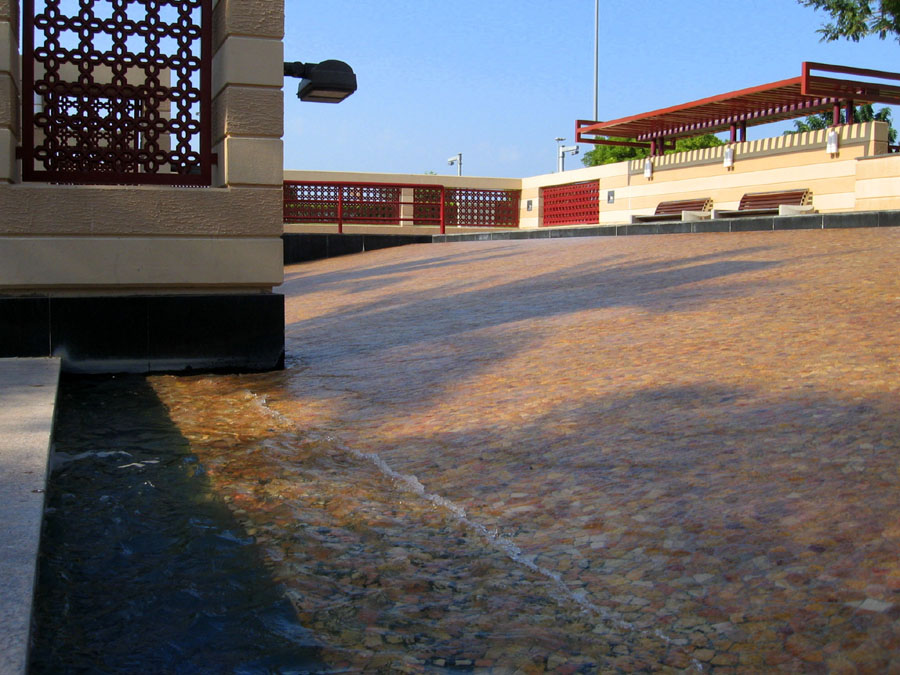
“Elemental.”  Water feature in a city park, Abu Dhabi, UAE, 13 November 2010.

A Writer’s Notebook: NaNoWriMo update #2

This week I’m just posting one long section from my NaNoWrimo novel.  I’ve been writing all over the place this week, but I’ve finally gotten into the meat (or the blood?) of the story concept, and this passage–a bit expository, I know–sort of encapsulates that concept.  (Plus it’s a nice glimpse of how fringe-nutty my character Portia Lynn is.)  So, I figure, just run with it.

Julian had been fascinated with vampires since childhood.  He’d seen every vampire movie he could find on TV or could convince his parents to rent for him at the video store, and after he’d moved out, he’d tracked down all the rest.  A few hundred films so far, and he had a list inside his TV cabinet showing a few hundred more he had yet to find copies of.  But he was always looking.  He spent hours in the library reading books about vampires, all the fiction but also whatever histories he could find. The famous studies by Montague Summers and Katherine Ramsland, the encyclopedias by Matthew Bunson and J. Gordon Melton, books on the historical Dracula and Elizabeth Báthory, books on the blood cults of Mithra and the doctrine of transubstantiation.

But Portia had brought him a new book.  Vampires: The Truth Within, by that man whose name they’d been hearing in the club circuit.  Lucius.  No last name.  Like he was a rock star, or a god.  “A lot of what’s in here,” she said, “is nothing you haven’t read before.  All the folklore, the movie magic, the bullshit.  But look at chapter five, Julian.  Look at the letters from others like us.”

“Like us?”

“We are vampire, Julian.  And we are not alone.  Forget your mortal family, and read about your true history.”

He read the book that night.  It was a slim volume, barely a hundred and twenty pages, some of them filled with drawings and symbols.  It began simply enough, mostly things he’d read or heard before, but by the third chapter the author, Lucius, began describing himself as a vampire, not strictly in the mythological sense but certainly in some sort of metaphysical sense, and by the fourth chapter, his sentences were long and full of arcane language and mythological imagery.

He claimed to be a member of an elite genetic master race and would, through the proper rites and servitude to the vampire gods, become immortal.  It was his destiny.  Lucius’s destiny and, if Portia believed any of this, Julian’s destiny too.

“This is all bullshit, Portia,” he told her when she dropped by the following morning.

“It’s all metaphor, Julian.  The vampire is an archetype, a means of describing what we are.”

“We’re just people, same as everyone else.”

“Have you ever felt the same as anyone else, Julian?  Until you met me?”

Julian looked at her.  He looked at his hand, where hers rested, her palm across his knuckles, her long fingers draping down the back of his wrist.

“Has anyone been able to touch you like this?  Since puberty, I mean?”

He shook his head.

“The world has distorted our lives for its own stories, the same as it has distorted all the differences the majority encounters.  The prejudices and fears that vampires have suffered through history are no different than the prejudices and fears and lies told about Africans, about Native Americans, about Hindus, about Jews.  Did you know that for many centuries, and sometimes even today, anti-Semites have told stories of Jewish blood cults?  The Jews were once considered a kind of vampire, too.  When Europeans first encountered Tibetan culture, they thought the red-faced demon-gods in all those Buddhist paintings were the devil himself and took back stories about the frightening Satan-worshipers hiding in the Himalayas.  Look at the so-called war on terror today.  It isn’t a war on terror, it is a war fueled by terror, by the majority’s fear of things they’ve never seen or do not want to see.  Look how bloodthirsty Americans think the Muslims are, how bloodthirsty Americans have become.  They are terrified of their own fucking shadow, but they send their shadows out to drape on other people because it’s easier than being scared of themselves, easier than facing themselves in the fucking mirror.  You know that old folktale about how vampires cannot see their own reflections?  That’s an invention of the majority psyche—the mortals cannot stand to see their own horrors reflected back at them, so we vampires become their metaphor for that.”

“But you’re agreeing with me, Portia.  It’s all metaphor, it’s all bullshit, even what’s in this book.”

“That book is a triumph, Julian.  African-Americans co-opted the word nigger for their own use in order to rob it of its power.  Gays and lesbians celebrate their own queerness rather than live in fear of it.  This book takes our myths and puts them to our own use.  And it is only the beginning.”

“You’re telling me you’re immortal.”

“Not at all, Julian.  Not yet, anyway.  But vampirism is a path to immortality—it is the path to immortality, and not in some flighty, New Age spiritual sense, not in some pseudoscientific terms of consciousness or mind.  I’m talking about bodily immortality, the perpetuation of our temporal lives.”

“You’re going to live forever.”

“Okay, I know it sounds stupid.  And I’m not delusional.  I know this body will decay eventually.  Our vampirism will delay that, it will prolong my time in this body, but nothing lasts forever.  One of the first things you learn on the path I want to show you is that death is constant, ever-present, and it’s unavoidable.  But we as vampires have the supreme privilege of embracing that death and transforming it to our own purposes.  We cannot escape death, but we don’t want to—we will chase it down and bend it, like a physicist bending space or time, so it can loop back on itself.  The ouroboros, Julian, the snake eating its tail.  That’s what we can do.”

“Because you’re a vampire.”

“Because we are vampire, Julian.  We.  You and me.  Forever.”

Again, there isn’t much of an exercise involved in this month’s Writer’s Notebook posts, because I’m mostly going all-out with the freewriting.  But this section is actually the result of some other writing I did earlier in the week.  I knew I was coming to the so-called “vampire bible” and the blood cult that my main character will eventually get wrapped up in, but before I could write what other people thought of that cult and its beliefs, I needed to know what it was and what it espoused.  So I did a couple of other exercises this week, including a lengthy character interview with the “bible” author and cult leader, Lucius, as well as large chunks of the “bible” text itself.  Very little (if any) of that will wind up in whatever final draft this novel winds up at, I’m sure, but it was useful to have the ideas written down.

For anyone looking for exercises:  I’ve done the character interview before (see the link above), but both of these techniques are forms of writing the backstory.  Of course, you have to be willing to throw most of that backstory away later, and you always need to be careful not to get too bogged down in backstory.  But this is NaNoWriMo.  If I wind up with too many words, then, just for this month, that’s fine by me.

Photo blog 29

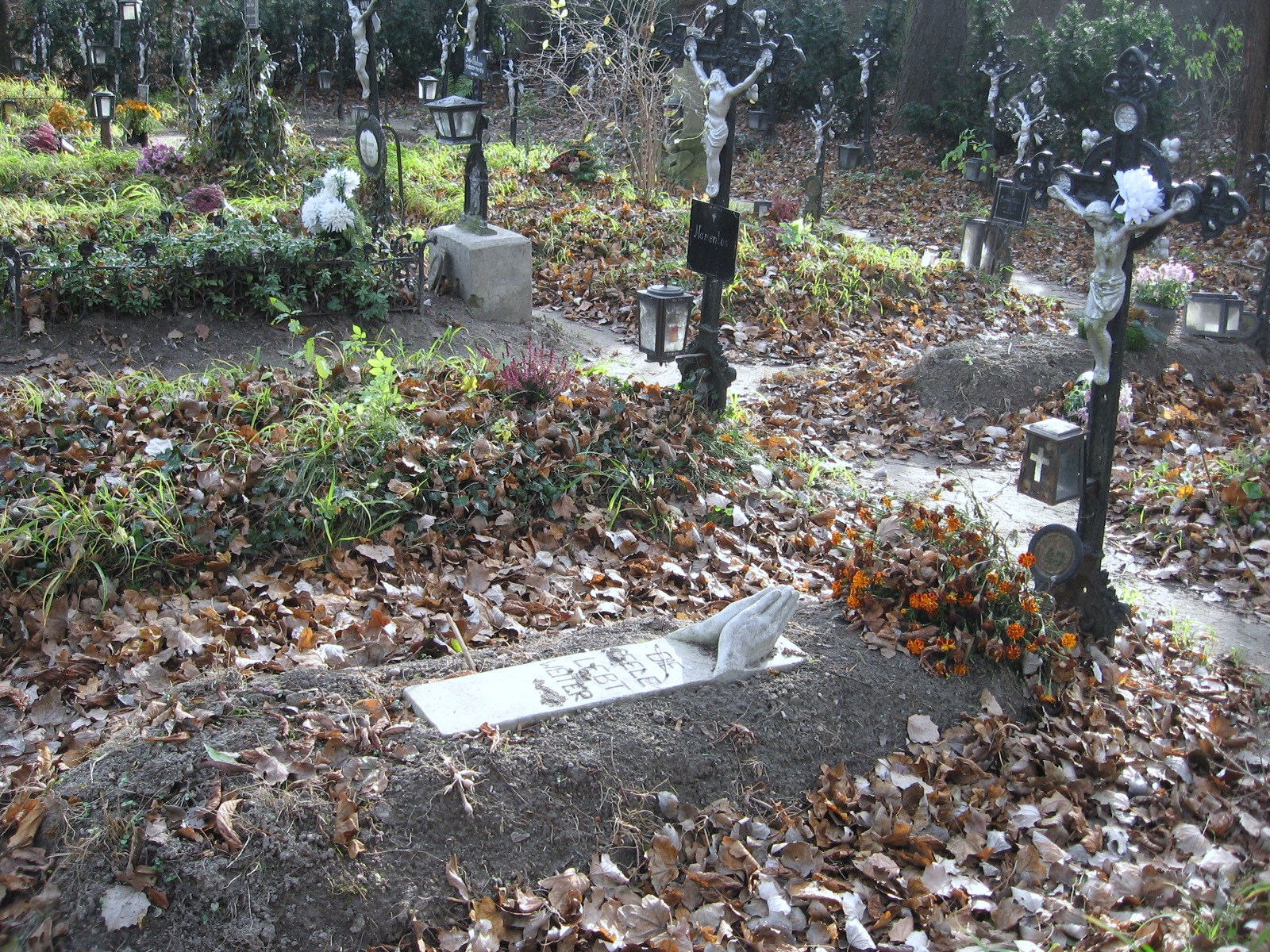
"die Seele lebt weiter." auf dem Friedhof der Namenlosen, Wein, Österreich, 30 November 2009.

Translated from the German:  “The soul lives on.”  In the Cemetery of the Nameless, Vienna, Austria, 30 November 2009.

A wider view of the cemetery.

This image isn’t directly related to my NaNoWriMo novel, but I am getting to a place in my novel where I might start writing about cemeteries, and the Friedhof der Namenlosen has become for me a kind of quintessential cemetery.  So the photos felt appropriate.

(Something of a coincidence that I took these pictures on the last day of NaNoWriMo last year.)

NaNoWriMo when you’re busy

YIP Day 6 - Study
Image by Auntie P via Flickr

I’ve been rolling along pretty nicely this November, having, as of last night, pulled together slightly less than 30,000 words.  My writing buddies are doing similarly well:  Two friends have broken 8,000 words and another four are well past 10,000 words (two of those are hovering around 15,000 words right now).  Many of my friends are staying at or above the daily average of 1,667 words required to finish NaNoWriMo on time.  They are rocking right along.  Yet so many fellow WriMos have expressed how difficult it is keep up with the word count, and indeed, this pressure to pound out words each day does make NaNoWriMo so difficult.  I have a slightly easier job of it because I’m writing full time, while many of my fellow WriMos are squeezing in their words after work, during their kids’ naps, on their lunch breaks, whenever they can grab a few minutes.

My current notebook, open to some of the writing I've done for my NaNoWriMo novel.

One of my fellow WriMos, who lives up in Dubai, a few hours away from me, commented that she is going old-school and writing her 50,000 words out longhand (a heroic effort!), and that she actually does most of her writing on the new Dubai metro, during her commute to work.  Which got me thinking about all the other ways we can write during NaNoWriMo.

I’m an self-confessed addict to the keyboard, a condition I’ve written about elsewhere, and so I find I do my fastest (if not my best) work while typing on the laptop.  But thinking about my WriMo buddy and her pen and paper on the metro, I realized that I’ve been writing a lot this November off the laptop.  I take my little writing notebook with me pretty much everywhere these days, so I can scribble ideas or even whole scenes in the taxi to the store or at a coffee shop.  I don’t get a lot of work done in that little notebook, but I’ve written a surprising amount there already.

My cell phone, with a text I sent myself regarding a new character.

And that’s not all. On those occasions when I forget my notebook, I have resorted to whipping out my cell phone and texting myself ideas.  Usually they’re just character names or ideas for a scene–I have about as basic a phone as you can get, with no QWERTY keypad and almost no fancy texting features–but once in a while I’ll get carried away.  Not long ago, I actually texted myself a 120-word scene of dialogue.

There are other tools, too.  This past summer, my wife bought a small digital voice recorder so her could interview her parents for a cultural heritage project here in the United Arab Emirates (her parents lived in Dubai in the `70s).  Once she’d finished her interviews, she loaned me the recorder and I’ve been using it to talk out story ideas and narrate scenes all this fall.  It’s a strange sensation, talking out a story as though dictating it, but it’s been fantastically useful because, even more than writing with pen and paper, it removes the possibility of editing on the fly.  I just talk a story out, and unless I want to bother with deleting the recorded file and starting over, I have to talk through the mistakes or changes I make–I have to keep moving.  That is, in many ways, the essence of NaNoWriMo, and it leads to some fascinating and surprising ideas I probably would have nixed in second-guessing before I ever typed them out.

Our digital voice recorder, which I often plug into a headset-microphone so I can record handsfree while doing other jobs (like cleaning the house or cooking dinner).

A couple of my non-WriMo friends have mentioned that they’d like to participate but don’t know when they’d find the time.  But our days are full of time.  If you’re willing carry along a notebook, or break your thumbs texting, or talk to yourself in public, you can actually get a lot of writing done on the way from the car to your office, while you’re eating dinner or drinking coffee, while you’re waiting on the bus, while you’re at a friend’s house, while you’re doing yard work.  You’ll have to find the time to transcribe the writing later (unless you have one of those fancy phones that let you text your own e-mail address, or one of those awesome voice-recognition programs that can transcribe your dictation for you), but in the meantime, you’re inching closer and closer to your 50,000-word goal.