A Writer’s Notebook: NaNoWriMo 2012, dead and gone

Those of you who actually follow may have been wondering where I’ve been. What’s more, you’re probably wondering what happened to NaNoWriMo and the Writer’s Notebook. As for the latter, the short answer is that I didn’t finish, for the first time since I started.

The longer answer I hinted at in my last Photo blog post: my wife and I bought a house. As weird luck would have it, we got the keys the day before Thanksgiving, then we spent the holidays and the week after moving. Meanwhile, life goes on, so this week I was wrestling with final exams and major research papers and finishing my fall term at my community college, attending senior thesis presentations and panels at the massive art-fair/academic-conference-like “Focus Week” at my art college, putting together a special issue of Jersey Devil Press and prepping JDP’s regular issue, and putting together a special issue of my sangha’s email newsletter. All in the same week I’ve been cleaning our old apartment and still unpacking and setting up our new home.

So, as you may have noticed, the blog took a backseat, to say nothing of NaNoWriMo.

I’m not that broken up about NaNoWriMo, though. I was trying out an idea but I knew from the start that the required length of 50,000 words would be a bit of a stretch for the scope of the book I was working on, and when I packed it in on the writing so I could focus on moving and teaching and editing, I’d actually written about as much as I think the book needs. It’s going to be a small book. So I’m happy.

Anyway, here is some text from the last I managed to write before I got busy.

from Library Stories: Don, the jailbird, and Jess, the Librarian

I know that she’s into me because she smiled at me when I came in. It’s like she knew I’d be walking through those doors in that moment. All those teeth, just for me.

It could have been a fluke of timing but it wasn’t. I know that she wants me to make a play for her because when she helped me log into one of the computers, she leaned over my shoulder but didn’t touch my hand as she reached for the mouse. She could have touched my hand — it would have been perfectly innocent, a complete accident — but she avoided my fingers with her fingers. She wanted me to touch her, not the other way around. She wanted it to be on purpose.

I know that she’s playing shy, wants me to try harder, because when I stopped by the reference desk and told her she has beautiful eyes, she smiled at me but didn’t reply. Not a thank you, not a you really think so, not an I can’t believe you even noticed or an I wish I didn’t have to wear glasses. No words at all until I’d stood there for more than half a minute, and then she said, “Is there something I can help you with?” And I knew that she wanted me to make my move then, to say, “Actually, there is — could you perform CPR on me? Because you’re so beautiful that my heart just stopped.” But I didn’t say it then, the way she wanted me to, because two can play at this game, and I won’t let her think I’m coming on too strong.

I know she wants me to take her home because she parked in the same parking lot as me. She left the library at night through the same door I was waiting for her at, and she said good-night as she passed me, and then she led me to her car. Because she knows I can’t take her home until I know where she lives, and she waited for me to get into my car and pull in behind her. She’s leading me on.

I know all the signs, I hear everything she’s not saying, I know exactly what she wants me to do.

from Zoo Stories: Martha, who loves to visit the elephants

I washed in the red dye just like the box told me, but it came out burnt orange and now the elephants are angry.

I never should have given in to such vanity. I love the elephants so.

But last week I got up on my stepstool and changed the bulbs in my bathroom, removed the two that were burned out and the three that were fine but outdated, and I replaced them all with those new florescent bulbs, the ones that look like regular bulbs but with bigger globes to accommodate the coiled glass inside them. They burn brighter but use less energy, the box says.

They shine like sunlight, something about the gas inside that imitates a natural spectrum.

And when I stepped down from the stool and looked in the mirror I saw how absurd I looked. My beautiful red hair faded with age and all those strands of silver and iron ruining the luster of the curls. I’d had no idea how old I’d gotten.

The box said results would vary, but I assumed they couldn’t sell the dye if it didn’t produce at least roughly reliable results. And all I wanted was to restore my hair. I’m not so foolish as to think I could look younger, but I always loved my hair — people said it was my best feature, but I realize now they hadn’t said that in a long time.

Elephants do remember, though. It sounds like an old wives tale but it’s true, they have remarkable memories. If you introduce change, though, sudden and without reason, they become upset. It contradicts their memories, and they rely on their memories.

from Park Stories: William, with all the balloons

When the accident happens he closes and hides his box and gives his balloons away for free. He is going to lose a fortune, as far as fortunes in balloon sales go, but someone had to keep the kids from the carnage. This is why he’d gotten into balloons in the first place: the protect the kids. People thought it was to entertain, but it wasn’t. Balloons saved lives. Give a kid a balloon, and you distract a kid from a video game, or a cigarette, or rooting in daddy’s closet looking for the handgun. Give a kid a balloon, and you give a kid something to look after, to protect, to care for. Something as fragile as they were.

Final word count (for now): 26,110 words.

For more about my NaNoWriMo project, check out my NaNoWriMo page here or my profile on the NaNoWriMo website.

Jersey Devil Press. Keeping it real.

December coverOrdinarily, when Jersey Devil Press releases a new issue, our editor does the official intro on the website and I just spout off whatever I think about the issue here on my blog. But this issue’s special, and really, I can’t say much about it better than Mike Sweeney already has, so I’m just going to quote his intro verbatim:

December 10th is International Human Rights Day and we’re publishing a special standalone story in its honor.

No, Jersey Devil Press has not gone overtly political. (And hopefully never will)

So why are we publishing this story? Three reasons.

First, one of our missions at JDP is to publish stuff that deserves to be published that a lot of other people won’t touch. We like being the indie lit community’s Isle of Misfit Toys. Sometimes that means publishing a novella about poo-eating aliens. Sometimes it’s a story about peeing on a magical unicorn. And sometimes, it’s something a lot, lot darker.

Second, we think we have a thoughtful readership that can handle this story, that can see why we had to publish this incredibly dark piece of satire once it was submitted to us.

Third, and perhaps most importantly, we’re publishing this because it’s about something truly awful that actually happened to a real person. As we weighed the pros and cons of publishing this, that’s the thing that kept coming up: the chance to give a voice – even a satirical one – to a woman who died young and horribly.

And that’s why we decided to publish this story even though it violates many of our guidelines and particularly the one about rape. (We probably should say TRIGGER WARNING, by way of preface.)

It’s not an easy read, by any means, but we do think it’s a worthwhile one.

With all that said, we present Robert Buswell’s “How I Upstaged Anne Frank.”

Two things bear repeating, people:

  1. This is NOT an easy read. In fact, if you came across it raw, without any kind of preparation, you might find it offensive. That’s the point. Press on through. Because….
  2. This is fiction, but it’s based on a true story. So that stuff you find offensive? You’re right about it — it is offensive, and it happened to a real live human being.

These are the stories most worth telling.

And that’s why, for this special stand-alone issue, we published this one.


Duotrope charges fees, and Missouri Review (of all places) complains

There are many internets, and I browse several iterations. But if you’re reading my blog, chances are you frequent the internet that writers know and love, and so you probably know that this particular internet has exploded this weekend. The culprit: Duotrope, who has announced they’re ceasing free operations and are switching to a subscription service starting January 1.

Today, I read an opinion piece on the issue from Missouri Review, in which MR essentially chastises Duotrope for getting greedy and then points readers to other, still free and (MR argues) possibly better magazine listing services. The two main ones, the CLMP directory and the website NewPages (both of which I like, and I link to NewPages on my site), continue to operate for free, and MR suggests that Duotrope’s decision to charge for any aspect of its services, while understandable, will render them moot and lead to their failure.

I love Duotrope and have used them for years. I’m so used to them now that I’ve been wondering for days whether it might be worth it to shell out their brand-new, unexpected, and relatively expensive annual subscription fee. (While $5 a month sounds perfectly reasonable, the annual subscription, even for the discounted $50 a year, is, frankly, too great a burden for writers who almost never get paid for their work.) For years, I mostly used their database, but in the last couple of years, I’ve been getting heavily invested in their submissions tracker. I’d had my own tracker running in an Excel spreadsheet for about a decade; Missouri Review rightly points out that using a spreadsheet amounts to the same thing as Duotrope’s tracker, but Duotrope did a lot of tracking math I didn’t want to write formulas for and added nifty features like reporting stats from other writers for the sake of comparison, data I couldn’t compile on my own. I’ve found a lot of use in those features over the last couple of years, and the thought of giving that up makes me seriously wonder if I can afford another $50 for my writing career.

But I don’t like places that put extra financial burden for writing on the writers. Yes, it’s our career, and we should expect to invest in it. But we do already, in the time away from day jobs, in the time spent researching markets and the money spent printing our own proof pages before sending out submissions. If we got paid for this work — if we got paid even a pitance — I’d have no problem with these costs. But even a cursory glance of the market will tell you how very, very few markets pay. As of this March, I will have published fiction 43 times in 28 different literary magazines, and I have not once been paid. I’m not complaining — the magazines that publish me often lose money in their production, too, so until readers start paying for the fiction they read, I don’t expect the magazines to pay me. But for Duotrope to add more expenses on writers in a world where we make little to nothing as it is seems particularly onerous.

I should point out, though, that this whole post of mine began in response not to the Duotrope announcement but to the Missouri Review‘s response. I have never agreed with the Missouri Review‘s practice of charging fees for electronic submissions. There simply isn’t any excuse for it. I know from experience that whatever costs a magazine incurs by using an online submissions service are more than offset by the savings in time, headaches, and manual labor involved in processing snail-mail submissions, and I honestly don’t understand why every literary magazine on the planet doesn’t switch to online submissions. So for MR to criticize, even obliquely, Duotrope’s decision to begin charging for its service seems ridiculously hypocritical.

Their argument against paying for listings in databases seems disingenuous, too. “Why hasn’t Duotrope charged literary magazines for their listing? Because we’d refuse,” they write. “We receive thousands of submissions every year. We don’t need any more.” By which I suspect they really mean, “We’re mostly just publishing big names we know or solicit, and we’re getting pretty tired of rejecting all you peons out there.” It smacks of gross snobbery, and while I used to lament losing my shot at getting published in MR, now I’m glad I gave up sending them anything when they started charging online submission fees. They don’t want my fiction, anyway. Or yours, apparently. So stop bothering. (I wonder if they also don’t need any more readers. They’ve certainly lost one.)

Sadly, Duotrope does need us as users — they need us to pay for what has been a valuable service, and that’s understandable. But I agree with Missouri Review that what you’re paying for is convenience, and most of what Duotrope does we can do ourselves for free. Yes, we writers are still the ones getting screwed — either we pay more money or we work harder — but I know how to research my own markets and track my own work, so I might as well go back to doing so and save myself the $50.

So goodbye, Duotrope. I’ll miss you. But, as they say, there are plenty of other piranhas in the river.


Photo blog 106

"Cart dancing." Portland, OR, 21 November 2012.
“Cart dancing.” Portland, OR, 21 November 2012.

(This is supposed to be an animated gif. I don’t know if you can see it animated or not, but I had fun “dancing” on our moving cart the day we moved into our new home.)

A Writer’s Notebook: NaNoWriMo 2012, week 3

Man, I cannot believe I have only a week left. And you know what? This might be the year I don’t make it.

It’s not for lack of trying. I’ve just been busy with schoolwork and, somewhat unexpectedly, moving. Because, you see, my wife and I have just bought a house. Or will have when we sign the final papers next week, and then we move like mad!

Fortunately, the house is literally down the block from our current apartment, so the move will be relatively painless, but we’ll also have the rare opportunity to spread out the move a bit, spend a little more time hauling things down the sidewalk, which is good for our backs and our schedules but isn’t so great for getting a 50,000-word novel/story cycle finished.

C’est la vie. I’ll just keep plugging away as I have time for, and we’ll see what happens.

This is what I did this week:

from Museum Stories: Leona, who longs for the food in the paintings

I started with the soup. Red and white cans of it, all in a row. Tomato, vegetable, green pea, clam chowder. The beef was tinny; the asparagus thick and sour. I saved the scotch broth for last, hoping it would taste of whisky, but it didn’t. It was small carrots and barley water, sodden ohs of pasta and gritty bits of mutton. The broth was too salty, but it was the best of the stack.

— 1962 Campbell’s Soup Cans by Andy Warhol

I moved from the pop Americans to the French a plate of peaches and green pears with a carafe of chilled white wine. All circles and oblongs, hard, clean outlines, the colors crisp but the flavors chalky. The apples kept rolling off the folds of drapery.

— 1893 Still Life With Drapery, Pitcher and Fruit Bowl by Paul Cezanne

The fish was dry but the lemon complemented it perfectly, the tomatoes a tangy sweet juice that seeped into the flaky flesh of the mackerel. The eyes staring up at me, the briny burst of them against my tongue.

I drank a tankard of clean, clear water.

–1888 Still Life With Mackerels, Lemons and Tomatoes by Vincent Van Gogh

from Library Stories: Walter, the poet who is also homeless

I’m sorry to come in like this I know how I smell. I’m sorry to come in this way I know I look a mess I just need to set awhile. Just need to set. Use the computer just need to use the computer. Need to find a job know how I smell need the bathroom just a moment. Won’t be long in the bathroom need to use the computer. I’m looking for a job. I won’t bother no one I just need to set awhile. My bones are tires, all my bones. All of them. See this one here? This here bones? This here bone is tired. I know I look a mess and I’m sorry to come in this way.

I need a job in maintenance can you help me? I can fix a car or some plumbing or refrigerators or door frames or lawnmowers too, lots of things. I done lots of things can do other things too. I can’t fix computers or work computers can you help me I can learn it? I can learn computers cause I need to find a job. I need the bathroom my bones are tired just a moment.

Just a moment. Just a moment.

You know someone who needs some tools? I got some tools I can sell them. I can use them too I need to find a job. Anything with tools I can do it, you know someone who needs some tools or someone who knows tools? I mean needs someone who knows tools can use them. I can’t use my tools on computers or electricians, electrics, elect– anything with the electricity I can’t do it, can’t do it yet but I can learn. I know I look a mess I’m sorry can you help me find some books? Need some books. Need some books on the electricity, I can learn it. I can read books on the computers — not on the computers, ha ha ha! On the computers, books on computers so I can learn them so I can find a job and use my tools. Use my skills. Skills I have skills I don’t have but I can get them I can fix a car those old cars some of the new cars some of them. I’m sorry.

I’d like an interview can you help me? I know how I smell I need the bathroom I’ll just wash up. Won’t make a mess just wash up. Get clean and keep it clean I’m sorry can you help me? Get clean so I can interview I need a job. I know the plumbing, I’ll keep it clean.

I just need to set awhile. I know I look a mess I’ll just wash up can you help me? Need a job need a job.

I’m sorry. I’m sorry.

from Zoo Stories: Charlotte, who gets divorced

It is not long past sunrise. I talked the zoo into letting me in more than half an hour early. A cold wind moves between the the rocks and trees but it stirs only the surface of the ponds, snakes over the run of the creek. Down in the quiet, cold water, small fish doze while above, a blue heron stalks through the waters, more tai chi than hunting.

Two of the zoo staff wade into the deeper end of the creek where the water is calmest, tools and bags slung over their shoulders, there to repair some pump.

I have come here to this removed enclosure to repair myself. Here, I am the only human being the animals aren’t used to. At home, I am the only human being still used to home, the only one willing to repair not only myself but my marriage. I am alone.

The heron looks between the tools cranking against something heavy underwater and me leaning heavy against the wooden rails overlooking the creek. The heron pulls long his neck like the unfurling of a
new bamboo leaf, leans toward the men, then collapses his tube of a neck like a hook, his head low near the water, as though to explain that the fish are small and not worth catching.

But I have come for the small. I have come for anything worth catching, even if it’s only myself.

from Park Stories: Oliver, the newspaper horoscope writer from Wisconsin

Today my horoscope reads, “Activities such as fishing, swimming, and boating are good choices for today. Find a way to work them into your schedule.” This is because I’m quitting work early and sneaking out to the lake this afternoon. I’ve invited some of the girls from advertising to come up and join me — I told them there was a party, but it’s just me up there and I’m hoping to score with at least one of them. Laila, if I had my pick. That’s why in the love category I added the line, “You are appealing to everyone today and by sundown you will have many potential admirers. Be ready for romance with that special person.” In Laila’s horoscope I wrote, “A gathering of friends will present an intriguing new partner — be adventurous and spend more time with someone you already knew but want to know better!” But she might know I just make this stuff up.

After I turn in the horoscopes, I’ll slide the paper pointer on that stupid sign they make us keep on our desks, make it point at the clipart picture of the restrooms, and then I’ll just slip out through the printing room, all those machines cycling away and thrumming so loud people can’t even see straight. I’ll slip out back, pop in that cd and blare “Spirit in the Sky” as loud as my car speakers will play it, and hit the road with the windows down and my sunglasses on.

The lake house is my grandfather’s. He was going to donate it to his church to use as a retreat, but my dad talked him out of it, some crap about a legacy for the family, a vacation home we could proudly hand down the generations. It’s a cabin, and barely that, and nothing worth handing down really, but my dad needed a place to take his girlfriend so my mom wouldn’t know he was cheating. Now my grandfather is in the hospital and my dad is down there taking care of my grandma — “It’s time to reconnect with your family,” his horoscope says; “Expect a call from long-lost relatives,” my grandmother’s horoscope says — so I know the lake house will be free this weekend.

Total word count as of this post: 24,722 words.

For more about my NaNoWriMo project, check out my NaNoWriMo page here or my profile on the NaNoWriMo website.

A friend in need

Eirik Gumeny is Jersey Devil Press’s founder and godfather (I have yet to kiss his ring, but only because we’re several states apart). And right now, Eirik needs our help, folks.

With the cost of a transplant often exceeding $500,000, many families are unable to shoulder the financial burden of such a procedure. The Children’s Organ Transplant Association (COTA) is a national charity dedicated to organizing and guiding communities in raising funds for transplant-related expenses. In New Jersey and in Albuquerque, New Mexico, volunteers are raising funds for COTA in honor of transplant patients like Eirik Gumeny.

Born on July 27, 1980, Eirik was diagnosed with cystic fibrosis at age 3. “Cystic fibrosis is an inherited chronic disease that affects the lungs and digestive system of about 30,000 children and adults in the United States (70,000 worldwide). A defective gene and its protein product cause the body to produce unusually thick, sticky mucus that: clogs the lungs and leads to life-threatening lung infections and obstructs the pancreas and stops natural enzymes from helping the body break down and absorb food.” (CFF.org)

Please consider going to Eirik’s COTA site and helping out if you can.


A Writer’s Notebook: NaNoWriMo 2012, week 2

Is it week 2 already?

I’m all over the place in the stories and characters I’m playing with, and the writing is coming in fits and starts — some days I manage fewer than 1,000 words, some days I knock out twice that many; sometimes I hammer out all the words at night after work, sometimes I clean a few hundred during office hours, and last night I managed several pages of handwritten work in my little paper journal on the light rail coming home from an evening class — but so far, I’m managing to stay more or less on track.

I haven’t written anything new today, so the total will look a little light, but it’s coming. And I’m hoping a day off on Monday will help me get a little ahead again.

In the meantime, here’s some of what I’ve been working on:

from Museum Stories: Devin, with a gift for caricature

Other artists came to compete. The museum security chased them all away. He alone sat on his stool at his easel on the top step outside, catching visitors as they waited in line or slipped out into the evening. The other artists complained, often loudly. When the guards were feeling generous, they would gesture to the doors. “Come in,” they’d say. “Apply for a permit and copy the art. Draw cartoons of Rembrandt — what jowls on that guy! What a hat he wears!” When the guards were out of sorts or low on coffee, they simply shooed the competitors away. “Go out in the park where you belong,” they’d say. “Draw the guy doing yoga. Draw the guy selling balloons.” Once, the guards came out in force and silently erected a velvet rope around the caricaturist. One of them stood by, his arms crossed, and scowled. When the competitors shouted he went round the length of the rope, inching it outward, farther at each corner, blending the competitors into the line, where they turned and stormed away, or forcing them by inches off the top step, down the next, until they fell and spilled to the sidewalk, pages and inkwells scattered on the pavement.

Once every so often — rarely, but perhaps as much as four or five times a year — the caricaturist would tear away the portrait he worked on and turn his easel from the customers. He would hunch over the white tablet, his brush a fury against the paper. The bristles were stiff and they scratched at the grain of the pulp like fingernails in beard stubble. His breathing came quickly, his shoulders quaked. Sometimes an elbow would wing out from behind the easel like a rifleman taking aim. When he finished, he would rip the portrait from the tablet and push past the crowd, through the doors, past reception and behind the long ebony ticket counter and into the cloakroom where visitors lined up with plastic yellow tags, giving or receiving their garments and bags. Past the back row of coats, concealed from view, was a door with a key pad. He would ignore the keypad and knock quickly, four times, and call out “It’s happening.” Sometimes he would say, “It’s happening next Thursday.” Sometimes he would say, “It’s happening in forty-five minutes.” Once, he whispered, “It’s happening the third Wednesday in March, two years from now,” and then he looked at the portrait in his hands and waited. When the door opened he was gone, the portrait folded neatly on the floor with a note on the outside that read, “Never mind.”

from Museum Stories: Carl, with a beautiful singing voice (and the woman in 3B)

Each morning for a week, Jenny B. followed Carl from their apartment building. She had been watching him for three weeks, through the window of her apartment and the window of his, across the quad and up down one floor. He had been singing from his window, across the quad and into her window, for just over three weeks.

His voice was gravelly and had terrible pitch, but the emotion in it was consuming. His breath was deep and his tones came sometimes in hitches and jerks, other times in long scratchy wails. His singing sounded less like a song than like a prayer, a call to god.

And this is what enraged her. The last thing she wanted was for god to appear in her apartment complex, to get anywhere near that close to her. With sight like hers, the revelation would be devastating.

Already she had to keep the shades drawn at night and had ordered heavy blackout curtains. Already she slept with a thick eye mask and the blankets drawn over her head. She woke several times a night soaked in sweat, but she couldn’t remove the blankets. Because already the angels were peering in at the complex, spectral flames and electric lights arcing into the air between the buildings. Few others could see them — the woman below Jenny B, down in 2B, complained of migraines more than usual, and she might have a sense of the angels without knowing for certain what they were — but Jenny B. was inundated by light, was drowning in it.

from Zoo Stories: Stieg, the photographer (can make the penguins pose)

I switch my camera on and lean on the fence but I slip against the rail and cut a gash in my elbow. I swear the leopard rolls its eyes. The blood is on the rail but I can’t afford to feel the cut. I hold the camera still. I get the shot — I get another.

When I shut out everything that happens outside, I can feel the inside ignite and thrum, like a generator in the dark. Sparks in the shadows of my cavity. Flashbulbs — steady, and I get every photo I can see. I’m not capturing on film what comes through the lens, I’m projecting through the viewfinder what I want to capture, and there it is, and I catch it. Snap. The engine revs. The blood from my elbow flows redder, but I don’t feel the outside.

I move on to the lemurs. A young boy points and I pull a spare lens cloth from my bag and wipe away the blood from my elbow. My flesh stings and the feelings on the outside are coming back as inside the engine sputters and threatens to stall. Get some oxygen. Close the valves. Shut it down; rev it up.

The lemurs are docile when I lean on the glass but then I raise my camera and squint one eye and there they are in the viewfinder. The blink and glance my way, then they’re up, all at once. They move in acrobatic leaps, the arcs slowing at their apex and the shutter snaps three rapid clicks, catching all the movement, all the grace of the curled tails and splayed limbs, their lips pulled wide in grins. Exactly the way I wanted to see it. Rapid fire. The engine thrums. The lemurs ricochet from limb to limb, corner to corner. I lower the camera and they settle on their perches, list a little. One drops immediately to sleep.

from Park Stories: Lydia, on business from Texas

Lloyd had stood beside the woman for ten full minutes before she spoke to him. She said, “What am I going to do? I can’t take him on the plane like this.”

Lloyd had sat her in the grass and told her to hold on. “To what?” she’d said. He’d come back with a small cardboard box and his fireplace shovel.

The maples hang with moss and the spruces smell of sap, and a recent rain had sponged the earth. It smells clean. Across the park, some college students play kickball; nearby, a lean man does yoga and a woman throws a ball for her huge dog. Lydia cringes at the dog, but Lloyd touches her shoulder, says, “Don’t worry. They don’t know.”

He walks into a copse of trees, shows her the stones, and she understands without him having to explain. She takes the shovel from him and pokes about until she finds a soft spot on a slope. Here the dirt is loose and easy to shovel, and she sets down the box and begins to dig. Its takes her ten minutes, but she manages a hole the size of the box and about three feet deep. Lloyd is watching; no one notices. She raises the box to her lips and whispers something to it, then she sets the box into the hole and buries it. Away in the park, someone shouts and they hear laughter—a team has scored in the kickball game. Lydia watches through the trees for a while, then turns and walks through the park, Lloyd beside her. No stone marks the cat’s spot.

Total word count as of this post: 13,828 words.

For more about my NaNoWriMo project, check out my NaNoWriMo page here or my profile on the NaNoWriMo website.

Bram Stoker’s birthday!

I love vampires.

No, not sparkly emo teens:

Where’s Van Helsing when you need him?

I’m talking about VAMPIRES:

The face of evil is not covered in glitter, it’s dripping with BLOOD!

And there is no one — I’m sorry, Anne Rice fans and Chelsea Quinn Yarbo fans and Richard Matheson fans and Steve Niles fans — there is NO ONE who has ever written a vampire story as brilliant as the one that launched the genre into our cultural consciousness, the man who invented the King of Vampires, the genius that is Bram Stoker.

Okay, he really only had that one book. I mean, he wrote plenty of others, but they were either sloppily written or outrageously racist or both. So he really only managed the one good book.

But what a book!

They don’t design book covers like they used to.

So I was thrilled to discover that today the Google Doodle is celebrating Stoker’s 165th birthday!

See? You can attain immortality without having to drink any blood.

Hurricane Sandy vs. the big bad Jersey Devil

‎Jersey Devil Press, y’all. Superstorm Sandy ran over us like a goddamn steamroller, and you know what? Screw that storm! We’re still here!

Seriously, our content editor, Mike Sweeney, lives in Jersey and rode that bitch out. He spent five days without electricity, surrounded by wreckage, and what did he do with the little power and wifi he was able to pilfer from the local drugstore when the wind died down? He got online and got to work making sure you all have fiction to read! Like a boss.

So honor that dude by reading the issue.

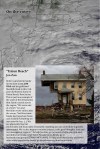
Also, our cover art? That’s a real house, 150 years old, as it looks right now, after Sandy knocked it around. The people who lived there have had the shit kicked out of them and they’re trying to rebuild. I spoke to the guy on the phone — he sounds exhausted, but he was nice enough to let us put his house on our cover. So to thank him for that, consider following the link on the cover art page and donating to his rebuilding fund. (Also, huge thanks to Help From Hurricane Sandy Union Beach NJ and Kelly Ebner Maher for helping me track down the guy who lives in that house.)

Or, at the very least, give to the Red Cross and help all of the East Coasters who got hit by this storm.


Interview with Bill Roorbach, author of Life Among Giants

I’m just going to say this: I love Bill Roorbach. Like, I want to hug the man. He’s not just a terrific writer, he’s also a fabulous human being.

But today, I’m interested in him as a writer: my first Bill Roorbach was his story collection, Big Bend, but I quickly moved on to his essays and his memoirs. So when I heard that he was putting out a new novel this year, I was an early pesterer for release dates!

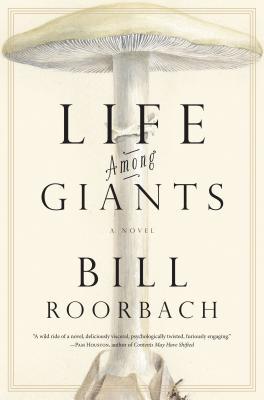
This month, Bill Roorbach’s new book, Life Among Giants, comes out in bookstores and online. I was lucky enough to get my hands on an early copy, and I reviewed it here on the blog. But after I finished the book, I kept wanting more, so I tracked down Bill and asked him to let me interview him here. And Bill, who is seriously one of the coolest people ever, said, “I’d be honored to do an interview when the time comes.”

This was our conversation.


It’s been about a decade since you last published a novel. I love the short fiction and the essays and the memoirs and the writing guides you’ve published in the meantime, but that decade between novels is interesting to me. What took you so long to return to that form?

I love nothing more than being inside a novel, working away. But other ideas had got hold of me and took precedence, that’s all. Temple Stream was a complicated book and took some years to complete. And then I wrote stories, lots of stories. And essays. And started Bill and Dave’s Cocktail Hour with David Gessner. Plus my mom died, which stopped me cold for a year or so. But all along I was playing with ideas for a novel, and had written a chapter or two. It’s a long novel! And some of the drafts were even longer, each one taking a year.

And what made this the story that brought you back to the novel?

I don’t feel like I was ever away, in a way. These things grow organically and among other projects in such a way that there’s no beginning and no end.

I know from Algonquin’s publicity materials, including “The Algonquin Reader,” that the bones of this story come from your youth: the mansion across the water, the rock stars, the intrigue over what was going on over there. But the characters are so complex and so interesting, and I’m not sure where some of the ideas for them come from. The main character in particular: I get why he’s smart and well-read, I get why he’s a foodie (though I want to ask more about that), but why also make him this paragon of masculine athleticism? Where did that idea come from?

David “Lizard” Hochmeyer is a great athlete, it’s true, but conflicted. He’s gotten disenchanted with the American Dream, including the sports dream. He’s unimpressed with his own considerable powers, cares little for the game.  He’s more drawn to other worlds, such as ballet, as exemplified by the famous ballerina, Sylphide, who lives in the mansion across the way. For her part, she regards athletes as artists, and dancers as athletes. I’ve always been interested in sports, though I was only pretty good at most, maybe a little better than that at baseball. And I always looked up to the best athletes, one of whom was my older brother, wondered what made them tick.

Okay, back to the food: I know you love to garden and to cook. Your photos of you and your daughter with vegetables from the garden or fresh-baked cakes, on your blog and on Facebook, are just delightful, and you obviously take a lot of pleasure from it. But those restaurant scenes! Man, those are vivid. I’ve cooked professionally — never on the scale that this guy does, but enough to know my way around a restaurant kitchen — and the bits of the novel that involve restaurants are just spot on. What’s your background in restaurants? 

I was a bartender in a number of good restaurants and always fascinated by the kitchen. Plus, as you say, I love to cook. Fun to imagine someone much better than it than I will ever be!

And some of the recipes! I haven’t tried it yet, but I want to take a crack at the mushroom sausage you describe early in the novel. Did you come up with that, or did you consult with someone? And all those other dishes… did you actually get into the kitchen with a chef and work on some of those?

There’s no crack in that recipe! Oh, read that wrong. I invented the sausage and experimented cooking them until I got it right, just on my own, with mushrooms from our woods and from various friends. The sausages are really good because mushrooms are really good, a nice replacement if you don’t eat much meat but love sausage.

Can we get the recipe for that sausage you invented?

The recipe is in the book!

One of the things I love about the book is the locations. New England and Miami in particular feel so real — you can sense the warmth and humidity down south, the chill and the changing seasons up north. You based the houses on your youth, and you live in Maine today, but what’s your history with Miami? Did you do research trips down there? Hang out with any of the Dolphins? 

I’ve known a number of football players, but never considered it research. Miami I love. I have friends down there and have spent time at different phases of life. Great food. Great energy. A way to light a fire under the book. I’m more like Everglades. And most of the Dolphins I hung out with were at Sea World.

For you, the first mystery, the one that led to this book, was the rock stars across the water and what they got up to in that big house. And you play that wonderfully in the fictional world of the novel. But the characters’ story starts with a murder, and the echoes of that event begin to take the shape of a murder mystery. What made you add that?

My question was: how does trauma play out through the whole life? Lizard’s dad is a hapless character who gets himself in over his head, and pays big. His kids pay even more. My neighbors back in the day, down there in Connecticut, were nothing like the neighbors in the book — that was just a kind of suggestion planted in my head that found expression here. Much more important was my curiosity about dancer friends, my admiration. Nothing in the book comes directly from life. When you write a novel, you make stuff up, and you try to bring it to life. Lizard is trying to solve a mystery, it’s true, but the real mystery for all of us is: what does this life thing mean?

This is a little book-clubbish, and maybe you want to leave it to the readers, but tell me about the title. The most obvious giants are the rock star and the dancer and the towering football player. But I get the sense that there’s something less tangible about that title, like the “giants” actually refer to an idea more than to human beings. The parents don’t quite fit the bill, but their deaths loom large in the book. Are they wrapped up in the title, and what makes them “giant”? Or is there something else that title might refer to?

Lizard is almost seven feet tall, it’s true, but he’s not one of the giants of the title. The giants are the famous dancers, rock stars, philosphers, evil bankers, and chefs that populate this book, the people Lizard lives among.

Some of the promo materials from the publisher, when they sent my advanced copy, compare this book to Gatsby. What do you make of comparisons like that? I mean, on the one hand, what an honor! But I can see why it would feel daunting, too, like you have to live up to that. Were you thinking about Gatsby when you wrote this? What do you do when someone compares you to Fitzgerald?

I was thinking of Gatsby from the start. I wanted to make a narrator who, like Nick Carraway, starts as an observer of people in mansions, and ends up getting tangled in more mythic lives. And I was gratified when Publisher’s Weekly called Life Among Giants “Gatsybyesque.”


Bill Roorbach, circa 1975. From his website.

Bill Roorbach is the author of Life Among Giants as well as the story collection Big Bend, the memoir Temple Stream, the writing text Writing Life Stories, and many other books, stories, and essays. You can find out more about Bill at his website; you can find out more about the novel at the book’s website; and you can follow Bill’s blog at Bill and Dave’s Cocktail Hour.

Portlanders: Bill is scheduled to to read at Powell’s Books on January 10. Everyone else, check out Bill’s book tour to see when he’ll be in your area!

Read an excerpt from Life Among Giants here.

Read reviews of Life Among Giants here.

Read other interviews with Bill Roorbach here.

Watch the book trailer Bill made here: