A Writer’s Notebook: family history

This one rambles, but it’s an exercise and it’s rough, so bear with me.

I used to read books. I mean on paper, pages made of wood pulp pressed flat in huge machines, cut and stitched or glued together and then cut again, printed with ink and bound in cardstock covers. When I turned the pages I had to hold the last one down with my left thumb and the next one I kept pinned beneath my right index finger. For a long time I would fold the books in half, breaking the spine so cheaply glued pages would fall out in my lap; but after I destroyed my father’s thick copy of It, I learned — the hard way! — to never break a book again, so as an adult I carefully bend the covers to keep the spine always straight and clean.

My books had spines. That’s where the titles went, so I could see on my bookshelves which books were which.

I had bookshelves.

All of this remains true now, but I’ve been thinking lately about how much the technology of literature is changing — has changed, really, and is leaving me behind, because I still don’t own an e-reader and have no plans to buy one any time soon. I like my books. I don’t dislike e-books, but damn it, the printed book is a nearly perfect technology already, and I see no reason to give it up.

None of this is really what I’ve been thinking, though. What I’ve been thinking about lately is my mother’s father. I called him Papa, and because I was his first grandson, he kept the name proudly; we all pronounced it “paw-paw.” His birthname was Julius Charles, but no one knew him as anything but JC, Daddy to his children even when they’d grown, Papa to his grandkids and great-grandkids.

He was a short man, barely five-eight and slight of frame his whole life, his dark Wranglers in a small waist and his simple Western shirts in a medium if he wore them loose, which he rarely did. But my whole life, even when I outgrew him as a teenager, he always seemed taller than me, a pillar of quiet, self-assured manhood.

My mother still tells the story of how her younger brothers fought as teenagers so roughly in the small family room that my grandmother had no way to subdue them but to get the baseball bat, and still they raged on, two of them pounding and wrestling while my mother cried and my grandmother screamed with the bat raised in the air, looking for a place to swing: this all occurred at the time my Papa got home from his shift at the oil refinery, yet when he walked into the house he passed the maelstrom in the family room without a word or even a sideways glance. He headed to the kitchen, took a drink, passed back down the hall to his bedroom to change his work clothes. When he passed the second time, the whole family was arranged on the couch, the brothers quiet and the bat out of sight.

No one in the family feared him. They shut up and settled down because they respected him. Such was the nature of his authority.

When I was in grade school — this was maybe second grade, maybe the year before — I had to do that assignment all kids that age have to do: I had to interview my grandparents about their upbringing. It allows kids to connect to their own past, their own traditions, and, perhaps more importantly, it allowed us to bring our history books to life through the experiences of people we knew.

My father’s father is a walking genealogy book and a born storyteller, and I’d heard plenty about our past already while sitting on his knee. But for this assignment, I decided to interview my mother’s father, my Papa, a man of very few words and about whom, I realized at the time, I actually knew very little. I’d only recently discovered that my mother had grown up without electricity or indoor plumbing, an image I could only connect with the paintings of pioneers in my social studies textbooks or episodes of Little House on the Prairie. Surely we were much farther removed from frontier life than that! Yet if my own mother had grown up in such a “primitive” setting, what must life have been like for her parents?

So I asked my Papa for an interview, and we sat down together.

I don’t remember much of what we talked about. My Papa was not a boastful man, so the coolest things I know about him — that he wrestled alligators out of the backyard in Louisiana so my mother and uncles could play in the yard, for example — I heard from other people. But I remember one detail vividly: I read from my list of assigned questions, “What did you do for fun as a kid?”

My Papa said, “Oh, we would hitch up the horse and buggy and ride into town for church.”

That was it.

I can’t remember if I laughed out loud, though I certainly don’t imagine that I did. My Papa was a great man to laugh with, but he was not a man you laughed at. But I do know I found his remark fantastically silly, and I definitely said something like, “Papa, people don’t go to church for fun!”

But it was true. My Papa was a farm boy and, after his father died early, was the primary breadwinner for the family before he was a teenager. As he explained it to me, life was mostly work on the farm, so going into town on Sundays was as much a social opportunity as a spiritual one. It was the only time you really got to see your neighbors, it was a time for ice cream socials and games of dirt ball and sly meetings with young girls.

That and the horse-and-buggy they took into town had me convinced my Papa grew up, oh, not exactly during the Civil War, but certainly shortly afterward. And I suppose in Depression-era Louisiana, that wasn’t really that far off

His life was utterly foreign to me. And lately I’ve been wondering how utterly foreign my life might someday seem to future generations. Already my nieces and nephews are astounded that I ever had to blow into a cartridge to get my video games to work, that we used to own a tv that had no remote control, that we used to have to rent a VCR from the video store because we didn’t own one ourselves. (For that matter, they’re astounded at the idea of VCRs, or video stores.)

When I needed to do a school report, I looked things up in an encyclopedia. On paper. In the library.

My church group had lock-ins for Halloween and watched Children of the Corn in the fellowship hall.

For fun, I borrowed my mom’s minivan and hung out at the HEB, or my girlfriend’s house, or went careening down country roads and catching air on railroad crossings. (Sorry, Mom.)

I read books. In print, on paper. For fun.

I talked to my grandparents about life when they were kids, and that was more fun than I’d ever expected it to be.

I’d like to link you to a specific exercise, but if you read the piece I just wrote, you’ll recognize the exercise already: It’s the one we all did in first or second grade, writing about our grandparents and what life was like for them.

I actually was thinking about this recently — I’m reading Elmer Kelton’s The Time it Never Rained, a favorite of my dad’s, which is about the worst drought in Texas history, back in the 1950s. Except, that might soon be outdone by the drought Texas is currently suffering through, so I’ve been thinking about the historical echoes. And the history Kelton writes into the story has me thinking about “the way things used to be,” which got me thinking about my Papa.

And then I remembered that grade-school assignment.

Which is still a great one, so if you still have access to your grandparents, go interview them. Now.

You’ll love it.

Photo blog 65

"All natural." Man in the woods, Silver Falls State Park, Oregon, 1 September 2011.

New publication

Remember when I was sitting in at Ryan Werner’s Our Band Could Be Your Lit project? Well, as of today, one of the stories from those sessions appears in issue 24 of the excellent Jersey Devil Press. The story is “Colony.” And I’m super-psyched, because JDP is awesome.

You can also download a .pdf of the issue, if you want to. And you want to. Trust me. There’s an essay in this issue called “Fear and Loathing in Western Sweden.” Seriously. Hell, the first story in this issue is titled “Where Did My Balls Go?”

I told you JDP is awesome.

A Writer’s Notebook: tarot story

Last week, riffing off a clip of The Daily Show, I wrote short bit about how cool it would be to do live “writings,” like a reading in a bookstore or a library but instead of reading existing work, we’d write something new, live, on the fly, according to ideas tossed at us from an audience. And then, to (sort of) make good on the idea, I solicited ideas for last week’s Writer’s Notebook, and last weekend, I wrote the first idea to be submitted.

This is the second.

This week’s exercise is a bit long, but it could be a LOT longer — I’ve cut it short just to save space. But I’ll explain more below.

When my wife left me, I went for a long, long drive, out of town, across the state, nowhere in particular, and when, after five or six hours on the road, I neared the edge of Sweetwater, Texas, I spotted a big sign painted on plywood in the shape of a hand. Palmistry, it says, as I sit in the driveway, and Fortunes Told, and Madame Jule. Not Jewel, but Jule. I shut off the engine and climb the wood porch, the steps dry and cracked, the welcome mat made of crumbling jute and woven with a yarn fairy. I knock on the door. I’m going to ask for a tarot reading, but I want my fortune told in reverse, as if, knowing what had already happened between me and my wife, I might somehow prevent it.

Jule is a redhead, her hair so thick and curly I almost don’t notice the plastic horns she wears on a novelty headband. When she answers the door she’s carrying a bunch of red grapes, dewy from the fridge, and she plucks one and holds it out for me before I can even introduce myself. I eat it, the flesh cold and tangy, too sharp, the grape not quite ripe. When I explain that I want a card reading, she reaches inside my shirt collar for the gold chain I wear, takes it gently in her little fist, and pulls me inside.

Her front room is dark, the windows draped in orange cloth so heavy it blocks the sunset even in the west-facing windows. The walls are a bright, cool shade of lavender, but she’s painted her ceiling black. One wall is lined with cheap replica swords like a shop display at a Renaissance fair. She offers me a glass of water, then we sit at a square table away from the window. I’d expected it to be round, and I wonder where she keeps her glass ball. As she arranges herself, I scan the room and find the orb,on a short console table by the entryway, right next to an ornate silver box marked “Donations.”

I feed her a story about being on vacation, passing through town, feeling a mysterious pull into her driveway. I tel her I want to know what’s coming down the road. Jule spreads the cards and talks about tomorrow, next year, my desires and my obstacles, but really, she’s full of shit, because I get what I’d really come for: all I see is my past.

The first card she turns over, she places it right-side up to me but she calls it “reversed.” She starts talking about who I am, what I’m doing, my present state, says I’m lost and wandering, seeking my fortune (she means money), but to hell with that. I can see what had happened before, how I’d been unseated in my own home. Me pouring a beer into a glass the way my wife liked it and her pouring out on the carpet of our living room, throwing the mug into the wall where it dented the plaster. “You’re not even listening,” she screamed. Behind me, in the kitchen, the smoke alarm went off; our fish lunch was burning in the frying pan.

Jule turns over another card, places it crossways over the first. She starts explaining how much hard work I’ll have to do in the near future, tells me to be careful about driving too late or picking up strangers on the road. When she warns me to avoid conflict in the near future I almost laugh in her face. I see the bars in the window of the gas station where I’d bought the beer my wife had poured out, the shadows from the morning sun cutting across the dingy linoleum, the smell of fish still on me from the market at the wharf. I see the fish wrapped in newspaper on my passenger seat, the beer on the floorboard, the rainbow sheen of gasoline in a puddle in the gas station drive. At home, my wife was packing her bags, nothing folded or stacked, just fists of clothing twisted into bundles and tossed in whatever bags she can drag from the closet. Across town, her lover was waiting. In the gas station parking lot, I was blinded a moment as a passing semi threw the morning sun in my face.

Jules turns over a card and sets it across the table, on my side. She sees my future, sees me overcoming all obstacles and achieving my goals. I see the house of that fucker who stole my wife. I’d gone over there, before I left town, before I’d given up; I’d thought I might somehow talk her out of this crazy shit, might win her over if I just fought for her. I stood outside for ten minutes banging on the front door, the front windows, until suddenly I got hit from the side and went sprawling in the guy’s lawn — he’d come out the back door and around the side, refusing to open up where I might force my way in. His grass was wet, my pants and elbows soaked. As soon as I got to my feet he shoved me again and I reeled backward across his lawn; he followed me, hands ready, shoved every time I caught my balance. When I managed to wheel free of him I ran for my car, the door still open, and pulled an old ax handle from the front seat. I think I might have killed hi, not on purpose but who knows what might have happened, except when I turned around he was already there and he grabbed the ax handle. We wrestled in the driveway, gaining and loosing ground. At least on his concrete, I had a better foothold, but when I thought I was gaining some kind of leverage over him, he let me come and pulled me back onto his lawn, where I slipped in the grass and went to my knees as he wrenched the ax handle from me. He held it up and I covered my head, then I heard a hard crack as he smashed my front headlight. He kicked me back into the grass as he passed me; he kept my ax handle.

Among the many very cool ideas that came my way last week, only one turned up here on the website, over at the Writer’s Notebook intro page. (The rest came my way through Facebook or via email.) This idea came from Evelyn, who wrote:

Play with a tarot deck and write a story based on a spread or card that you pulled. The story can be from the point of view of the reader of the cards, the person the cards are talking too, or use the spread as the plot line, or character details/development for the fictional story. Also you could try writing an imagery poem based on what you see in the card, color, picture, story, elements, or overall tone of the card.

I’d planned to tackle the poem idea, just to shake things up a bit, but today, two things happened: 1) I chickened out. And 2) I read a piece in this week’s New Yorker about an artist doing interpretive painting of the major arcana in which he replaced the traditional figures and imagery with people and locations he knows in New York City. And even though that could still have led me to poetry, I got caught up in the stories behind this guy’s paintings and starting thinking about ways to tell a story with a tarot deck.

This short piece only shows three cards, but the tarot spread I’m working with in this story is the traditional ten-card spread, with a six-card cross and four additional cards lined vertically to one side. So you can see why I cut things short — I’d have been writing forever (and might still be — I’m kind of intrigued by the story unfolding here, even though I’d likely ditch the tarot device in later drafts).

Additionally, I used the cards to describe Jule and her divination room, and I thought it might be fun to share with you the five cards that wind up in this story. (For people who know tarot: I used the Universal Waite deck, which are also the images I’ve included here.)

For the description of Jule, I turned over The Devil:

For her front room, I turned over the 10 of swords (reversed):

The first card Jule turns over is the King of Cups (reversed):

The second card is the 8 of Swords:

And the third card is the 7 of Wands:

Steve Jobs supports the humanities and liberal arts

iPad Books
Image by Ownipics via Flickr

About ten months ago, I came across an article about Peter Thiel, the college drop-out turned tech mogul, and his grand plan to pay college students to quit school. It set me railing against Thiel’s shortsightedness and ignorance, an irritation that stayed with me so strongly that I wound up referencing it again this past March, and again in May.

Today, there’s an article making the rounds among my academic friends about Steve Jobs, who just resigned from Apple because of his health, and his firm belief that no true innovation can ever occur in technology or in business without the kind of creative thinking nurtured in the humanities:

Steve Jobs has mentioned [former Sony president and chairman] Norio Ogha as a great inspiration as they shared the belief that to create true technological innovation you need a mix of technology and liberal arts. […] As Steve Jobs explained last year during his Keynote at the WWDC: “We’re not just a tech company, even though we invent some of the highest technology products in the world,” he said. “It’s the marriage of that plus the humanities and the liberal arts that distinguishes Apple.”

Take that, Peter Thiel!

But as awesome as that is, my favorite moment in the whole article is author Axelle Tessandier’s closing lines:

We need to revolutionize education to encourage creativity and need to teach our kids to play, take a chance and create. By not teaching our children liberal arts we will hinder their capacity to innovate. And this initiative and revolution is not just Silicon Valley’s responsibility but a universal one.

As educators in Texas and Wisconsin come under attack by their own governments and education budgets get slashed across the nation, with the arts hitting the chopping block LONG before any other discipline, I think Tessandier’s point cannot be emphasized too often or too loudly.

I want this on a t-shirt.

New poetry from Michael Levan

My friend Michael Levan has been this week’s featured poet at Atticus Review (quite appropriate, since his son’s name is Atticus). His week is coming to an end, but take a moment to head over to Atticus Review and check out Michael’s poem “To My Wife Exiting the Church and Looking Forward to Our New Life.” Seriously: he is hands-down one of the finest poets writing today, and he’s also a hell of a cool guy.

Photo blog 64

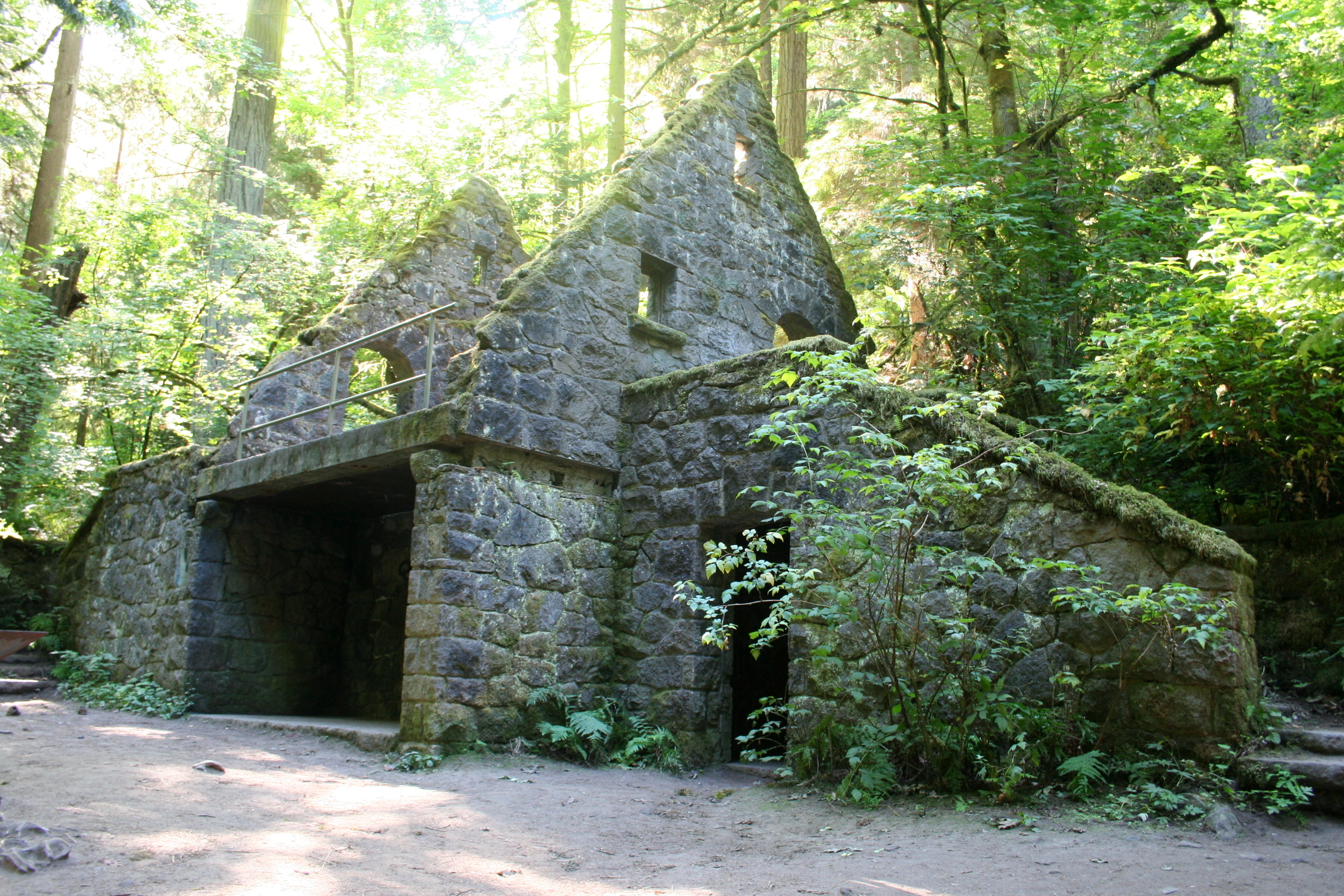
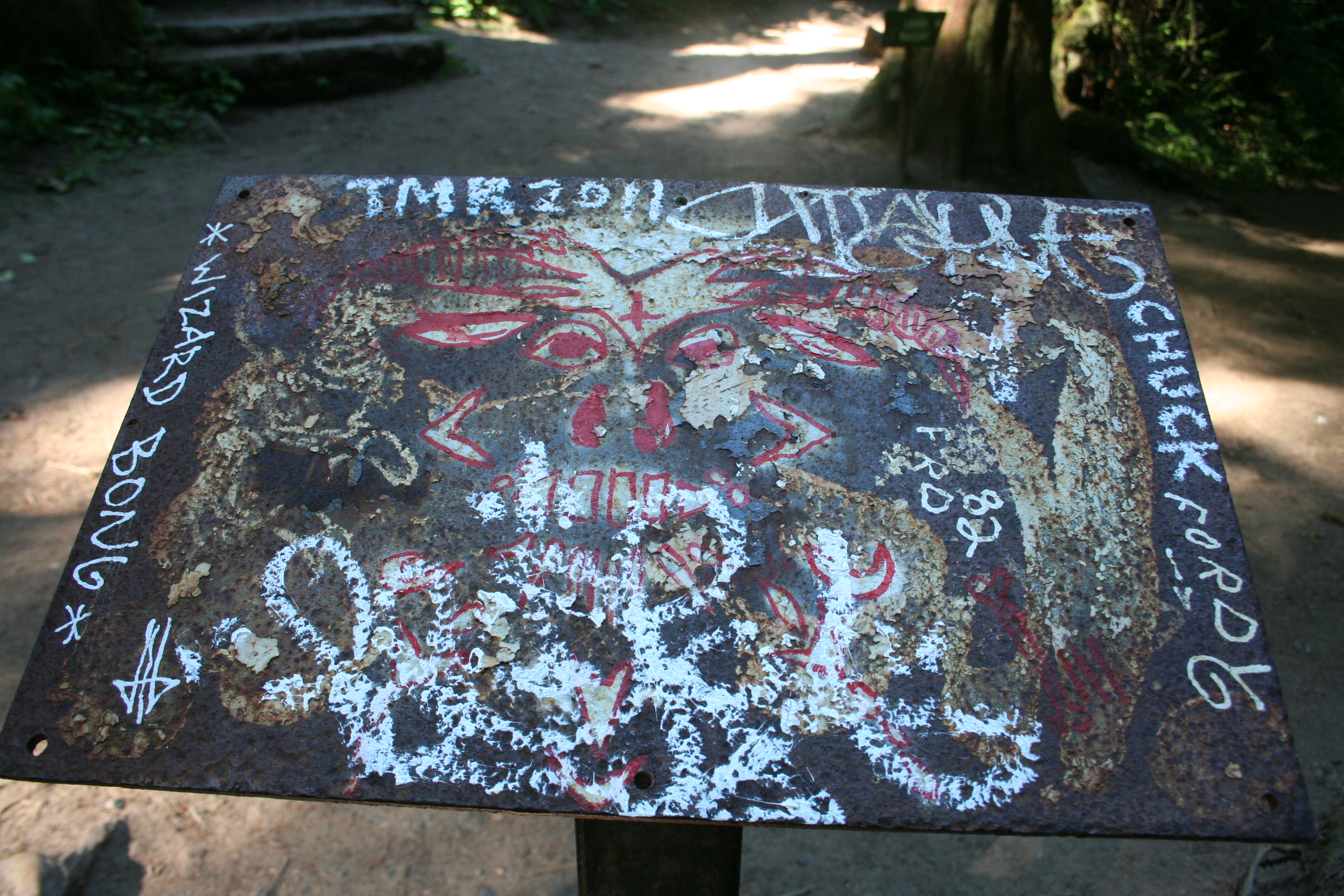
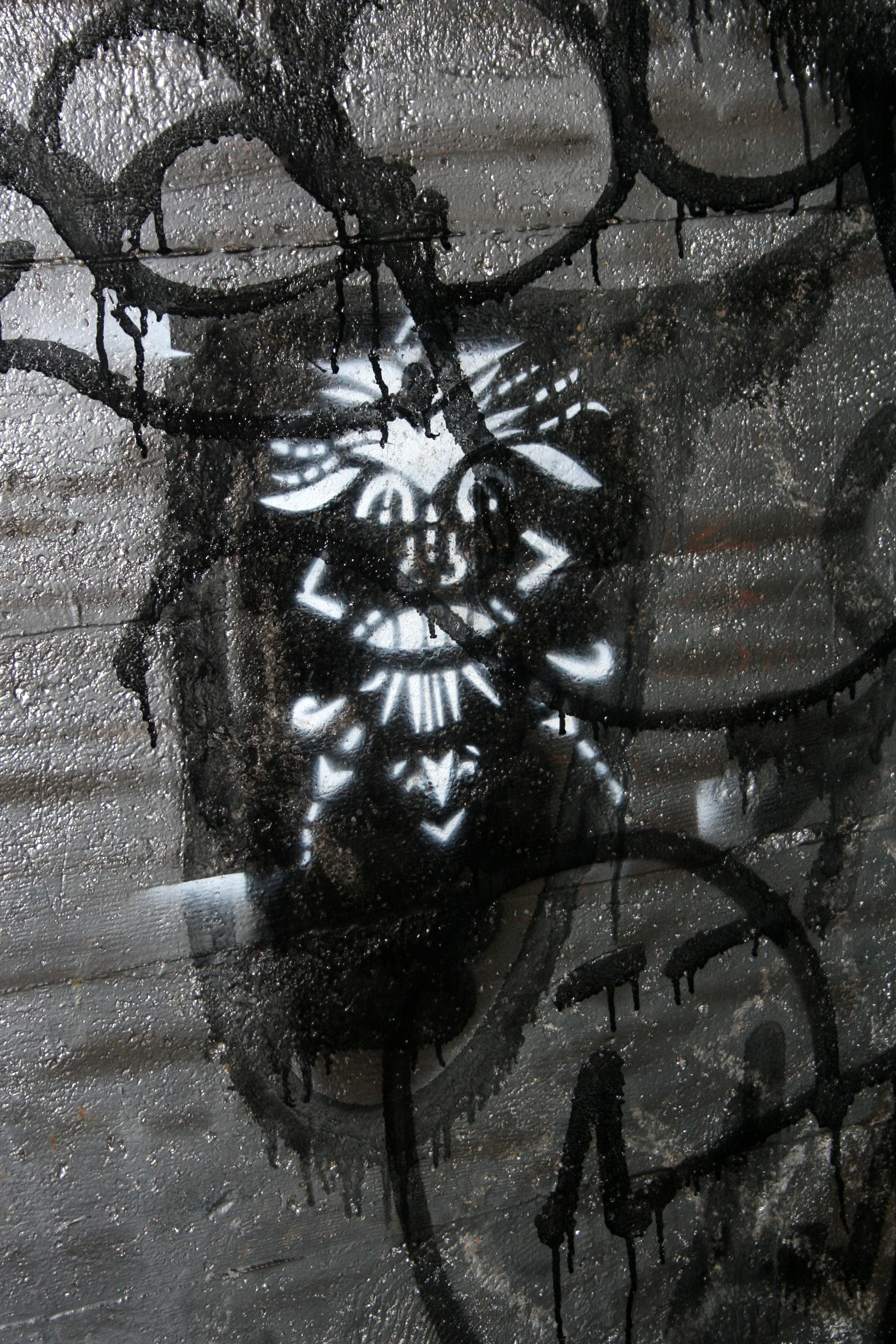
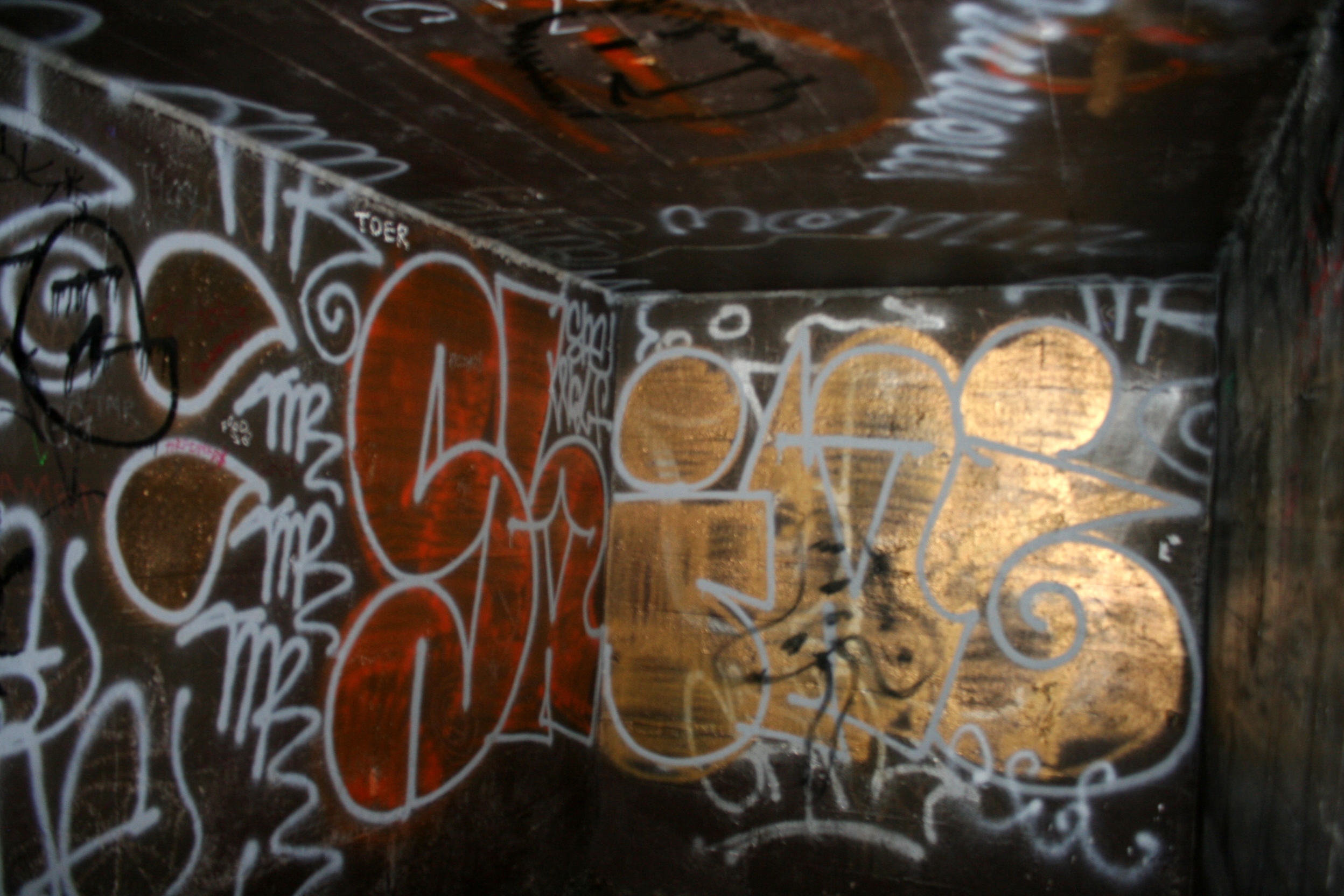
“Wild at heart.” Stone cottage with graffiti in Forest Park, Portland, OR, 19 August 2011.

New publication (this one’s big)

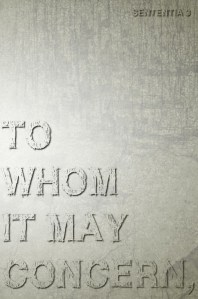
Cover of Sententia, issue #3.

I’ve been sitting on this one for a while, waiting for news of its imminent arrival, but it’s been hard because I’m really excited about this one: issue 3 of Sententia is publishing an excerpt from my Civil War novel Hagridden (which long-time readers might remember from NaNoWriMo 2009). Today I got news that the issue is in from the printers and should begin shipping to readers this Friday. Want one? You can pre-order a copy today!

And you’re going to want one, because this thing is unique: This particular issue of Sententia is a special “pitch” issue, which will consist entirely of novel excerpts accompanied by plot synopses and query letters. In addition to the copies that go out to readers like you, the issue will also get shipped to literary agents and small presses who might be interested in the books.

The idea is that someone might read, for instance, the excerpt of my novel and be intrigued enough to contact me about the rest of the book. Which might lead to representation or even a book deal.

This is all very tenuous, of course, as everything in the publishing industry is these day, so who knows what might come of all this. But the idea itself is so cool that I’m thrilled to be a part of it, and you can be thrilled to be an early reader if you pop over and order your copy today!

Incidentally, in preparation for this special issue’s release, Artistically Declined Press (which publishes Sententia) put the issue in Goodreads. I’m listed as one of the contributors, which allowed me to launch my author profile at Goodreads. So while you’re waiting for your copy of Sententia, head over to Goodreads and become a fan!

A Permanent Relationship With Words: Literary Tattoos (via Amanda Rudd’s Blog)

This blog post about literary tattoos is awesome in its own right, but I particularly love it because it links to a site called The Word Made Flesh, which is so cool I’ve added it to my links. Check out both — you’ll love them!

A Permanent Relationship With Words: Literary Tattoos This is the first official post for the newly-instated “Free-For-All Fridays.” It’s a funny coincidence.  On Tuesday Clay talked about being “Tatted Up” on his blog EduClaytion.  Of course, his story is about receiving a few temporary tattoos from his niece, but still.  Tattoos.  Major coincidence, because I’ve planning to write a blog about tattoos all week. Let me begin by saying I don’t have any tattoos, but I am endlessly fascinated by them.  … Read More

via Amanda Rudd’s Blog

A Writer’s Notebook: “This is happening”

This week, I’m going to give you the writing exercise up front, because it was a prompt and, in the “real” world, the audience would know what I was writing toward before-hand:

The other day, I posted a clip from The Daily Show in which John Hodgman jokingly suggests authors stage live “writings” in bookstores, which I thought was both hilarious and a great idea: I actually wondered, in my post, how it might feel to take writing cues from passing readers and churn out a story on the spot.

I’m not yet brave enough to try out guerilla literature and go post myself on some street corner begging for prompts, but I did go ahead and toss the idea out on Facebook, where I asked all my friends and acquaintances to feed me ideas; I linked to the blog post I’d written and added this comment: “I’m looking for an ‘assignment’ for this week’s Writer’s Notebook on my blog. So check out this post, and if you have any ideas, send them to me.” And, to keep things honest and make the “assignment” a bit more like the kind of spontaneous, who-knows-what-I’ll-get exercise I’d been talking about, I promised to tackle the first idea I got.

A friend of mine named Tara Urbanski was the first one to respond. This was her prompt: “Write the story of this happening. Tell me about the emotions the writer feels while trying to complete this task.”

What follows is not brilliant and, I think, might stray a bit off the original exercise, but that’s the beauty of prompted, unscripted exercises like this: the surprise in the writing. So, for better or worse, this is what I came up with.

His esophagus felt too big, like he’d somehow managed to swallow his own arm, and if he could have managed it he probably would have. For three days now he’d been sitting in this room, moving from the office chair to the recliner only to bring the blood back into his legs or to catch a twenty-minute nap. He had started out eating cold sandwiches and drinking warm beer, but by the middle of the second day, he’d abandoned all pretense: he was subsisting on tubes of saltines and individually wrapped string-cheese sticks, the plastic packaging scattered around the trash bin. Two bottles of whiskey sat on the littered desk, the Walker long ago empty and the cheaper Cutty Sark well into its last third. He was starving, misshapen, and oily; his pants stuck to whatever seat he sat in, and his hair was beginning to smell.

The only hint of decency he’d left himself was the coffee pot, which he’d moved from the kitchen into the office and kept clean and in good working order; the aroma of the beans as he ground them every couple of hours helped clear his head as much as the coffee itself did.

Still, he loathed himself. He was living a cliché and he knew it.

He consoled himself with the idea, which he had taken to speaking aloud in the empty room every few hours like a mantra, that he was wearing this outward cliché like a costume, like a uniform, so that, appearing in the role of a writer nearly finished with his masterpiece, he might actually become such a thing. The book he now was trying to finish had begun with such energy, the writing spinning out ahead of him so fast his computer’s autocorrect couldn’t keep up with his typos; but he had languished in creative doldrums for weeks, staring at empty pages or rereading and rereading typed pages, his eyes read and his neck stiff, unsure what was missing or where to go next. Last Thursday, he’d given up, slept late then just stayed in bed all day, skipping meals, rising once to exchange his boxers and t-shirt for a bathrobe and then crawling back beneath the blankets, hiding from the daylight. When the sun set, he’d rooted in the sheets for the remote to the small tv in his bedroom and stayed up all night watching talk shows and infomercials.

Halfway through Friday he peeled himself out of the bed and showered, dressed in jeans and a blazer and, God help him, a tie, drove to the store for sliced bread and a case of beer. At home, he pieced together a stack of sandwiches chucked the beer into a cooler with three of those blue plastic bricks from his freezer, and set out everything like a buffet in his tiny living room that served as his home office. He locked the door to his bedroom, took the key off his ring and slipped it into an envelope, and mailed it to his ex-wife along with a note: If you don’t hear from me in a week, come over and break in.

He had access to the half-bath in his entryway, and his kitchen, and his office. He sat down at the small desk, found a sticky note and a pen, and wrote in large block letters: THIS IS HAPPENING. He pasted it to the wall beside the window. He looked at it a moment, then wrote four more, one for each of the other walls and one for the archway that led from his living room/office to his entryway.

He said it aloud: This is happening.

Then he got to work.

Now, he rubbed his right forearm, which held the wireless mouse, and this his left, which held the pen. He reread the scribbles in his little paper notebook, words all over without regard for the lines on the pages. Arrows he’d drawn to connect ideas. He stood and arched his back, his hands on his hips, and he gazed at the wall where he’d taped whole chapters, page by page, and scribbled on like a chalkboard, grand stroke and huge letters spanning several pages at once. It was beginning to take shape. He could see it, if not on the wall or in his computer then at least, perhaps for the first time, in his head. He swilled a shot of Cutty from the bottle, set it back on the desk, and said out loud, again, for probably the fiftieth or sixtieth time, “This is happening.”

Just so you know I played by the rules: this little piece took me about 30 minutes to write, and I just finished it.

Also, I shouldn’t need to point out that this is fiction, but I think any writer out there would recognize this as vaguely autobiographical, because we ALL go through some version of this at some point or another.

I think it’s interesting, too, how often heavy drinking turns up in portrayals of writers, real or fictional. I’m not a heavy drinker, actually, but I can’t help but pull that into this sketch, and I wonder if the reason is its metaphorical impact: with or without the booze, the final throes of any writing project can both intoxicate and wreck a person.

Anyway, so there it is: my somewhat stereotypical example of what this writing thing can feel like.

One final note: Though I promised to tackle to the first idea to come my way for the sake of this exercise, I also promised to stockpile any other ideas for future Notebook entries, and the second one to come through is a doozy — and would require me to write (gulp!) poetry! So you have that to look forward to for next week. 🙂