Just wanted to let folks know about a couple of upcoming reading events I’m involved in.
[UPDATE: The William Stafford reading was originally Monday night, but it’s been rescheduled for Wednesday. I’ve edited this post to reflect that change.]
For the first event, on Tuesday, January 13, I’ll be hosting a reading full of Southern ex-pats who’ve escaped their hot hometowns and congregated in cool, rainy, literary Portland. “Ex-Southerners in Portland” will feature work by Hobie Anthony, James Bernard Frost, Edee Lemonier, Edie Rylander, Davis Slater, and of course me. We’ll be reading at the American Legion Post 134 in Portland.
And since we’ll be at a veteran’s post, I’ll be extending my donation offer: in addition to the money I’m sending to the National Military Family Association from the December sales of Hagridden, I’ll be adding one dollar for every book sold at the Ex-Southerners reading. That’s anyone’s book — regardless what book it is or who wrote it, if you’re at the reading and you buy a book, I’ll add a dollar to my donation.
And if you bought a copy of Hagridden in December, thank you! You all really came together and helped make a difference in the lives of military families. And if you bought a copy before December or plan to buy one later, but you still want to contribute to military families, you can always donate directly to the National Military Family Association or to an organization of your choice.
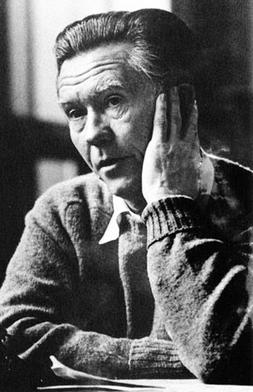
American poet William Stafford (1914-1993) (Photo credit: Wikipedia)
The second event is the next night, Wednesday, January 14. Each year, the Friends of William Stafford organize a series of readings to commemorate the life and work of Oregon’s own William Stafford, and next Wednesday, Linfield College in McMinnville is hosting one of those events.Linfield professor emerita and Oregon poet Barbara Drake will be hosting the reading, and I’ll be joining area students, Linfield faculty, and local writers and poets Joe Wilkins, Emily Grosvenor, and Lisa Ohlen Harris, among others. We’re all reading from Stafford’s work and some work of our own.
That reading is January 14 at 7 p.m. If you’re in the area, look for us at Linfield College, in the Austin Reading Room of the Jereld R. Nicholson Library.
I love Speaking of Marvels, by the way. I only recently started reading them — my publisher, sunnyoutside press, sent them my direction — but we need more places that focus on these beautiful oddball cousins to the novel and the collection, the novella and the chapbook. And Speaking of Marvels does a great job; I’m thrilled they exist.
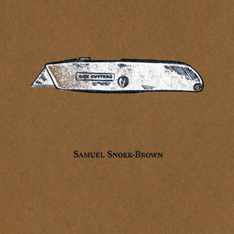
Samuel Snoek-Brown, Box Cutters
In my interview, I talk a lot about my own chapbook, Box Cutters, as well as some of my chapbooks-in-progress and what I love about the form. I also mention some of my favorite chapbooks and chapbook publishers, including books by my friend Matthew Burnside and books from Passenger Side Books, run by my friend Ryan Werner.
By strange coincidence, before I even saw that my own interview was live this morning, I’d already read another interview — between Matthew Burnside and Ryan Werner! — over at Boaat Press.
So today you get a twofer: my interview, and also the interview Matthew did with Ryan.
And then you get to go buy lots of chapbooks, because between Boaat Press and Speaking of Marvels, we’ve given you a heck of a shopping list!
It’s time again, gang, for my annual reading list. This year’s been quite light, actually — I felt like I’d read quite a bit, but turns out I managed just under 60 books. Does it count that I reread my own novel something like seven times in revisions before it came out in August? My summer months were slowest, which would normally be surprising but I was teaching an intensive summer course, entertaining visitors, as well as going through a few revisions of Hagridden and gearing up for the book tour — and then going on said book tour. So, I forgive myself the lighter load this year, and maybe I can make it up next year.
But this year is done, so here’s my whole list, followed by a sort of break-down:
A.M. O’Malley, What to Expect When You’re Expecting Something Else
Akira Kurosawa, Seven Samurai and Other Screenplays
Albert E. Castel and Thomas Goodrich, Bloody Bill Anderson: The Short, Savage Life of a Civil War Guerrilla
Bartee Haile, Murder Most Texan
Bret Anthony Johnston, Corpus Christi
Charles Portis, True Grit
Cheryl Strayed and Robert Atwan, Best American Essays 2013
Christian Anton Gerard, Wilmot Here, Collect for Stella
Cormac McCarthy, Blood Meridian
Daniel M. Shapiro, How the Potato Chip Was Invented
David S. Atkinson, Bones Buried in Dirt
Elizabeth Strout and Heidi Pitlor, Best American Short Stories 2013
Garland A. Perry, Historic Images Of Boerne And Kendall County, Texas: A Sesquicentennial Project 1849 – 1999
Gayle Towell, Blood Gravity
Hannah Stephenson, In the Kettle, the Shriek
Hosho McCreesh, A Deep and Gorgeous Thirst
Ian V. Hogg, Weapons of the Civil War
James A. Crutchfield, It Happened in Oregon
James Claffey, Blood a Cold Blue
James M. Smallwood, Barry A. Crouch, and Larry Peacock, Murder and Mayhem: The War of Reconstruction in Texas
Jane Austen, Mansfield Park
Jason Aaron and Russell Dauterman, Thor (issues 1-3)
Jefferson Morgenthaler, Boerne, Settlement on the Cibolo
Jesse Lee Kercheval, Building Fiction
Jo Baker, Longbourn
John Carr Walker, Repairable Men
JP Reese, Dead Letters
Leesa Cross-Smith, Every Kiss a War
Mark Millar and John Romita Jr., Wolverine: Enemy of the State
Marley Brant, The Outlaw Youngers: A Confederate Brotherhood
Matty Byloos, Rope
Meg Tuite, Bound By Blue
Molly Gaudry, We Take Me Apart
Neil Kagan and Stephen G. Hyslop, Atlas of the Civil War: A Comprehensive Guide to the Tactics and Terrain of Battle
O.S. Barton and John McCorkle, Three Years With Quantrell: A True Story, Told by His Scout John McCorkle
Randy Stradley, et al, Aliens Vs. Predators Omnibus, Vol. 1
Randy Stradley, et al, Aliens Vs. Predators: Three World War
Robert Kirkman, The Walking Dead Vol. 16 – 20
Robert Lashley, The Homeboy Songs
Robert Vaughan, Addicts & Basements
Rusty Barnes, Breaking It Down
Rusty Barnes, Reckoning
Seneca, Letters from a Stoic
Stevan Allred, A Simplified Map of the Real World
Steven E. Woodworth and Kenneth J. Winkle, Atlas of the Civil War
Tom Franklin and Beth Ann Fennelly, The Tilted World
Tom Franklin, Hell at the Breech
Traylor Russell and Robert T. Russell, Some Die Twice
Ulysses S. Grant, Personal Memoirs
William C. Davis and Ray Bonds, Illustrated Directory of the Civil War
Of these nearly 60 books, thirteen were nonfiction research and two were fiction inspiration while working on my new novel.
Twenty of these books were fiction, including novels (8), story collections (7), story cycles (2), and novellas (2). Another eight were poetry collections, and five more (or eleven more, depending on how you count issues/volumes) were comics or graphic novels. One was book of screenplays!
Just for fun, I’ll also tell you that I have at least two dozen books by friends or colleagues on my to-read shelf, including a couple I plan to review and one I’m going to blurb(!). So I’ll be starting my year already behind, but what else is new?
Oh, and, as usual, I’ve also read hundred and hundreds of pages of student writing, almost all of it essays, and folks, this year was an impressive year for essays! I read some stupendous student work, and I’m looking forward to more of it when I return to classes in a week.
Yeah, WordPress did that “Year in Review” thing for me. And yay, stats and numbers and math and that tired old Sydney Opera House comparison.
The concert hall at the Sydney Opera House holds 2,700 people. This blog was viewed about 17,000 times in 2014. If it were a concert at Sydney Opera House, it would take about 6 sold-out performances for that many people to see it.
But I want to look deeper than just blog posts, because this has been an interesting year.
It certainly hasn’t been perfect. College enrollments are down and, consequently, I’ve lost a couple of classes this year. I just found out I’m allergic to nuts, which has a pretty dramatic impact on this vegetarian’s already limited diet. And it gets worse. My short publications record has dropped significantly as I’ve shifted my focus to longer works and book promotion. My tomatoes didn’t come in at all this summer.
I’ve lost some relatives this year. (Much love to them. They know.)
And those are just the close, personal downsides to the year.
But you guys.
Near the start of the year, I got to help out a fellow writer by participating in Bartleby Snopes’s Revenge of the Scammed anthology, which was a wonderful way to begin my literary year.
The next month, I saw Chris Ware speak in Portland and actually got to shake his hand. For real. In person. And then I took a train up to Seattle for AWP, and I got to meet Roxane Gay. For real. In person! And then, of course, there was the rest of AWP, which was amazing.
Loads of people sent me photos of themselves with Box Cutters.
As a writer, gang, this has been a stellar year for me.
And you, fans and friends and readers and fellow writers, have been a HUGE part of that. And I can’t thank you all enough.
I don’t know yet what 2015 has in store. I have a couple of chapbooks floating around and a publisher is looking at a story cycle of mine, and I should get rejections or acceptances on those sometime in the next 12 months. And I’m getting to interview some writers I admire and, if I can scrape together the money, I’m hoping to be at AWP in Minneapolis this April. And I’m making good progress on the next novel and, who knows, I might even finish it this year. But whatever happens, 2015 is going to have a lot to live up to.
One of my students from this past fall emailed me over the break and asked me a question:
What is your favorite thing about teaching writing classes?
I love this question, especially as I’m in the midst of (re)designing my winter syllabi, because it makes me stop and think about what I’m really after, why I’m in this profession. It takes me back to Natalie Goldberg’s “Beginner’s Mind.”
But to answer my student’s question, I’m not going to quote Natalie Goldberg. I’m going to turn to Richard Bach.
Yes, I know, a lot of people consider his work schmaltzy pseudophilosophical touchy-feeling religion-lite fiction (or so a college professor once told me), but I go in for that sort of thing, silly as it is, and some of my favorite quotes are from the fictional “Messiah’s Handbook” tucked inside Illusions: The Adventures of a Reluctant Messiah. And the line I repeat most often to myself is this one:
You teach best what you most need to learn.
This is why I went into teaching writing. I knew long ago that I wanted to be a teacher, and I figured out just before college that I wanted to teach English, but it wasn’t until I was in college and finally harboring serious (as opposed to fanciful) ambitions to be a writer that I realized that, for me, the best way to keep having exciting conversations about craft and technique and process and practice was to be in a classroom talking about those things with students.
So when I thank students each semester for showing up to class, when I tell them that I’m there to learn from them as much as they are there to learn from me, this is what I mean. They remind me of how important practice is to writing; they remind me of the value of writing exercises and revision techniques. They keep my attention on the process of writing and they make me want to write each day just to keep up with them. And when I push them for new, more complex expressions of new, more complex ideas, I remember that I need to push myself to do the same. I remember that, as writers, we never stop learning, and while I have a couple of decades or so of writing experience under my belt, each blank page is a new terror and each new piece of writing puts me right back in their chairs, learning how to do it all over again.
So these are my favorite things about teaching writing classes, student of mine:
The thrill and the fear of it all still being so new, every time. The comfort of getting to share that with rooms full of fellow writers. And the privilege to be part of seeing even one mind catch fire, or one heart become still, or one new discovery unfold in a research essay or one new revelation emerge in a response piece — of witnessing one new writer go wide-eyed at the possibilities she’s created for herself on the page.
And I’ve been working damned hard for a long time to realize that.
I mean that verb, realize, in the transitive sense: to bring into being, to make this my reality.
So it’s always a bit artificial, really, to go on a “writing retreat,” because that makes it seem that I’m withdrawing from the rest of the “real world” to do the thing that is already my real world.
In practice, this isn’t so far from the truth. Just as sometimes “life happens” and can interfere with the work — the routine — of writing, so too is writing sometimes an imposition on daily routines and other obligations, and it really does help sometimes to separate the two: to take a time-out from one in order to focus on the other.
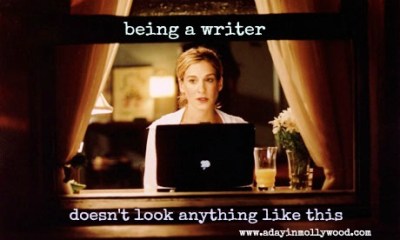
I found this PERFECT image on the A Day in Mollywood blog. Click it to go to her post on being a writer.
But it isn’t helpful to always think that way, to always assume that these two worlds — the writing world and the rest of life — are not only mutually exclusive but actively in conflict. They’re not, or they shouldn’t be, but if we think too often about how the “real work” of writing only happens on retreat, in full writing days, then we’ll always be living in this state of conflict: abandoning one set of obligations in favor of another, resenting one part of our lives because it’s keeping us from another.
Who needs that kind of stress?
We’re only a few days from a new year, and I’m just a over a week away from my winter term of classes. So it’s time to come out of retreat and get back to the daily grind. But all this means is that I’m transitioning from one set of writing habits — daily, hours-long, focused writing — to another set of writing habits — near-daily, infrequent, focused writing and daily, constant thinking about writing, the background work that is a part of any writers consciousness, and the juggling act of keeping both a writing routine and all the other, non-writing routines in the air.
And this is good, because as much as I enjoy periods of focused, intensive writing — much as I need that time to get my head around larger projects like a novel or a story collection — this juggling act is where I live. This is actually the life I’ve been working toward.
Today I’m reading books and working on syllabi for my upcoming classes. I’m cleaning the kitchen and installing a new heater in my wife’s study. I’m catching up on emails and doing a little organizing. And yeah, I’m still writing, too.
Balancing a writing life and these other kinds of life, it isn’t some burden I have to endure until I get to “live the dream” of being a writer. This IS the dream of being a writer — this is what we do. And it’s wonderful.
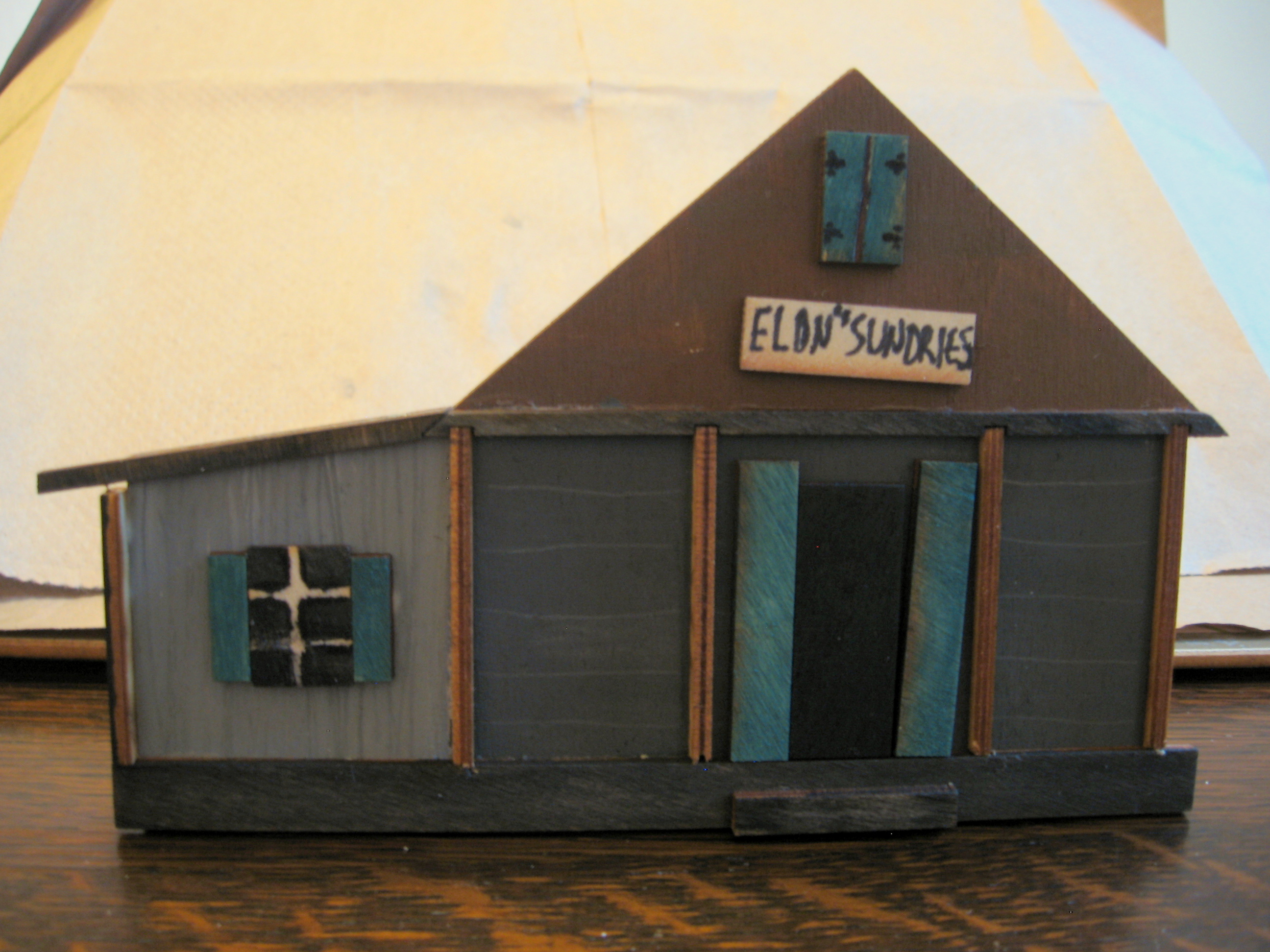
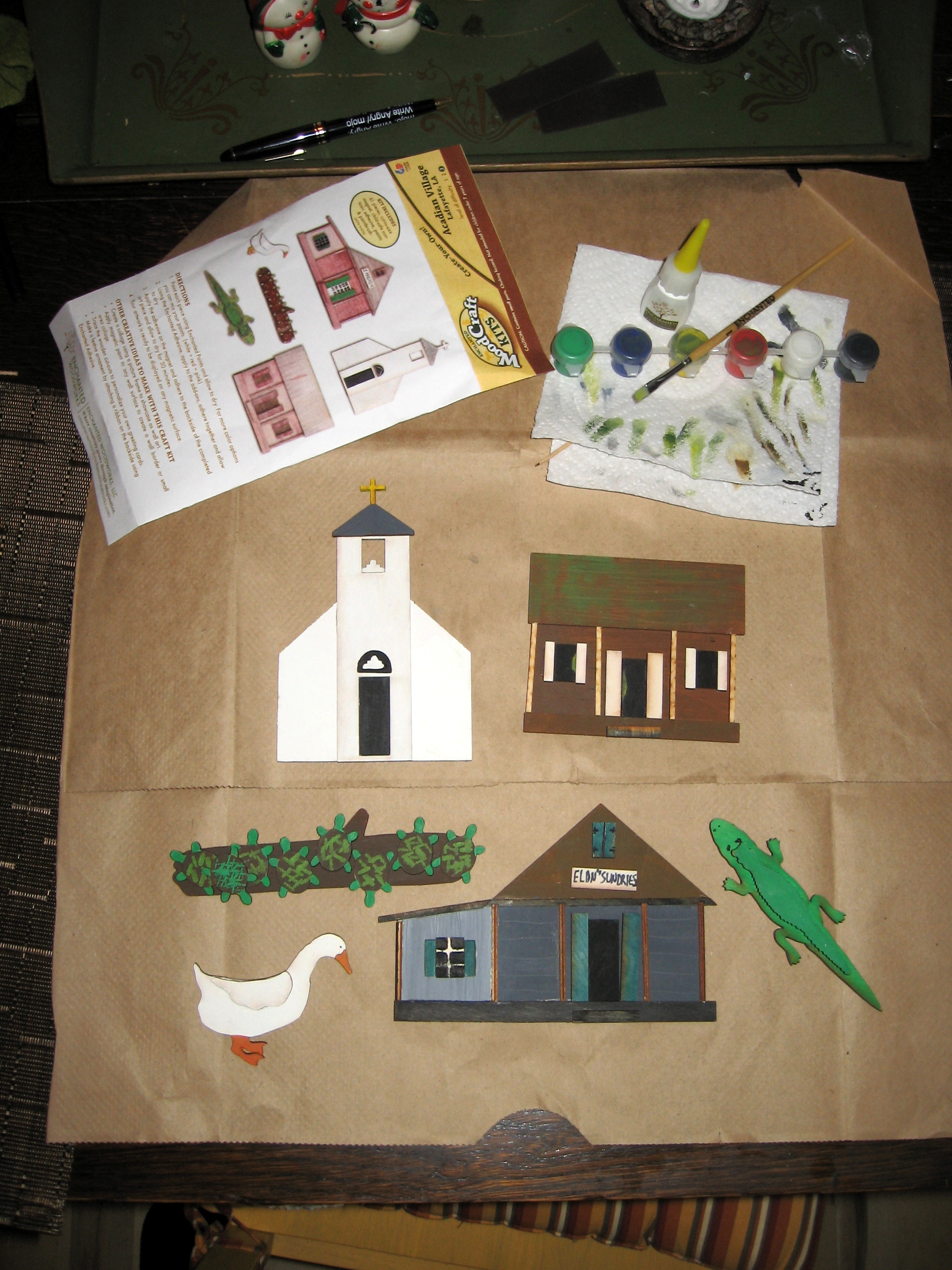
My wife called this “an odd sort of Christmas village.”
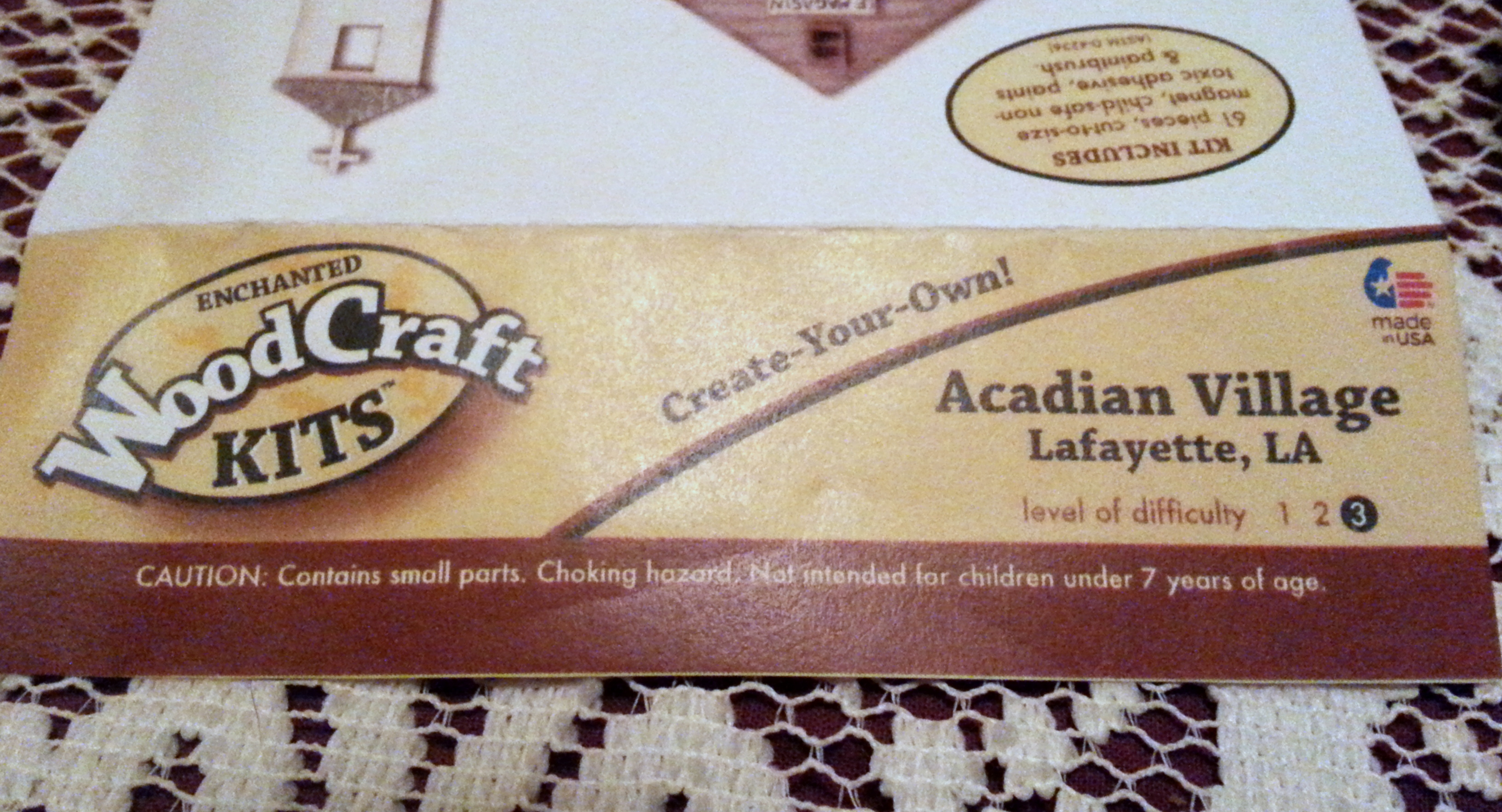
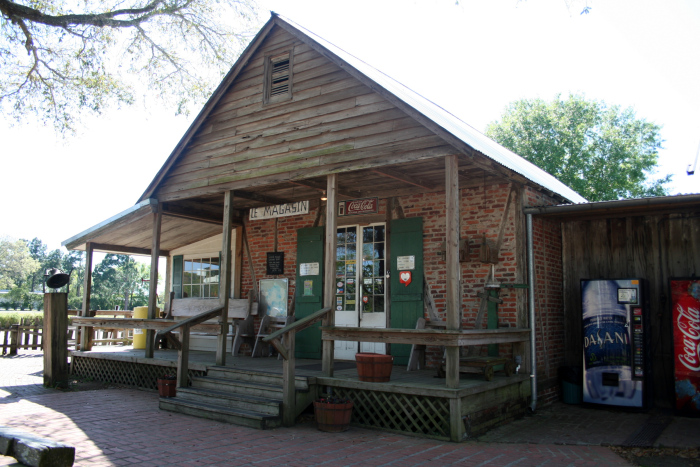
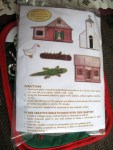
Back in March 2013, when I was in Louisiana on my research trip (thanks again to the Literary Arts and the Oregon Literary Fellowship that made that possible), I spent some time touring historic villages to get a sense of the buildings and town life of the time. At one place, I visited Le Magasin (the gift shop) and bought, among other things, a cute little kit full of jigsawed wooden plats and paint pots and a brush. The idea was to paint the pieces, glue them together, and create little 2D models of the buildings in a traditional Acadian village.
I, of course, was thinking about the buildings in Hagridden.
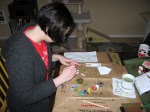
It’s taken a long time to get around to it, but I came across the kit a couple of weeks ago while cleaning my study for my writing retreat, and I decided this holiday break was the perfect time to finally put it together. So I cut open and spread out a couple of paper bags on the dining table, and my wife and I settled in for an afternoon of crafts on Christmas Eve.
Two of the buildings I’ve made into direct references to Hagridden, and for fun, I’ve decided to include the descriptions of those with their photos. The third doesn’t actually show up, but there is a reference to it, so I’ve included that as well.
Buford’s Shack
Buford’s shack
By the end of the week Buford had the true walls framed and raised. No time in his agenda to cure the moss in the old ways so that weekend he mixed the moss with mud from the marsh and constituted a new batch of bousillage, which he packed between the studs before he skinned the walls in tongue-and-groove siding. Exhausted, he decided to ignore the traditional garçonnière in the attic and instead bent long green poles to a shallow barrel ribbing bowed over the ceiling, and he thatched the ribs with reeds. This he finished by the middle of the second week, and at night he slept indoors on the floor while by day he began constructing a few pieces of furniture: a sturdy chair, a bench for his small porch, two storage boxes.
[. . .]
When he finished he bundled some reeds into a crude broom and swept out the small shack and appraised it, tested its walls, sat on his porch bench, lay back on his mattress, and wondered what the girl would make of it all, if she would approve.
You might notice that the doorway and the right window show a faint bit of light. This is my nod to the book cover. 🙂
Here are some examples of actual Acadian houses I saw in Louisiana:
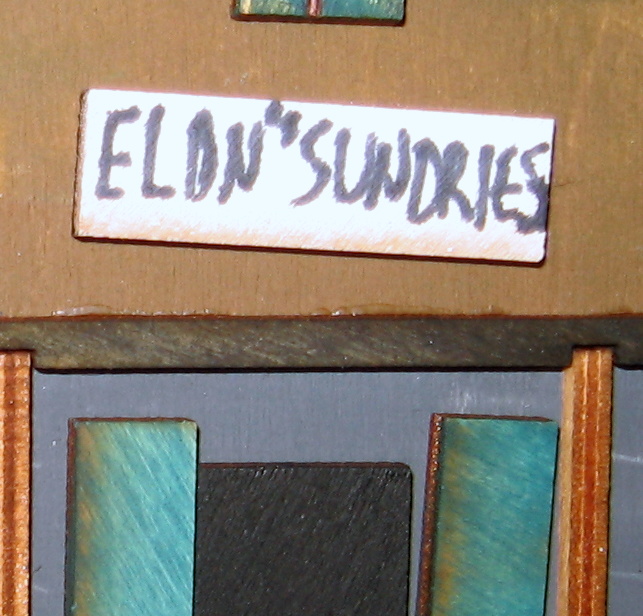
Elon’s store in Leesburg
As the day wore on and they neared the far edge of town, they stepped into a leaning wood structure that might once have been a cheap stilted house but now resembled more a broken toolshed. Over the door hung a sign with painted letters, Elon’s Sundries. It was the last place in town, no choice left them though the woman wrinkled her nose as she entered and at first let the girl talk to the old black man in his chair by the crooked door.
I thought about making this Clovis’s sutler shop in the swamp, but it’s far too stable and traditional for Clovis’s place — this is a town building, even if it is in the poor, segregated section of town. And besides, Elon is one of my favorite characters and I don’t think he gets enough attention. So here’s his store, crooked door and all.
Here’s what the “magasin” gift shop at the Acadian Village in Lafayette, Louisiana, looks like:
A church
Well hell. To tell it true, I can’t face that priest knowing what we done. And nowadays, I can’t bear to face the man what christened Remy knowing I let him die.
You might ease your conscience some if you let him hear your confession.
Father Nathaniel ain’t got time enough in his whole life to hear a confession such as ours.
All right, fine. Maybe we just go to that Baptist church, then, ain’t no one we know there and no priest to face. Get us right with God and we come on home.
[. . .]
Once over in Leesburg, the woman said, when I was a younger woman and me and Alphonse would go to Mass more regular, well, we was running late and ever church was already started, and as we passed that old Baptist church I overheard their preacher sermonizing about sins and salvation and how we all got to watch out.
[. . .]
So as dusk settled, they hauled out great sections of the ruined houses, and tables and wagon beds and the cross from the church, and piled it all into a wide bier on the beach. Then they tossed on the corpses and set them ablaze.
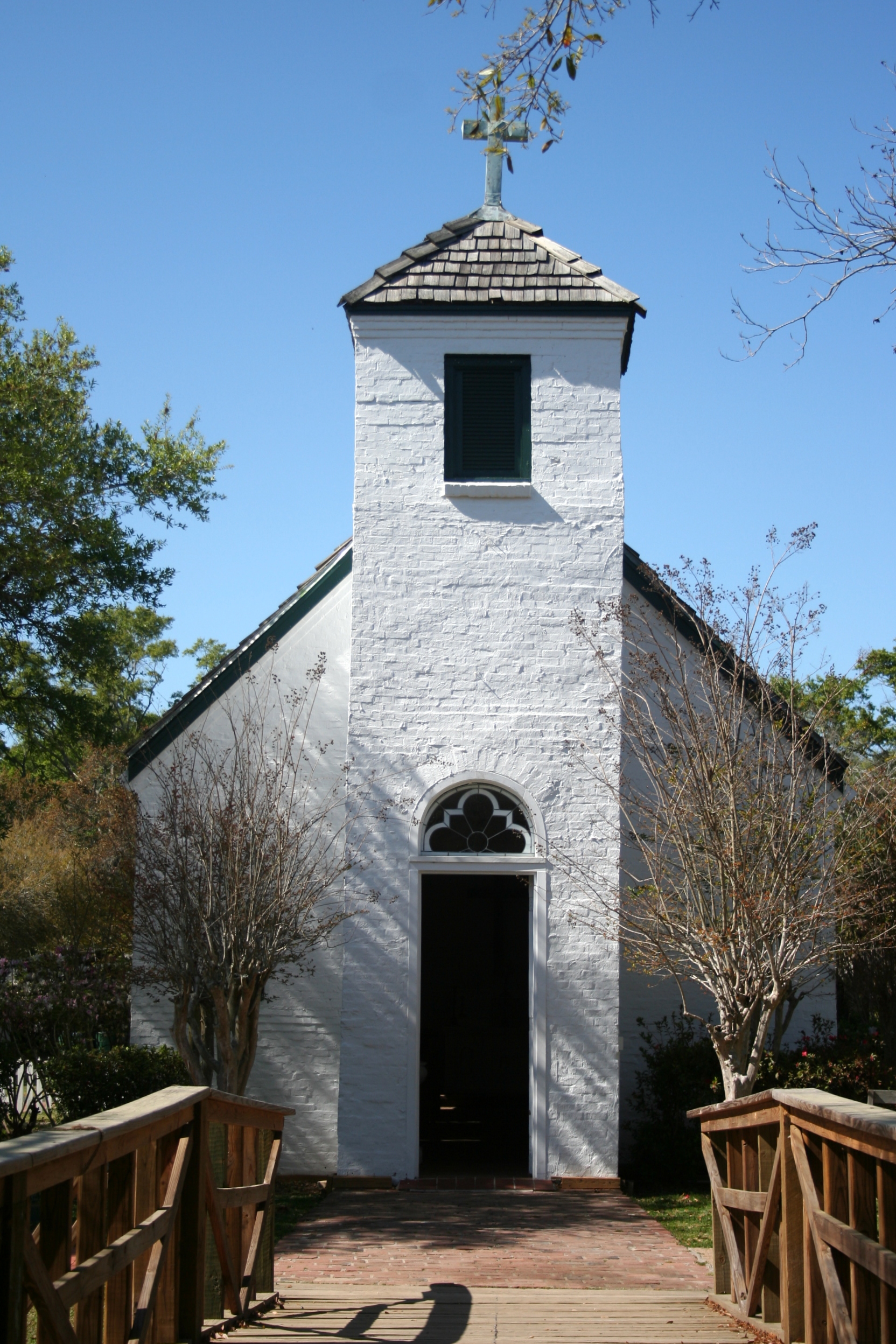
I should point out that the region I write about here, that part of old Calcasieau Parish that is today Cameron Parish, is still heavily Catholic and has been since the early 19th century, but as far as I’ve found, the area didn’t have a regular parish priest until after the Civil War, and no full-fledged Catholic church until the 1880s. At the time my novel is set, the few residents in the area would have received visits from an itinerant priest, but I’ve gone ahead and given them a chapel anyway. 🙂
Here’s what the chapel in the Acadian Village in Lafayette looks like:
In addition to the buildings, the kit came with a set of animals: a goose, a gator, and a log full of turtles. (As I showed my wife the illustration on the back of the kit, she squinted at the indistinct shape and color of the log and I said, “No, that ain’t shit on a stick, that’s turtles on a log,” and she laughed about that the rest of the day.)
I like the gator and the turtles because I took such photos in Louisiana.
But it was these animals that made my wife call this “an odd sort of Christmas village”: “There are no people in this village,” she said. “No one lives here but a goose, some turtles, and a gator.”
I reminded her of what my Uncle Bill said when I told him that my motel in Cameron, Louisiana put me in the middle of where I needed to be: “You’re in the middle of two gators maybe!”
🙂
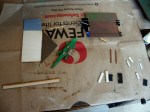
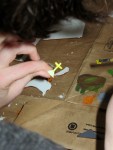
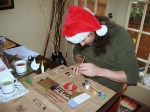
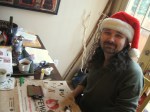
Finally, here are some shots of us painting and assembling the pieces:
I was in ninth grade. I was taking home-ec because I wanted to learn to cook, but we weren’t always in the kitchens — often, our class sat in desks and did bookwork, which I tended to get through quickly. So home-ec soon became my daydreaming time, and so I could look busy, I took to daydreaming on paper.
Which is how I started writing my first short story.
A couple years before, I’d started an action novel during seventh-grade English, when we had “sustained silent writing” time each week. But I never managed to finish it, and by my freshman year of high school I’d basically given up on the book. But as Christmas approached, I came upon an idea for a complete story that I knew would be much, much shorter than a novel.
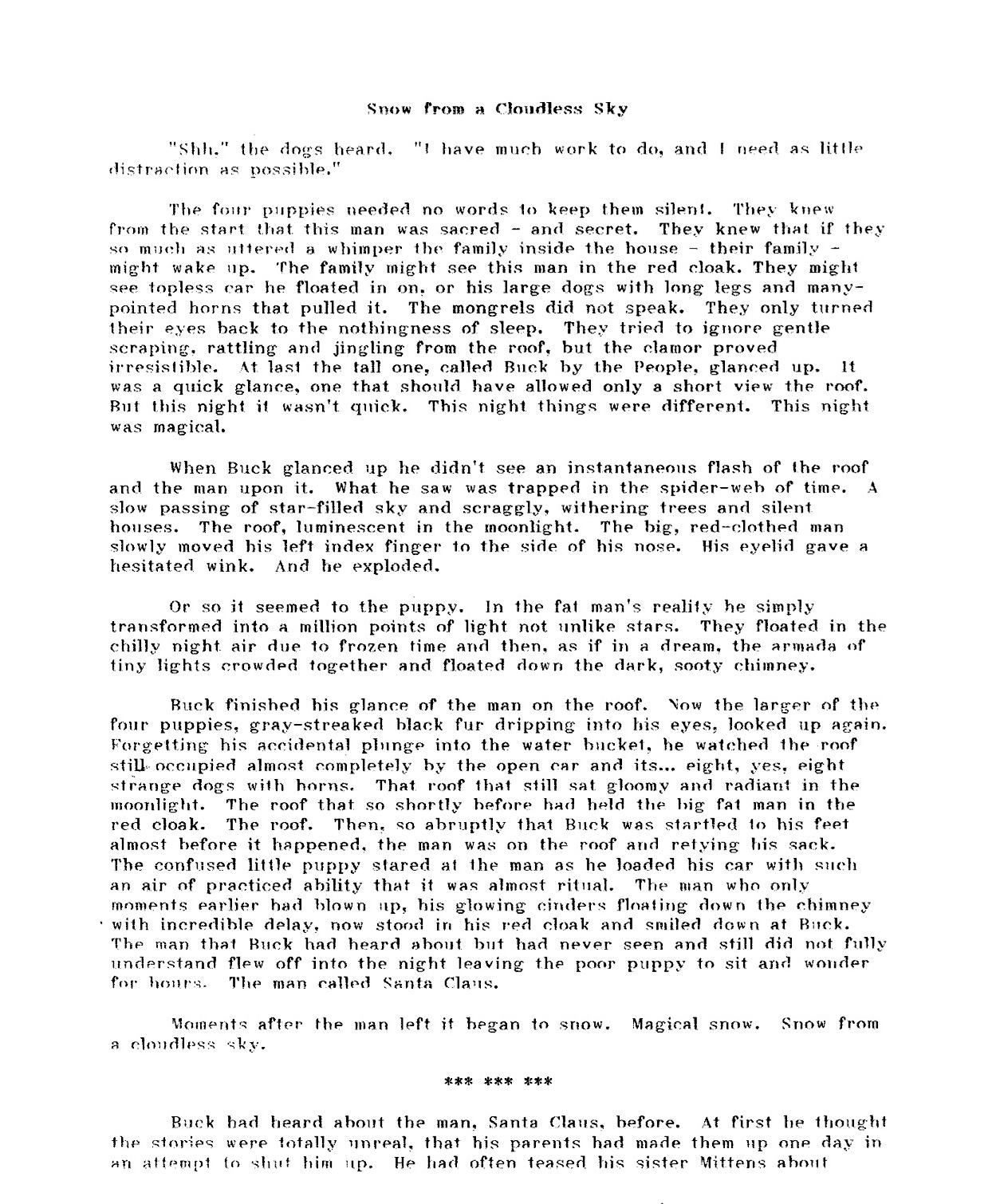
This is one of my earliest typed manuscripts. Remember dot-matrix printers?
At the time, I’d not read many short stories beyond a few tales in textbooks and my newfound taste for Poe, and I hadn’t started the tale with the idea of it being a short story. But once I knew where it was going, I knew it was going to be only a handful of pages long (in the handwritten manuscript, which I still have around here somewhere, it’s eight pages), and I thrilled at the idea of putting together something so compact.
I wrote several other stories, including a tale about sentient fireworks that died on explosion but reincarnated into mice, and later entered my horror fiction phase with stories of madness and nightmares and murder and necrophilia, which I wrote in spiral notebooks and later typed on my dad’s office computer at his insurance agency, the monochrome monitor’s green text dark in the lamplit office and the whir of the dot-matrix printer a thrill to hear.
But this first short story, which I wrote when I was barely fourteen years old and which features my family’s actual pet dogs, is a Christmas story. So for Christmas, I thought I’d share it with you.
Snow from a Cloudless Sky
“Shh,” the dogs heard. “I have much work to do, and I need as little distraction as possible.”
The four puppies needed no words to keep them silent. They knew from the start that this man was sacred—and secret. They knew that if they so much as uttered a whimper the family inside the house—their family—might wake up. The family might see this man in the red cloak. They might see the topless car he floated in on, or his large dogs with long legs and many-pointed horns that pulled it. The mongrels did not speak. They only turned their eyes back to the nothingness of sleep. They tried to ignore the gentle scraping, rattling and jingling from the roof, but the clamor proved irresistible. At last the tall one, called Buck by the People, glanced up. It was a quick glance, one that should have allowed only a short view of the roof. But this night it wasn’t quick. This night things were different. This night was magical.
When Buck glanced up he didn’t see an instantaneous flash of the roof and the man upon it. What he saw was trapped in the spider-web of time. A slow passing of star-filled sky and scraggly, withering trees and silent houses. The roof, luminescent in the moonlight. The big, red-clothed man slowly moved his left index finger to the side of his nose. His eyelid gave a hesitated wink. And he exploded.
Or so it seemed to the puppy. In the fat man’s reality he simply transformed into a million point of light not unlike stars. They floated in the chilly night air due to frozen time and then, as if in a dream, the armada of tiny lights crowded together and floated down the dark, sooty chimney.
Buck finished his glance of the man on the roof. Now the larger of the four puppies, gray-streaked black fur dripping into his eye, looked up again. Forgetting his accidental plunge into the water bucket, he watched the roof still occupied almost completely by the open car and its . . . eight, yes eight strange dogs with horns. That roof that still sat gloomy and radiant in the moonlight. The roof that so shortly before had held the big fat man in the red cloak. The roof. Then, so abruptly that Buck was startled to his feet almost before it happened, the man was on the roof and retying his sack. The confused little puppy stared at the man as he loaded his car with such an air of the practiced ability that it was almost ritual. The man who only moments earlier had blown up, his glowing cinders floating down the chimney with incredible delay, now stood in his red cloak and smiled down at Buck. That man that Buck had heard about but had never seen and still did not fully understand flew off into the night leaving the poor puppy to sit and wonder for hours. The man called Santa Claus.
Moments after the man left it began to snow. Magical snow. Snow from a cloudless sky.
*** *** ***
Buck had heard about the man, Santa Claus, before. At first he thought the stories were totally unreal, that his parents had made them up one day in an attempt to shut him up. He had often teased his sister Mittens about trusting the stories. But soon he came to doubt that his disbelieving attitude was justified. Eventually, becoming more daring and venturing out later at night, Buck happened across another story about the big red man. Only the story about the “generous wizard” wasn’t mean for youthful ears. It was a serious conversation between adults.
As he approached his parents’ nocturnal nest he heard a name. It was a name that hung in the air and echoed through the night. His own name floated in his mind, haunting him. He froze, barely acknowledging the air impatiently pushing at his lips. He stood and listened. But what he heard frightened him even more.
“Do you think the wizard is coming this year?” Benji asked as he looked on his wife and sister with seemingly endless, pleasing, Beg-for-a-Bone eyes.
“I think so. That’s what the People are saying,” Randi answered. She met his eyes with younger, more thoughtful eyes.
Buck could see his mother’s small black back. It caused him to wonder many a time how fur so stunning could refuse any and all attempts of the Moon and the Sun to see themselves in the coat’s shimmering black. How had his mother come to possess the fur that was so unlike her brother’s. He could see that thick thatch of softness and had almost lost himself in his own amazement again when her words brought him back to reality so fast that he almost slammed through it.
“I heard that Santa Claus has a special gift for us. I hope Buck stays up this time and watches for him. Maybe this year he’ll get a present, too.”
The fat wizard was real!!!
There was more, but Buck didn’t hear. He didn’t want to. Didn’t dare. He just headed back to his bed, head lowered in thought. He would never have believed it, but his parents weren’t talking to him and Mittens, they weren’t trying to hush anyone. They were just talking amongst themselves, and they weren’t kidding around. The big red man was a reality. The idea left him dumbstruck. It was like the Moon had suddenly sprouted lips and eyelids, opened both, and began to eloquently describe everything in sight. It was too large to grasp. Like someone had thrown a gargantuan seven-foot-high cage ball and said, “Fetch!” And by some overwhelming instinct he went after it and persisted in trying to grab hold. He darted forth, snapped his jaws together, and missed. Drew back, contemplated a new approach, and shot forward again. And missed. Until finally his teeth sank into the ball and it blew up in his face. That’s what happened on the final realization that this man was somehow real. All of the real world, all he had known before, all he anticipated, everything, simply blew up. And just as the deafening explosion of the cage ball, the death of reality scared Buck. Scared him to death.
And so Buck sat there, remaining terribly awake for the rest of the night. Sat and thought about the fat man. “Santa Claws,” as the People called him. Claws. What kind of name was that? Was he vicious and menacing? Not according to his parents. Or the People. And yet what kind of man would venture out every year and bring the People gifts—wonderful gift—and treat the dogs kinder than their own family and still be named Claws? It made no sense! But then again, neither did anything else about the man. The flying car with no top. No top, on a cold, wintry night! The car had a name. Something like “slay.” Another gruesome, murderous name. It was pulled by a strange species of dog called “rain, dear.” Beloved rain? At least it wasn’t something horrid. Unless it was “rained ears.” A very strange man. A fat man who could climb down narrow chimneys with armloads of presents. From what Buck could see this was a pretty impressive feat. From what he had heard, however, this was impossible. His parents had one told him that inside the chimney was, instead of a large open space, a long thin pipe almost too small for his minute little sister to fit through. For a moment he caught himself smiling at the thought of Mittens struggling to escape the cavernous, carnivorous tube. Then he was laughing. Laughing at the hysterical picture of the big red man, mummified by colorful boxes, floundering around like a fish, desperately trying to wriggle himself into the pipe. But slowly the laughter faded. Slowly Buck began to wonder how a man that large could fit into a cylinder that small. He supposed it could be magic—the did call him a “wizard.” But the pondering little puppy had never heard of anyone—or anything, for that matter—that could do this. Not a single Person, no matter how unique the People were supposed to be. So . . . how?
The question remained in his mind, unanswered, throughout the night. Eventually Buck confused himself into a deep, dreamless sleep.
*** *** ***
That had been about three weeks ago. And the whole thing was still puzzling enough to remain freshly imprinted in his mind. Yet, upon witnessing the mystical acts of the fat man’s annual visit, Buck understood it all. Everything that he had heard and disbelieved in the past was now perfectly clear. All the times he had taunted his sister (. . . “Hahahaha, Baby!” he teased as Mittens began to cry . . .) and argued with his parents (. . . “Ridiculous!” he yelled at Benji . . .) over the stories he now fully regretted. And for every time he had questioned his family’s sanity he wished he could go insane himself. Then, after thinking of all the horrible things he had done, Buck began to cry.
Actually, a few short, sharp, shrill cries escaped his throat and several small tears trickled down his soft, furry cheek and rolled into his mouth, leaving a salty sting. But it wasn’t nearly enough to call a cry. It would have been considerably longer—Buck had intended it to be—had it not been for the soft, comforting voice that interrupted him.
“Calm down, Buck. Everything is forgiven.”
“Who are you?” Buck asked, terrified.
“You know who I am. You met me tonight on the roof.”
“But . . . how? How can you be talki—”
“I believe you can answer that, too, Buck.”
And Buck could. Did. And with the satisfaction of finally understanding, Buck smiled to himself and fell asleep.
*** *** ***
The sunlight spilled over the hilltop and flowed out and down into the woods The brilliant golden color plowed through the trees and rocks and over dirt. It littered the cold, damp ground with somehow—as if by magic—warm shadows. It made its way down the hill, toward the creek bed and began to climb again. But none of this was important. All of this was natural. What was important was that it woke up Buck. And Mittens. And Benji and Randi.
The first thing the puppies heard, however, was not the sweet melody of singing birds or the ploink-ploink of melting icicles letting go of their origins and plummeting to the snow below, exploding into a brilliant microscopic shower and freezing within the blinding brightness of the millions of tiny crystals. What they heard came to their ears before they even fully awoke. Before Buck sat up and stretched his forelegs out unbelievably far in front of him. Before Mittens could haul her squat little body up and waddle out from underneath the back deck. And before Benji could trot over to the food bin, releasing Randi from the hay-heated dog house. What the young mongrels heard that quiet Christmas morning was the gleeful laughing, shuffling of paper, name-calling and thank-you murmuring that accompanied the celebration of what Santa Claus had brought them.
Buck smiled a secret smile and thought, “Even I got a gift.” And, to his complete surprise, there came a reply.
“Yes, Buck, I give gifts to everyone. Even dogs.”
“But why? Why do you do it?” But before he had finished his question he knew the answer.
“Because I love the world. And it loves me. And I hope to teach them to love each other. That’s why I travel the world and give to all the people of the world. Now do you understand?”
Buck managed a deeply hypnotized monotone “Yes,” in response to the question and more so to the previous explanation.
“I thought you would.”
“So did I,” said Buck.
There was a warm and hearty HO-HO-HO! The laughter trailed off into the day but stayed with Buck forever. He was happy and . . . mellow the rest of the day. He was a different, better dog. And he vowed to pass the tale down through the generations, and to make them take the same vow. Then, content with this promise, he lay down and went to sleep.
Moments after Buck drifted away it began to snow. Magical snow. Snow from a cloudless sky.
Okay, so I haven’t actually done a lot of writing today. I certainly intended to, but this morning I got an email notice that some books I’d put on hold at the library had arrived, so I went to pick them up and they’re an absolute TROVE! So it’s been more of a “reading retreat.”
I’ve written about this before, but one of my favorite research tips for fiction is to shop the catalogue. The way Tom Franklin describes it, if he ever got stuck while writing Hell at the Breech, he would take up his Sears & Roebuck catalogue from 1898 and find an item that caught his attention, and then — using the very detailed descriptions and illustrations in the catalogue — he would write about that item, give it to a character in the novel, and let the story unfold from there. And a lot of that made it into his novel.
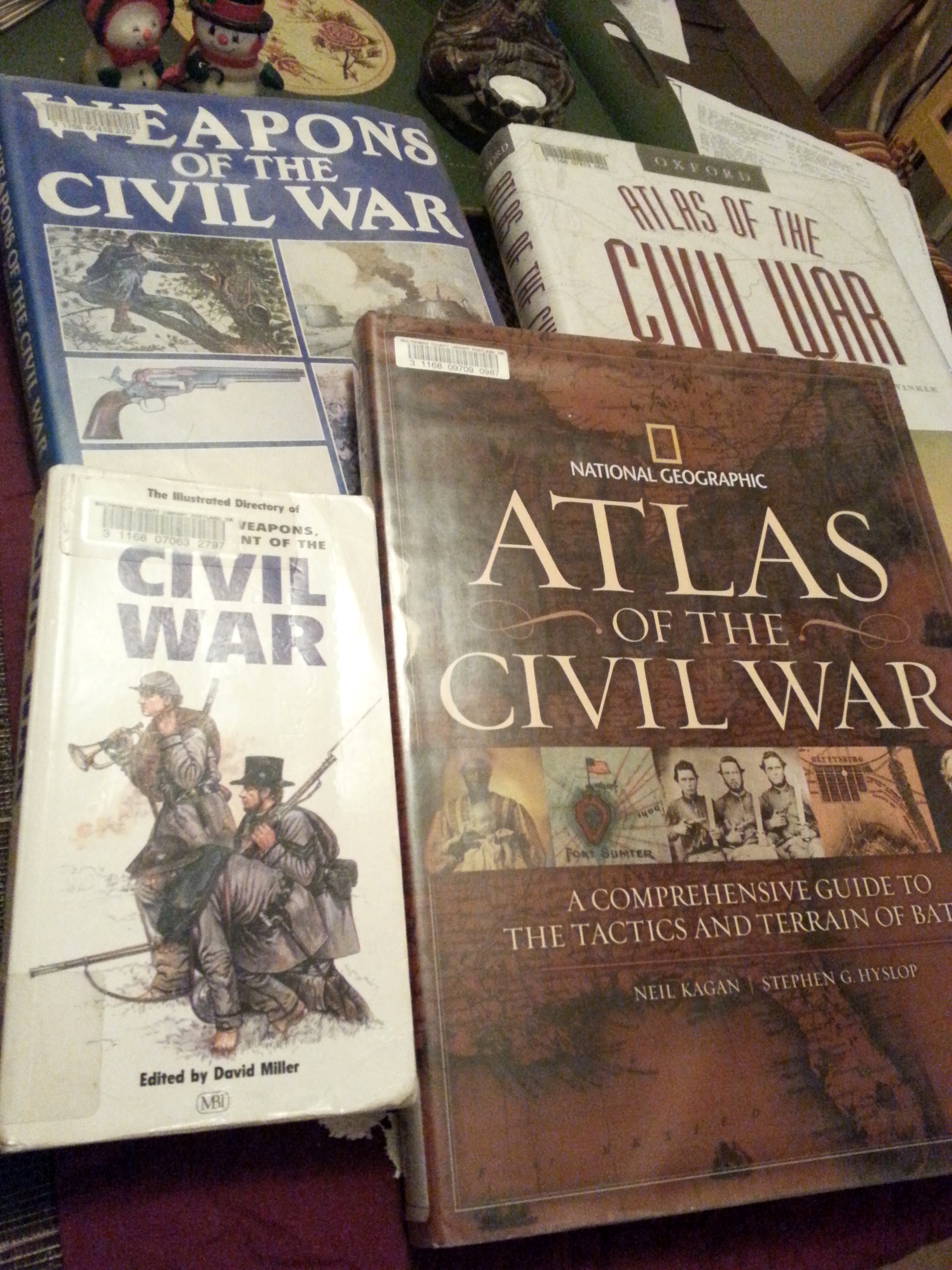
The characters in my new novel are ex-soldiers who served in the Civil War, and even though the book is set years after the war, they still hang onto a lot of their old firearms and camp gear. So I’ve been wasting a lot of time this week doing internet research on period-accurate arms and gear, and I figured it was time to get a kind of “catalogue” of my own. That’s what these two books on the left are for: from now on, instead of writing until I need a detail, I’m going to start with the detail by flipping to something cool in one of these books, giving it to one of my characters, and writing from that.
The two books on the right are Civil War atlases, which I need less because I’m not really writing about the war, but these characters are coming together from a variety of backgrounds and regions, so these period maps will help me keep my bearings.
Or, they will after the holidays, because I’m taking Christmas Eve and Christmas Day off.
So, until this weekend: Happy Hanukkah, Merry Christmas, and Happy Kwanza, friends!
Today is going to be another late-writing day. Which is fine — there’s a reason my mother cross-stitched this for me a few years ago:
This overlooks my desk in my study.
So I’m up for it.
But I’m running late because today has been an on-again/off-again writing day, not much of a “retreat” at all. I’m off the novel at the moment, for one thing, and back to those chapbooks I mentioned last week. Late last night, I finally found a title for one of them (titles drive me bonkers) and I got it sent off for consideration, but that whole process made me eager to wrap up the other chapbook. So that’s what I’ve spent today dabbling in.
The problem with the new chapbook is that it’s not quite complete. I was reconsidering it last night and again early this morning, and I wound up pulling a story from it, but now it feels a bit slight and there’s a missing connection between the first and third piece. So I’ve been trying to work that out. Do I write a new story? Do I find an old story that fits? I’ve tried both several times today, but without much luck, so I keep setting the work aside, hoping an hour here, a couple of hours there, might eventually give me fresh perspective.
This afternoon, I did find an existing story that might fit the gap quite well, but it’s an oldie and needs some reworking. Funny how we do that to ourselves as we grow in our craft: what looked fantastic ten years ago looks stilted and dated now. So I’m revising heavily, and when I’m done, I’ll see how it looks in the chapbook. Might not even be the right piece when I’m done with it. We’ll see.
In the meantime, I’ve also been writing character scenes and notes for when I get back to the novel, which is always on my mind these days. So regardless what happens with this story later tonight, I’ll be getting back to longform fiction tomorrow.

















 Samuel Snoek-Brown