Why Experts Are Not the Best Teachers (via Worst Professor Ever)

I’m not entirely sure what to make of this. On the one hand, I take issue with the author’s assertion that “knowing something at the PhD level benefits very few of your fellow citizens.” And the final comment, about “amateurs” being “cheaper to hire,” really gets under my skin, because one of my personal missions in my academic life is to raise the level of prestige — and therefore compensation — for part-time adjuncts and Limited-Term Employment faculty, the so-called “amateurs” this article seems to hint at. These people may not be tenured, they might not even have pushed their way through to a PhD, but they are phenomenally qualified experts in what they do, and a closing statement about the “cheaper” labor they offer colleges and universities only invites the Powers That Be to continue devaluing those excellent teachers.

On the other hand, this post taps into my own philosophy of teaching — that the best teachers consider themselves perpetual students — and the post does a good job of explaining some of the reasons why this seems to be true.

Also, keep an eye out for the link to the interview with Ann Daly. It’s also controversial (and, in my view, a bit counterproductive), but Daly, too, offers some very interesting ideas.

Whatever you might think of these posts, they’re definitely good food for thought. And I’d love to hear some of your comments, here or on the original posts.

I admit, that’s a deliberately controversial title. The whole notion of ‘expert’ has become problematic lately, as more and more people catch on to the fact that pieces of paper and honorific statuettes and bumper stickers mean jack squat about your ability to communicate your esoteric knowledge to other people. It so happens that last week’s bidness (yes, I actually do have some, hence my Johnny-Cash-inspired policy of inviting eminent guest blo … Read More

via Worst Professor Ever

Reading and writing: a beginning, and no end in sight!

Reading on the floor

Just wanted to quickly share two blog posts, which by happy accident I happened to read almost back to back today.

The first is from Odds ‘N Ends (aka Mary’s Little Blog), in which a mother recounts helping her son learn to read and write. More importantly, the post focuses on the first time her son read a story on his own — a tremendous achievement and a memorable milestone in any reader’s and writer’s life! (My big moment arrived, appropriately enough, on the toilet, when, at age four, I read the top of a carton of laundry soap my mother had stored in the bathroom. It’s been my favorite reading room ever since.) Check out Mary’s son’s story at “Mom, I know LOTS of words.”

The other post is from Bill and Dave’s Cocktail Hour, where writer Bill Roorbach, after spinal fusion neck surgery, is learning new — and healthier! — ways to read and write for a living. You can read the epic saga of his surgery ordeal starting with his posts on “Occupational Hazards,” but the post I read today, “Ergonomics,” is all about his path toward better reading and writing habits. Ergonomic chairs, proper sitting postures, speech-recognition software … the whole toolkit. There’s nothing overtly heroic about the post, but the quiet subtlety (typical of Bill) in his penultimate line — “My job is all reading and writing, and I’m going to have to find new ways to do it” — belies Bill’s determination to keep reading and writing no matter what, not just because it’s his job but because it’s who he is.

It’s who I am, too. And if you’re a regular reader of this blog, my guess is it’s who you are, too. This is who we all are. We read and we write, some of us for a living but all of us for life.

A Writer’s Notebook: found objects

This week is a little random, but I’ll explain why below.

When I lived in the States, I used to get a lot of junk mail.  I got more junk than mail, actually, and I’m not including my bills in that.  Brochures for apartments and trailer homes, ads for banks and groceries and shoe stores that only sell shoes I’ll never wear.  Those post office cards that announce a missing child on one side and a free oil change on the other.  “Have you seen me?” they ask, when what they’re really saying is “Have you seen this?  A lube and a tire rotation for $29.95!”  I threw it all away, of course — I usually wound up also throwing away the junk other Residents and Occupants have let drop in disregard.  But those missing person cards I always stopped to read first, always tried to memorize: the bone structure, the shape of the eyes, the texture of skin, the curl of the hair around one small ear.

Just in case.


I can’t stand cigarette butts.  It’s an environmental thing, sure — when I smoke, I stick to pipe tobacco or cigars or, rarely, those middle-eastern bidis that are all leaf and no filter, everything ready to return to nature in smoke or ash or just another leaf on the ground.  But I think my aversion to cigarette butts also comes from my first experience smoking.  In third grade, the girl who lived behind my house — Kay, whose mother grew wild grapes along the fence, not exactly the girl next door but definitely a girl I’d always wanted to kiss — she brought over a discarded butt and a matchbook.  In the weedy alley between our back fences, she lit the butt like a stick of incense, the flame to the end until it glowed, then she put it to her lips and inhaled.  When she handed me the dirty brown paper, pinched flat like used gum, I too sucked on the end.  I know now that what I smoked was primarily dirt and the fiberglass of the filter, but then, as far as I knew, the suffocating fog that soaked up all my saliva and pinched my throat was what tobacco was — a smoky hand that closed to a fist inside and rammed its way to your stomach.  I wanted to vomit.  Sweat broke in the southeast Texas humidity, my knees fell asleep, and my vision went funny — Kay looked green as the grapes in her backyard.  Apparently, so did I.


I’ve had a few unintentional gurus in my life.  The first was Scott, a guy I knew in high school who once announced he was a lesbian because he liked women, and who shunned the cap-and-gown pomp of his graduation and instead sneaked into the rafters of the gymnasium to watch the ceremony from above.  The second was Sean, who I met at a temporary telemarketing job after high school.  He showed up to work in knee-high black boots with fringe and leather lace, like a fake Native American in a cheap movie; his shaved-head stubble changed from one extra-natural color to the next almost weekly — coal black to flame red to ash white.  He said he’d spent six months in a Buddhist monastery in California: hence, the shaved head and the impermenance of his hair color.  Before that, he’d spent six months studying Native American flute on a Hopi reservation in New Mexico: hence, the boots.  It was from that reservation — through Sean — that I got my first feather.

The feather was inside an envelope next to my phone when I arrived for work one day.  We all had envelopes, each with a feather, a small polished rock, and two bite-sized Snickers.  We each also got a carnation, pink for the women, white for the men.  On the fronts of our envelopes, Sean had drawn a Hopi symbol; mine was a yellow sun pierced by an arrow, which Sean told me meant “young warrior.”  But the feather touched me most of all — it was the lead feather of the left wing of a bird Sean had found dead in the dessert one day.  He had plucked the bird, burned the body, and scattered the ashes in a stream, as was tradition.  But he’d also catalogued the feathers as he plucked them, and he liked to give them as gifts occasionally.  He was known for it, in fact.  Later, I worked in a nearby restaurant where a waiter once told me he’d served Sean coffee.  As a tip, the waiter said, Sean had left a dollar, a feather, and a small gold Buddha.

The waiter, too, had kept his feather.

I’ve taken to collecting feathers.  For a while I would take them home and keep them in a box or on a shelf beside Sean’s feather.  But soon I took to decorating nature with them, standing them upright in the grass where I found them, or perching them in bushes and small trees.  In my more bohemian days, I sometimes stuck found feathers in the twisted hairband that held back my ponytail, wearing the feather till it fell out on its own.  And when I met a beautiful girl in college and determined to woo her by writing her letters, an American Cyrano, I included in the first letter a gift: a feather I’d found that day.  It worked — more than fourteen years later, and my wife still has that feather.

So, these are all mini-essays written from objects I’ve found outside. I didn’t keep them (who carries around found cigarette butts and trash mailers?), but I did take note of them. No idea if any of these little snippets will develop into full blown essays, or find homes in other works of nonfiction or fiction or even poetry. But here they are, recorded should I ever need them. Details like these — the discards of life, the roadside flotsam noticed by no one but convicts and highway-cleanup volunteers — are what make written passages come alive, I think.

To do an exercise like this, just go for a walk. Take a camera or a notebook or even a little bag; photograph or write down or even pick up whatever you find, and take it with you. Then, when you have a moment, sit with the things you found. Where did they come from? Where can they take you? What associations arise as you consider them? Write it all down.

And then take out the trash.

Don’t feel like — or not capable of — venturing out into the big, bad world? No worries! Check out the cache of really excellent “found object” photographs at Language is a Virus. Plenty to work from there!

Student revenge: assign a teacher homework!

"Neon Texas." In University District, San Antonio, TX, March 5, 2009. (Image via Flickr; click image for link and credits)

This April, when I return to the States and visit my family in Texas, I also am going to attend the huge conference of the Popular Culture Association/American Culture Association, held this year in San Antonio. I’m reading fiction there, and I’m planning to reconnect with a bunch of scholars and colleagues I used to hang around with at PCA/ACA back when I went every year (living outside the States has meant I’ve missed it the last three times).

But I never go to PCA/ACA just for the socializing: I’m there to work, and I’m there to learn. In fact, the last two years I did attend, back in 2007 and 2008, I was teaching my freshman composition/research classes as courses in pop culture, and I had my students assign me panels to attend. It didn’t matter if I was interested in the subject or not (though, at PCA/ACA, it’s awfully hard not to be fascinated by everything on offer!) — I attended whatever panels the students chose, because they wanted to learn about something and it was my job to take notes and report back to them when I returned to the classroom. I loved doing this, because my students often sent me to panels I might not ordinarily have made time for, and I wound up learning a LOT of truly fascinating things on behalf of my students.

This year, I have no students to assign me homework, so I get to choose whatever panels I want. But this conference is HUGE, and the schedule tends to get rather overloaded every year, so I’m flush with choices and cannot decide which panels to pick.

So I turn to you, dear readers. Read through my shortlist on the PCA/ACA in SA page, and then assign me my homework! Send me to panels! Make me learn! And I promise to report back to you, here in this blog, just as I would report to my students.

You can find the polls page in the Popular Culture section of my Teaching tab, or just click the link above.

American History WI

solidarity wisconsin
Image by Vince_Lamb via Flickr

This is for all my friends and former colleagues in Wisconsin, who are making American history as we speak. America’s children will study these weeks in their US history and US government classes. These people in the streets these past few weeks — my friends — are our heroes, and our future generations will celebrate them.

Fight on, Wisconsin!

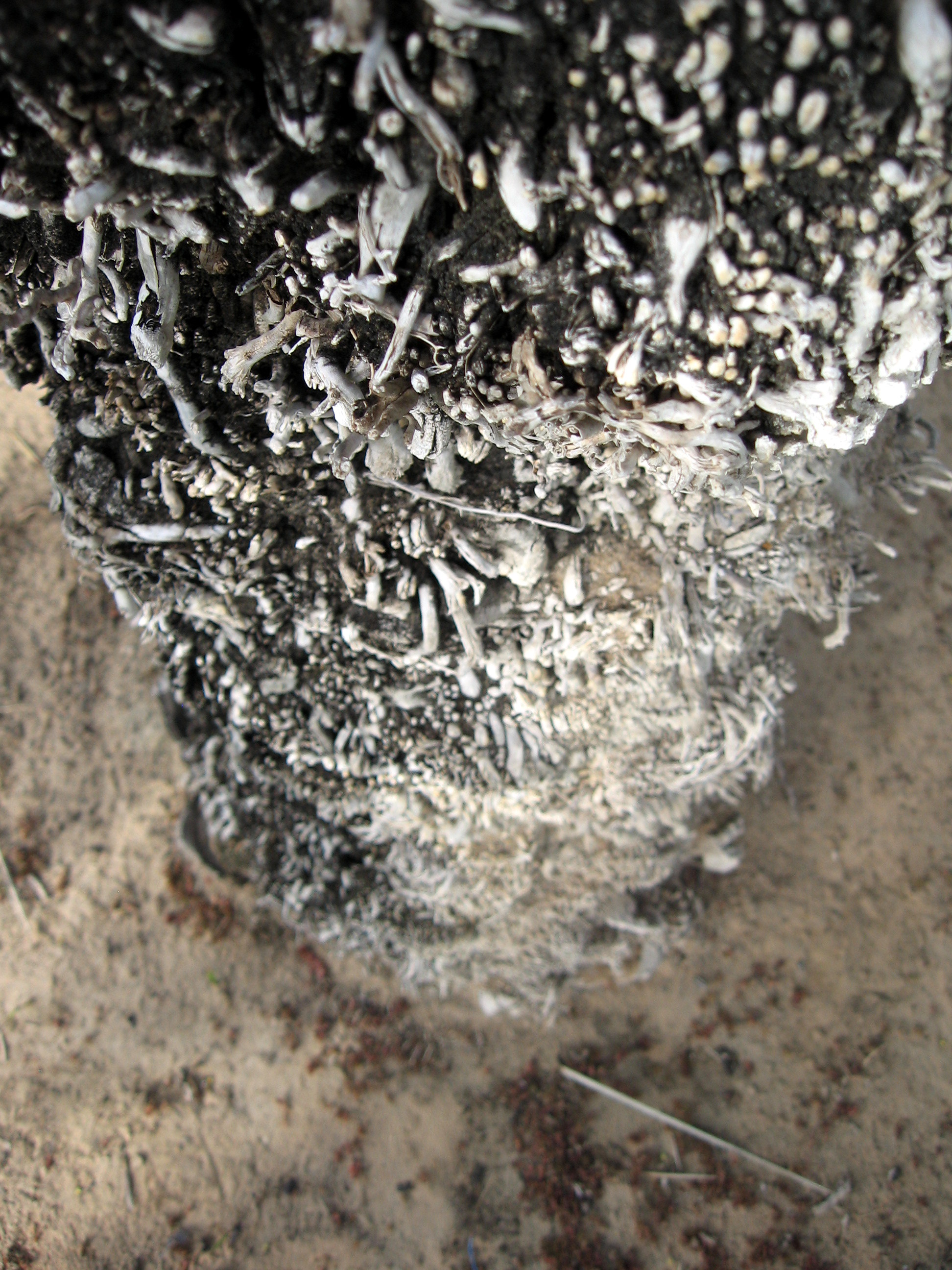
Photo blog 44

“Textures.” Shangri-la Souk and Khalifa Park, Abu Dhabi, UAE, 12 & 26 February 2011.

New fiction from Lori Ann Bloomfield

A cropped and retouched picture, showing a hea...
Image via Wikipedia

Lori Ann Bloomfield, of First Line blog fame and author of The Last River Child, has a new short story available online. Check out “Thank You Elvis” (that’s right — Elvis!) in the current issue of Lies with Occasional Truths magazine.

Small stone, Vol. 2, #4

The dark setting sun like a copper coin in the sandy clouds.

“Hubris” -the likely downfall of Gov. Walker? (via Teacher Reality)

For anyone still confused about what’s really happening in Wisconsin, this is an excellent, real-life summary of what’s at stake. Not politics, not ideologies. Just the real situation of so many real people and what they stand to lose if Walker’s bill passes. Please read it and share it.

"Hubris" -the likely downfall of Gov. Walker? Marc Sears. a former public school teacher and current WI college professor, wrote this next piece.  So much of what he wrote expresses the true realities of what is going on…a great read! *** Here is an op-ed piece that I wrote that the paper would not run (because of length)….  Share or repost at will, but I ask that my name remains as author. – Marc Seals After nearly two decades of being a Republican, I must face the reality that my party … Read More

via Teacher Reality

A Writer’s Notebook: First-line found story (revision)

This is a partial revision of the “found story” I began in last week’s notebook.  And below that, I’ll write a bit about the revision process.

No one was going to believe her, but the dog would not stop barking. That was how Margot put it, a metaphor she’d adopted like a slogan, the dog in this case being her ex-husband, the barking his daily advances.  Text messages, e-mails, phone calls in the middle of meetings — his as well as hers; she could hear his colleagues in the background, some of them snickering.  He didn’t want her back, he said.  He knew it was all over and that’s exactly the way he wanted it.  But he just needed to see her again.  One last time, please.  It would have been sweet in a desperate sort of way if what he’d been asking was to take her to dinner, or to sleep with her in a tender farewell.  But he literally wanted to see her, to look at her, to ogle her in her underwear and shoes.

She was the only woman he had ever met who wore sensible shoes and a g-string. Margot got the idea from an article she read in a woman’s magazine. Nothing revolutionary, but definitely a departure from the high heels in the nudie magazines he — not she — had read as a teenager.  And anything different was exciting.  He got off on the thrill of the extraordinary even when it involved the utterly ordinary.  Different was all it took.  It was an island on no map.

She had started with mules, which had set him off, but she really found his button when she’d bought the white nurses shoes from the uniform store.  Heavy soles in soft rubber, thick arch support, plain, breathable leather.  The man at the store had winked at her when she’d said she wasn’t a nurse.  Was it all men?  A fantasy no one spoke of but all of them knew?  She wasn’t even sure if the shoes would work, if the sex would be any better than it had been with the mules, but the salesman had patted her foot in the shoes as she tried them on and, without her having asked any question, he had said it would be easy.

It started snowing at midnight that Christmas Eve, when she’d last worn the outfit for him. New Year’s Eve was different. He’d become insatiable, and she caught him in the bathroom not with another woman but with a woman’s magazine, a special issue about hard-working women.  Beat cops, librarians, school teachers, postal workers.  He was cutting out the tiny images of their feet, and on the counter beside him was another magazine, unclothed women sprawled in ridiculous poses.  A glue stick.  His feverish efforts to match cut-out shoes to naked feet.

He’d tried to shut the door on her but she’d held it with her foot.  he’d said, Look, you don’t really need to be here.  I can do this on my own.  She’d asked why he even needed them, the magazines, when she had the shoes and the thong in bedroom.  He’d said, Margot, sweetheart, you don’t look anything like the photographs.

But Dave had been wrong, he’d needed her after all, and now he called her day and night begging to let him back in, just to see her in the outfit.  He would bring his camera, he would leave her alone after that.

First: I had to stop this story here, which only covers the first half of the draft I posted last week.  It’s taking a direction that doesn’t yet gel with the “dead bird”/”dead body” bit that used to follow this; I think there’s probably a way to work that element in, but I’d be forcing it in, and I’m not sure I want to do that.

And second: frankly, I don’t quite know what to do with this anyway, or if I want to continue it.  I might — chances are good that some day roughly a decade from now I’ll be working on something that will remind me of this piece, and I’ll dig this up and suddenly know what to do with it or where to put it.  But for now, both these characters are kind of annoying me, and I don’t really want to know where this ends up.

The lesson in this, though, is that you can let other texts lead you to places you wouldn’t ordinarily go, and that can often make from some of your most interesting writing.

Feel free to finish this thing yourself.  Or return to last week’s draft and start over, or pick up where I left off and try to adapt that unfinished text.  The possibilities, they abound.