New publication

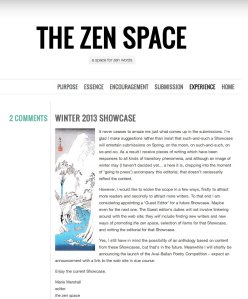
zenspacecoverI don’t write much poetry, but when I put lines down I feel fairly confident in, they’re always in the form of haiku. I feel like I understand that form, inasmuch as anyone can (the mystery and ambiguity of the form is one of the reasons I love it so). And, as regular readers might remember, I composed a couple of haiku during the Moonviewing Festival at the Portland Japanese Garden a while back.

And then poet and author and editor Marie Marshall (you read my interview with her, yeah?) asked to publish those haiku in The Zen Space‘s Winter 2013 Showcase.

It went online January 1.

But wait, there’s more! I only realized it had gone online because my old buddy and grad-school colleague Steve Bowman mentioned it to me. How in the world did Steve know about it? He’s in it, too — directly above me!

What fantastic serendipity to appear not only in the same issue as my pal but actually side-by-side!

2013, you’re off to a heck of a start.


2012 in review

The WordPress.com stats helper monkeys prepared a 2012 annual report for this blog.

It’s been a strange year in blog posts for me. I was thrilled in May to get “Freshly Pressed” here in WordPress, for my post on Maurice Sendak’s passing and legacy. I wasn’t looking for attention — at least, not for so sad a subject — but I was certainly glad for the love that came rolling in and all you new readers who stuck around as a result. (Hi, gang!)

But, surprisingly, my Freshly Pressed post is only my second-most popular post this year. (The official stats count my home page and the blank link that redirects to my homepage, both of which come in as second and third most popular or, considering they wind up at the same place, the most popular, but I’m not counting those — I’m interested in the posts themselves.)

No, the most popular post of mine all year, with a whopping 5,304 hits since the end of May, was my third post about the Hatfields & McCoys miniseries on the History Channel. In fact, taken altogether, my three posts about that three-part miniseries has brought in more than 5,600 new views this year, and (I think because of reruns on the History Channel) still occasionally results in surprise spikes in views. In any given week since May, I can usually count on one of my Hatfields & McCoys posts to be the most popular post at least one day of the week.

Searches related to that old feud account for four of my top five searches, too. (Benzaiten, one of my Patrons of Writing and Teaching series, is the third-most popular search.) In fact, those miniseries posts are eight of my top ten searches. They’re sixteen of my top twenty searches. You get the picture.

Other search terms of note: three people came here looking for my poet friend Michael Levan; three others came looking for my former English professor and good friend Qui-Phiet Tran. Three people came looking for Bill Roorbach’s new novel Life Among Giants, which I reviewed back in August; three others mistyped the title as “Land Among Giants” and still wound up here; and five people came in search of my interview with Bill in November.

Thirteen people were looking for poet and author Hosho McCreesh. Four people wanted Texas poet Jerry Bradley. Five people needed Portland author Lidia Yuknavitch and four others were looking for the heroine in her recent novel Dora: A Headcase. Seven people wanted Unshod Quills editor and Portland poet Dena Rash Guzman. Six people wanted Jersey Devil Press, and eight people wanted JDP’s founder, Eirik Gumeny. Three people came looking for Matthew Burnside.

Thirty people were trying to find information about my former grad school professor, the late, great Scott Simpkins.

Eight people wanted short stories about Nancy Drew. Thirty-two people needed Winnie-the-Pooh. Three hundred and fifteen people were interested in “Uninvited Guests,” from the Chris Van Allsburg book The Mysteries of Harris Burdick.

Ten people wanted my wife, Jennifer Snoek-Brown, and three more were looking for her Reel Librarians blog.

And three people wanted “captain caveman doing dishes.”

I don’t have any explanation for that.

Click here to see the complete report.

More math: a booklist

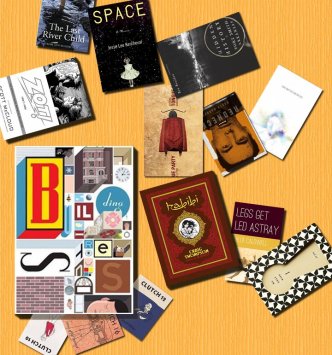
booksYesterday I added up all the writing and writing-related stuff I’ve been up to this past year. But I left off the most important writing-related activity that isn’t actually writing: reading. That’s because it’s so big and so important it’s another post altogether. So here, this is what I read in 2012:

Marcus Aurelius, Meditations

Rusty Barnes, Mostly Redneck: Stories

Stephen Batchelor, Buddhism Without Beliefs: A Contemporary Guide to Awakening

Charles E. Benton, As Seen from the Ranks: a Boy in the Civil War

Lori Ann Bloomfield, The Last River Child

Ryan W. Bradley, Prize Winners

Kevin Brockmeier, The Brief History of the Dead

Ben Boulden, Hidden History of Fort Smith, Arkansas

Russell Brickey, Cold War Evening News (forthcoming)

Charlotte Brontë, Jane Eyre

Chloe Caldwell, Legs Get Led Astray

Howard Chaykin and Mike Mignola, Fafhrd and the Gray Mouser

Chris Claremont, Len Wein, John Byrne, and Dave Cockrum, Uncanny X-Men Omnibus, Vol. 1

Suzanne Collins, The Hunger Games

David Eagleman, Sum: Forty Tales from the Afterlives

Sarah Rose Etter, Tongue Party

Percival Everett, Wounded

William Faulkner, As I Lay Dying

Drew Gilpin Faust, Mothers of Invention: Women of the Slaveholding South in the American Civil War 

Ray Fawkes, One Soul

Edward FitzGerald (trans), Rubaiyat of Omar Khayyam

F. Scott Fitzgerald, The Great Gatsby

Nicole J. Georges and Clutch McBastard, Invincible Summer #4 / Clutch #5

—, Invincible Summer #7 / Clutch #13

—, Invincible Summer #9 / Clutch #15

—, Invincible Summer #17 / Clutch #21

—, Invincible Summer #18 / Clutch #22

—, Invincible Summer #19 / Clutch #23

Basil Greenhill, The Life and Death of the Merchant Sailing Ship (The Ship, #7)

The Harvard Lampoon, Nightlight: A Parody

Zahi A. Hawass, Tutankhamun: The Golden King and the Great Pharaohs

Ernest Hemingway, For Whom the Bell Tolls 

Gilbert Hernández, Love from the Shadows

Thomas Jefferson, The Jefferson Bible: the Life and Morals of Jesus of Nazareth

Jac Jemc, My Only Wife

Peter Kadzis (ed), Blood: Stories of Life and Death from the Civil War

Frankz Kafka, The Complete Stories

Jesse Lee Kercheval, Space: A Memoir

Robert Kirkman, The Walking Dead, Vol. 15: We Find Ourselves

James Kirkup (trans), Modern Japanese Poetry

David Lester, The Listener 

Jodie Marion, Another Exile on the 45th Parallel

Edgar Lee Masters, Spoon River Anthology

—, Clutch 1: The Life and Times of Clutch McBastard

—, Clutch 2: 40 Days

—, Clutch 3: Three More Weeks

—, Clutch 10: The Last Turnaround

—, Clutch 12: Small Claims

—, Clutch 16: House of the Damned

—, Clutch 19: The Lost Years

Cormac McCarthy, The Road

Scott McCloud, Zot!: The Complete Black-and-White Collection: 1987-1991

Hosho McCreesh, Something That’s True

Mark Millar and J.G. Jones, Wanted: Assassin’s Edition

Debra Monroe, On the Outskirts of Normal: Forging a Family against the Grain

Alan Moore, Alan Moore’s Writing For Comics Volume 1

Alan Moore and Dave Gibbons, The Watchmen

Steve Niles and Ben Templesmith, 30 Days of Night Omnibus

Erich Origen and Gan Golan, The Adventures of Unemployed Man

Kelby Ouchley, Bayou-Diversity: Nature and People in the Louisiana Bayou Country

—, Flora and Fauna of the Civil War: An Environmental Reference Guide

Orhan Pamuk, My Name Is Red

Riley Michael Parker, A Plague of Wolves and Women

Philippa Perry and Junko Graat, Couch Fiction: A Graphic Tale of Psychotherapy

Ethel Rohan, Cut Through the Bone

Kelly Roman, The Art of War: a Graphic Novel

Jim Sanderson, Faded Love

Stephen W. Sears (ed), The Civil War: the Second Year Told by Those Who Lived It

Brooks D. Simpson, Stephen W. Sears, and Aaron Sheehan-Dean (eds), The Civil War: the First Year Told by Those Who Lived It

John Steinbeck, Grapes of Wrath

Walter Sullivan (ed), The War The Women Lived: Female Voices From The Confederate South

Bill Roorbach, Life Among Giants

Ben Tanzer, My Father’s House

Craig Thompson, Habibi

J.A. Tyler, Variations of a Brother War

Chris Ware, Building Stories

Ryan Werner, Shake Away These Constant Days

James Wood, How Fiction Works 

That’s 77 books, altogether. Fifteen novels and nine story collections; five poetry collections, including one that won’t be published until next year, plus whatever you call J.A. Tyler’s weird (and weirdly beautiful) prose poetry/flash collection/novel-in-stories book, Variations of a Brother War. One novella: Ben Tanzer’s My Father’s House.

Seventeen works of nonfiction, including one essay collection (Chloe Caldwell’s sharp little Legs Get Led Astray), two memoirs, three works of philosophy or religion, and a whopping eight books about the Civil War. (I was re-researching while revising my own Civil War novel.)

One book on writing fiction: James Wood’s pedantic but interesting How Fiction Works. One book on writing comics: Alan Moore’s tight and illuminating Writing For Comics.

And twenty-nine works of graphic fiction, from Clutch McBastard’s intimate little comic diaries (I fell in love with these, people) to Craig Thompson’s epic modern classic Habibi to Chris Ware’s deeply complex, moving, and triumphant feat of interconnected storytelling, Building Stories.

Overall, it’s been a good year for books, and I’ve equally enjoyed finding new voices to fall utterly in love with and re-reading old favorites, including my belated perennial reading of The Watchmen. Re-reading is something I don’t do often, but this year I’ve been given the gift of returning to books I know and love: one of my private tutees has been reading some terrific books in his high school English classes, and I had the wonderful opportunity to teach a literature seminar this fall, in which I assigned some of my favorite novels.

But the new voices are always the more exciting, and I thought I’d make you a shortlist of recommendations.

For graphic novels, please do yourself a favor and track down any copies of the Clutch McBastard zine you can find. Also, the book looks intimidating, but Craig Thompson’s Habibi is well worth the time. Conversely, Ray Fawkes’s One Soul will seem simplistic at first, but read it closely — and repeatedly — or else you’ll miss a lot of the beauty in this book.

Also, though Scott McCloud and Chris Ware are hardly new discoveries for me, I cannot let any chance to recommend them go by. Both McCloud’s Zot! and Ware’s Building Stories reduced me to sobbing, and they both made me feel so grateful for the tears. Read them. You’ll thank me.

In novels, I fell utterly in love with Jac Jemc’s My Only Wife, a weird but engrossing novel that will haunt you for weeks after you finish it. Jemc cannot write and publish her next book fast enough — I am dying for more from her. Also, try to get your hands on Lori Ann Bloomfield’s The Last River Child — it’s not going to change your world, but it’s a delightful little novel and I loved it.

If you’re a fan of local histories and quirky true stories, find yourself a copy of Ben Boulden’s Hidden History of Fort Smith, Arkansas. And if you’re ever in Little Rock, track him down and ask him to sign your copy — and tell him I said hi! (Ben’s a cousin of mine.)

If you’re more a fan of personal drama and the unembarrassed excesses of youth, check out Chloe Caldwell’s essay collection, Legs Get Led Astray. You’ll wish you were young again, and — practically in the same firing of your synapses —  you’ll get religious and thank all the deities that you’ll never be young again. Somehow, the immediacy and the insight of these essays complement each other beautifully.

For a longer work of engrossing personal narrative, read Jesse Lee Kercheval’s Space: A Memoir. I keep meaning to write a review of this one, I loved it so much, and I might try to eke one out before the New Year, but here’s the short version: there is a LOT to love in this slim personal history, and you’ll find yourself wishing you had been Kercheval’s best friend — or feeling like you were her best friend growing up. It’s that approachable, that inviting, that personal.

The real genre winner this year, though, was the story collection. I cannot say enough kind things about Ethel Rohan’s Cut Through the Bone, Rusty Barnes’s Mostly Redneck, Ryan Werner’s Shake Away These Constant Days, or Sarah Rose Etter’s Tongue Party. All four books are slim — Barnes’s is the longest, at a pocket-sized 156 pages — but all four are powerful little gut-punches of fiction, gleaming examples of what fiction is capable of in its tightest, sharpest form. They will leave you breathless, your heart hammering.

And… that’s it for me in 2012.

What should I read in 2013, gang?

Math in words

We survived the fake Mayan apocalypse, and though people still seem pretty worried about this fiscal “cliff” (slope) thing, I’m going to go out on a limb and say, what the hell, we’ll make it through that, too. I feel pretty confident, because 2012 has been the Year of the Dragon in eastern astrology, and I’m a Dragon, so, baby, this was MY YEAR!

So let’s see what I did with my year.

Total words written:  160,000+

That’s 55,000 words of fiction, more than 90,000 words of blog posts here, and another 11,000 words at my Smile! blog. Toss in a few thousand words of small newsletter articles and other things, and I’ve had a fairly productive year, considering I’m also teaching at two campuses and tutoring part time and editing a newsletter and a literary magazine. So, not too shabby. The fiction could have been better — I wrote barely more than half of my NaNoWriMo project last month — but really, even that’s pretty good, especially considering….

Books written/finished:  6

That’s actually only one book-length work finished: my Civil War novel. I added more than 8,000 words to its total word count, and that’s after the material I cut in revision, so what I added is probably closer to 10,000 words. Then I revised and polished and revised and polished, and it’s been circulating among agents and publishers for the last six months.

The other books are all chapbooks: 3 new chapbooks and 2 I started last year and polished off this year with new stories and final revisions. Okay, technically, that’s only 2 new chapbooks, because the third is a reworking/reconfiguration of material from the other two plus some other stories. But it is a different creature, really, so I’m counting it.

Two of those chapbooks are out on the market right now (I should hear about at least one of them any day now). The “remix” I’m sitting on until I find out what’s happening with the other two chapbooks. Another I’m sitting on because it ties in with my story cycle (which is also at a publisher right now, getting pored over) and I’d like to release them together. The last of these is still looking for a market — it’s a kind of an odd length — but there are some contests opening up next year I have my eye on.

Stories written:  13

That’s 13 new stories. Started and finished this year. A lot of them are short — one is only 140 words long — but a few are more traditionally longish, one up near 4,500 words. Together, they total more than 20,000 words of brand new fiction.

Stories published: 16 (+5)

This is been a red-letter year for me. A few years ago, I was celebrating — ecstatically — a whopping 6 publications in one year. Last year, I doubled that total and was agog at the year I’d had. And this year? Man oh man. I’ve placed 16 stories at 11 different literary magazines, and I have 5 more stories accepted for publication and slated to run early next year (many of them will be online or in print in March).

Don’t let that fool you into thinking I’m some kind of literary badass. I’m not. I’ve submitted stories to literary magazines 98 times this year. Sure, that means I got an acceptance once out of every five times I sent something out, and that is astounding. But that’s still almost 80 rejections this year.

But man. One in five? I’m over the moon.

Interviews done: 5

I’ve been chatty this year! In just the past few months, I’ve interviewed Bill Roorbach and Marie Marshall and been interviewed by Marie as well as E.J. Runyon and the creative writing students over at University of Wisconsin-Platteville. The conversations were amazing on all counts, and I’m hoping to chat with more people in 2013. In the meantime, you can check out all the interviews here on the blog.

Books published: 1 (sort of)

I didn’t publish any of my own books this year (more on that a bit), but I was part of the team that ushered Ryan Werner’s story collection, Shake Away These Constant Days, into print and onto bookshelves. And I’m damn proud of that, because it’s a fine, fine book.

What, you haven’t read it? Here: go buy a copy.

Books blurbed: 1

It won’t be out until next year some time, but just this morning, I had the honor to blurb my friend Russ Brickey’s forthcoming poetry chapbook from Aldrich Press, an imprint of Kelsay Books. Keep an eye out for it. It’s a good one.

Major projects not accomplished (yet) this year:  at least 3

NaNoWriMo was half a failure this year. I say half not because I only wrote 26,000 words out of the 50k goal, but because in failing to reach that goal, I still got a fairly decent start on nearly four dozen new short stories, at least a quarter of which I think might turn out pretty good pretty quickly once I sit down and focus on revising them. If I can pull off all 48 planned stories, I’ll have four new chapbooks that could get published separately or together in a kind of boxed set/broken story collection. So I fell short of finishing NaNoWriMo for the first time in four years, but I also got a pretty cool book project out of it.

I had also planned to revise and finish my previous NaNoWriMo, from 2011, this year, but that didn’t happen. I made good headway on a handful of the story/chapters in that book, but I didn’t actually finish any of them. Still, I believe in the project and would like to finish it next year.

The biggest project for me this year — and the one most out of my hands — was to get a book deal. Technically, if we’re talking about the Year of the Dragon instead of 2012, I have a few weeks left to meet that goal, and yes, I have a few chapbooks and two book-length works out there not just on the market but directly in publisher’s hands, getting serious review by people I’ve actually spoken to about the books. So I’m a few toes, if not a whole foot, through the door of getting a book deal somewhere, eventually. And that’s great news! I’ll take it! But so far, no contracts yet.

But there’s always next year….

A Writer’s Notebook: someone else’s writing exercise

I posted a blank page two weeks ago and, still exhausted from national events and from finishing a school year, I missed last week’s entry entirely. And with a whole new year just days away, I had thought about skipping this week’s entry, too, and starting fresh in January.

But then this happened.

A year ago we were on the rocks and over iced whiskey at midnight we made a resolution to stick together into the future. But we didn’t look to the future — we started looking to the past, back through the history of our four years, all the fights and the sex and candlelight dinners and the flirting and uncertainty — how would this ever work out? We looked back through the history of our respective families — all the divorces, all the long miserable great-grandparents, all the separations beyond trial, and, on one side, three suicides and on the other an old murder, strychnine in a bowl of soup. We looked back through the history of our respective hometowns (Indian treaties broken; feuds through generations), back through the history of our ancestors (three trade agreements violated, an assassination, two accounts of piracy or privateering depending on which side you took — about which we argued for days — and more civil wars than we could count), and finally through the history of words. “Love” comes from the German for joy and the Dutch for praise, but in tennis it comes from the French for egg, as in goose-egg, as in zero. That empty shape, hollow as a spent shell. For most of its history “sex” wasn’t about love or even fucking — it was just a way to keep the genders apart, something about a Latin word for dividing, cutting in half. “Happiness” comes from hap, meaning chance or fortune — good luck with that. And “resolution,” it turns out, is really just about the math, not a promise at all but “a breaking into parts.” So tonight, fresh whiskey and the bells chiming, we resolved.

The other day, my super-secret online writing group (which contains some very awesome and hard-working writers as well as artists, videographers, musicians….) threw out the timely prompt of “the resolution.” I haven’t written anything for that group in some time, which is my bad, but this prompt got me thinking about my own complicated relationship with resolutions. I like them as an impetus for renewed discipline, on the one hand, but I also know from habit that they’re more an excuse for failure, because I suck at discipline. Then this morning, over coffee with one of my Buddhism teachers, we got to talking about a book on discipline she was reading and she mentioned how science is showing us that we human beings seem to have limited resources for discipline. In other words, you take up the challenge of one thing, you’ll probably wind up slacking off in another. Which is why it’s probably not a good idea to start meditating and exercising at the same time, for example — you try to do too much, and you’ll just fail at one or both things.

When I got home this morning, I checked in with my writing group and noticed that important word “the” — we’re not talking about a list of New Year’s Resolutions, we’re talking about THE resolution.

So I’m thinking about resolution and my own lack of discipline and how those lists of resolutions are almost always lists of future disappointments, and then I do something I usually resort to, out of nerd-habit, when thinking about big ideas: I started thinking about the original meaning of the word “resolution.” Why do we use it? Where does it come from? How have we abused it or helped it evolve over the centuries?

Which is what this little piece of fiction is: a looking back, a re-solving, a kind of relationship algebra in which we try to solve for x and, even though we arrive at our answer in a long and awkward way, at least we showed our work.

For whatever that’s worth.

New(ish) publication

bartlebysnopesPeople who read my blog a lot (no, I haven’t forgotten you, even though it’s been more than a week since I last posted) might remember my story “Lightning My Pilot,” which was in Bartleby Snopes back in September.

If you missed it, don’t worry — it’s getting re-published by Bartleby Snopes: it’s just been selected to appear in their semi-annual print magazine!

The pdf version of Issue 9 will be available free online in January. But if you’re an old-fashion paper-and-binding-glue aficionado, you’ll also be able to purchase the issue in a POD print version.

But wait, there’s more: joining me in the issue will be my good friend and brilliant writer Matthew Burnside! If you haven’t read his story “For Heather,” do yourself a favor and go check it out. Or, wait until the magazine comes out in January and read us both together.

But wait — there’s STILL more! If you’re an artist or a photographer, Bartleby Snopes is looking for work to print alongside the fiction:

If you have any photos or artwork you would like to submit to accompany your piece, please […] head over to Submishmash and submit your files there. Feel free to tell others about our call for photos as well (please have them go through Submishmash).

So go visit the website and send them your stuff, gang.

A Writer’s Notebook: a blank page

Today, dozens of very young children and at least a handful of adults are dead in Newport, Connecticut after a singe shooter opened fire in the elementary school there.

And I cannot write anything here today.

I have a lot of things to say today, actually. And I’ve written a lot of them down. I’ve wept and ranted on Facebook, and I’ve sent letters to the White House and to my Congressional representatives urging them to, as the President called for this afternoon, “come together and take meaningful action” on better preventing tragedies like today.

But here, in a blog post for creative writing exercises? Not today. Not about this.

So I offer only a blank page — an old handwriting page like the ones I remember from my elementary school days, when my handwriting was even worse than it is now — and I encourage you to write. Or cry. Or hug someone close. Or meditate or pray. Or contact your leaders and urge them to take action. Or all of the above.

Blank-practice-writing-paper

Interview with Marie Marshall, poet and author of Lupa

A while back, I had the excellent good fortune to have a really cool conversation with author, poet, and all-around cool person Marie Marshall. Happily, when I got tired of talking about myself, Marie was kind enough to let me ask her a bunch of questions, too, which I was eager to do. A poet by nature, she also dabbles in erotica, she published a tribute to Gene Roddenberry, and she wrote a novel about a female gladiator! She also lives in Scotland, a home of which, if I didn’t love Portland, Oregon so much, I’d be supremely jealous. So I was thrilled to chat with her via email.

This was our conversation.


When you first started writing, what were you writing — and why were you writing it?

I started writing in about 2003. I started relatively late, being in my forties, and right out of the blue. No special grounding in writing, no creative writing course, nothing. I decided to go in for a short story competition — it was rather an unusual one because entrants had to finish a story which had been started by a famous writer, and I chose to finish one started by Joanne Harris about a woman who falls in love with a tree. It wasn’t an easy exercise; I guess anyone can have an idea of how to finish off a plot, but to be able to graft it onto an existing introduction so that the join or seam between the two is invisible is another matter. I had to absorb something of Joanne Harris’s style in order for it to work. I didn’t win, but doing it put into my mind the idea that I could write. I enjoyed it so much.

Anyhow, believe it or not, I continued from that point by writing erotica. I can’t honestly remember the circumstances but I was reading some and it was really dire. I wondered whether I could do better. Turned out I could.

When did you first start taking yourself seriously as a writer? And, okay, a lot of us still don’t take ourselves seriously as writers, because where’s the fun in that? So I suppose I mean, when did you first start trying to publish things? What drove you to send work out?

It’s difficult to say when I started to take myself seriously as a writer. I think there came a point in writing erotica when the story became more important than simply “writing dirty,” otherwise what was the point. Not that I ever did simply “write dirty.” The thing about sex is that it’s part of life, not an end in itself, and things happen while it’s going on — people get cramps, they laugh, they lose time, they get overcome with emotion and cry, all sorts of things like that. I recall writing a story called The Invisible Woman, the premise of which was a woman who had had cosmetic surgery to correct a disfigurement, and her later meeting a nurse who had befriended her around the time of her operation. Originally I had intended this to be an erotic story, but instead it seemed right to focus on other aspects, such as how a person defines herself, and in the end there was one unexpected kiss and that was that. I guess that was the point at which I became a mainstream writer.

About the same time a friend gave me an idea for a novel — in fact she said little more than, “You should write a story about a female gladiator,” and at the time Rome was “hot,” what with the film Gladiator and all — and what came out of that was my novel Lupa, which wasn’t completely about a female gladiator by the time I got to the end. I wanted to nod at the “sword-and-sandal” genre but not to fall prey to its clichés (er… “fall prey”… that’s a cliché… oh dear). I completed that in 2004, but it took until 2012 to get it published.

Everything seemed to gel around 2004/2005. I started writing poetry, started sending it to magazines and got one published in a magazine fairly quickly. I started writing macabre stories for a competition run by the Winter Words literary festival in Scotland and became one of their regularly-featured writers, having my stories read to an audience by a professional actor.

What actually drove me to try to get things published is another matter. I really can’t remember. Except perhaps I wondered what was the point of writing unless I tried to get other people to read? Although I have contemplated writing poetry that no one else will read and burying it in the ground (as an artistic experiment), I have always been aware that to create any work of art is to attempt to communicate. Once a story or a poem “leaves” me it becomes the experience of the reader. Was it Roland Barthes who wrote of “the death of the author?” That takes it to an extreme, but basically I felt that if it was worth writing it was worth trying to get it “out there.” Also, if I am honest, and bearing in mind that these days it is so easy to get things “out there” by blogging, self-publishing, and so on, I have always felt that persuading someone else to publish my work legitimizes it, confers credibility on it. I try to write to a standard which I would like to read, so being published confirms that I have probably achieved that. I hope that doesn’t sound complacent or pompous.

I love your bio on your Marie Marshall website. It’s quite impressionistic, all glimpses and moments. What made you decide to approach your bio that way?

Basically because I am a boring person who has led an unremarkable life. Also I guess it turned my bio into an exercise in creative writing. And it worked.

You have how many blogs and web projects now? Two personal blogs and the zen space site. Your Lithopoesis project. Probably more I don’t even know about. Is this an attention deficiency, or do you just never sleep? What drives you to tackle so many projects?

It’s funny, but it doesn’t seem a lot. I have my main web site, which I try to keep as “clean” and professional as possible. It has a blog section on which I post literary news, the occasional review, interview, or story from time to time, just to keep the content fresh. Then I have the poetry blog on which I post a very short burst of poetry every day; this helps to maintain a little self-discipline, it hones my ability to express things economically.

The Lithopoesis site is an archive of a poetry experiment I conducted in 2010. As such it’s not something I add to. As for the zen space, I guess that’s a kind of open e-zine rather than a blog — it’s for other people’s writing rather than my own — as being an editor is another string to my bow.

Somewhere I do have another blog, on which I used to post humorous pieces, anarchist rants, and essays on English folk dancing. You heard me. Basically that is dormant at present.

With all those projects and all the writing you do, what do you do when you find yourself overextended? How do you unwind?

I eat, I sleep, I listen to cricket commentary on the radio, I watch escapist TV — currently I’m following a re-run of Dexter — and if all else fails I have a nervous breakdown.

You seem to love formal poetry. Sonnets, haiku, block poems…. Is it a restraint thing, or is there some other reason you’re drawn to form?

When I started writing poetry it was mainly free verse, except for the odd one here and there in which I tried to use metre and rhyme. The more I wrote free verse, the more I became conscious of such things as the way it looked on the page, the sounds the words made, and the rhythm. I began to look for, find, and deliberately give my poetry internal structures, if not recognized form at that stage.

I think at some point I began to realize that free verse had been around for a relatively short time, and that most poetry, certainly in English, was overwhelmingly formal. I began to see that far from constricting poetic expression, it could lend enormous power — it had done so for the likes of Shakespeare, Shelley, Dylan Thomas. I wanted to see whether I could use formal poetry to say things without the form dictating to me. I was looking for that technical power, if you like, that is almost unnoticed except in its effect. I began to write English sonnets. I loved iambic pentameter; I realised that it was based on the rhythm of everyday speech, that each line was easily covered by a single breath, that each line was compact enough to be memorable for an actor in classical Greek drama, and most importantly I learned that it was a ripple not the thud of a jackhammer. I became fairly well known for my sonnets and joined the editorial team for Describe Adonis Press of Canada. We’re currently working on the twenty-first century’s first major anthology of contemporary sonnets.

I have even “invented” poetic forms — the “loose sapphic,” for example — but I have to say I wasn’t actually trying to. I was simply looking for a good way of saying something, of more than saying something. I’m wary of the vogue for inventing poetic forms, because the result can be very contrived, more often than not.

It was at that point that I said something which I know is controversial. Referring to poetry, I said, “I’ve proved I can draw — now I’m entitled to pickle a shark and call it ‘art’.” I must point out I was speaking about myself. Just as in art there are people who leap in without learning basic draughtsmanship, or people like Andy Warhol who were rather bad at sketching but came up with amazing ideas in conceptual art, so there are poets who never so much as tried to rhyme “moon” and “tune” but who write staggeringly innovative free, avant-garde, or experimental poetry. I admit that. I was talking about myself. I guess I needed that grounding in self-discipline. I now mainly write what would be regarded as “free verse,” but inside I have what I hope is a kind of self-discipline. I call it discipline rather than “restraint” as you did in your question, because I can also let my hair down in free verse and “go nuts.”

I don’t know what the result of all this is, except maybe as a writer of free verse I am not afraid to write deliberately long lines. I know — I think I have been left with a sense of the meaninglessness of the Chinese walls between the various types of poetry. There is just poetry, a means of saying more than you can in prose, and with fewer words — a way of exploring the mystery of human consciousness and perception with words.

Your novel, Lupa, is published through P’kaboo Publishers in South Africa. You live in Scotland. What’s it like working with a publisher some 6,000 miles away? 

Firstly it is great to have a publisher anywhere in the world, even a small press such as P’kaboo, that shows faith in a book. I could so easily have gone down the road of self-publishing, or applied to one of these publishing houses that offer author-subsidised publishing. I chose not to, even though I am confident of the literary worth of my two (so far) novels. It’s all to do with the legitimizing factor I mentioned before with regard to poetry. P’kaboo offered me a commercial contract and I said yes. I have to say that most of the hard work has been on the part of P’kaboo and my agent — they have been working tirelessly to promote Lupa, with only limited success. But at least, as Lyz Russo from P’kaboo said to me, I’m ‘on a moving vehicle’.

These days the world is a much smaller place, so I could say what’s six thousand miles? We have the internet, email, yadda yadda. All the editing, final layout, proofing, etc., was done by email and without any problem. I think that would have been the same if the publisher had been twenty miles down the road. The novel is available via Amazon, and there’s a Kindle version. Of course it would be great if the novel could be taken up by a publisher with more commercial clout — there’s provision for this in my contract with P’kaboo — but I couldn’t have wished for a more attentive, more supportive publisher.

My second novel, The Everywhen Angels, is currently sitting with a larger publisher in the UK, who asked to see the manuscript. For all I know it may be sitting in the “slush pile,” but at least being asked to send in a complete manuscript to a commercial publisher is legitimizing in itself, a sign of being taken seriously as an author.

I’m going to ask you a variation of the desert island question: Your house is burning down (touch wood), and you have time to grab just three books. Everyone is out and safe, your furniture and photo albums exist in some magic bubble so they won’t get destroyed — it’s just down to the bookshelves now. And it’s not the end of the world, so you can always buy new copies of the books that do burn. So which three irreplaceable books would you save?

Oh dear, this is a tricky one, because as you say just about any book you can mention can be replaced, and even some of the world’s rarer books exist in Project Gutenberg on the internet. I’m tempted to cite a relatively modern book that is out-of-print, such as Colin Thubron’s Emperor — a novel about Constantine — but on the other hand, although I enjoyed reading it I would not necessary want especially to save it from a fire. Same with David Lindsay’s A Voyage to Arcturus. Even a classic novel that I love — To Kill a Mockingbird — is easy to find a replacement for. So here are my three…

The Tree That Sat Down coverWhen I was little I had a hardback copy of Beverley Nichols’ The Tree That Sat Down. It was published in 1945 as the first novel in a trilogy of whimsical fantasies set in a forest full of anthropomorphic characters. The protagonist is a girl called Judy who, with her grandmother Old Judy, keeps a shop in the roots of an old tree, from which she sells goods to the talking animals in the forest. Her rival is a boy called Sam who, with his grandfather Old Sam, keeps a shop in the remains of a Model T Ford. Sam is boorish and mean-spirited; he is an unscrupulous petty-capitalist entrepreneur who cheats his trusting customers at every turn. Given my radical politics, it is unusual that I ended up sympathizing with Sam. An attempt is made on Judy’s life and Sam is implicated. He ends up on trial for his life, handcuffed by Constable Monkey, brought before Mr Justice Owl, questioned by Mr Tortoise as prosecuting lawyer. Eventually, as a great storm begins to rise, as Judy takes pity on Sam and shouts an unheard petition into the wind to whatever powers may be, he is saved by supernatural intervention. However, what drew me to his ‘side’ was the nature of the trial. The court was prejudiced against him because all the animals had found out that he was a cheat. There was no defending counsel. The plot to kill Judy had been orchestrated by Miss Smith, the witch, who had also made the poison. The task of delivering it to Judy had been given to Mr Bruno, the bear, who had turned himself in. Sam had been terrified, and had been persuaded into complicity by Miss Smith’s eldritch blandishments — and now Miss Smith and Mr Bruno appeared as witnesses for the prosecution. I longed to be his defense council, I was sure I could have got him acquitted! Instead I went back to the beginning of the book and, Compleet Molesworth coverwith pen and ink, began to rewrite Sam from his first entrance, determined to alter the whole book in his favour. I only got as far as the first three or four pages which became totally defaced. I think that copy of the book is in a box somewhere now. I’d like to have it with me so I can shake my head and laugh.

Second choice. In English literature the boarding school is iconic, from Tom Brown’s Schooldays to Harry Potter. I like fiction that subverts its iconic stature. I was thinking first of all of Rudyard Kipling’s Stalky & Co, but that book’s subversion is gentle and subtle. In the 1950s a series of – what? articles? stories? fictional memoirs? — began to appear in a magazine called The Young Elizabethan. They claimed to be from the pen of Nigel Molesworth, a semi-literate schoolboy at a seedy, third-rate boarding school called St Custards. They were in fact written by humourist Geoffrey Willans and illustrated by cartoonist Ronald Searle — if I tell you that Searle was responsible for the original St Trinians cartoons you’ll appreciate the level of the humour. It is totally subversive, totally iconoclastic, and bloody hilarious. The pieces were eventually collected together into a Young Stalin covervolume called The Compleet Molesworth (sic). I think my copy is in the same box as The Tree That Sat Down

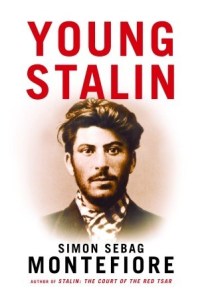
Lastly — and let’s be serious — Young Stalin, the biographical work by Simon Sebag-Montefiore. It is an utterly fascinating book in which Dzhugashvili the seminarian, Dzhugashvili the poet, Dzhugashvili the swashbuckling bandit is seen growing towards Stalin the plausible father-figure, the dictator, and the monster that history has proved him to be. It’s eminently readable, and something that no serious student or lay enthusiast of modern history ought to be without.


This is not Marie Marshall. (It’s not Scarlett Johansson, either.) Marie likes to use this photo in order to preserve her anonymity.

Marie Marshall is a poet and writer. Her books include the novel Lupa and the poetry collections Naked in the Sea and the forthcoming I Am Not a Fish.

You can find out more about Marie at her website; you can find out more about the novel Lupa at P’kaboo Publishers.

Read a preview of Lupa here.

Read some of Marie’s poetry at kvenna ráð.


Check out Marie’s Lithopoesis project here.

Check out zen space here.

Jersey Devil Press will sneak up behind you undetected

You never even saw us coming.

December is a twofer: in addition to our special International Human Rights Day issue, Jersey Devil Press is also running our regular monthly issue. Except it’s anything but “regular” — this one’s another novella issue, and it’s a fistful of awesome!

Why? Because of one stealthy, lethal word: Ninjas.

Also: Football.

That’s right. Ninjas and football. Beat that, Internets!

Plus, killer photography from the always-excellent Eva Steil on the cover.

Really, you can’t lose.

Unless we defeat you in combat….

I’m ready

And, seriously, I cried again.