The Netherlands: Days 10.1 & 10.2 (the Great Volcano Standstill, 2010)

Day 10.1

Friday, April 16, 2010

Stranded still.  The volcano continues to spew, the European authorities in charge of their respective airspaces continue to freak out, many of our fellow passengers are growing irrationally angry, and it’s looking more and more like we’re in this for a longer haul than anyone would like.

We woke insanely early, determined to get to the airport even before it opened so we could be among the first in line, because we knew the forecast didn’t look good and we wanted as much time in the airport as possible to sort out our flight arrangements.  Sure enough, everything was canceled, and when KLM finally opened their ticket counter (almost a half-hour late and after a stern lecture from an angry—and, I think, showboating—man in line, I managed to grab the third number-ticket out of the machine, so our plan to arrive early paid off.

Unfortunately, we’d underestimated just how inconsiderate KLM was prepared to be.

We knew things were looking bad almost as soon as the KLM staff appeared from within the safety of their offices, and the crowd around us was getting unruly before the day had even got started, so, to be on the safe side, Jennifer had the bright idea to send me over to the Lufthansa counter and see if they could transfer us back to their airline.  Sure enough, after maybe 20 minutes, I got a text from Jennifer saying the crowd over there had gotten so angry and so vocal that KLM had called in security, closed their counter entirely, and refused to do any rebookings today at all.  I guess they figure everything’s going to be shut down all day anyway, so what’s the point in addressing their customers’ concerns if no one’s going to get out anyway?  And then they kicked everyone out of the ticketing area—we weren’t even allowed to wait in line in case they did reopen later in the day.  So Jennifer was bee-lining it for my line at Lufthansa, which was calm, orderly, and receiving all the help Lufthansa could reasonably offer.

Shortly after Jennifer found me, I made it to the ticket counter and got ourselves moved back over to Lufthansa.  They’ve bumped us from our Etihad flight to Abu Dhabi and put us on Lufthansa planes the whole way through, which we had been told yesterday wouldn’t be possible, but I suppose the volcano has forced everyone to throw out the rule books and do whatever they can think of.  Lufthansa all the way is fine by us—they’ve treated us extraordinarily well so far, and we’re just happy to be on a flight at all.  We’re now on a flight out on Sunday, which is the earliest they could book us, but they also warned us not to hold our breaths and to check back frequently (they gave us a phone number), so we’ll see what happens from here.

Meanwhile, we needed a place to sleep the next two nights, so we took our B&B host up on her offer and called her—for the same reason we’re not getting out, no one else is getting into Amsterdam, and she had a cancellation from the people who were supposed to be in our old room tonight, so she happily welcomed us back.  We caught a shuttle back out to the neighborhood, dropped off our luggage, and then realized we still had the whole day to while away—we’d gotten up so early and sorted out our flight problems so fast, we’d managed to get back to the B&B a little after 10 am!  With nothing to do but wait, we decided to squeeze a little more use out of our Museumkaart and headed into town to visit the Rembrandthuis.

The house was interesting—a little small for a museum, and the audioguide mostly just repeated the information written on the plaques—but it was quite cool to see where and how the artist worked:  Among the exhibits are a restoration of his studio, with easel and some of his models, as well as his collection of source material, a big room absolutely stuffed with skulls, marble busts and old pieces of broken columns, taxidermied animals of all sorts, weapons and armor, pieces of furniture, and so on.  It reminded me of Ray Bradbury’s description of his cluttered office and how he would use the jumble of junk in there as inspiration for details in his stories, or how Tom Franklin used the Sears Catalog to add realistic details to his historical novel Hell at the Breech.

Afterward, we hopped a tram north to the KNSM Eiland, a manmade residential island in the IJ that boasts some distinctive architecture.  With its quiet, leafy streets and its carefully planned layout, the neighborhood there feels almost like a small residential college campus (Jennifer and I amused ourselves by deciding which would be the “dorms,” which the “married student housing,” which was the “science building” and which the “campus art gallery”).  But the docks do a lot to dismiss that impression, with the houseboats and small yachts docked in long rows.  Overall we weren’t as impressed as we thought we ought to have been, but then, we’re distracted with thoughts of getting home or (dare I say it?) what to do if our flight can’t get out on Sunday.

Which is why we came home early, opted for take-away pizza from that excellent little pizza place in our neighborhood, and settled in for an early night.

It’s going to be hard to sleep with my fingers crossed, but I’m certainly going to try….

10:10 pm


Day 10.2

Saturday, April 17, 2010

Things are getting ridiculous.  Our flight has, again, been canceled.

I called Lufthansa and spent a LONG time on hold before finally getting a guy to rebook us.  The earliest he could get us out was Tuesday, though it’s unclear at this point if that’s because they’re overbooked with people like us, stranded and rebooking and rebooking, or if it’s because they’ve simply given up on Monday already and aren’t bothering to book anyone till Tuesday.

So now we’re stranded for an additional two days, not counting Tuesday–if we get out when they tell us we’re getting out (this time), we’ll have been here four days longer than we’d planned.  With all this worry and nowhere to go, we decided we needed to try to de-stress by getting out to a few more sites we’d missed during our actual vacation.  (Well-meaning friends keep telling us how “lucky” we are to be stuck in Amsterdam, and it’s true that we are far more fortunate than all those thousands of people camping out in the airport, broke and desperate—we have a little extra cash, we have a place to stay and a wonderfully accommodating host.  And the weather is frustratingly pleasant—no sign of an ash cloud anywhere, no indication of any chaos at all except the eerie absence of contrails in the clear blue sky.  But believe me, this is NOT a vacation any longer.  This is purgatory.)

Today we headed to the Vondelpark to try and relax as much as possible in the morning sunshine, then we walked north to the Jordaan, a quiet neighborhood on the west side of the city known today for its quaint canals, pleasant narrow residential streets, and its many trees, flowers, and home gardens (one theory on the name is that the Jordaan is a Dutch adaptation of the French jardin).  We actually didn’t see many gardens, but the streets in the Jordaan are mostly named after flowers, including several streets and a canal named for the eglantine, which has long been my nickname for Jennifer.  So we hoped it would help us unwind, and despite getting turned around a few times and wanting apple pie or ice cream but never finding any (the cafes were absolutely PACKED today, and we didn’t want to brave the crowds), we did indeed have a wonderful afternoon.  We bought Jennifer a jaunty fedora, toured a houseboat, and watched the final moves of a giant outdoor chess match, then returned to the Museumplein (our other favorite park) for waffles and ice cream at one of the outdoor cafes.  Then it was home to update family and eat yet another pizza (the guy makes good pizza, and it’s cheap and makes good leftovers).

Not much else to do now but wait.

11:01 pm
Day 10.1:  16 April 2010

Stranded still.  The volcano continues to spew, the European authorities in charge of their respective airspaces continue to freak out, many of our fellow passengers are growing irrationally angry, and it’s looking more and more like we’re in this for a longer haul than anyone would like.

We woke insanely early, determined to get to the airport even before it opened so we could be among the first in line, because we knew the forecast didn’t look good and we wanted as much time in the airport as possible to sort out our flight arrangements.  Sure enough, everything was cancelled, and when KLM finally opened their ticket counter (almost a half-hour late and after a stern lecture from an angry—and, I think, showboating—man in line, I managed to grab the third number-ticket out of the machine, so our plan to arrive early paid off.

Unfortunately, we’d underestimated just how inconsiderate KLM was prepared to be.

We knew things were looking bad almost as soon as the KLM staff appeared from within the safety of their offices, and the crowd around us was getting unruly before the day had even got started, so, to be on the safe side, Jennifer had the bright idea to send me over to the Lufthansa counter and see if they could transfer us back to their airline.  Sure enough, after maybe 20 minutes, I got a text from Jennifer saying the crowd over there had gotten so angry and so vocal that KLM had chickened out and called in security, closed their counter entirely and refused to do any rebookings today at all.  They figure everything’s going to be shut down all day anyway, so what’s the point in addressing their customers’ concerns if no one’s going to get out anyway?  And then they kicked everyone out of the ticketing area—we weren’t even allowed to wait in line in case they did reopen later in the day.  So Jennifer was beelining it for my line at Lufthansa, which was calm, orderly, and receiving all the help Lufthansa could reasonably offer.

Shortly after Jennifer found me, I made it to the ticket counter and got ourselves moved back over to Lufthansa.  They’ve bumped us from our Etihad flight to Abu Dhabi and put us on Lufthansa planes the whole way through, which we had been told yesterday wouldn’t be possible, but I suppose the volcano has forced everyone to throw out the rule books and do whatever they can think of.  Lufthansa all the way is fine by us—they’ve treated us extraordinarily well so far, and we’re just happy to be on a flight at all.  We’re now on a flight out on Sunday, which is the earliest they could book us, but they also warned us not to hold our breaths and to check back frequently (they gave us a phone number), so we’ll see what happens from here.

Meanwhile, we needed a place to sleep the next two nights, so we took our B&B host up on her offer and called her—just as we’re not getting out, no one else is getting into Amsterdam, and she had a cancellation from the people who were supposed to be in our old room tonight, so she happily welcomed us back.  We caught a shuttle back out to the neighborhood, dropped off our luggage, and then realized we still had the whole day to while away—we’d gotten up so early and sorted out our flight problems so fast, we’d managed to get back to the B&B a little after 10 am!  With nothing to do but wait, we decided to squeeze a little more use out of our Museumkaart and headed into town to visit the Rembrandthuis.

The house was interesting—a little small for a museum, and the audioguide mostly just repeated the information written on the plaques—but it was quite cool to see where and how the artist worked:  Among the exhibits are a restoration of his studio, with easel and some of his models, as well as his collection of source material, a big room absolutely stuffed with skulls, marble busts and old pieces of broken columns, taxidermied animals of all sorts, weapons and armor, pieces of furniture, and so on.  It reminded me of Ray Bradbury’s description of his cluttered office and how he would use the jumble of junk in there as inspiration for details in his stories, or how Tom Franklin used the Sears Catalog to add realistic details to his historical novel Hell at the Breech.

Afterward, we hopped a tram north to the KNSM Eiland, a manmade residential island in the IJ that boasts some distinctive architecture.  With its quiet, leafy streets and its carefully planned layout, the neighborhood there feels almost like a small residential college campus (Jennifer and I amused ourselves by deciding which would be the “dorms,” which the “married student housing,” which was the “science building” and which the “campus art gallery”).  But the docks do a lot to dismiss that impression, with the houseboats and small yachts docked in long rows.  Overall we weren’t as impressed as we thought we ought to have been, but then, we’re distracted with thoughts of getting home or (dare I say it?) what to do if our flight can’t get out on sunday.

Which is why we came home early, opted to take-away pizza from that excellent little pizza place in our neighborhood, and settled in for an early night.

It’s going to hard to sleep with my fingers crossed, but I’m certainly going to try….

10:10 pm

Day 10.2:  17 April 2010

Things are getting ridiculous.  Our flight has, again, been cancelled.

I called Lufthansa and spent a LONG time on hold before finally getting a guy to rebook us.  The earliest he could get us out was Tuesday, though it’s unclear at this point if that’s because they’re overbooked with people like us, stranded and rebooking and rebooking, or if it’s because they’ve simply given up on Monday already and aren’t bothering to book anyone till Tuesday.

So now we’re stranded for at least two more days, not counting Tuesday.  With all this worry and nowhere to go, we decided we needed to try to de-stress by getting out to a few more sites we’d missed during our actual vacation.  (Well-meaning friends keep telling us how “lucky” we are to be stuck in Amsterdam, and it’s true that we are far more fortunate than all those thousands of people camping out in the airport, broke and desperate—we have a little extra cash, we have a place to stay and a wonderfully accommodating host.  And the weather is frustratingly pleasant—no sign of an ash cloud anywhere, no indication of any chaos at all except the eerie absence of contrails in the clear blue sky.  But believe me, this is NOT a vacation any longer.  This is purgatory.)

Today we headed to the Vondelpark to try and relax as much as possible in the morning sunshine, then we walked north to the Jordaan, a quiet neighborhood on the west side of the city known today for its quaint canals, pleasant narrow residential streets, and its many trees, flowers, and home gardens (one theory on the name is that the Jordaan is a Dutch adaptation of the French jardin).  We actually didn’t seem many gardens, but the streets in the Jordaan are mostly named after flowers, including several streets and a canal named for the eglantine, which has long been my nickname for Jennifer.  So we hoped it would help us unwind, and despite getting turned around a few times and wanting apple pie or ice cream but never finding any (the cafes were absolutely PACKED today, and we didn’t want to brave the crowds), we did indeed have a wonderful afternoon.  We bought Jennifer a jaunty fedora, toured a houseboat, and watched the final moves of a giant outdoor chess match, then returned to the Museumplein (our other favorite park) for waffles and ice cream at one of the outdoor cafes.  Then it was home to update family and eat yet another pizza (the guy makes good pizza, and it’s cheap and makes good leftovers).

Not much else to do now but wait.

11:01 pm

The Netherlands: Days 9 & 10

Day 9

Wednesday, April 14, 2010

We had planned today to go to Haarlem, but when we bought our train tickets to Hoorn yesterday, a saleswoman launched into a pitch to sell us bus-tour tickets, and we decided to take the brochure and peruse it just to make her happy.  And sure enough, while waiting on the train to Hoorn, Jennifer found an interesting bus tour that would take us through Delft and Rotterdam as well as a few places we’d missed in The Hague (including a very cool miniatures theme park I’d wanted to go to), and a stop at a massive flower auction and some drives through windmill country.  It seemed too cool to pass up, really.  Aside from the crowded Bloemenmarkt in central Amsterdam and a bustling little flower market at the train station in Hoorn (where we bought our B&B host some roses), we hadn’t seen much in the way of Holland’s famous flowers.  Flower stands abound in Amsterdam, of course, so we’d seen plenty scattered here and there, but nothing like the massive array of flowers the guide books led us to expect, and this flower auction on the tour is one of the largest in the world.  And I’d been on the lookout for Delft pottery but so far had only found cheap souvenir knock-offs, so a trip to Delft itself seemed ideal.  Plus, after visiting the city where my great-grandfather grew up, it felt right to also take a short trip to Rotterdam, where he was born and where his brother—my grandfather’s uncle—lived for a while.  So as a final bit of spontaneity, we decided to make a grand tour of the region as our last full day in The Netherlands.

The day turned out to be almost more tour than we could handle—or rather, more tour than the tour could handle.  They packed a LOT into this trip, and in the end the whole day felt a bit rushed.  Lunch in particular was more hurried than we’d have liked.  But we also got to see a lot of things we might otherwise have missed, and exhausted as we are, I’m glad we went.

Still, not everything was up to expectations.  The flower auction (our first stop), for example, was strongly underwhelming.  I had expected to see vast fields of planted flowers blooming in the sun, glistening with dew.  Instead, we walked a steel catwalk overlooking a huge warehouse, electric trolleys like airline luggage carts towing long trains of crated flowers around into lanes and rows.  The huge auction rooms where masses of flowers are bought and sold were interesting to see, though, and the inside look at the global flower industry was educational.  It’s also strange to think that I saw today, in The Netherlands, a rose or a tulip that tomorrow might sit on a dining table in Philadelphia.

The Delft pottery tour was also understated, but in this case I wasn’t disappointed.  I had mentioned to Jennifer that I’d done a similar tour at the great Turkish ceramic center in Iznik, and sure enough, the styles, the process, and the tours were all quite similar, so I hadn’t expected a long tour and didn’t get one.  What I did get—and had hoped for—was a chance to buy some Delftware directly from the source, which was exceptionally cool.  Most interesting, though, was that the Delftse Pauw (The Delft Peacock), the shop we visited, is one of only two remaining authentic Delft pottery makers left; as the industry turned to machine-painted ceramics, the old handcrafted makers dwindled, but the name “Delft” can’t be copywrited because it’s the name of the city, so the traditional Delftware has to share its name with manufactured Delftware.  It was nice, then, to see the old style of creating such ceramics and to purchase pieces that came with certificates of their authenticity.

Delft itself was lovely—perfectly picturesque—and I think if we’d gone on our own we could have spent the day there, as we did in The Hague and in Hoorn.  The town center was as exact a portrait of traditional town life as one could imagine, complete with a fête in the square, music on the corners by the cafes and pubs, and college students reviewing exam notes while packs of teens flirted with each other.  But the quiet residential areas surrounding the center were gorgeous as well, with tiny thatch-roofed cottages and small gardens lining grassy-banked canals, or tall, narrow townhouses overlooking narrow-alleyed neighborhoods.  Every street paved in cobblestones.

Better still, Jennifer got to see the grave of Vermeer, overall her favorite painter and the impetus behind two major museum visits while here in The Netherlands.  But we barely managed to squeeze in it and a hasty lunch at what was actually a fairly cool little indoor/outdoor café, located at the old weigh house on the square and seated in the shadow of the medieval tower at the town center, before the tour bus was loading and off to the next site.  Like I said, things were a bit rushed today.

Also hasty was our trip through—not to—Rotterdam.  In fact, the bus never stopped; we just navigated the busy streets as the guide pointed out landmarks and architecture, and then before we knew we were zipping north to The Hague.  I was ready to be disappointed, given my family’s connection with the city, until we learned that the Nazis had decimated the city in 1941 in order to force the capitulation of the Dutch (they were successful)—the city was so utterly destroyed that only three buildings survived—so it turns out none of the city my ancestors knew even stands today, anyway.  And we did get a good rundown of the recent architecture and the growth of the city, so in the end I felt okay about the brevity of the drive-through.

In The Hague, we stopped by the Queen’s working residence (she was in her office and at work, which she indicates by flying her flag at full mast), and then hopped out for a quick peek at the Peace Palace, seat of international arbitration–it was established as an alternative to war, which, as a committed pacifist, I quite enjoyed seeing even if we couldn’t go inside.  But the highlight of the day, it turned out, was the trip to Madurodam.

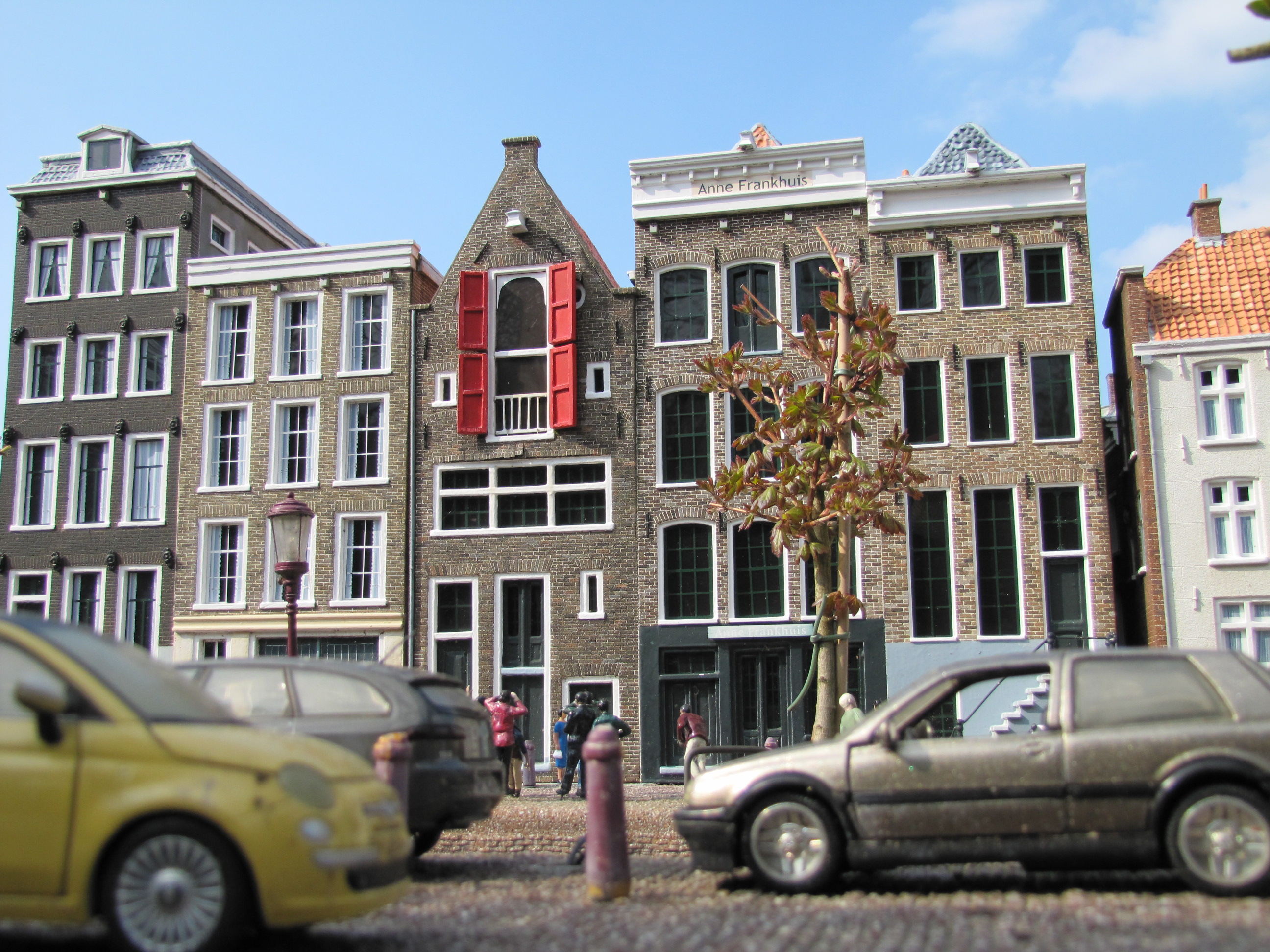
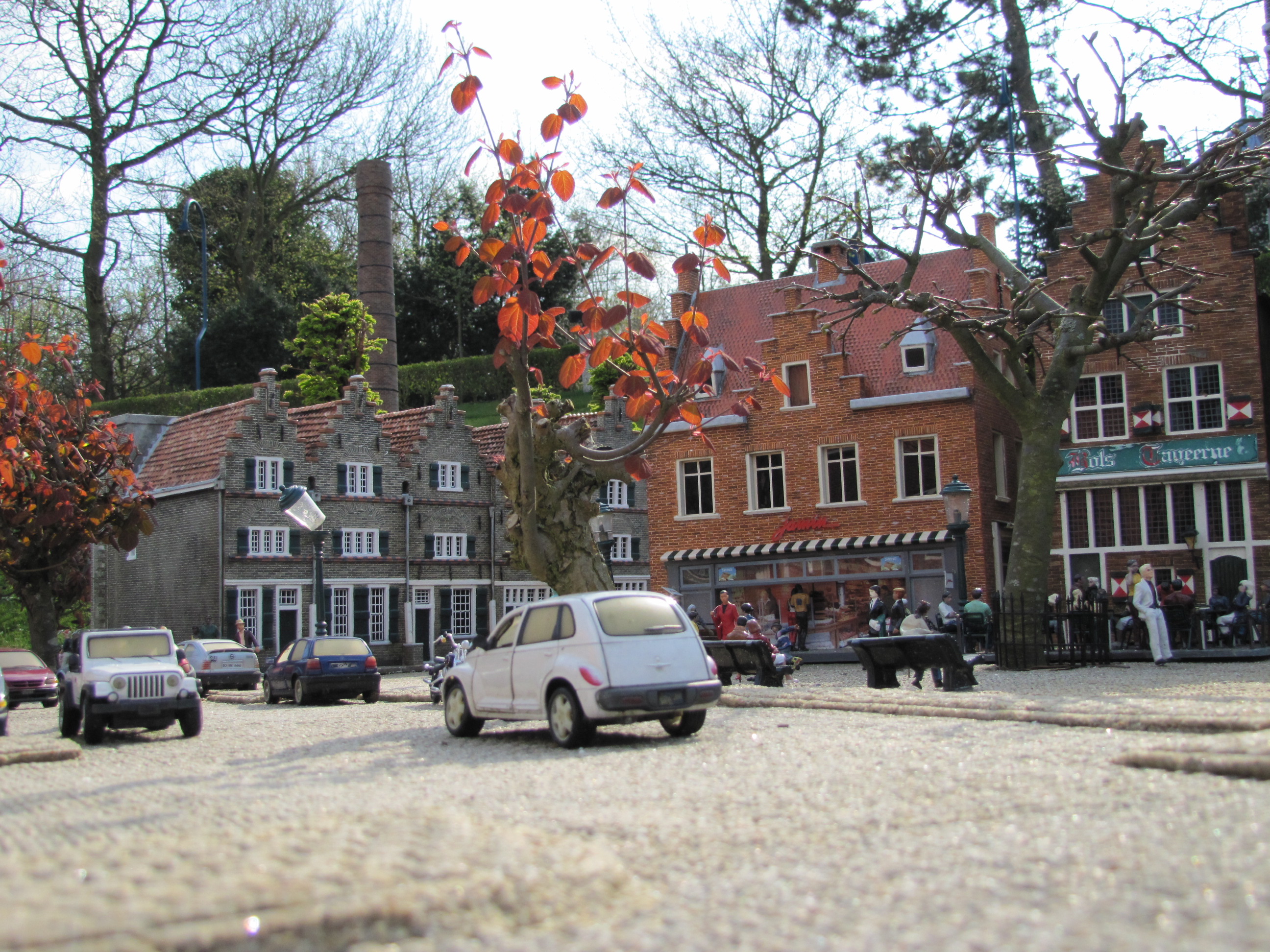
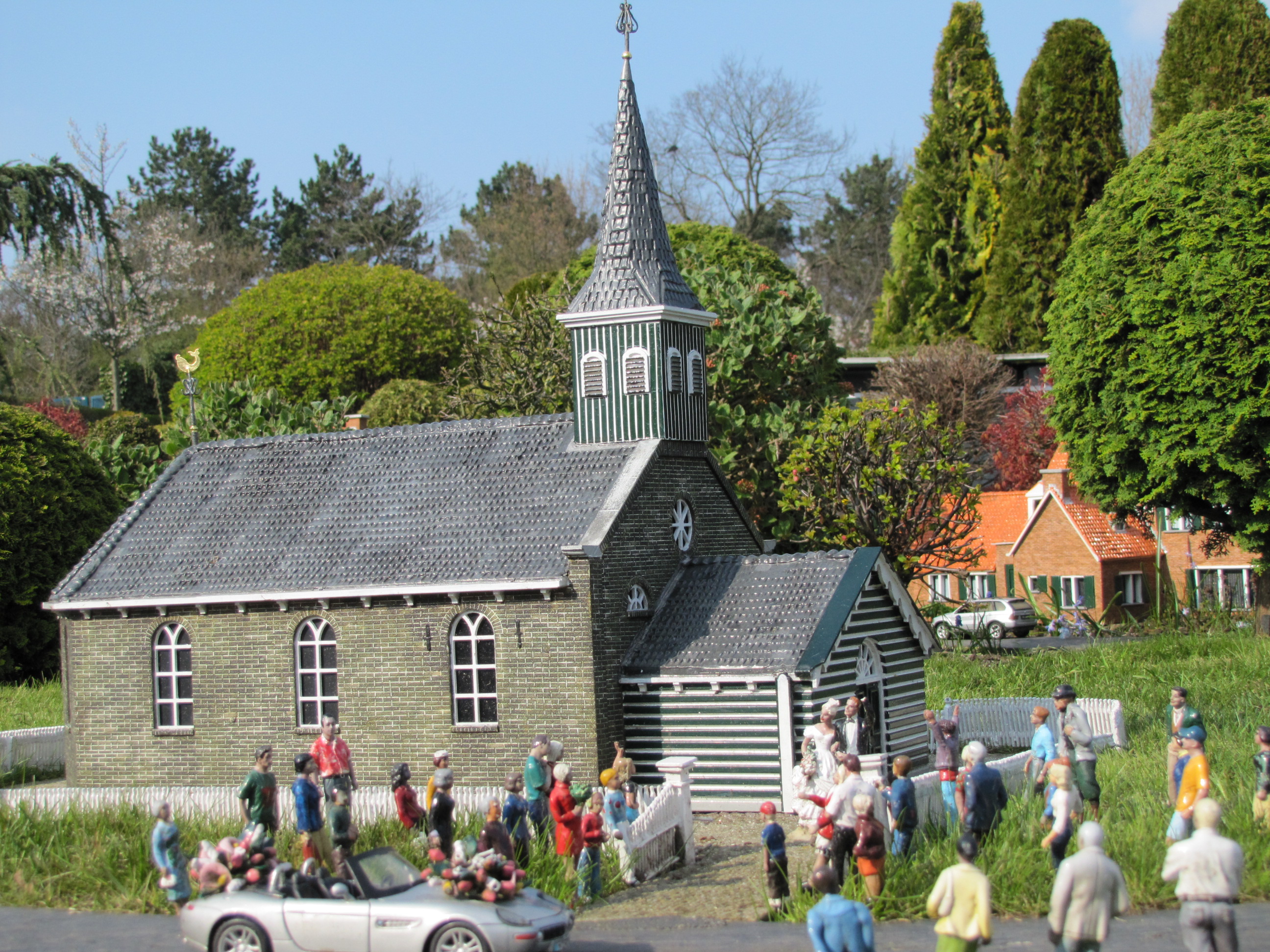
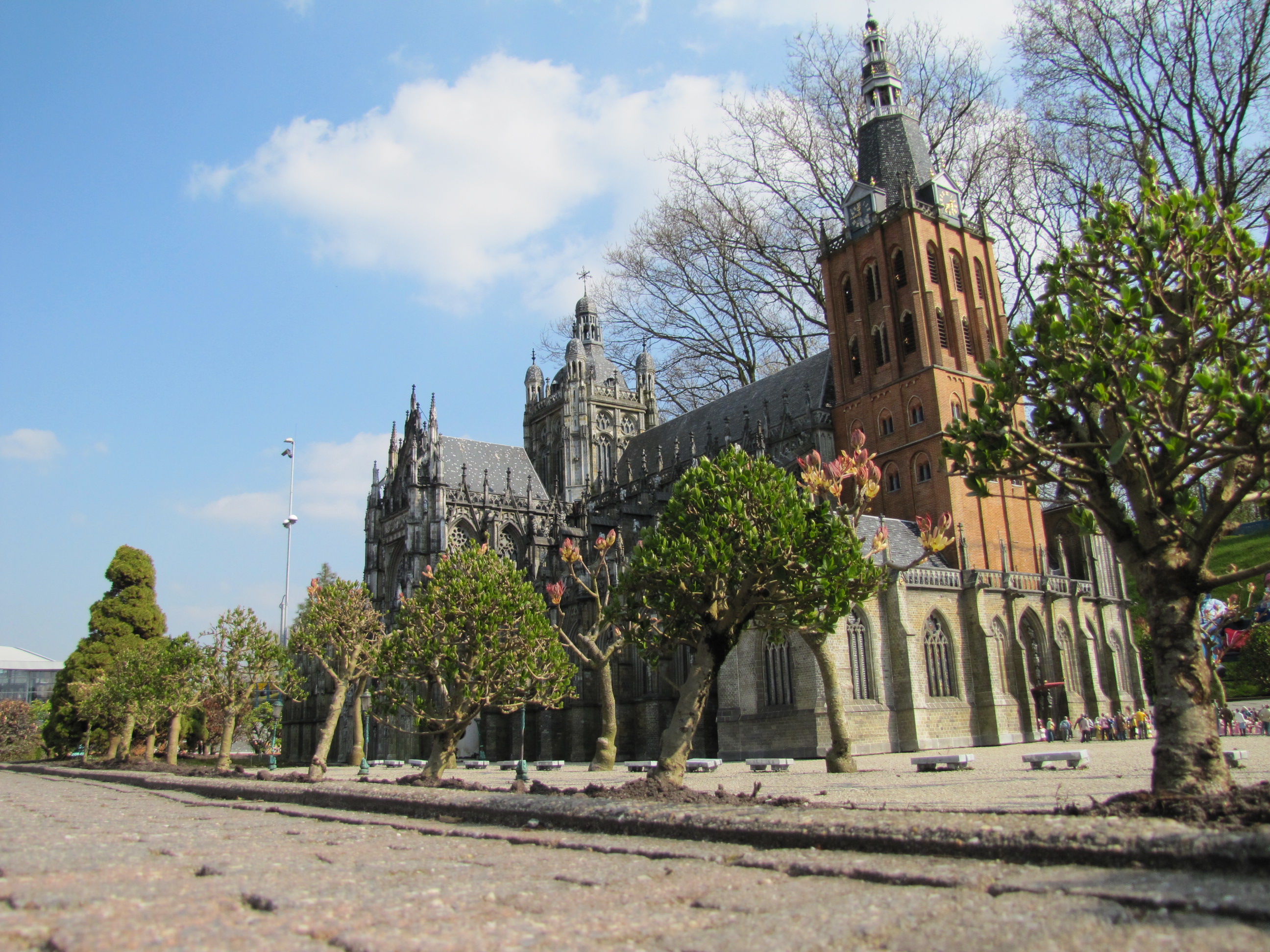
Madurodam is a vast theme park constructed entirely of 1:25-scale miniatures of Dutch landmarks, architecture, and cultural scenes.  Here, in perfect detail, were the Rijksmuseum (without the shell of renovation scaffolding we’d seen), the Royal Palace (without the shell of renovation scaffolding), the National Monument on the Dam (without the shell of renovation fencing)—in short, all the sights we’d missed seeing in their full glory because they were under renovation, here were reproduced in perfect miniature.  The detail was so amazing that on several occasions I dropped to the ground, placed the camera at model-eye level, and snapped a photo that looks utterly convincing as an actual street shot.  The attention to realism is exquisite, too: the grass is all living moss, and the trees are pruned bonsai, so they look like real trees because they are real trees, just in miniature.  The boats navigate the harbors and canals (pulled along underwater tracks), the trains ride their rails, the windmills turn….  At the scale model of Schiphol Airport, the planes even taxi around the runway.  It was astounding, and a man-boy’s ultimate playground.  It was also our longest stop of the day—more than an hour to explore the grounds—so I was positively giddy with excitement.

Still, the day had to end, and we had reservations at De Kas, a classy organic restaurant built inside a greenhouse—we made our last dinner in The Netherlands a special one.  De Kas is a specialty place that grows most of its own vegetables in a greenhouse attached to the dining room (the dining room, too, looks like a greenhouse, with the glass ceiling alternating clear panels and solar collectors for their power); they grow their own herbs on site, too.  The rest of their veggies they grow in a farm outside the city, and the meat, fish, and cheese comes from local producers, too.  Each day, the staff brings in a fresh harvest, and each day the chef designs a new menu based on what’s available.  Therefore, there is only one menu each day, with two options:  Meat and fish, or vegetarian.  Jennifer ordered the meat and fish menu, and I had the vegetarian.  They also hand-select a series of wines custom-matched to each course of each evening’s menu, so we did that as well.

For our starters, Jennifer had lobster ravioli in a cream sauce and lamb tongue in lentils, while I had cabbage rolls in lentils and parsley and a spinach ravioli in cream sauce.  We also both shared a plate of smoked lettuce with aged Dutch cheese.  Our starters were paired with a pinot blanc and a Madeira.  Then, for the main course, Jennifer have seawolf with mashed potatoes and parsnips while I ate roasted potatoes with parsnips and onions, which was paired with a French chardonnay.  And then, for dessert, we each had a crème brulee topped with rhubarb sorbet and a delicious dry Riesling.  I’m not much of a food snob, but I love great cuisine when we can get it, and this was one of those most unique and delicious dining experiences we’ve ever had.  I loved it, and we will definitely return to De Kas if we ever get to Amsterdam again.

But now, despite an after-dinner cup of coffee, I am tired, and though we have an evening flight out tomorrow, we plan to spend some time wandering the park tomorrow before finishing our packing, so I’m done for the evening.

12:25 am (April 15)


[Just for fun, I’m including this small gallery of images from Madurodam to show the incredible detail of the place.]


Day 10

Thursday, April 15, 2010

I had intended to write this in my notebook on the plane home.  But I am not on the plane home.  I am in a hotel on the outskirts of the city, between the airport and Amsterdam proper.  It is late.  We are tired.  But we are not going home today.

After we left our B&B, Irene, our host, called the taxi driver (they’re friends) and told us she’d just seen the news about a volcano erupting in Iceland.  All the flights out of Schiphol were being canceled, she said.  She still had a vacancy for the night—our old room, in fact—so we were welcome to return to her place if our flight, too, was canceled.  We thanked her, crossed our fingers, and went inside.

We were canceled.

I’m not entirely sure what the full extent of the situation is, but after spending a few hours in line and talking with the Lufthansa people (who operate the first leg of our flight, to Frankfurt, before we switch to Etihad to go home), they managed to rebook us for tomorrow on KLM.  But they also are saying tomorrow doesn’t look good.  The volcano, it seems, is not finished spewing ash yet, and word is they might cancel everything tomorrow, too.  So, who knows.

The good news is that Lufthansa was kind enough to give us a free room and dinner at a nearby hotel.  Because this is a natural disaster and outside the airline’s control, they didn’t have to do that, but they seem to want to treat their customers well, so we lucked out.

I should go ahead and recap the rest of today, but I’m tired and need some rest.  The hotel is okay, dinner was as good as we could expect, right now all we want to do and get some sleep, get on a plane, and forget this happened.  But we’ll see what tomorrow brings.

10:07 pm

The Netherlands: Days 7 & 8

Day 7

Monday, April 12, 2010

I am quite too relaxed to write.  I’ll try to jot down a few notes, but I expect to sleep soon.

We did the Artis Zoo today, a beautiful complex packed not only with an excellent zoo but also with a planetarium, an aquarium, a zoological museum, an African savannah area, a butterfly house, and a few small Japanese gardens.  The planetarium was rather small and seemed a bit underdeveloped, the aquarium was cool but is in the middle of some much-needed renovation (as is the savannah), and the zoological museum was, unfortunately, partly closed.  But the zoo itself was fantastic, full of well-planned open enclosures and lots of breathing room for the animals.  The Japanese macaques, for instance, live on a fenceless “island” called Monkey Rock, with just a wide moat separating them from us, so they have no cage wire to contend with and we get to see them more closely and naturally.  The birds, too, mostly have the run of the zoo—I once found myself face to face with a blue heron as it alit on the railing of the bridge I was crossing; later, an opportunistic heron flew over to the seal tanks during their feeding demonstration in order to pilfer a few stray fish, and we also found peacocks pecking around in the dirt and harassing a European bison, though he wanted none of their imposition and quickly charged them to chase them off.

I think my favorite part of the zoo, though, were the two small Japanese gardens, each with a large bronze statue—one of the Japanese bodhisattva Jizo and one of Buddha—resting quietly along the stream and the blossoming trees.  At each garden I slipped inside, sat on the bench facing the statue, and took a few moments for quiet meditation.

Still, it was a LONG day walking all over the zoo, which stretches over several city blocks, and by evening we were definitely ready for a little relaxation.  A while ago, I had experimented with some homemade sensory deprivation for a writing exercise, and in the course of researching techniques I started reading about saltwater float tanks, similar to sensory deprivation tanks but aimed more at physical relaxation.  Turns out one of the more prominent companies that offer the tanks is here in Amsterdam, a spa called Koan Float, so Jennifer and I each booked a massage and a float session.  The massage was fairly standard, but it was really just the run-up to the float itself, a kind of pre-relaxing relaxation.  The float was clearly the highlight.

The tanks look like space capsules or, more accurately, like two hot tubs, one turned upside down over the other as a lid.  Inside, the water is heated to body temperature and heavily salinated, salty like the water in the Dead Sea or the Great Salt Lake, which makes the water extremely dense and allows a human being to float in it unaided by breathing or swimming—you just bob on the surface.  (Actually, the water is shallow enough that you can sit in it if you want, but if you let yourself relax completely, you do indeed rest high up in the water.)  There’s a air flow system to circulate air, small speakers and a music system to play the sort of relaxing sounds you usually listen to during a massage (“the plinky-plunky music,” to quote Phoebe from Friends), and a light.  This way, you control the amount of sensation you experience; if you turn off the music, the air, and the light, and float in the body-temp water, you will experience almost total sensory deprivation.

It’s a spooky experience, to feel nothing, and at first I felt restless, like I needed to keep moving just to remind myself I was in the water.  Every several minutes I switched on the light just to make sure it worked.  And because I was floating so high in the water, because of the salt content, my head kept falling back at an uncomfortable angle.  But I soon discovered that if I raised my arms over my head—which created a kind of counter-balance in the water—my torso floated lower and my head found the right angle.  So, after about a half-hour or so, I got used to the sensation (or sensationlessness) and was able to let go.  I switched off the light, breathed deeply as in meditation, and… well, fell asleep, to be honest.  It was just that relaxing.

So, no mind-altering revelations, no great epiphanies or sudden enlightenment.  But a hell of a relaxing soak (the company promotes a 45-minute float session as the equivalent of 4 hours of sleep, and if I’d been used to the experience and had relaxed the entire 45 minutes, I think I’d believe them), and now I’m ready for a full night’s rest.  Tomorrow, after all, is Hoorn, the city my great-grandfather left more than a century ago.  So I need my sleep.

10:46 pm


Day 8

Tuesday, April 13, 2010

I grew up hearing story after story about my family history.  My grandfather is the child of an immigrant father, and he never knew his own grandfather, who remained in The Netherlands after my great-grandfather left it back in the 1890s.  Despite a lifetime at sea, my own grandfather never managed to get to the “old country” and meet his relatives, and I suspect that’s partly why he became such a passionate genealogist.

We still like to jokingly roll our eyes when Grandpa gets started on genealogy, because he exhibits an inexhaustible joy in recounting our lineage, begats after begats, and when he long ago traced the direct lines as far back as he could get, he happily jaunted off down side avenues of our family, tracing distant cousins and several generations of relation by marriage and then reciting his discoveries to us all.  Genealogy can be a lot like fishing—you have to spend a lot of time sitting in the boat before you get a hit—and listening to anyone talk about genealogy can sometimes be like listening to a fisherman recount the types of bait he chose, the places he cast the lines, and what direction the wind blew before you finally get to the excitement of the catch.  But I have always shared my grandfather’s fascination with our family history (though I am a recent convert to the joys of genealogy), and as a storyteller I love knowing the details of who my forebears are—not just the names and dates, but the real details of their lives, like what professions they worked in or how long they waited to get married.  I’ve discovered, for instance, that the men in my family have a strange, unspoken tradition of marrying older women (a tradition my grandfather and I both bucked but which my father upheld).  I’ve discovered, too, that my family’s history with the sea goes back farther than I’d thought: my grandfather was the fourth in a line of ship captains, but before those Snoek men took command, their ancestors already had their toes in the water, working as harbor pilots or bargemen.

So this trip to Amsterdam has always been about more than just  museums and city life and vacation.  For me, this trip was most importantly about getting to the country where my great-grandfather was born and, today, to the city he grew up in.  There is something both profound and sublime about walking in an ancestor’s footsteps, about seeing buildings and touching water and treading stone streets that my forebears saw and touched and trod.  Perhaps it is just a trick of the mind, a psychological game I play on my myself, but it feels deeply important that I echo my history, that I not only learn about my family’s past but, when possible, that I experience that past first-hand.  That physical connection feels important to me.  I worry that many in the coming generation are losing that—as information and gratification become faster, more immediate, so our memories grow shorter.  It feels necessary, then, that I lengthen the reach of my own memory.  While my students recall their own “distant” past, “back in the day” when they were only 10, and seem not to care much about events that preceded their own birth, I now can say that I have seen myself the city my great-grandfather left almost 115 years ago.

After a short train ride north to Hoorn, we popped into the regional tourism shop—I’d read the shop had walking-tour guides for sale, and we bought two, one detailing the historic buildings in town and the other covering the history of the Dutch East India Company in Hoorn—then we headed to the Westerdijk, the boardwalk area overlooking the harbor and the Markemeer (the huge lake that once was part of the Zuiderzee, the massive inlet from the North Sea, before The Netherlands dammed it off and separated it from the sea).  When my great-grandfather left Hoorn, at the age of twelve, he did so as a stowaway aboard a ship, but it was a natural means of escape, since his father and his grandfather both were sea captains.  My great-grandfather spent the rest of his life as a seaman, as did two of his sons, including my own grandfather.  So I felt it was important that one of the first things I do on arriving in Hoorn was go down to the shore and touch the water.

The rim of the harbor is shored up with large, dark-gray boulders to break up the surf, so I clambered down these to the water’s edge and knelt there, dipped in my hand, and held a fistful of the water a moment before bringing up my hand and wiping the water over my face.

We had plans to visit two museums in town, one focused on the long history of the town and the region, and the other focused on Hoorn and Holland in the 20th century.  Both were fascinating and surprisingly similar:  The Westfries Museum contains several fascinating displays of domestic life in North Holland in the 16th to the 19th centuries, with bedroom and living room furnishings, children’s toys, and storerooms, as well as exhibits of shops, jail cells, and courtrooms.  The 20th-Century Museum had many of the same kinds of displays, showing living rooms from the `30s, `50s and `70s, the evolution of the washing machine, and an early schoolhouse and schoolyard, as well as huge display cases packed with all manner of pop-culture paraphernalia.  Browsing the two museums back-to-back, and walking the narrow, winding streets of the town between museums, I kept thinking about my own ancestors in this same town, using similar furniture, eating in a café like the one where we had lunch, touching the hospital wall that Jennifer and I touched, visiting one of the churches in town (my grandfather doesn’t know which church my ancestors attended, so I photographed every church I could find in the hopes of getting the right one).

As we wandered the town, we worked our way south to the old harbor, where my great-grandfather was most likely to have sneaked aboard a ship and left his homeland.  There, at the junction of two harbor-side roads, stands the Hoofdtoren, a 16th-century defensive tower protecting the Buitenhaven (Outer Habor) and the merchant ships coming in and out of port.  Today it’s home to a (rather disappointing) café and restaurant, where we sat for a cup of coffee, but the tower remains otherwise unchanged and is an impressive sight.  It’s become one of the city’s key landmarks, and later we bought a little statue of the tower to add to our Christmas village display (which, through our travels, is rapidly becoming less Christmas-y and more just a display of places we’ve been!).

Also on the dock is a three-piece bronze sculpture depicting the three Ship’s Boys of Bontekoe.  The statue refers to a legendary story of a Dutch sailor from Hoorn, who kept a journal during one particularly perilous journey to the Dutch East Indies and his heroic return; when he published the journal in the 17th century, it was a sensation throughout Holland, and remains so today, so much so that in 1924 a Dutch author used the three cabin boys Bontekoe mentions in his journal as the basis for a young-adult adventure story.  The statue, three boys sitting on a wall gazing over the harbor, longing to head out to sea and high adventure, speaks to the Dutch connection with sailing and the yearning to be out on the ocean.

I spent a long time at the statue, circling it, touching it, studying it.  It could easily have been my own great-grandfather’s story (of course, knowing my family’s penchant for embellishment, it could just as easily have influenced my great-grandfather’s telling of his own story), because my great-grandfather was himself a cabin boy, gone to sea at the age of 12.  It’s true that he was running away from home as much as he was running toward the sea, but he made a career of seamanship and did indeed enjoy a lifetime of adventure.  So standing there, in this place, I felt like I had somehow found my family, like I was seeing three versions of my own ancestor perched up there on the wall, watching the ships sail in and out of the harbor.

We spent the rest of the afternoon walking around the city, poking into narrow passages and exploring little neighborhoods.  My great-great-grandfather is supposed to have run a boys’ school in Hoorn, and we found buried in the heart of the city a crooked little street called (in Dutch) School Street, though I have no idea if there’s any connection.  And there is a long street that (I think) we walked down called Gerritsland—my great-great-grandfather’s name was Gerrit, though it was a common name and there’s surely no connection there, either.  But otherwise we contented ourselves with casual exploration, whiling away the afternoon until it was time to return to Amsterdam on the evening train.  I had seen the things I came to see, done the things I’d hoped to do.  I’d touched history.  And I am happy.

10:42 pm

A Writer’s Notebook: Script Frenzy

So, as you might know, my planned 10-day interruption in participating in Script Frenzy turned into two and a half weeks, because we were stuck in Amsterdam for a week trying to figure out how to get home.  Then I was resting up, then working on other projects, like my travel journal….  Needless to say, I didn’t do anything like the kind of work on my Script Frenzy experiment I had wanted to do.

Still, I’m writer enough not to completely abandon a project, so I figured I’d try to toss out a handful of pages at least, and while I was at it I could use it as this week’s Writer’s Notebook exercise.  I’m managed about 10 pages so far and might push that to 12 by the end of the day, though that’s as far as it’s going to get.  But just for fun, here are the first three pages of what might become the graphic-novel adaption of my dissertation.  (To see the pages properly formatted, click on the pdf version; for the “rules,” see below.)

Page 1

There are four horizontal panels on this page, roughly equal in height.  Each is black.

Panel 1

The first panel is all black—completely blank except for the inky emptiness.

Panel 2

This panel is also black.  In the top-left, there’s a narration box.

NARRATION

I can’t breath.

In the bottom-right is a sound.

SFX

leaves crunching, like a “krish” sound.

Panel 3

Also black.  In the top-right is another box.

NARRATION

It hurts.

There are sound effects moving along the bottom from left to right.

SFX

“snap”; rustling effects, possibly with movement in the form of lines or a faded-black streak; and a “splish,” possibly with a watery rub-out surrounding the last effect in the bottom-right corner.

Panel 4

The last black panel, this one with a fade to a soft, golden glow in the bottom-right corner, radiating from a bright center.  It could be a spotlight, or it could be a tunnel.  In the top-left is another box.

NARRATION

Oh god.

Page 2

This page is a three-tiered layout, with two horizontal panels and a bottom tier of three panels.  Panels 1 and 2 together take up slightly less than half the page.

Panel 1

This is a horizontal panel roughly equal in size to the previous four.  This one is an extreme close-up of a tire, with the weedy edge of the asphalt just visible beneath it and the old hub, a rust-spotted chrome cap, flat with alternating ridges in the sloped walls of the cap like a wide cog, slipping into the frame from above.  The tire is not quite centered; the bulk of it is on the right.

NARRATION

I just want…

Panel 2

This is a thin horizontal panel, at most half the height of the previous one.  It’s an extreme close-up of NESSIE’s blue-gray eyes.  They are wide, not from fear so much as confusion and a bit of pain.  Her white face is wet, but not from crying—there is at least one drop of water falling from her brow in the upper-left corner.

NESSIE

Please.  Help me . . .

Panel 3

This is a vertical panel, roughly one quarter of the page.  It is an overhead view of the road, which comes into frame just left of center at the bottom and goes out of frame just right of center at the top; the road curves a bit at the top, and it takes up most (or all) of the right side of the panel.  On the road sits a white Dodge Ram full-size touring van.  It’s a plain van, no bells or whistles, and it’s a first-generation Dodge Ram, the paint a bit faded, with a flat glare of white sunlight coming in from everywhere—there are no distinct shadows.  The van is aimed up the road, toward the top of the panel.  The driver’s door is open, and HARISH, a bald, liver-spotted man with dark olive skin, is leaning out the door, one hand on the armrest, looking back down at the road.  Nessie is huddled in the weeds on the left, on her knees but slumping sideways on her left side, and she’s surrounded by three elderly people, one of them a black woman with iron curls and the other two wrinkled old white women in flowery dresses.  The black woman has a hand on Nessie’s shoulder and her face near Nessie’s face; the two white women have their hands under Nessie’s right arm.  On the right side, the passenger side of the van, the two side doors in the middle are open into the road.

Everything is washed in a thin gray tone, like a silver wash on an old photograph.

In the top-left corner is a narration box.

NARRATION

to sleep . . .

Panel 4

A smaller, horizontal panel.  The vantage is from ground view, looking at the rear of the van from roughly the level of the rusty license plate (no state is given, only the numbers 551 195).  Most of the driver’s side of the van, from the wheel on, is out of frame, so all we’re seeing is from the license plate and right of it, including the DODGE RAM logo on the bottom-right of the rear door.  The passenger side of the van is visible, moving straight out away from the viewpoint, with the front end just out of frame.  The side doors are open, and the three women are helping Nessie crawl into the van; she has one leg draped on the ground, and she’s collapsed on her other knee, which is crooked into the open van doors.

Panel 5

A square panel, slightly taller than Panel 4.  It’s a head-and-shoulders view of Nessie, seen from over the worn beige seat back in front of her; she’s slumped against a dark-tinted window with a shabby cream shoulder strap hanging behind her, unused.  She’s in her mid-thirties and wears solid-color, nondescript clothes and no make-up.  She’s no Hollywood beauty, but she’s feminine enough even though she clearly has a tough edge to her.  Her eyes are closed, her shoulder-length, ashy blonde hair has fallen half into her face.  Her face is a watery reflection in the glass.  Through the window is a dark vision of a scrubby woods, live oaks and cedars.  In the bottom-right corner is a narration box.

NARRATION

to dream . . .

Page 3

A splash, divided into thirds.  The color tone here, too, is that silvery gray wash, the top third is the sky, strangely colorless, an empty blue without any depths—it is either without clouds or uniformly overcast, but it’s hard to tell which.  The middle third shows the old highway winding up and right across the page over a rugged landscape of grasses and scrub, the trees falling away into the distance as though into mist and the horizon barren of anything but the road, a few bushes, and the slope of an occasional swell.  Once in a while small road breaks off and tunnels underneath the highway, but the roads always loop back into the highway again, going nowhere, like something out of an Escher sketch, and the land out past those roads is all two-dimensional emptiness; no trees, no wildflowers, not even road kill.  Over the last dip in the horizon, where the grass meets the flat sky, a tiny overpass crosses the highway, but we can’t see any road it’s connected to—it’s just a bridge.  In the foreground, a small kick of dust floats behind the van, and the imprint of Nessie’s shape is still in the grass on the left side of the road.  Below that, in the bottom third, the scene fades into white nothingness, completely undrawn.

In the top-left of the page is the tag BOOK 1.

The rules for comic scripts are quite flexible, and the formatting in particular varies widely.  I learned what little I know about graphic narrative from Will Eisner’s Graphic Storytelling and Visual Narrative and Scott McCloud’s two excellent books, Understanding Comics and Reinventing Comics.  But for the practical bits about actually writing a script, I mostly followed Neil Gaiman’s advice both in what to include in the panel descriptions and in how to format the script (he includes that advice and a sample script at the back of the graphic novel edition of The Sandman: Dream Country).  For this, I’ve largely stuck with Gaiman’s advice on descriptions.  For the formatting, though, I decided to try and conform to the advice on Script Frenzy‘s website, which is closer to traditional screenplay formatting.

The Netherlands: Day 6

Day 6

Sunday, April 11, 2010

Today started out continuing the forgetfulness of yesterday, though it improved quickly.  We decided to head to the Anne Frank House first thing this morning, thinking the crowds might be thinner early on a Sunday.  We were right, but even after a thorough run-through of our new pre-departure checklist, somehow I managed to forget to put the memory card back into the camera, so I was unable to photograph the Anne Frank House at all.  Turns out it didn’t matter, though—photos aren’t allowed at the Anne Frank House.

Besides, the history in the Anne Frank House quickly overshadowed any small lapse of memory I might have had this morning.  The museum is a somber place but it is exquisitely presented, with quotes from Frank’s diary painted or mounted in relief on the walls, excellently documented relics from the house and the Franks’ life there, and short video presentations throughout the house.  The building itself has been lovingly restored, but wisely, they’ve only restored it to a point:  When the Nazis arrested the family, they stripped the cramped living quarters upstairs of all its meager furnishings, and Anne Frank’s father Otto Frank decided to leave the house in that condition; the museum, acting on his wishes, has rejected any attempts to redecorate the rooms with replica furnishings, leaving the house eerily but appropriately empty.  Still, they did briefly furnish it for photographic purposes, so we can see what it used to look like, and with Otto Frank’s guidance and Anne Frank’s diary, they also built small models of the furnished rooms, which are on display in the house, to give you a sense of perspective.

But the house isn’t without points of sublime, historic echo.  As you leave the from offices and duck into the hidden living quarters, you pass through a reconstruction of the famous swinging bookcase, aged and stocked with period-accurate file boxes and books.  On the other side is a worn metal handle the family would have used to pull the door shut behind them.  As the crowd moved on up the narrow staircase, I paused to grip the handle, just for a moment, and imagine what it must have felt like to pull that bookcase shut each morning, or swing it carefully open each night.  The moment was electric and profound.

Then, on passing through the main living room (which was also the bedroom for the Frank parents and Anne’s older sister Margot), I was stunned to find a faintly penciled height chart on the wall by the door frame, where the Frank family marked the growth of Anne and Margot during their years in hiding.  Such a quaint, homey display of family life was shocking, all the moreso because it remains today, never erased.  These were no reproductions—these were the actual measures, penciled by Otto or by Anne’s mother, Edith Frank-Holländer.  It was for me a moment in which time folded onto itself, the past rushing over me in a physical way so that suddenly the Frank family and I occupied the same space at the same time.

When we arrived in the room Anne shared with the dentist Fritz Pfeffer, I stopped moving.

Sections of the two long walls were covered in protective glass, a kind of shallow clear box attached to the walls.  Behind the glass, just inches from my fingertips when I reached out and touch the glass, were the pictures and postcards and magazine cutouts that Anne Frank herself had pasted to the walls to decorate the room.  Because she’d had no way to hang up decorations but to glue the paper directly the walls, they remain there still, undisturbed even when the Nazis ransacked and emptied the house.  There were Anne’s movie stars, her garden scenes, her drawings, her fashion photos.  All the things she’d glued up just to find some cheer and normalcy in her life.

As I type this, I find I still must pause, remembering the sensation.

I believe that sometimes, rooms can absorb or inherit the emotions of those who live in them, that in cases of extreme stress or joy or anger or love, a room can serve as a memory of those emotions.  I had expected this whole house, hidden away behind the staircase until the two families were betrayed and arrested and hauled off to die in concentration camps, would feel at best melancholy, claustrophobic, tense.  Those emotions were to some extent still present in the upper rooms, and in the stairways.  But here in Anne bedroom, glowing through the quiet sadness, I felt a sense of joy, a sense of determined happiness.  I think it was probably just the psychological effect of seeing those pictures on the walls, Anne’s own determination to fill her life with whatever beauty and happiness she could manage, but the feeling, whatever its origins, was deeply moving, and I moved more slowly through the rest of the house.

I did cry at the Anne Frank House today.  It was inevitable, I think.  When you see the quiet, resolute hope those rooms represented and then move into the final museum exhibitions detailing the family’s arrest, their deportation and imprisonment, their murder—mere weeks before British troops liberated the camp—you cannot help but be overwhelmed.  So much promise in so young a girl.  So much horror for any human being to endure.  So much….

I wept openly, and I trembled, but there was more than sorrow at work.  I felt rage.  I felt abject fury that anyone in the world had ever let the Nazis gain that much power, let alone exercise it, that we all had kept quiet for so long.  To see what happened to the Frank family, as just one example among millions—millions!—and to realize our leaders could have prevented it all, before a war was even necessary….  I have rarely felt such anger.  Such rage.

But the museum chooses not to end on that note.  Otto Frank, who survived the war, chose not to remember his daughter in anger.  Instead, they end on notes about Anne Frank’s diary, her determination to become a writer, and, in the midst of all that fear and suffering and uncertainty, her unshakable hope for the future of humanity.  Strident, determined hope.  I wept again—and am crying now, as I write this—for the compassion necessary to feel such hope, for Anne Frank’s sincere belief, even at so young an age, that through her writing she might one day be able to bring hope to the world.  That is the message she wanted to impart in what she viewed as her first novel, her diary.  That is the legacy her father wanted her to leave.  And so that is the point on which the museum leaves we visitors.

Among the last exhibits in the museum, as you exit toward the gift shop, is a display case showing various editions of Anne’s published diary, and virtually every conceivable language.  Dutch and English, French and Spanish, Russian and Romanian.  Hebrew and Arabic.  Afrikaans and African languages.  Chinese and Korean and Vietnamese.  Japanese.  German.

Despite everything she endured, Anne Frank wrote.  She wrote for herself and she wrote for an audience.  She wrote with honesty but she also wrote with a purpose—she wrote to inspire hope in others.  She wrote because she believed that through writing she might somehow benefit the world.  And the world is reading.

This, I thought as I left the museum, is what it means to be a writer.

* * *

Afterward, we tried to unwind with a leisurely walk to and through the Vondelpark, the vast park/nature reserve near the Museum Quarter.  It turned out to be the perfect decision.  The weather was a bit chilly today, but when the sun peaked through, the park transformed.  Joggers, cyclists, scampering dogs, blooming trees, a dozen small ponds rippling in the breeze and shimmering in the sunlight.  The park was sometimes full of bird calls—woodland birds chirping, ducks quacking in the ponds, pigeons cooing along the sidewalks as seagulls cried overhead—and other times it was utterly serene, perfectly silent.  The birds, the dogs, the people around us content to stop a moment and just enjoy the day in a peaceful hush.

As we made our way back into town for a little shopping and dinner at that Mexican food place we’d tried yesterday, we passed the large Buddhist temple dedicated to Kwan Yin, female bodhisattva of compassion.  We’d visited it the other day but it was closed; today, we arrived while it was open, and it seemed too perfect an opportunity, so we ducked inside, where I lit a stick of incense and recited the short Tara mantra before carrying on with our evening.  After such an emotional morning yet one that ended on such profound compassion, visiting the temple this evening made perfect sense, and we finished our day in serene satisfaction.  I feel it still, and hope it will provide me with a peaceful night’s sleep.

11: 54 pm

The Netherlands: Day 5

Day 5

Saturday, April 10, 2010

Today was a weird, difficult day.  It started out a little off:  Jennifer forgot her chapstick, my hair was so wild in the wind that Jennifer had to braid it just to keep it under control, and we kept missing our trams by seconds and getting stuck waiting around for the next one.  Not disastrous by any stretch—we got to wander through the famous Albert Cuypmarkt near our B&B, where I found a snappy new hat for fairly cheap, and though the weather was a bit brisker than usual, the sun was out unusually early to cheer our morning—but a bit vexing.

But it picked up in a hurry as we headed for the NEMO, a large interactive science museum.  I’m a sucker for a science museum.  Maybe it’s because I love any activity that combines fun and learning, or maybe it’s because such places invite even we adults to join in the fun and act like kids ourselves.  Or maybe it’s because my competency in science never progressed beyond elementary school.  But I freaking love these things, and when we found a hole enough in our schedule to fit in the NEMO science museum, I jumped at the chance.

This is Museum Weekend, two days each year in Amsterdam when many of the city’s most famous or most popular locations are free or discounted.  NEMO was free, so it was absolutely packed with kids, making the experience a bit crushing sometimes.  But the museum itself is packed with loads of interactive exhibits and learning centers, so there was rarely a moment for us to simply stand around waiting in line.

For me, the biggest thrill was the astronomy exhibit on the Galaxy Zoo project.  I was always a bit of a space geek as a kid, and if I’d had any aptitude for maths or sciences, I’d have loved to have been an astronomer or an astronaut.  The Galaxy Zoo is a chance to do just that at the most basic lay level:  Similar to the SETI project from a few years back, Galaxy Zoo uses hundreds of thousands of volunteers to cull through an online database of telescope images of galaxies and classify them.  Though a computer program can easily stockpile a database of galaxy images, so far none can reliably classify the galaxies; such an interpretive, subjective task needs a human eye and some good old fashioned critical thinking.  So the Galaxy Zoo gives everyone access to the database of images and asks us to help classify the galaxies through a series of simple questions.  Children can do it, adults can do it, I intend to do it, and so should everyone.

We also enjoyed a LONG conversation with the Dutchman monitoring the exhibit.  We started talking about astronomy and the Galaxy Zoo, of course, but as we lingered, the friendly and enthusiastic guide broached topics on Dutch culture, multiculturalism, language and linguistics, and the disparity between Dutch and American politics.  (Turns out I’m very Dutch in all those areas, though my capacity for new languages is rapidly waning, I’m sad to admit.)

We also got a kick out of the teen section, which looked like a teen magazine brought to life, with exhibits on dating, personality, hormones, and pop culture.  But we’d seen a lot of the museum by then and were ready for some lunch, so after a quick tour on body image and concepts of beauty around the world, we headed to the top deck of the boat-shaped museum to enjoy some quick café fare on the vast rooftop terrace overlooking the harbor.  It was an idyllic spring day, and I remarked to Jennifer that I could stay up there all day, just sitting on the upper deck of the NEMO, in a café in the sun watching the water glisten in sequins of silver, flags waving in the breeze.  Children frolicked on the terrace and in the play area while families lunched at tables and young couples lounged together on giant pillow-cushions.  Pigeons fluttered about, hunting for crumbs.

But Jennifer reminded me of the ship docked next door, in the water just outside the NEMO, and I was quick to abandon the ideal for the historical, the laze of a spring afternoon for adventure at sea.  So we packed up and headed downstairs to the Amsterdam, a faithful replica of the 18th-century East Indiaman and the living standard-bearer for the vast, historical Dutch empire at sea.

The current Amsterdam was built between 1985 and 1990, using traditional shipbuilding tools and techniques.  It’s currently moored outside the NEMO, but its true dock is beside the Nederlands Scheepvaart Museum, once the home of the Dutch naval arsenal but now the national maritime museum.  That building is currently under restoration (what else is new?), so the Amsterdam had to move.  I had really wanted to visit the Scheepvaart Museum, actually, since my family’s history is as tied to the sea as it is to The Netherlands and my great-great-grandfather was a captain in the Dutch Navy, but I was relieved that the Amsterdam—what would have been for me the highlight of a visit to the Scheepvaart Museum anyway—had moved locations in order to stay open.

And as much as I’m a sucker for a science museum, I get absolutely silly about ships, especially old replicas like this.  When a working replica of the Niña came up the Mississippi and docked in Dubuque a few years ago, Jennifer and I drove down from Platteville to climb aboard.  The Niña was a tiny ship—it’s all but miraculous any of Columbus’s ships managed to cross the ocean!—but standing aboard, rocking in the gentle current, talking to the people who crewed the ship….  There was an advertisement posted nearby asking for high school and college students to go to sea on the Niña for a weeks-long workshop learning traditional sailing techniques, and if I had thought I could get away with it, I’d have signed up then and there.  (Fortunately, Jennifer was there to bring me to my senses!)

Today, aboard the Amsterdam—a much larger and more livable ship—I felt that same tug in my bones, the call of the sea that is apparently encoded in my DNA.  I know I would have a rough time of it at sea and probably would never make a great seaman, and the call of the sea is getting easier to resist as the years stretch on, but I still have this foolish, romanticized vision of myself aboard such a ship, the ocean air in my hair, the horizon flat and hazy blue in all directions, the toss of the spray under the prow of the ship and the whine of the rigging as the sails tug in the wind.  Or as in my grandfather’s day, the chug of a massive engine somewhere deep in the belly of the ship, me hanging in ropes over the side of the ship with a brush and a bucket to clean the hull, the salt crusting on my skin as the seawater dries in the hot sun.

Sailing on the Amsterdam, though, wouldn’t have got me very far.  The original Amstersdam was built in 1748 but wrecked off the coast of England less than a year later.  (Most of the wreck is still there, buried in the sand.)  She was crewed by 333 men and boys serving under Master Mariner Willem Klump, though I don’t know how many of them were injured or killed in the wreck.

The replica, like the original, is 48 meters (157 feet) stem-to-stern, meaning its length at the waterline; it is 56 meters (184 feet) tall from the keel to the top of the center mast, and it has a 11.5 meters (38 feet) beam, meaning is greatest width.  It displaces 1,100 tons (apparently referring to the weight of the ship when fully loaded, a measure of how much cargo it can hold), yet it can sail in a depth of only 5.5 meters (18 feet)—unloaded, I assume.

We spent a good hour aboard the ship, exploring the living quarters, the galley, climbing to the upper decks and descending into the hold.  The wind was stiff and the ship was crowded (it, like the NEMO, was free this weekend), and down in the hold a group of college students was putting on a bizarre little pirate skit for the kiddies, but whenever I found a quiet moment aboard, I paused to revel in the experience.  And, of course, when the helm became available, devoid of giddy children, I became a giddy child myself and rushed to pose beside it.  But there, too, I paused, my hands on the wheel, the wind in my hair….  Dreaming.

After the ship, we headed over to the central branch of Openbare Bibliotheek (Dutch for “Public Library”), which might just be the coolest freaking library I’ve ever set foot in.  The DVD collection is HUGE and is housed in round bookshelves; the stairs aren’t stairs but modernist, gleaming white escalators with the names of the collections printed in the undersides, so as you ride up or down you know where you’re headed; the overhead lighting in the central section consists of these giant globular light-sculptures; there’s not only a café in the library but also a bull-blown restaurant; almost all the public access computers are Macs, and the seating around the computers and at the study tables are not just chairs but also hip, modernist rocking-chair balls, wide bench seating like giant ottomans, and enclosed study carrels that look so cool I thought at first they were video game capsules like those arcade racing simulators you climb inside.  There’s also a “public piano” in the main lobby, where experienced pianists—and only experienced pianists, no pranksters or kiddies allowed—can spend a half hour a day practicing or composing right there in the lobby.  But the hippest part of the whole library?  Up on the second floor, there’s a full-blown professional radio station broadcasting live from the library, and it isn’t news or easy listening—it’s the local arts and culture station, Amsterdam FM, playing popular and alternative music as well as broadcasting cultural events and interviews.  While we were browsing, I kept hearing live rap drifting down from upstairs; the djs were doing an on-air interview with a couple of hip-hoppers and they’d done a live performance.  In the library!  Outside, scores of college students and young professionals sprawled on the library steps reading books and snacking on lunch or enjoying a break.

In Amsterdam, it seems, the coolest place to hang out on a sunny weekend afternoon is the public library.

I love this city.

Afterward, we visited Madame Tussauds, a mad crush of wax celebrities and faux-horror house “frights” and wild animatronic displays.  It wasn’t quite what we were expecting (we wanted a leisurely stroll through some simple wax figures), but parts of it were pretty interesting.  On the way in, we posed with the wax figure of Barack Obama, then later we took turns posing with people we liked (I posed with His Holiness the 14th Dalai Lama and with Sean Connery in a kilt; Jennifer posed with librarian-turned-author Annie M.G. Schmidt and with Johnny Depp).  There was also a pretty cool history display about the evolution of Dutch sea trade, and toward the end we found a lifesize image of DaVinci’s “human proportions” sketch, where I discovered that I am exactly the “ideal” size and shape for a human being.  At least, according to DaVinci.

But the museum was absolutely swarming with people, including a gang of obnoxious guys who insisted on posing with every soccer player statue (and every female statue) in the place, and they got in our way and held us up so often that by the end we were anxious to escape and just unwind with a quiet movie.

Unfortunately, all the turmoil in the museum must have been contagious, because once we left, we got ourselves turned around and kept hopping on the wrong tram or ducking down the wrong side street, so by the time we found a movie theater we were both pretty flummoxed and I discovered that somewhere along the way I’d lost the bag with our Obama souvenir photo and a library book I’d bought for Jennifer.

We went ahead and watched Clash of the Titans (which was okay for an action flick and just as corny of my beloved 1980 version, but which felt disappointingly underdone, full of obvious plot holes and bad direction, and which was supposed to be in 3D though the only real difference I noticed was that the Dutch subtitles floated nauseatingly on the bottom of the screen), but the movie didn’t do much to cheer me up.  Then we went to a Mexican restaurant we’d seen earlier and had wanted to try, only to discover they were overfull and couldn’t seat us, so by the end of the day we just retreated home for take-out pizza (which, to be fair, is actually very good, made by hand from fresh ingredients—I watched the guy make it) while I called around trying to find our lost bag.  No luck so far, and I’m exhausted now from such a mixed-bag of a day, so I’m done for the night.

Tomorrow, Anne Frank House and a relaxing day in the park.  But tonight, I’m ready to put this day to rest.

12:01 am (April 11)

Photo blog 1

I’m going to start a new feature here this week:  I’m going to start posting photos.

When we were stranded in Amsterdam last during the Iceland volcano fiasco, we decided to ease the tension of being trapped (I called it “maintenance,” as in, maintaining a healthy stress level) by visiting a few of the museums on our Museumkaart.  One day we dropped into the FOAM, a gallery of contemporary photography, and as we browsed some of the exhibits, Jennifer leaned over and whispered to me, “You know, if you wanted to, you could do this.  Your pictures are as good as these.”  I think my wife is being sweet–I’m just a hack, and some of the exhibits were astoundingly good–but one of the exhibits did feel at first a bit pedestrian, and I have always loved photography enough that I think if I had decent equipment and could afford to devote more time to it, I might not be half bad.  As it is, we did buy a better camera for this trip and I’d been experimenting with some of it’s more advanced features, and I’ve been thinking a lot lately about the relationship with narrative and visual art.  This was especially true on this day: that exhibit that seemed at first pedestrian was actually driven by an interest in photographic narrative.  The artist cited Chekhov as an influence, in fact, saying he hoped to capture the kind of honesty and mundane beauty in his pictures that Chekhov captured in his fictional characters.  One of his techniques was to take sequences of photos and then arrange them sequentially to tell a story, almost like a graphic short story.  Given my recent interest in visual narrative and sequential art, I was drawn to the work in a way that I might not otherwise have been, and I started thinking about my own photos in a different way.

So I decided to start posting photos, one each Wednesday, that I think are visually interesting.  If I can progress to the point I’d like to, I want to also start posting photos that I think are narratively interesting–I want to try and tell stories in pictures.

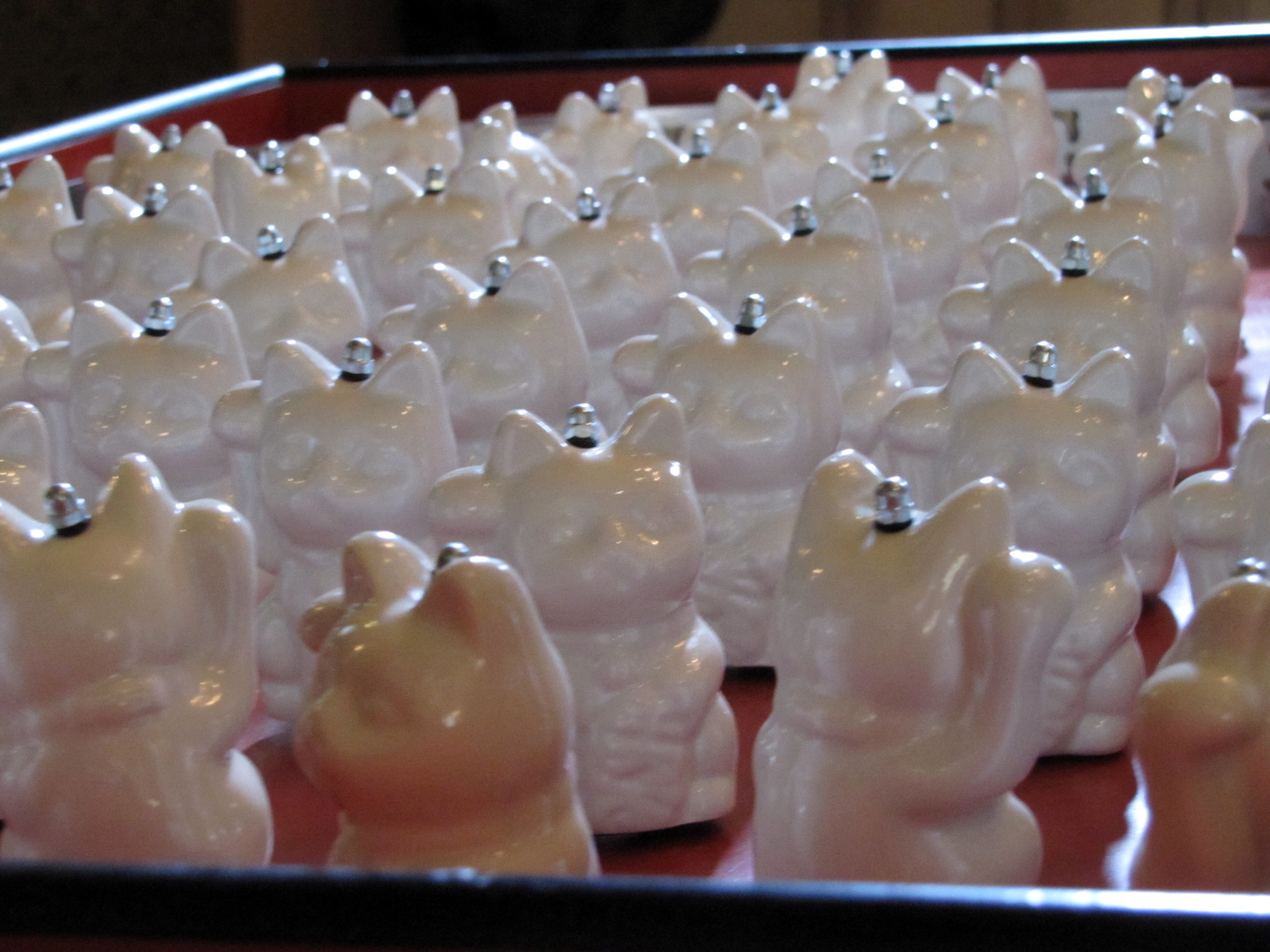
We’ll see how this plays out over time, but here’s the first one, a shot from the Katten Kabinet, a museum in Amsterdam devoted entirely to cats and cat-related art.

Bell the cats
"Bell the cats." At the Katten Kabinet, Amsterdam, 7 April 2010

(PS:  Today will be a double post:  Look for my travel journal, Day 5, later today.)

The Netherlands: Days 3 & 4

Day 3

Thursday, April 8, 2010

There were too many highlights today, and it’s hard to single out the second-best moment.  Was it the train ride south to the Hague, the countryside rolling by as we wrote postcards in the flashing sunlight?  The splendid Maritshuis museum, with its brilliant focus on the best of the classical Dutch masters, the crème de la crème—or, better still, the utter thrill of seeing Girl with a Pearl Earring in person, that illuminated, unreadable expression and the simplicity of the portraiture?  Perhaps it was the serene little plaza just northwest of the museum, the wide cobbled avenue shaded in tall trees, a thin, bent old man with cropped hair and a long, straight beard dragged across his chest as he stood with his cane to walk through the crowds of restless pigeons.  Or the fantastic Escher museum just off the plaza, with its quirky and unexplained crystal chandeliers in all conceivable shapes, from pipes and umbrellas to sharks and eagles to bombs and skulls.  Or better still the Escher sketches and prints themselves, virtually every major, recognizable work collected in one place, including the self-portrait in a sphere, the two hands drawing each other, the “Day and Night” tessellation, lizards crawling off their page and over a stack of books, the infinite staircase and the impossible waterfall, the optical illusions….  It might even have been the large woodcut print of Escher’s wife, the lines fine and open and lovingly wrought in her face, the attention to detail and the care in execution belying Escher’s devotion to his lovely wife.

But each of these, if it could beat out the others, would still be only the second-best experience.  That pride of place belongs to the morning, which Jennifer and I spent in the Central Bureau for Genealogy, attached to the National Archives in The Hague.  There, we worked with a man named Spaans to research my family history, and we found records related to the birth, marriage, and/or death of every major direct ancestor going back five generations, including my great-great-grandfather’s parents, his siblings, and his in-laws.  The biggest thrill of all, though, was rooting through the archive files, turning over page after page of newspaper announcements, birthday cards, shipping documents, and census records and then discovering my own grandfather’s name:  almost 30 years ago, he’d written to this same Bureau asking for information on his grandfather, and suddenly today, in my hand, I held a mimeographed copy of the Bureau’s response.  There was my grandfather’s name, his old address in southeast Texas, a description of his request, and the lengthy and detailed reply full of information about my great-great grandfather—my own grandfather’s grandfather.  I literally went cold, as though for a second not only my heart but even my blood had stopped, the circulation arrested in my veins, nothing capable of moving in this split-second echo of history.

I called my grandfather this evening to tell him the news.  He remembers the letter I found.  “Oh yes,” he said.  “Did you give them my regards?”  I assured him that I had, and that the man Spaans was glad to hear it.  In fact, when we pointed out to Spaans the weird historical ripple—my grandfather’s letter—he smiled and said, “There you go, then—you have all you need to know!”

I do, indeed, have all I need to know, because my grandfather is a meticulous (if sometimes creative) genealogist, and he’d complied all this information long before me and without the benefit of being in The Netherlands—he did everything by hand and by mail!  But it was fantastically exhilarating to be tracing his research myself, to put my hands on the actual records he’d long ago got copies of, to be in the country of my ancestors reading the records of my ancestors.  I feel a sense of place, of pride, here:  When I told Spaans my own last name, he chuckled and repeated, “Snoek—yes, that’s a very Dutch name!”  I felt a similar sense of pride in my Scottish heritage when we visited the Fraser gravesite on the battlefield at Culloden, and a similar sense of personal connection when we visited my dear great-aunt Flora and looked through her old photo albums.  But here, I am in my father’s father’s father’s homeland, myself in name removed from the Snoeks of Holland by only two generations.  The experiences here still me, both in the sense that I am arrested by them and that I am serene within them.

My great-grandfather was born in this country and shared his memories with his children; my grandfather shared the history with his children and grandchildren, and my great-uncles were able to return to this land and walk the earth of their father.  But my grandfather and my father have not been able to come here, so I feel like their own arm lent down the generations and stretched across the ocean: I am touching this land for them, and in turn I can tell the generations to come of our homeland, I can pass down the tales with first-hand details (and, because I’m a Snoek, perhaps a few embellishments) until some future descendant can one day make the journey and touch our land again.  In this way, our connection to the past is never broken, and I am both proud and thrilled to be a part of that.

11:15 pm


Day 4

Friday, April 9, 2010

Today was a deliciously lazy day, though we hadn’t planned it to be that way.  We started out with the ambitious mission to do all of the Van Gogh Museum and the Rijksmuseum, each a daunting, full-day adventure.  And the Van Gogh Museum was indeed a lengthy exercise in art, with three (and a half) levels of art plus an annex (known locally as “the Mussel” for its shell-like shape) showing a special Gauguin exhibit.  We got the audio tour on a whim, but it turned out to be excellent, with some fascinating insights, cool multimedia displays, and a whole separate section linking Van Gogh’s extensive letters to the artwork.  In fact, that was probably the coolest part of the museum experience:  The curators have organized the museum chronologically, arguing visually that Van Gogh was not the frenetic, spontaneous, violently independent artist popular culture has made him out to be, but instead was a serious student of his craft, a man who set himself a course of progress in his art and pursued it diligently and with great purpose.  The layout of the exhibit showed not only the progress of his talent and skill but also the direction of his study and the minor “courses” he set for himself, such as studies in stippling or a period mimicking Japanese painting.  To complement the visual argument, they have exhaustively culled Van Gogh’s thousands of letters, finding references to artistic craft or to specific paintings in progress and analyzing his comments for evidence of purpose in his study and his work.  They portray Van Gogh as a troubled but dedicated artist desperate to express a clear, personal vision independent of traditional schools of painting but also desperate for community in art, a man possessed of the need for company, for critique, for influence and audience.  The museum makes a compelling case, and their presentation makes the whole museum experience a brilliant, breathtaking tour through art.

Not that Van Gogh’s paintings needed much help in that area.  I went in hoping to see some of his famous self-portraits (I did) and the haunting Wheatfield with Crows, but I was surprised to discover some other emotional areas in his painting.  His sunflowers are, in person, more melancholy that I had expected, their somber yellows and ochers darkened by the story of why Van Gogh painted them:  He had displayed a sunflower painting in Paris, and heard that Gauguin had praised the work; when he finally convinced Gauguin to join him in Arles to live and paint as the founders of an artists’ colony, he painted a slurry of sunflowers, including his most famous ones, to decorate the small studio, only to have them all roundly dismissed by Gauguin and to see them become the subject of occasional taunting from Gauguin.  (The museum, displaying their Van Gogh bias, does not cast Gauguin in a very favorable light, though even reading between the lines, I have to admit he seems to have been a bit of a bully.)

The other surprise was a vivid painting of almond blossoms, the thin tree branches winding merrily through a deep, rich blue sky, the brush strokes masterful and delicate, not at all the energetic desperation in some of Van Gogh’s more famous paintings.  It’s a troubling work, because on first glance it seems so bright and happy, so full of natural beauty, of hope and promise.  And indeed Van Gogh painted it for his infant nephew, first son of his brother Theo; he writes in letters of the hope and cheerfulness he wants to share with the boy.  But the longer you look at the painting, the darker the sky seems, the more distant its depth, the less natural its light.  Something feels wrong: it’s too emotional, perhaps, too emphatic.  It’s as though Van Gogh himself weren’t quite convinced of the hope and happiness he wanted to convey, as though he’s painting the image to force those emotions into his own life.  It’s a disturbing but powerful piece, and for its complexity, it is a new addition to my favorites.

After lunch at the museum café, we strolled up the plein to the Rijksmuseum, wondering how we were going to fit in everything with only a handful of hours left in the Rijksmuseum’s daily schedule.  The guide books all mention the extent and variety in the collection, with whole wings each on Dutch history, foreign collections, sculpture, prints, and Asiatic art, as well as wings for 17th century painting, 18th and 19th century painting, and the Hague School.  However, the museum building is currently undergoing restoration (as is every major landmark in the city, it seems), so to accommodate the construction and protect the art, the museum has had to drastically reduce its exhibition.  Most of the former wings are condensed to single rooms of selected highlights, and some sections (like the Asiatic art, which I was looking forward to) have been cut entirely.  The truncation was a slight disappointment, I admit, but in the end it turned out to be a good length, because we were in and out of the museum in about 90 minutes, leaving us plenty of the afternoon to relax.  Plus, the museum continues (wisely) to display their most popular and prized paintings, including their handful of exquisite Vermeers, which was of course the highlight of the museum for Jennifer and me.  I don’t like to jump on bandwagons with art—I like the popular stuff but I look for the less popular, and on this trip Jennifer and I both became new fans of the saucy Jan Steen—but when it comes to Vermeer, the celebrated works truly are the best.  I enjoyed the quiet tone of the muted Woman Reading a Letter, for instance, but The Kitchen Maid is absolutely breathtaking, and despite the two and a half rooms of Rembrandts and his gigantic and much touted The Night Watch, for Jennifer and me, The Kitchen Maid stole the show.

So once we’d seen it, it was easy to walk back out into the sunshine fully satisfied, and we felt so good about our newly open afternoon that we decided to while away the last of the warm sunlight eating waffles and ice cream at a café in the plein, pigeons dancing on the few empty tables while teenagers flirted in the distance and, just on the other side of the outdoor seating area, a group of street musicians set up and began a lively jazz number.  We finished our treat and sat sipping coffee in the breeze, then when the lead horn player began weaving into the tables with a cup for tips, we dropped a few euros in his cup and strolled home.  We wanted to drop off souvenirs and regroup before our scheduled canal cruise—our second, but this one by candlelight through the city at night.

Halfway through the tour, we all hopped off the boat and made our way through the narrow city-center streets to a popular Dutch pub, The Old Sailor, for a complementary sample of jenever, the original Dutch gin from which all other gins derive.  It bears much more of the juniper-berry flavor and seems to pack a stronger punch, but it was a delicious end to our evening, and after we made it back to the boat, Jennifer and I sat back for a leisurely canal ride home, wandered back up to our B&B, and now I find myself too tired to write more.

Not too tired.  Not exhausted or weary.  Too… complete.  Today was a full and, in my book, a perfect day.

11:43 pm

The Netherlands: Intro and Days 1 & 2

As I did with my travel journal from Vienna last fall, I am going to start posting my journal from my recent trip to The Netherlands.  And, like the Vienna posts, I’m going to break them up by days, partly to keep the posts (relatively) short but also to try and replicate the journal-writing experience.

Of course, as you might know by now, our trip was extended by the eruption of the volcano in Iceland, so what should have been a ten-day vacation turned into more than two weeks.  Though the vacation had ended and I spent most of that extra week stranded in Amsterdam worrying about how to get home, I did continue to write in the journal.  Consequently, I have so many entries that I’ve decided to post them two at a time, just to keep the posts moving.  This is going to make for some lengthy posts the next week and half or so, but hopefully they’re interesting enough to keep people reading.

So, what follows is Days 1 and 2, our arrival on April 6 and our first full day in Amsterdam on April 7.


Day 1

Tuesday, April 6, 2010

Our first day in The Netherlands was long and exhausting, but also somehow uneventful and still exhilarating.  Which is perhaps what we’ve come to expect from travel by now.

The flight out was as it always is: time in the airport, time on a plane, some napping, some unexpected jolts awake to eat tepid airline food….  But when we landed in The Netherlands, something transformed for me.  This is the land of my fathers.  Those were the exact words that buzzed in my mind as we coasted down the runway, as I watched the flat, canal-rimmed and tree-lined landscape flash past.  I’ve always been deeply proud of my family heritage, but I’ve never been exclusively attached to the traditional paternal lineage of my family.  Now, though, the realization that my own great-grandfather—my father’s father’s father—once walked this land was a weirdly profound moment, made all the stranger because I’ve known this as long as I can remember; I grew up with the stories of my great-grandfather’s flight from Holland to a life at sea.  I’ve long loved all the aspects of my family history—the Scottish, the Cajun, and the “Chinese” (according to my grandfather) as well as the Dutch, and when I visited Scotland I was awed by that family connection, when I started writing my historical novel set in southwest Louisiana I was proud to have a relationship with the region.  But now, in Holland, there is a jolt of connection I have not experienced before.

When I texted my family to let them know we’d arrived, my father sent me an e-mail:  “Does your DNA sense a déjà vous?”  I think that’s exactly what I’m feeling today:  a tug at the genetic code, a familiarity somehow inherited.  And it’s not just me:  during this day alone we’ve already seen at least two copies  of my younger brother and a version of my cousin Kathy, and there are plenty of more general features on the streets:  the foreheads, the cheekbones, the height, all belong to my grandfather.

To familiarize ourselves with the city itself, Jennifer and I walked around our neighborhood for long stretches and ran some essential early errands, like strolling over to the Rijksmuseum to purchase a Museumkaart that will get us into dozens of museums all over the country (including a few in Hoorn, where my great-grandfather actually came from).  Later we wandered up a long street and across the Amstel to a subway station to buy our transit card for the week.  And otherwise we simply meandered about, crossing canals on little bridges, the canals like wide alleys or boulevards in water, packed with small canoes and skiffs and houseboats parked along the canal walls like cars on curbs; or admiring the gorgeous architecture here, both the distinctive leaning brick facades of Amsterdam homes or the vast modernist buildings for offices and museums; or else simply sitting in a park (Amsterdam is full of them!) and watching the passersby, enjoying a perfect spring afternoon in the sunshine with a breeze on our necks.  We watched lovers stroll hand-in-hand, college kids play pick-up on the basketball court, teens trying tricks at the small skate park, dogs splashing in a long reflecting pool while kids clambered over interactive installation art like playground equipment.

Now I’m back at our lovely B&B, weary after a long climb up three (and a half) flights of the steepest stairs I’ve ever seen but refreshed after a shower (in the most economical bathroom I’ve ever seen—a tiny room the size of an American half-bath, completely tiled floor and walls, and the toilet is literally inside the shower!).  Our host, Irene, calls her B&B “Between Art & Kitsch,” a reference not only to the names of her cats but also to her delightful décor, a blend of gilded chintz and bohemian flare, with plenty of painting both modern and classical to liven up the walls.  She also taught us some Dutch:  I tried out the long, formal “dank u wel” for thank you, and after she congratulated me on the effort, she explained that the shorter “bedankt” works just as well.  So I told her “bedankt,” and she replied with the second phrase she taught us:  “alstublieft” (you’re welcome, though the guide books also suggest it can be used for please and something like “here you go,” when giving someone something).

She said she’d quiz us over breakfast in the morning, and since it’s nearly midnight Abu Dhabi time and therefore late for me, I’m off to rest for the adventures of tomorrow….

12:05 am (April 7), Amsterdam time


Day 2

Wednesday April 7, 2010

Today started with cold water.  It’s not really worth mentioning, except that this time of year back home in Abu Dhabi, our water begins to heat up all on its own, just from the sun, so even our cold tapwater comes out lukewarm.  Here in The Netherlands, even in spring, the water is running frigid, and it made for a bracing wake-up as we washed our hands and faces.  But it certainly woke us up for the day.

The weather helped, too.  The springtime is unbelievably perfect here, precisely my idea of spring weather:  brisk morning, warm sunshine and cool breezes, flowers everywhere, even downtown.  It’s hard to imagine a more ideal spring day.

Which is why we were happy to walk so much today.  We started with a long hike out to a post office (which wasn’t there anymore, prompting a second hike the other direction to find the next post office), and then we drifted north across the first canals into the city to visit the Katten Kabinet, a quirky little museum/private collection of cat-related art:  sketches, paintings, statuary, advertising posters, and real cats, who lounge around on the furniture like exhibits themselves and who certainly didn’t mind all the petting.  Among the highlights:  an original (rather than a print) of our Chat Noir poster, a disturbing painting of a sorcerer conjuring a demon cat from the clouds over a debauched city, a neat little drawing of cats by Manet, and a weird little sketch of a cat by Picasso (which he disliked and so X-ed out!).

Afterward, we set out on a boat tour, which was glorious.  I think this should become a thing for us.  We took a seal-watching boat tour around a bay and a fishing town in Prince Edward Island, and a river boat tour of the architecture in Chicago.  Now a tour of Amsterdam’s canals.  Today was a perfect day for it, too—with the warmest temperatures predicted for this week but still a cool breeze through the open windows, and absolutely awash in bright spring sunshine, we couldn’t have asked for a more picturesque introduction to the city, or a better vantage.  Scores of bridges in every shape and design, bright modern architecture alongside the famous leaning townhouses, a water-level view of the merchant ship Amsterdam docked outside the NEMO museum—even a heads-up on the kinds of lines we can expect when we visit the Anne Frank House (they were l o n g! even before noon).

After such a leisurely drift through the city, we decided to keep the pace slow and just meander the streets in the direction of the city center, figuring we’d act like seasoned travelers and just pop into the first restaurant that appealed to us and grab a little lunch.  Sure enough, after several blocks Jennifer spotted a delightful little tearoom called Pompadour, with hip but comfortable table settings, a familiar atmosphere, and absolutely splendid food.  We split a delicious homemade tomato soup, then Jennifer had a sandwich of brie, grilled asparagus, and paraham (like Canadian bacon but in strips), while I ate a feta, spinach and tomato quiche.  Add the pot of tea we shared and it was a perfect lunch.

But this is what we do on vacation, it seems.  We are only adventurous to a point—we’re willing to try almost anything and we do a fair job of rolling with unexpected detours (we’ve made “it’s an adventure!” our joking response to almost any mishap), but when we find something we like (a place that feels inviting, comforting, right), we aren’t afraid to come back again and again.  Sure enough, as we left, Jennifer said without my prompting, “I really liked that place.  We might have to come back!”

After lunch we toured the fascinating Amstelkring, a full-blown Catholic church tucked away inside the attic of a canal-side home, a leftover from the days when Protestant Amsterdam outlawed Catholicism.  It’s under restoration at the moment (as is every museum and monument in the city, it seems!), so we missed out on some of the more impressive sights, but the fact of its existence—what seems a smallish but complete church, including chapel, nave, altar, huge organ, confessional, and the priest’s quarters—is practically miraculous.

We stopped for milkshakes, and then we moseyed on across a few canals to find a small public library, tucked away in what feels like a private home.  It was a delightful moment, keen as we are to visit libraries in any city we travel to, and this one was full of friendly people, engaged readers, homey nooks and side rooms, and distinctive painted ceilings left over from when the library was a home.

After a few more quaint streets and beautiful little canal bridges, we stopped off at a hip terrace bar and restaurant—another spurious but fortuitous find from Jennifer (the Cafe de Jaren, a terrace café along one of the canals)—and enjoyed a terrific dinner of lasagna (for Jennifer) and giant ravioli (for me), with a brownie and homemade chocolate ice cream for dessert, and then we hopped a tram back to de Pijp, our home neighborhood.  By then night had settled over the city and a light rain had started, a perfect cap to a long spring day.

One of the most interesting things about today was the observations about language I got to make.  Jennifer and I are both language nerds—during lunch, we had a conversation about the Dutch word for gin, jenever, which I teased she was named after; Jennifer said her name meant pure, and I said that was because gin is clear, but she insisted her name is of Welsh origin (I knew she was right, but I like to make lame jokes).  I said that I actually thought jenever might be related to the botanical name “juniper,” the berries of which are distilled to make gin.

Then, toward the end of our lunch, I overheard a girl ordering chocolates from the Pompadour—she had a vaguely francophone accent, though I couldn’t place her as French, Belgian, Swiss, or something else entirely—yet she was ordering her chocolates in English.  I recalled that yesterday, when we toured the Heineken brewery, one of the guides opted to speak in English even though we were the only native English-speakers in the room (a French woman in the crowd translated for her children; the guide clearly understood French because she kept responding to French questions in English, but she also apologized for being unable to speak it well).  In fact, most of the tours here are done in English, and when they’re done in other languages (our boat tour was also in French and Italian), the English comes first.  And in the restaurant where we had dinner, we overheard a conversation between three women at the table next to us—all three sounded European (one said she was born in Romania), but all three spoke in English, as did the young guy who later came over to flirt with them.  I’ve heard plenty of other languages and accents (Amsterdam is a very cosmopolitan city), but I’ve also noticed that when people of different nationalities talk here, they tend to use English as their common language.  Such a common tongue is usually called the lingua franca, a reference to a time in which French was the international language, and I remember reading many a novel in which travelers touring continental Europe would apologize for their poor German, but it seem English has truly replaced both, even in cultures of polyglots.  There are plenty of common languages to go around here in Amsterdam, but English, it seems, is the en vogue tongue to use.  (Lucky for us!)

Tomorrow, we head to Den Haag to research my family history, see a few museums, and tour a village in miniature.  And I am WAY overdue for some sleep.

But before I sign off, I want to add that I was right:  I’ve looked up the origin of the word jenever, Dutch for gin, and it does indeed come from “jeneverbes,” the Dutch word for juniper berries.

My nerdom reins supreme!

12:46 am (April 8), Amsterdam time

The good times are killing me

One of the relatively minor frustrations about this travel freeze is that as long as we’re in limbo, I feel the only productive use of my time is to research alternate modes of travel or to monitor the current travel updates.  It’s a foolish fixation, because I know by now that the other modes of transportation are prohibitively complicated and/or expensive, and there are usually several hours between updates.  I spend some of those hours working on my travel journal or updating friends and family about our situation, but I’m doing none of the writing I’d planned to do the second half of this month.  Script Frenzy is effectively a wash.  My fiction is on hold.  I’m not doing much to promote National Nonviolence Week this week (though my sister is trying to take up the slack, and thanks to her for that!).  I’m not even reading like I want to.  I’m truly adrift.

We writers and academics love to ask each other what books we’d want with us if ever we’re stranded on a desert island, and we love offering clever, literary answers:  Jane Austen, Cormac McCarthy, the Oxford English Dictionary, the Dhammapada.  But we’re lying to ourselves.  I’m marooned in Amsterdam, surrounded by libraries and bookstores and with near-constant access to the Internet, and all I want to read are travel guidebooks, train schedules, or a bright big airport monitor with my flight number and the words “Now boarding.”