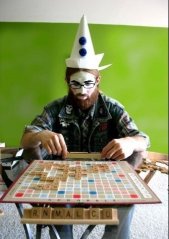
“You’re into some kink.”

This is actually the image they used for the post at The Date Report. And it probably says more about me than the books do that as soon as I saw Belle up on that ladder I started singing “Belle (Little Town)” in my head. Where’s the shot when the Beast gives her the castle library as a gift? I need to watch that movie again, right now….

There’s a funny post from The Date Report making the rounds on Facebook today. It’s all about “What Your Bookshelf Says About You To A Date.” The piece is short and definitely intended as humor, but it’s kind of fun and not entirely untrue.

Of course, tracking what my books say about me to a date is somewhat difficult, because A) I haven’t actually been on a date with anyone but my wife in fifteen years (we just went on a date last night, actually), and B) since my wife is a librarian and I’m an English professor and a writer, we have a pretty diverse library.

But whatever. All in good fun, yes? So here are the handful of book combos that apply to me, and the things those books apparently say about me.


Alice Munro and Raymond Carver: You’re quiet by nature, but intriguing if people take the time to get to know you.”

Everyone who knows me is cracking up right now. “Quiet by nature”? Several years ago, someone gave me a copy of the children’s book The Loudness of Sam, as though it were my biography! But man oh man, I do love Alice Munro and Raymond Carver!


Well-worn Austen and Bronte: You think men aren’t what they used to be. If you’re a dude, you’re trying to impress the ladies.”

Yep. Sort of. The Austens and Brontes are all my wife’s, but I’ve read about half the Austens and plan to pick up Charlotte Bronte this summer. Also, we have a cat named Bronte, so that ought to tell you a lot right there. And my wife is my Lizzie, so that whole Darcy-is-the-ideal-man thing works the other way around, too. 🙂


Flannery O’Connor, Don DeLillo, Cormac McCarthy: You get moody and dark after sex.”

What if it’s all of McCarthy but only one DeLillo and I somehow don’t own any O’Connor even though I love her? Can I have the dark and moody as well as the sex but not necessarily in the same sentence?


Unadorned stack of Hemingway: You can handle your liquor, and you’re almost definitely a good lay.”

Now we’re talking!


* The title of this post is also from the Date Report piece: it’s their judgment on someone who owns a lot of Palahniuk. I’ve read a few but I only own one. That one’s autographed, though….

“And the whole town’s waitin’ just to hear me yell”

Eirik Gumeny will not stop drinking this cherry limeade until you pre-order one of his books. And even then he might not quit.

Over at Jersey Devil Press, we have a whole mess of cool projects in the works. We’re working on a special Halloween-themed issue of the magazine, we have the special novella issue coming out later this summer, and we have not one but two books coming out later this year: Eirik Gumeny’s Exponential Apocalypse: Dead Presidents and Ryan Werner’s maybe-titled-but-technically-still-untitled story collection. [UPDATE: After much deliberation and beard-tugging, Ryan Werner finally settled on a title for his upcoming book: Shake Away These Constant Days.]

To launch those two books, we’ve been running a Kickstarter campaign. It’s been going well so far, but we’re still short of the goal, and you can help us get there. This sounds like we’re running a pledge drive. We’re not public radio (though I love public radio, and yes, I’m a member of Oregon Public Broadcasting). What we’re offering is, for the bargain price of a mere $5, an opportunity for you to patronize the arts. Like rich people used to do back when people cared about the arts, except you don’t have to be rich. You just have to skip your Starbucks and make your coffee at home today (which is probably a good idea anyway).

Ryan Werner writes all his first drafts in Scrabble tiles, which is why most of his words are shorter than seven letters.

Or maybe you’re a good old-fashioned red-blooded Capitalist and you don’t like giving away your money unless you can get something in return. Not to worry: we’ve got you covered! For just a few bucks more, you can simply use the Kickstarter campaign to pre-order your book (or both books, if you have some extra cash and like saving money).

And the swag gets cooler from there. We have a whole list of awesomeness we’re willing to dole out for people who support the books. So if you like literature and alcoholic gods and rock and roll and werewolves and sex and cuss words and everything else that’s cool, head over to the Kickstarter and sign yourself up.

But hurry! There are only 26 days to go….

134 Short Story Links in Honor of Short Story Month 2012

Raymond Carver bibliography
If you haven’t read Raymond Carver’s “Little Things,” you’re not yet fully human. (Photo credit: Wikipedia)

Gay Degani, over at Flash Fiction Chronicles, wanted to put together a list of 100 great flash fiction stories in honor of National Short Story Month in May. Instead of the 100 she was looking for, she got 134.

I suggested three of the stories on the list, all really killer examples of the form. It was a very cool idea and a terrific effort of Gay’s part. Go check it out: 134 Short Story Links in Honor of Short Story Month 2012.

And yes, chances are good that we missed naming a gaggle of awesome flash. I got shy about submitting too many names, or else you’d also see David Maizenberg on the list, and Jonis Agee, and Ron Carlson, and yt sumner, so on, and so on. But now that the list is out there — and already longer than 100 — feel free to drop more names and titles into the comments!

A Writer’s Notebook: revision (Civil War novel)

As some of you know (or as a lot of you know — for some reason I racked up more then 400 visitors yesterday!), I’ve had the 19th century American South on the brain lately, partly because I was so wrapped up in watching the Hatfields & McCoys miniseries on the History Channel and partly because I’ve been working on my Civil War novel set in Southwestern Louisiana.

So I thought today I’d share one of the new scenes I added to my book today, with a little explanation of where it’s coming from and why it’s in here, after the sample.

Inside the hut, she dropped the bucket so the water slipped over the rim to seep in the earthen floor. The woman glanced sideways but kept at her work sharpening a long kitchen knife. You took you a while, she said while the girl reached into the ragbin to wipe her brow.

Thought I saw a gator, the girl said. Just a hump of old tree, but I didn’t want to risk it, so I stood still a while.

Too bad it weren’t one. Gator’s good eating and would set us up for a week.

I reckon they ain’t no more trouble to kill than a man, but I don’t know as I’d like to find out.

Shoot, they just like a man. Get a hold on they mouths and they can’t do nothing to fight you off. The woman tested the edge of the knife and wrapped it in an oilcloth to set aside. My Alphonse used to wrestle gators out the yard ever morning just so’s little Remy could go outside for his chores. They was one morning I woke to Remy shaking in his sheets and Alphonse stalking the house with a lit candle in one hand and that they knife in the other. She pointed to the oilcloth. Took me a minute but then I heard it, this shuffle and knock on the floorboards but no one up save Alphonse and him barefoot and tiptoeing. Thought for sure it was a ghost ambling about the house. After a while Alphonse went out to the porch and peered his head under the floorboards, like to break his chinbone on the wood coming back upright he jumped back so fast. They was a gator right under the house. And Alphonse, he went right on under they after it. Bravest man I ever saw, but really, weren’t no trouble if you knew how to handle them gators like he did.

I’m surprised Remy was so scared. He seemed about as fearless a man as I know of, and I seen him chase after a gator or two myself before he got called up.

That boy was his papa to a tee, looked up to him with a mighty pride. Wanted so badly to be like his papa that he took to wrestling black snakes just for practice. Ever day came in smelling to high heaven.

I sure would like to have seen that.

I wish you could see him still, the woman said.

That night the girl lay awake again, this time envisioning Remy, full grown and shirtless in the heat of day, grappling with long coils of serpents thick as his muscled arms, black as his hair. Alligators hissing and snapping around him like an audience. The sweat down his back. The black snakes gone pale, her own arms and legs now, his hands on her back, his chest hard and hot against her breasts. The visage before her not quite Remy’s anymore, cast in shadow that she mistook for stubble until is spread over his whole face and the breath on her neck was someone else’s. She wasn’t thinking of Buford, but he was the nearest thing she had, and in the end she knew she needed him, or something like him. She rose carefully and sneaked across the brake again, and when she came to his shack she didn’t even knock at his doorframe. She just slipped in. He torso jumped from his tick like a spring trap and he sat panting with a knife flashing in his hand, but when he saw her he set it aside gently on the floor and he stood and smoothed his hair, straightened the creases in his nightshirt.

I’m right glad to see you. Maam.

Shut up, Buford. Then she kissed him.

The two things that have always been solid about this book are the plot and the theme. But going back through the story, I’m seeing how thin some of the characterizations are. Why are these people the way they are? What are their backgrounds, and how might those backgrounds hint at their futures? There are a lot of holes I want to fill and characters I want to flesh out, but my three primary concerns are the main characters: I want to add more to Buford’s trauma from the war and, more importantly, the trauma of seeing his best friend (and the husband of the woman he’s always pined for) get killed. I want to explore the woman’s emotions regarding the loss of her son (on the one hand, she lost him the day he left for the war and so she’s long been used to the idea that he might be dead; on the other hand, she is almost totally alone now, with just her widowed daughter-in-law to cling to). And I want to grapple with the girl’s conflicted emotions over wanting Buford (or, perhaps, any man, after so long alone) but having as her only option the man who took her husband into battle and saw him killed.

And, in working up some of those inner conflicts, I want to play with their backstories, too, to make each of these characters a bit fuller and more human.

This scene addresses some of those issues, providing a background scene for the girl’s husband’s childhood and giving her a memory she’d never heard from Remy himself — a ploy the old woman is using to try and guilt her daughter-in-law into sticking around — while inadvertently setting up a sexual fantasy that drives her into Buford’s arms.

The story of the gator under the house is loosely based on a story about my maternal grandfather as a boy, which my grandmother wrote down about thirty years ago as part of her informal memoirs. In my grandfather’s story, it was a goat under the house (the family thought the “ghost” was a woman wearing heels), and it was my grandfather, still a small boy, who got sent under the house to wrestle out the goat.

In fact, maybe next week I’ll share some of those stories by writing up (and editing a bit) my grandmother’s memoirs! 🙂

Hatfields & McCoys & scapegoats & baptisms

(UPDATE — 8-31-2014: I mentioned while writing this series of posts that I was revising my Civil War novel at the time and was watching this miniseries for atmosphere. That novel I was revising is Hagridden, and it’s out now from Columbus Press. If you like this miniseries, you might like that novel. Click here for more information!)


So, the series is over. The feud is ended. The results are…. okay.

Let me just start this by warning you that there be spoilers below. It’s hard to have a spoiler in a historical drama, I know, but I’m going to give away not only what happens but also how director Kevin Reynolds handles the events. Because he makes some interesting and, to my mind, troubling choices in the end.

But before all that, let me say once again how awesome Tom Berenger is in this series. Up until the final moments of his (SPOILER?) death scene, he rocks this film, and if his acting weren’t so brilliantly underplayed, he’d have stolen this whole series. (How unfair it is that the best acting is the acting you don’t notice?)

His character’s death, actually, is a good example of how, in some ways, the story is best paced in this last episode. The violence and the motives for violence are explored in their most even balance here. This isn’t to say it’s perfect — the series gets a little heavy-handed in the last half hour — but it’s the best they’ve done.

But it’s that heavy-handedness throughout the series that has bothered me the most. I know that all history is in the eyes of the beholder (and the words of the victors), but even considering that, I was a bit surprised by how much editorializing this series did considering it was a History Channel production.

I pointed out in the last post that the series had been playing on types rather than deep characterizations when it generally portrayed all McCoys as pious and indignant and the Hatfields as basically the mob. I’ve been aware, too, that one Hatfield hanger-on in particular, a young man called “Cotton Top,” had been written and was being played as mentally retarded. What I didn’t realize until last night was that “Cotton Top” was the nickname — not often recorded in the blander histories of the feud — for Ellison Mounts, the man whose trial and hanging for murder effectively ended the bloody warfare.

Ellison Mounts (click the photo to visit an excellent account of the trial and hanging at the blog Appalachian Lifestyles, which borrowed this photo from the Pike County Tourism, Convention and Visitors Bureau).

It seems to me a conscious decision to focus on Mounts’s nickname rather than his given name in order to disguise his famous role in ending the feud and so give even the (casually) informed viewer a bit of a surprise at the end. As a narrative device, it works. But what bothers me is the extent to which they focus on the character’s mental disability. The historical records I’ve seen, if they mention a disability at all, mostly refer to Mounts as “dimwitted” or easily manipulated. The term “dimwitted” is, of course, more appropriate in context, considering that mental retardation wasn’t really an accepted term back then (and is problematic today). But “dimwitted” is still a far cry from the derisive “mushhead” most characters in the series use when referring to Cotton Top.

And the series doesn’t stop with simply playing on (or exaggerating) Mounts’s mental disability. They also work in moments like Mounts whistling a jolly tune to content himself in the midst of the siege on the McCoys’ home, or shooing rabbits away from a battlefield. In the historical record, Mounts’s last words on the gallows turn the blame on his kinsmen (and indeed, there is a general consensus that the murder he hanged for was committed by someone else); but in the series, the filmmakers take pains to emphasize his line “They hornswoggled me with love,” the last word all but cut off by the snap of his neck in the noose. These are blatant attempts to rouse our sympathy and make us weep at the senselessness of all that violence. It’s a storyteller’s device (and a fairly broad one at that), but it feels out a place in a historical account.

Even more heavy handed is the treatment of Randall McCoy and Anse Hatfield: for all the careful, stock-character emphasis on McCoy’s righteousness and Hatfield’s mob-bossery (I just invented that word), I should have seen the sudden role-reversal coming. Because sure enough, at the end of the series, McCoy is a bitter, hateful drunkard out for blood even as he regrets the conviction and hanging of “the one person who doesn’t deserve it.” And Hatfield takes his family into a cool, quiet copse in the hills to read what is essentially a sermon on the importance of peace.

Actually, I would have been perfectly happy with this ending, because the two scenes were well written and very well acted: in the jail cell just before the hanging, McCoy drunkenly tries to get Cotton Top released, but you can see in Bill Paxton’s face all the confusion of the moment, feeling sorry for Cotton Top and regretting his role in the arrest and conviction but hating the Hatfields all the more for making him doubt his revenge. It’s a beautiful piece of acting. And in the woods, Kevin Costner does a fantastic job of expressing the utter exhaustion of all the years of hate and warfare. Combined, the two scenes serve as a terrific reminder of the early Civil War scene from the first episode in which Hatfield, tired of war and the cost in human life, decides to desert the army and go home while McCoy, honor-bound to fulfill his duty to God and country, twists and frets over whether to bring Hatfield to justice or let his friend go home.

Talk about redemption — or self-aggrandizement! (This photo is of “Devil Anse” Hatfield’s grave, complete with life-sized monument to Anse Hatfield. It’s credited as being in Sarah Ann, West Virginia, Sept. 22, 1944. (Thanks to Bob in the comments for clarifying that!) Click the link to visit The Civil War Album’s page on the Hatfield-McCoy feud.)

If it had stopped there, it would have been terrific. But it doesn’t. For one thing, we need all those loose ends if not exactly tied up then at least burned off, so we get various bits and pieces about who wound up marrying whom or dying alone or living out bitter days trying to forget the feud. And then, in case we’d forgotten that excellent role-reversal from earlier, the filmmakers beat us over the head with a reminder: literally the last two scenes in the series are of McCoy, white-bearded and alone in his cabin, mad with grief and a bitter heart, accidentally setting himself on fire and hallucinating one final show-down with his nemesis Hatfield; and then Hatfield, long-bearded and hung with a clean white shirt, being baptized in the river and thereby redeemed. It even ends on a freeze-frame.

Why? It feels so forced, so manipulated. A good half-hour after Cotton Top gets scapegoated (and by the way, I love the period/regional term in the film, “Judas goat,” even if it does seem a bit inaccurate — a Judas goat gets spared, not slaughtered), we ourselves get manipulated into viewing the events through one lens alone. It’s part of the filmmaker’s job to present us with a perspective, of course, but it’s a part of an artist’s job to offer us more than one perspective, more than one possibility. Even Powers Booth, who narrates the obligatory text-over-screen afterward about the feud’s place in history, seems strong-armed into so flat a presentation, delivering the last words of the film in a deadpan monotone, as if bored and ready to get the film over with.

Still, I got what I wanted out of the miniseries: a lot of wonderful historical details, especially in the language (I’m a sucker for dialect), a lot of violence and heartbreak, and some damn fine acting. If they ever decide to re-edit this into a directors cut (and right now I’m unsure whether a shorter or a longer version would be better), I might even decide to buy it. I’m glad I watched it. But I’m also glad it’s over, because I want now more than ever to get back to revising my own violent historical narrative!

Writing desk, here I come.

Hatfields & McCoys — episode 2

(UPDATE — 8-31-2014: I mentioned while writing this series of posts that I was revising my Civil War novel at the time and was watching this miniseries for atmosphere. That novel I was revising is Hagridden, and it’s out now from Columbus Press. If you like this miniseries, you might like that novel. Click here for more information!)


The Hatfield Clan of the Hatfield-McCoy-feud.
The Hatfield Clan of the Hatfield-McCoy-feud. (Photo credit: Wikipedia)

I felt the first episode of Hatfields & McCoys was uneven because in some ways it felt too rushed and in other ways it felt too slow. I said I hoped that the second episode would feel more engaging because of the great emphasis on action (read: violence). Unfortunately, it felt too violent, too active: it focused so heavily on advancing the action and the deaths in the feud that it didn’t pay enough attention to the psychological underpinnings of the story, to the motives behind the killings. And for me, that’s the most important part. It’s good action to show all these people dying, but it’s good narrative to show — not to explain, but to illustrate — why people are killing and dying the way they are.

To be fair, we do get hints here and there. In one of the most pivotal moments of the bloody feud, we get to watch as what starts out as taunting and then rough-housing escalates rapidly and naturally into deadly violence, which then unleashes a horrible but weirdly understandable retribution.

But for much of the second half of the second episode, violence simply begets violence, often just for its own sake, and the resulting story feels somehow both cheap and aggrandized. The scenes in which Nancy McCoy’s brother is hunted down and killed, or in which a pair of McCoy snipers get sniped themselves, feel inserted rather than organic.

Which raises another concern: the characters themselves can often come across as stock. This is most evident when looking at the whole families rather than at individuals, but generally speaking, the McCoys are painted as legalistic self-righteous prudes while the Hatfields are essentially a hillbilly mafia. It’s too easy.

But the episode still feels satisfying because of a few key points. For one thing, the acting is superb. I could take or leave Johnse Hatfield or, for that matter, Roseanna and Nancy McCoy (though the actress playing Nancy has a couple of excellent moments in this episode). But Bill Paxton is terrific, and the woman playing his wife is flat-out unearthly. Kevin Costner is turning in one of the finest performances of his career in this miniseries. Powers Booth is, as always, delicious. Generally speaking, the acting is absolutely first-rate.

Chief among all the performances, though, is Tom Berenger’s. This is a true story: I was almost half an hour into the second episode by the time I started wondering which character Tom Berenger was going to play, and when he’d turn up on screen, before I realized that he’s playing Jim Vance and has been on screen practically from the very beginning! He disappears completely inside his character, not so much playing or even inhabiting Jim Vance as curling up inside the character and letting Jim Vance do whatever he damn well pleases. It’s a careful, studied, nuanced, stunning performance.

There are also some nice moments of directing and scripting. They seem a bit obvious, but in an episode starved of subtext, they stand out as at least helpful. I particularly liked the scene when Devil Anse Hatfield is hunting turkey and then finds himself hunted by McCoy snipers. The scene when Hatfields take custody of McCoy murderers, through legal arguments and threats of lethal violence simultaneously, is harrowing, and the execution scene in the woods is haunting.

But that’s all the series is giving us in this second episode: scenes and moments and a few stand-out performances. It’s enough to keep me on through the last episode, but I’m hoping for a stellar finish or else I might wind up disappointed in the series overall.

Photo blog 83

“Oh, how my momma needs a comma.*” Punctuation art at the Jeld-Wen Field stop on the Portland MAX line, Portland, OR, 28 May 2012.

My wife and I went out to the Rose Gardens in Portland for Memorial Day. On our way home, we transferred from the bus to the MAX light rail, and I spotted these punctuation marks in the stone. My wife kept wondering where the semi-colon was, but then she realized it was in the form of a bench, and suddenly we were seeing the punctuation marks everywhere! The whole stop was set up with these.

I don’t know.

They even had parentheses bracketing a manhole.

Because “manhole” is the kind of thing you say under your breath.

I was having lots of fun just snapping photos, but when I spotted the hyphen, I had a brilliant idea:

Snoek – hyphen – Brown!

Just in case anyone is unsure how to spell my last name**.  🙂


* The title I chose for this series comes from a line in a poem my wife wrote in college.

** Just to clarify: Yes, my last name is Snoek-Brown. My family name is Snoek, and my wife’s family name is Brown. We both hyphenated our last name. She’s a Snoek-Brown, and so am I.

Hatfields & McCoys (and play-pretties)

(UPDATE — 8-31-2014: I mentioned while writing this series of posts that I was revising my Civil War novel at the time and was watching this miniseries for atmosphere. That novel I was revising is Hagridden, and it’s out now from Columbus Press. If you like this miniseries, you might like that novel. Click here for more information!)


I have all sorts of reasons for completely geeking out over the announcement that The History Channel is airing a three-part miniseries on the Hatfields and the McCoys, the first episode of which I watched last night. For one thing, I’ve always loved epic, historical tales of violence, blood feuds, and the deep-rooted psychological aftermath of the American Civil War in the South. It’s why I love Cormac McCathy’s Blood Meridian. It’s why I love Tom Franklin’s Hell at the Breech. And this story of two warring families in Appalachia is the granddaddy, the real-life origin of what has become an American epic myth.

For another thing, I’ve always loved the Civil War, and while the story of the Hatfields and the McCoys is mostly a late-19th century family war — a word that feels heavy but is apt, since these two families almost single-handedly reignited the Civil War — much of what drove a rift between these two families had its origin in the Civil War. Ultimately, the story is one of self-righteous pride, family honor, human psychology, star-crossed lovers, and socio-economic politics, but one can’t fully understand the conflict that unfolded across generations without looking at the Civil War.

This is a point the miniseries is careful to hammer home, starting the series in the middle of a Civil War battle and, before the first commercial break, setting up issues of wartime honor, desertion, and inter- and intra-familial conflict — the old “brother against brother” line that comes up so often in reference to the Civil War.

And then there’s the real motive for me wigging out: I’ve set aside all my other fiction writing to focus heavily on revising my own Civil War novel. I’m roughly one-fourth through that revision at the moment, and as part of my revision process, I’m doing a LOT of side research to make sure my details are right. For example: a few days (and several pages) ago, I found a sentence in my book describing a young woman waking early and dragging on a dress over her men’s longjohns. I’d put it in because she’s poor and isolated in the Louisiana marsh and doesn’t much care for fashion — she’ll wear whatever keeps her warm, and since she’s been killing stray soldiers for a living, she had some old men’s longjohns handy. But re-reading that line, I realized I’d probably better check the details of mid-19th century fashion, and sure enough, I discovered I had to change the sentence. For one thing, longjohns weren’t even an item of clothing until after the Civil War (the first patent for them was registered in 1868). And, even more interestingly, they were originally women’s underwear — men didn’t start wearing them until the late 19th century.

That sentence also made me realize I’d never paid much attention to the women’s wardrobe in the first few drafts of the book — I was more focused on getting the story down and refining the characters — so now I’m double-checking all the references to their clothes. (I’ve learned, for instance, that the women in my book almost exclusively wear “wrappers” but usually don’t bother with the aprons traditionally worn over those dresses, choosing instead to simply cinch the dresses with belts from stolen military uniforms.)

Watching Hatfields & McCoys, I’ve been keeping an eye out for period(ish) details like clothes and tools, as well as tuning my ear to some of the colloquialisms. There was a wonderful moment when Johnse Hatfield is professing his devotion to Roseanna McCoy, and he exclaims to her, “I tell you true, I love you,” which thrilled me: I’ve used the expression “I tell you true” in my own Civil War novel, having come across it as an accurate colloquial phrase of the period. I had thought it was regionally located in the South — in fact, I came across it in a list of expressions from mid-19th century Southern Louisiana — but apparently, if the History Channel is accurate in its dialogue, it extends not only out of the deep South and up into Appalachia, but also beyond the Civil War and into the late 19th century.

Not that there isn’t a history of overlap in time and geography when it comes to Southern dialects. I remember writing a college research paper on hillbilly dialects and coming across the term “play-pretty,” meaning “toy,” and being surprised because I knew the term intimately — it’s what my grandmother always called the toys I played with as a kid. I was surprised because my grandmother was born in Oklahoma and grew up in Louisiana, neither place anywhere near hillbilly territory. But then I learned how hillbilly dialects of the southern Ozarks would extend a bit west of Arkansas into Oklahoma and a bit south into northern Louisiana, and my Granny — my grandmother’s mother — is from that area, too. So it makes sense.

(I haven’t heard it yet, but I’m really hoping someone on tonight’s episode uses the term “play-pretty”!)

As for the miniseries, it’s a bit uneven so far. A friend of mine from high school remarked on Facebook that he was having trouble following the story, and I can see why — it rushes through a lot of key elements of the story, cramming in the set-up of the feud, which smoldered slowly for twenty years before erupting into the worst of the violence, into just the first episode. How they’re going to stretch out the remaining few years over the next four hours I don’t know. Perhaps the pacing will be better now that we’re in the thick of the violence and aren’t dealing as much with the political and psychological underpinnings of the story. But that first episode was definitely uneven, and I had done a lot of reading ahead of the series to bone up on my history; I can’t imagine how confusing it must have seemed to someone coming into the story cold.

The writers do gloss over some major elements of the story (and make at least one glaring stand on the story — historians remain unsure who exactly killed Harmon McCoy, but the miniseries puts the blame squarely on Hatfield relative Jim Vance). But the acting is superb, and the mythology remains compelling however it gets told, so I’m looking forward to tonight’s episode!

New publication

Issue 2 of Scintilla Magazine (which some killer cover art!).

Just a quick note to say I have a new story out in Scintilla Magazine, which just went live today. Huge props to editor Timothy A. Lepczyk for making the issue look so awesome!

I mentioned a week and a half ago that this story actually came to me as a suggestion from a coworker, but to be honest, it’s an amalgamation of a lot of things, including a couple of kitchens I used to work in and some people I knew in high school and in college, all of it kind of mashed together and re-imagined. (No, that character in this story isn’t you.) But the thing about the pregnant girl is the part of the story that someone else suggested. (It’s supposed to be a true story!)

Also, in case anyone’s into connected stories, this story is one of a trilogy of connected stories, which live in a little chapbook I call There Is No Other Way to Worship Them. I haven’t put out the chapbook yet because I’m still looking for a home for the third story, but if you want to read the first story in the trilogy, it’s up at SOL: English Writing in Mexico.

A Writer’s Notebook: literary retrospective

This week, another post based on a tutee’s assignment — this time for a high school student writing a final term paper. I’ll explain the assignment below (it’s an awesome one — this tutee of mine has a very cool high school English teacher!), but I ought to explain up front that I’m short-cutting my own work, because this is an updated excerpt from an essay I wrote back in grad school. It’s still a hot mess, though, so I’ll call it a work in progress and pretend it’s a writing exercise (I did revise the thing, after all).

In Tom Franklin’s “The Hunting Years,” which serves as the introduction to his story collection Poachers, he writes about his childhood as an unenthusiastic hunter. “For some reason, I never wanted to kill things,” he writes, “but I was never bold enough to say so. Instead, I did the expected: went to church on Sundays and on Wednesday nights, said ‘Yes ma’am’ and ‘No sir’ to my elders. And I hunted.” He was a miserable shot at first, got better only because the social structure of his South demanded it, and abandoned hunting as soon as his South let him, after he had earned his badge as a Man. But when I met him about a decade ago, he was talking about hunting in new words, with new breaths of excitement. He wanted to go out into the wilderness again, site down the barrel of a rifle, and fire. Kill. Win. Be right with the world again. Some men are like that. They can see the world quartered by crosshairs, organized into hit or miss. These men wrinkle their brows when they hear I’m a vegetarian, unsure how I can readily abandon my manly right to meat. My sights are out of line; I’m not seeing the crosshairs. But I have sighted down the barrel at the living world, and I have pulled the trigger. Not, perhaps, in the ways these men would prefer, or with the weapons they might choose, but I haven’t always been a vegetarian, and I haven’t always shunned the thought of killing.

When I was twelve, my father did something a lot of fathers do sooner or later: he bought me an air rifle. It was a simple single-pump, but it looked like a M-16, black, with a magazine for spare bbs and a grip along the top. I thought it was the coolest air rifle ever made. I shot everything. I shot soda cans in my bedroom. I shot those black steel wildlife targets that pinged as they fell from the back deck railing into the weeds of our backyard. I shot paper targets and cardboard boxes and — thanks to a very cool adaptation for air darts — I shot corkboard and dart boards and bulletin boards, too.

And once, I shot a bird.

The people who made this particular air rifle wanted something versatile, so they made this rifle so it could fire all sorts of ammunition. In addition to bbs and air darts, the rifle could take a thin plastic four-shot clip with little lead pellets. When we got the gun, my dad bought me all the ammo: brass bbs, tiny darts with a rainbow of furry tails, and a big box full of flat-headed lead target pellets.

The darts were, of course, my favorites. Not only did they stick nicely in dartboards (and cardboard and corkboard and my bedroom walls), but they were easy to trace and they were reusable. I lost most of the bbs I shot, usually in the backyard but sometimes in my closet or under the kitchen stove or in the fireplace. The pellets, being flat-headed and lead, stopped quickly and stayed fairly close to where they hit, but once I found them, I could never reuse them — they wound up misshapen from the impact. So the bbs and pellets soon depleted.

The darts were my dad’s favorite, too: all fathers, on buying their sons air rifles, quickly revert to childhood. He didn’t mind the bbs, because when lost, they didn’t often get found. But the pellets he had issues with. At first he liked them from a scientific point of view. It was interesting to see how the lead flattened and warped when it hit things. And when shot at things not usually marked as targets, the lead often left a little gray smear as evidence of the hit. My father particularly enjoyed firing the pellets at old tires on the side of our house, because afterward we could inspect the marks and deduce what direction the pellets had ricocheted.

But soon my father discovered that pellets fired — and then lost — in the house got found quite often. They usually turned up on the kitchen tile in the middle of the night, when my father was barefoot and crabby. So pellets, I learned early on, were not the best thing to shoot out of my air rifle. Which is precisely why I bought a new box as soon as I had the money.

Being twelve, I wasn’t prone to reading labels or thinking things through, so I didn’t notice until I’d got home that my new box of pellets was different from the last. But I did notice when I opened the box and drew out a single pellet, ready to load my four-shot clip. This pellet was not flat; it was pointed.

So then I read the box. The label was copper and black, not gunmetal and black as the last had been, and instead of “Target Pellets” written in small white print across the middle, it read, “Gaming Pellets.” There was a picture of a small bird.

My father grew up a Boy Scout. Worked for them after college, too. He has a degree in forestry and a healthy respect for nature. But we both had grown up in Texas, and in Texas, when you see “Gaming” and a picture of a bird, you are reminded that Texas expects its men to hunt. If you don’t hunt, you at least ought to have hunted once, and you ought to admire the sport. My dad didn’t hunt, I think on account of his hearing aids, but he’d been out a time or two in his youth. He still keeps an old Stevens model 95 shotgun in his bedroom. So my father was all right, a man in good standing in the state of Texas. Me — I’d never been hunting. So I knew what I had to do. The pellet box had told me.

I loaded the pellet clip. I pumped the air rifle, cocked it, hefted it by its M-16-like black handle. I sneaked out the back door, around the house, and into the small wooded lot across the street. I watched for birds.

The first bird I saw was small. It perched in the upper branches of a scraggly little live oak, surrounded by juniper brush and one lonely yucca stalk. Despite my father’s and grandfather’s careful tutoring, I’d never mastered the art of bird watching, so I didn’t know what kind of bird this was. I only knew it was small. And alone. And unaware of me.

I was a good shot by then — I could hit those steel targets almost every time from some fairly impressive distances. But the bird was not steel. When I raised the rifle, I had to breathe slowly; the rifle made minute bobs with the pounding of my heart. My temples throbbed. Sweat dripped into my eyes, but I couldn’t blink. I inhaled, held the breath, and squeezed the trigger. The rifle popped. The bird simply vanished.

I stared at the tree, then at the ground, for several long breaths. I circled the tree, poking at the brush with the guilty muzzle of my air rifle. I walked in a spiral away from the tree, sweeping my head from side to side. I even whistled a few times, my lungs still jumpy and my heart still pounding. I looked in other trees, I scanned the horizon. Nothing.

Not long after, I took up a new weapon, a straight bow made of banana-colored fiberglass. I’d discovered in my middle-school gym class that I had a knack for archery, so when I saw this old bow for fifty cents at a garage sale, I couldn’t reach into my jams pocket fast enough. Like the air rifle, this was nothing intentionally dangerous — the only arrows I bought were from Walmart and had impossibly dull tips (a few even bounced off the cardboard box I hauled into the wooded ravine behind my house). But I took the target shooting seriously — even bought a camouflaged padded wrist guard — and spent hours down in the woods, firing into the box for long afternoons, sometimes until dusk. One fall afternoon, an armadillo came scurrying through the hilly brush across the creekbed from me, and for the hell of it, I decided to try and hit a moving target.

I wasn’t thinking about killing the armadillo, really. I barely thought of it as a living creature. Armadillos in Texas have the status of something equivalent to mud pies — they’re disgusting but make-believe. In college, I had a friend who would stop his truck next to an armadillo trying to cross the road so he could reach out the door to pick the thing up and then drive down the street with the armadillo kicking its tiny gray legs until he lobbed it like a football into the ditch. I wasn’t thinking of this armadillo as a living creature — I just saw something new to shoot at, something only slightly less dull than my sagging cardboard box. So I pivoted there in the dirt, my feet planted but my torso following the target; I notched an arrow, drew back, and let it fly into the brush. Amazingly, I hit it, and in what must have been a karmic miracle designed to teach me a lesson, my dull Walmart target arrow wedged itself into a convenient spot where two of the armadillo’s armor plates met. I don’t think I actually pierced the armadillo’s hide, because the damned thing jumped and went scurrying through the woods until it found its hole to disappear into, and outside the hole, I found my arrow, dirty but unbloodied. But I felt sick all the rest of that day, sick and guilty, much the same way I’d felt when, only a few months before, I’d shot at the bird with my pellet rifle.

I’m sure I didn’t injure the armadillo beyond a nasty bruise and a serious case of the nerves. A few years later, I found another and, unarmed and with my younger sister and brother in tow, I followed it to its hole and watched it crawl quietly into the earth. I sat outside the hole for a long time, satisfied that this one, too, had gotten away.

I still don’t know what happened to that bird. I have no idea whether I hit it, or winged it, or missed altogether and just scared it off. I sometimes wonder if it was even there to begin with. But I haven’t aimed a weapon at living thing since high school, when I loaded a single Black Cat firecracker into the barrel of that air rifle and asked my girlfriend to light it so I could fire the little explosion into the New Year’s night air. The fuse fizzled, but when I moved the barrel to check it, the firecracker exploded in my girlfriend’s face. She was fine, but I decided that night I’d had enough of nearly killing things.

So, here’s the assignment my tutee is working on: She’s been reading a whole slew of heavy texts this year (Life of Pi, 1984, Henderson the Rain King, Hamlet, Rosencrantz and Guildenstern Are Dead, and Grendel, with healthy doses of Frankl, Sartre, and Camus), and her teacher has asked each student to write a retrospective memoir in which she connects pivotal moments in her life with thematic elements in the works they’ve read for class. It’s a weighty assignment, but it’s a cool assignment, and my tutee is working on a killer essay (we outlined it yesterday).

I wanted to write a piece today about Raymond Carver, because it’s his birthday (he would have been 74 today), but every approach I tried wound up being more about Raymond Carver than about pivotal moments in my own life. So I started thinking about other writers I love and admire, and when I started working over Tom Franklin, I remembered this essay I started back in grad school. So here we are.

Want a better example? In helping my tutee work on her essay, I remembered a really excellent example of precisely this sort of assignment, so I linked her to a blog post by my friend Michael Levan, who read Cormac McCarthy’s The Road while his infant son slept on Michael’s chest.