Photo blog 69

Fog in the Japanese Garden, Portland, OR, 29 October 2011.
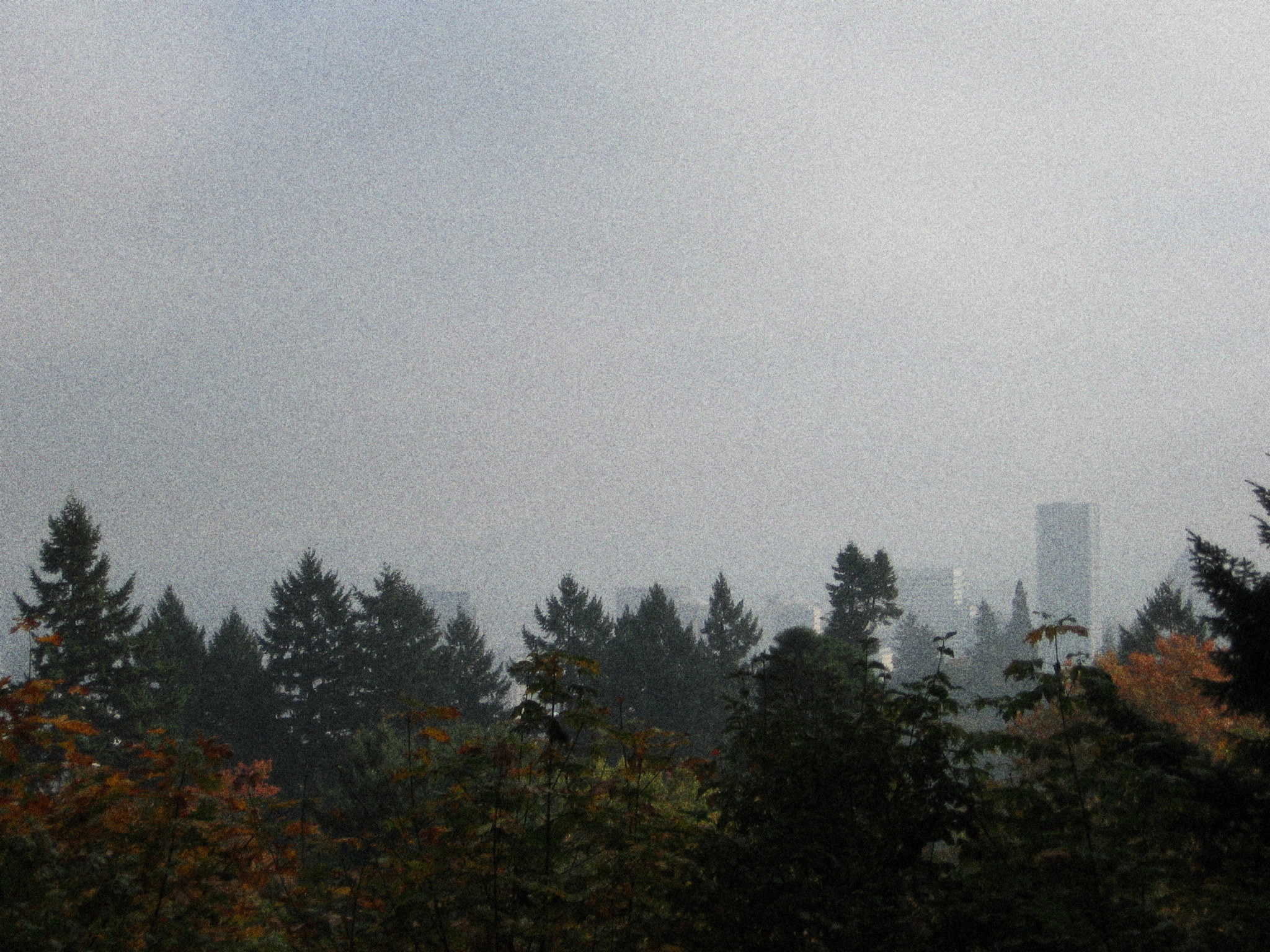
Fog over downtown Portland, OR, 29 October 2011.

As I did last year, I’m using November’s photo blog posts to record some mood-setting pictures for my NaNoWriMo project. This year: the apocalypse, which involves a lot of ash. Hence these doctored, ashed-up photos of fog in Portland. (Today was eerily — and almost undrivably — foggy as well, so it felt like good timing to post these!)

More notes on my NaNoWriMo table of contents

content

On Monday, I was explaining the concept of NaNoWriMo to my students, and they asked what I was writing. So I told them about my book idea and the “table of contents” I’d come up with, and one student asked me, “How do you write from a title?” But before I could answer, another student asked for help on his essay, and since we were working on essays in that class and not just sitting around inflating my ego and gabbing about my extracurricular work, I set aside the title question. And then class ended. So I never got a chance to answer it.

Then yesterday I saw that Bill Roorbach had updated his blog with a new post entitled “Bad Advice Wednesday: The Annotated Table of Contents.” Which basically describes exactly what I did with my own table of contents in my run-up to this year’s novel.

So thanks, Bill, for answering my student’s question for me. 🙂

If they need help with their essays, I’ll probably send them to you with those questions, too.

NaNoWriMo in a comfortable sweater

I’m starting NaNoWriMo today, so I figure I ought to get comfortable. I have a lot of writing ahead of me.

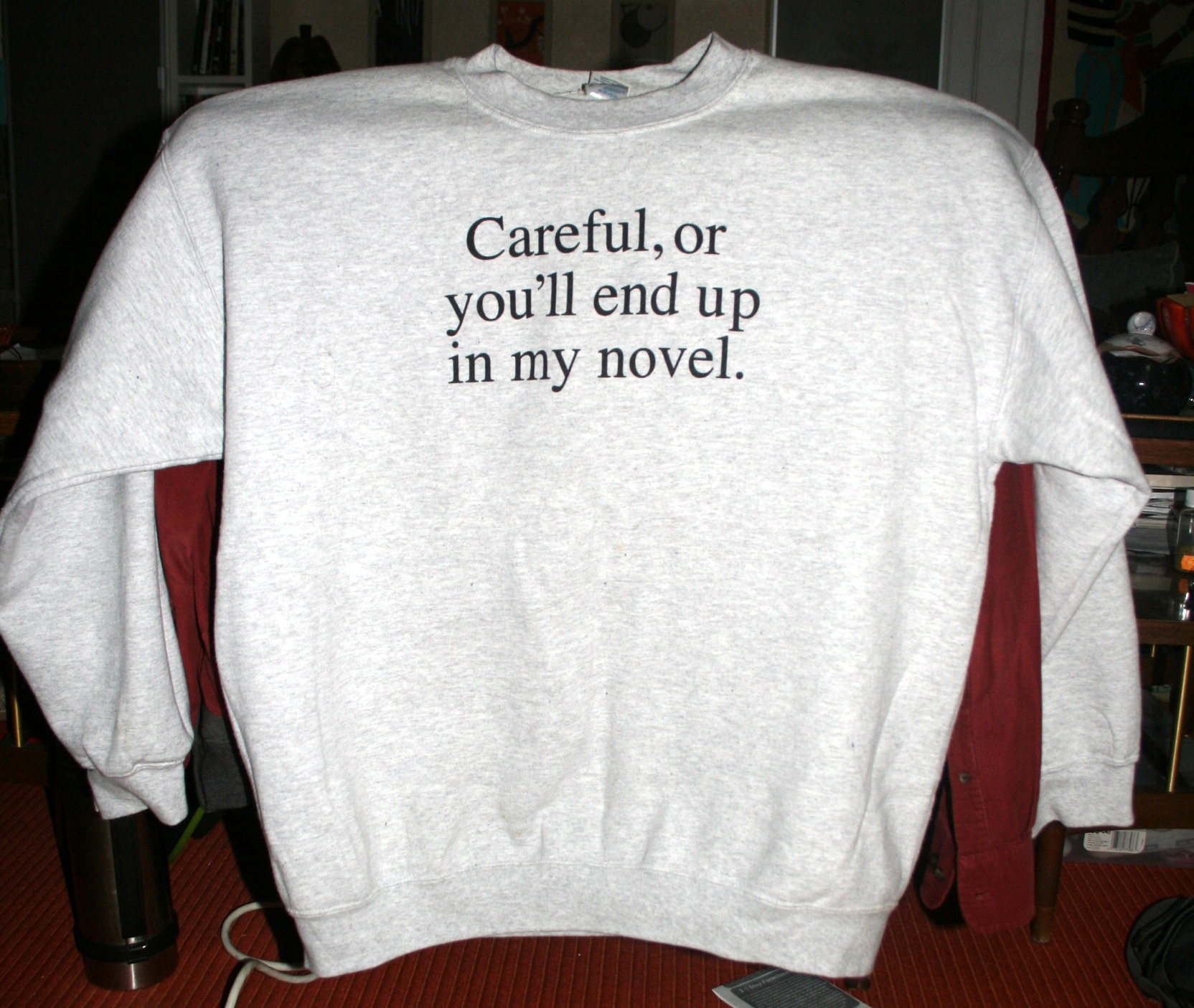
This is a sweater my mother-in-law gave me a few years ago. At the time, I was living in Wisconsin and renting a duplex from a wonderful couple who knew I taught at the local university but didn’t realize I wrote. When my landlord’s wife found out, she confessed to me that she had a deep fear of novelists. “I’m always afraid to be around them for very long, because I’m scared they’ll put me in their novels and I’ll come off sounding like a crazy person!” I laughed at her joke, but she didn’t laugh along. “No, I’m serious,” she said. “You should have warned me. I’ve been talking to you for years and I didn’t know I had to be careful.”

I had just received this sweater (it was a Christmas gift), so the next time I drove over to pay rent, I wore this to the front door. She was not amused, though the homemade cookies I gave her helped restore our good relationship. 🙂

The next year, my wife and I moved to the Middle East, which is where I first started formally tackling NaNoWriMo. And even in the dead of winter, temperatures never got much cooler than the upper 40s, in the middle of the desert, in the middle of the night — in the city, we were lucky if the temperature dropped into the 50s. So I never had a chance to wear this sweater while writing a novel in November.

Now I’m in Portland, the weather this morning was a chilly 34 with dense fog, the streets are quiet and the crows are calling in the trees. And I’m wearing what is now my official NaNoWriMo first-day sweater.

Time to get writing, gang!

(For more about my project, check out my NaNoWriMo page or my NaNoWriMo profile.)

A Writer’s Notebook: NaNoWriMo table of contents

In just a few days, National Novel Writing Month will begin. So of course I’m gearing up.

I have a lot of explaining to do about what you’ll see on the “notebook page” below, but I don’t want to front-load all this. Better just to give you the list, and then I’ll explain everything below. To skip to the story about this year’s NaNoWriMo, click here. To skip to the writing exercise(s), click here.

Basically, what you’re about to look at is the table of contents for my NaNoWriMo novel (or, more accurately, my novel-in-stories). This year, it’s an apocalyptic book; hence, the bleakness of many of the titles. But beyond these titles and the genre of the stories, I don’t really know what this book will be about.

For All It Reminds Us Of*

Lonely as a Weeping Trumpet

This Last March of the Human Animal*

Like a Cold, Heartless Whore

Winter Struggles Even as the Night

An Ugly Conversation

The Marrow Seethes with All We’ve Let Them Take

So Much Simply Lost

A Meaningful Conversation with a Stranger

The Dusty Shutters of Ourselves Thrown Open

A Cackling, Drunken Cure

Everything Created Will Be Joyously Destroyed

When I Sketch a Clean, Measured Line

Life, Thus Far

Like Churchbells on a Hangover Sunday

Either They Want All This or They Can Do Nothing to Stop Us

The Bones of the Long Forgotten

Today, Tomorrow, and the Day After That

Somewhere — an Insistent Harvest Moon

With a Doomed, Mortal Joy

A Very Good Thing

This year’s run-up to NaNoWriMo has been a strange ride, actually. Two years ago, I had a very clear vision of the book I wanted to write, and what I wrote turned out really, really damned well. In fact, it worked out so well that an excerpt of it appeared in Sententia‘s “pitch” issue of novel excerpts, and though the novel still needs a bit of spit and polish, it’s really a pretty damn fine book, I think.

Last year, not so much.

I went in with at least as clear a vision for the book, and with one successful outing under my belt, I felt pretty confident about the second book even if the premise was a bit silly. But the writing turned out to be rambling and tedious, full of some fun scenes but with no real story and no character development whatsoever. In fact, I basically managed to kill my own interest in a novel I’d been thinking about for almost twenty years.

Though maybe that was a good thing.

Anyway, so this year I had no real investment in any particular project. I just wanted to jump into something fun, something without direction for a change, something I could play with and figure out as I went. That was a couple of months ago. Then, while teaching writing exercises to my college freshmen a month ago, I started talking about the looping exercise, (more on which later), and I realized I could use it to write a tightly connected series of short stories: a story cycle, or novel-in-stories, or whatever you want to call them. (Academically, I prefer the term “composite narrative,” but that’s not something I’d ever use in a pitch to a publisher.) So I figured that’s what I would do: instead of outlining the book up front, I’d let each story dictate the next one, and just write a bunch of stuff until I hit the 50,000 words.

But then I found Hosho McCreesh.

You might recall that a few weeks ago I won a contest at Poet Hound, the prize for which was a free, autographed copy of Hosho McCreesh’s poetry collection, For All These Wretched, Beautiful, & Insignificant Things So Uselessly & Carelessly Destroyed. After I won the book, I looked up Hosho online to thank him, and I wound up friending him on Facebook. Later, I mentioned to him how much I loved the lines in his poetry, and that I’d found one I wanted to steal as a story title. “Do it!” he wrote back. “I’d love to see what comes of it.”

That line was “Everything Created Will be Joyously Destroyed,” which comes from the title poem in the collection. But the more I read and reread his poems, the more I kept finding other lines I loved as story titles, and then an idea struck me: Why not write a whole collection of stories using one line from each of McCreesh’s poems? That’d be twenty stories in all, each with an awesome title. And it was no small leap, really, from that idea to using it as the unifying, driving factor in my NaNoWriMo book.

So what I’m really doing, if you’re looking for a writing exercise, is writing stories by starting with the titles.

To find the titles, I went through the poetry and selected two lines from each poem (except the title poem, because the line I pulled from it is so perfect there was never really an alternative). Then I passed on the list of pairs to my wife and asked her to choose the lines that seemed like the coolest/most effective story titles, and this is the list (more or less*) she narrowed it down to. So now I have the titles of all the stories I’m going to write.

There’s no real “exercise” to the writing beyond using what works about story titles and reverse-engineering it: Instead of looking into the story and finding a single line or image that seems to speak for the whole story — to suggest what the story is without giving everything away but to also speak beyond the plot of the story and hint at some underlying meaning — you’re looking at the title and asking what sort of story it describes, what plot it might become but also what underlying meaning it might suggest. And then you’re writing that story. (There’s a discussion of all this at WritersNet, if you’re interested.)

So for this year’s NaNoWriMo, I’m actually engaging in a whole series of writing exercises: looping, pre-titled stories, allusion (to McCreesh’s book), and maybe a handful of others (one might consider this whole project a loose adaptation of McCreesh’s poetry, but maybe not).

As in years past, I’ll post little excerpts from each week’s writing here in the Notebook every Friday, and I’ll probably toss in some other posts about NaNoWriMo on other days of the week. Plus, I’ll keep tabs on the whole project at my dedicated NaNoWriMo page. So stay tuned next Friday for the beginning of NaNoWriMo 2011!


* I’m on the fence about the title of this book. My wife selected this one from a shortlist of four (all of which, remember, were originally options for story titles), and I really quite like it as a title for the whole book. However, I also quite like one of the alternates, This is All We’ve Really Accomplished, partly because it seems to work better in some ways than the one my wife and I settled on, and partly because “This is All We’ve Really Accomplished” was the title my wife picked for “This Last March of the Human Animal.” I prefer the title I picked for that story, which is why I overruled her, but I do get the merits of the title she picked and like it so much I don’t want to just toss it aside. So I wonder if I ought to make it the title of the whole book.

Thoughts, anyone?

Photo blog 68

Remember the photo blog? Yeah, me too. It’s back, by popular demand (of my wife.)


"Masque." Red-lit skull in my entryway, 25 October 2011.

How to win the Nobel Prize (by eating a puppy)

A couple of weeks ago, the Nobel committee in Stockholm announced that Swedish poet Tomas Transtromer had won this year’s Nobel Prize in Literature. Congrats, Tomas Transtromer! But apparently I’m in the minority over here in the US, because Americans in general have been booing the Nobel Prize for a few years now, ever since Horace Engdahl, the permanent secretary of the Nobel prize jury, denounced American literature as “too isolated, too insular” and essentially said we would probably never win another Nobel in lit. “[American writers] don’t translate enough and don’t really participate in the big dialogue of literature. That ignorance is restraining.”

Ouch.

But shortly after the announcement of this year’s prize, I was listening to an interview on NPR with Alexander Nazaryan, who said — as he did in his much longer editorial on Salon.com — that the Nobel committee is right: we don’t deserve the prize. “We’ve become a nation of literary narcissists,” Nazaryan said on the radio. “Part of that comes out of the write-what-you-know tradition, which I think must be taught in every single MFA program.”

Ouch.

As a participant in an American graduate program in creative writing (though mine was a PhD, not an MFA), I can tell you that there’s a lot of truth in this. “Write what you know” has been the de rigueur axiom for all American writers for decades now, and while it has worked out great for some American writers, it has become problematic for others, partly because we take the axiom too literally and too rigidly. We fear ever breaking out of our own immediate, personal experiences, so we wind up becoming what Nazaryan refers to in his interview as the “great American narcissist.” (He borrows the term from David Foster Wallace and credits Wallace with it in both the interview and his editorial at Salon.com.) “I talk about Juvela Heery(ph) and Jonathan Safran Foer, Jonathan Franzen — I don’t see big political, social engagement in their works. I see narrow concerns,” Nazaryan said on air. “I think the vast majority of writers are almost afraid of imagination.” And in his editorial, he writes about how this obsession with self and ego, and this fear of imagination, get perpetuated in writing programs: “Go small, writing students are urged, and stay interior.”

He notes how William Styron dared to write in the voice of a black slave in The Confessions of Nat Turner, or how John Steinbeck wrestled with large-scale cultural criticism in The Grapes of Wrath. Instead, we get Updike needling away at his own sexual obsessions over the course of four Rabbit novels, or Joyce Carol Oates indulging in whatever writing exercise happens to catch her fancy in a given year, or Colson Whitehead‘s novel Sag Harbor, “little more than the bourgeoisie life made gently problematic by the issue of race,” in Nazaryan’s estimation.

Now, I should say that I quite like Updike’s Rabbit novels, and I heard Colson Whitehead on NPR’s Fresh Air a week or so ago and found him to be intelligent and interesting and his novel Sag Harbor sounds pretty damn good. I might like to read it. And when Nazaryan turns, in his editorial, toward a juxtaposition of what he seems to think are the “bigger” concerns of great literature compared with what he dismisses as the “small” concerns of navel-gazing or ego-stroking American writers, I start to take issue with his position. I feel I can love the small as well as the great, and I think that our old axiom to write what you know is a good controlling tool to help prevent us from going too far in our literature, because there’s writing big, bold literature and then there’s just talking out your ass. And frankly, I feel that looking inside ourselves can often be bigger and scarier than trying to tackle the “big ideas.”

But Nazaryan is definitely onto something, and the point he makes best he made in his interview on NPR: Late in the interview, interviewer Guy Raz says, “[Y]ou say writers are encouraged to write from their perspective and to write what they know. But how should they sort of be thinking about writing differently? I mean, what would they write?” And Nazaryan replies, “Well, first of all, I think you have to have experience. Hemingway, of course, wrote from the viewpoint of many times his own self. But he’d done a lot of things. He’d been to war. He lived in Paris. If he’d just gone to college and then to a writing seminar and then moved to Brooklyn, I don’t think he could’ve written The Sun Also Rises.”

Ouch.

But it’s a good point. Hemingway — who did not originate the phrase “write what you know” but gets credited with it a lot and was fond of the idea — wrote exclusively from his own experience, and he won a Nobel Prize for writing what he knew. (In his editorial, Nazaryan claims that “between 1950 and 1959, every one of the 10 Nobel winners was a European male,” but he’s wrong: Hemingway won in 1954.) But one reason Hemingway’s experience managed to be more than self-indulgent narcissism (though it was certainly an ego trip) is that Hemingway experienced a lot. Dude drove an ambulance in WWI, got wasted in Paris with Picasso and Fitzgerald and Stein, hung with the bullfighter crowd in Spain, served as a war correspondant during the Spanish Civil Wartalked to (and possibly double-crossed!) the freaking KGB, for crying out loud!

In other words, rather than sit at home and write about his divorces or his alcoholism or his depression (which he could easily have done, because he was notorious for all three), he went out and found stuff worth writing about, and he lived it.

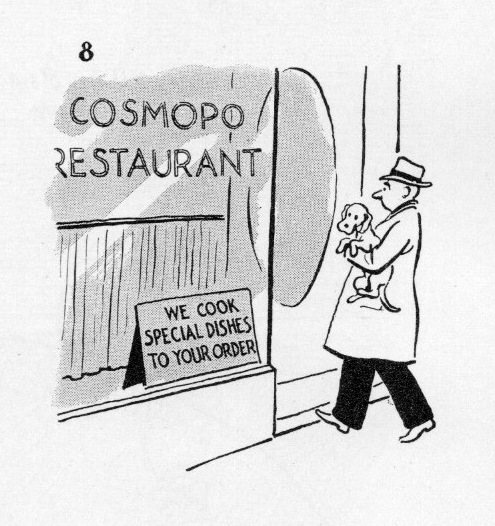
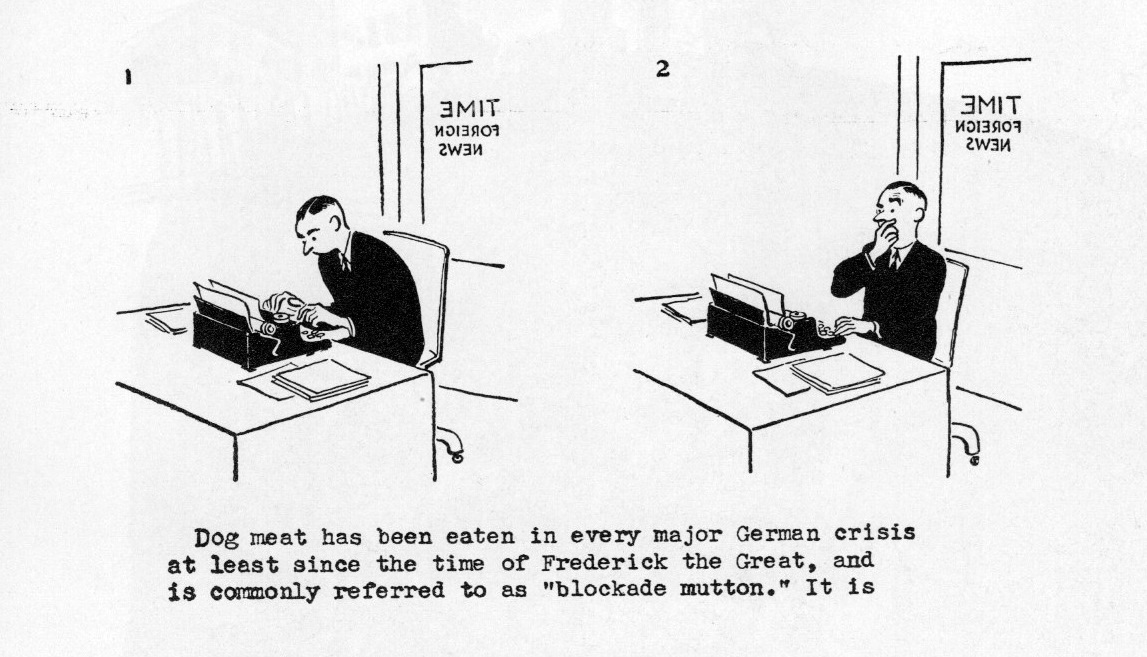
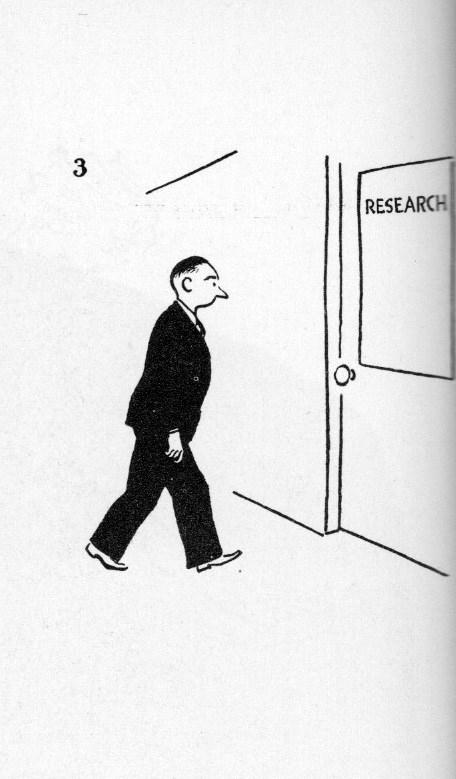
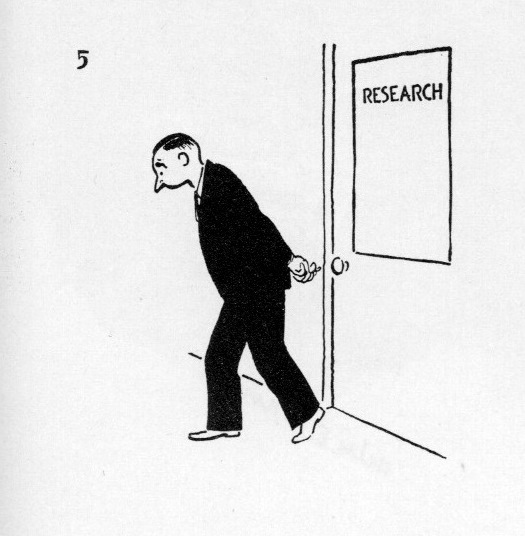
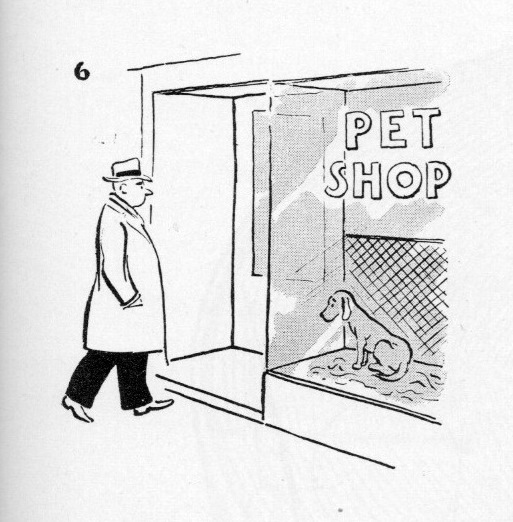
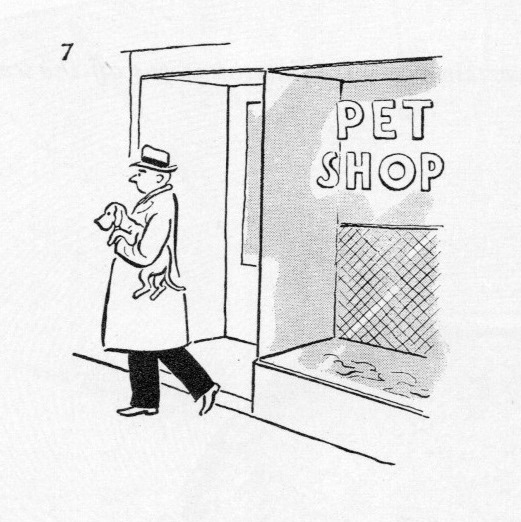
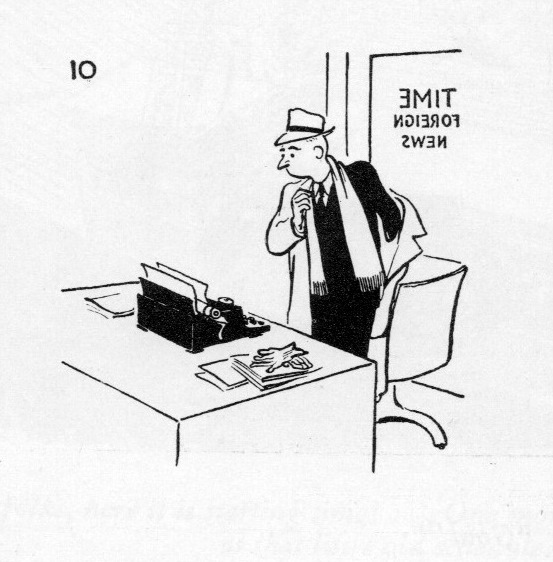
Which reminds me of an old New Yorker cartoon from the 1930s, which was poking fun at Time magazine’s “faked” foreign reporting but which also seems to bear a message for writers about not only writing what we know but knowing what we write:


I’m a vegetarian and an animal lover. I’m not saying — as the cartoon seems to suggest — that you should go cook and eat a puppy. (Really: please don’t cook and eat any puppies!) And I’m not saying you should be like Hemingway and join a war, or blow all your money getting wasted in Paris, or spy for the Russians. And I’m not saying that all that would necessarily make for great literature — Hunter S. Thompson was a very Hemingway-esque guy and his contribution to American letters is beyond measure, but he never won a Nobel Prize (maybe because the committee worried what he’d spend the prize money on).

But you should dare to experience your own life — you should dare to live your own life.

And perhaps that’s the way to reconcile the bold, grand literature that Nazaryan (and the Nobel committee) wants with the self-reflective literature we college-educated Americans have all been trained to write: We should be fully present in our own lives, and we should be fully honest about what we have — and haven’t — experienced.

Writer’s Notebook: Coffee story (with apologies to Orhan Pamuk)

This is not done. It’s probably not even good. But it’s been an interesting exercise.

But I’ll explain more later.

I can tell you only a little about the man and woman before they entered my shop. They both were new, you see, and so much of what I know about them I know only from observation. I can tell you, for instance, that the woman had recently been to the salon, because her hair looked too perfectly coiffed and still smelled of chemical fixatives and the sterile solution the scissors and combs rest in. Also, at the salon or perhaps somewhere between there and my coffeeshop, she had drunk a cup of what I’m fairly sure was rooibos tea, though I can’t imagine why anyone would stop for herbal tea on their way to coffee. What I cannot tell you, though, is where the woman was born, or who her parents are, or which of her childhood dolls or stuffed animals she might still have on her bed or in her closet at home.

I can tell you that the man smokes unfiltered cigarettes — I believe Camels — and covers the smell with a faint spray of musk cologne. And I know that he takes his laundry to the cleaners on the corner of Pettygrove, about a block away, because he placed his wallet on the table as he sat down and one of old Murray’s hand-scrawled receipts was folded among the bills, a heavily-penned corner protruding. But I do not know the name of this man’s childhood dog, or indeed what sort of car he drives — he kept his keys in his pants pocket.

I can only guess what brought them to my shop. I assume they had planned to meet here, because they approached each other immediately after the man entered, the little bell on the door still dinging when they came together. But they clearly were unfamiliar with each other. The man feigned swagger as he entered but let go his act quickly and awkwardly as she drew nearer; and when the woman leaned in to kiss his cheek hello, she seemed about to kiss his other cheek as well, in the European or the Middle Eastern fashion, but changed her mind and only bumped his shoulder with hers. They both laughed at this, each gesturing with arms outheld in shallow shrugs, but it was short, nervous laughter full of half-formed and abandoned apologies.

They sat and ordered coffee, he a tall black and she a Turkish coffee, medium sweet. The woman’s phone buzzed — no phones ring anymore, they only hum inside jackets or purses, everyone so much politer now than they were a few years ago — and she checked the caller but set the phone aside. The man removed his own phone and checked it as well, then he set it atop his wallet. The woman eyed his wallet. I cannot tell you if she was wondering what he hoped to prove by setting it out like that, or if she was guessing he might offer to pay for the coffees, and if the latter, whether she would refuse or accept. She simply looked at it, longer than a glance but not long enough for anyone to deduce any motives. When she looked back at the man, he smiled at her and slid the wallet and phone from the table, dropping the phone in his suit jacket pocket and holding the wallet on his thigh, under the table.

First, why I’m writing this. And second, why it looks like this.

A new literary acquaintance of mine, the excellent Dena Rash Guzman, is working on the next issue of the literary magazine Unshod Quills. A while ago she put the call out for some material related to a series of prompts: coffee, David Bowie (Dena is a HUGE Bowie fan), “enough rope” (whatever that means), “dancing about architecture” (is that “about” in the American sense of “relating to”? or in the British sense of “around”? You decide!), childhood, and — awesomely — Joan of Arc.

Obviously, the topic of coffee has a lot of appeal for me, and my friend and mutual-Dena-acquaintance Ryan Werner basically challenged me to write something about coffee.

This is that something.

But why does it look this way? Well, I have to confess, I love coffee so much that my head was just swimming with ideas for how to approach this, so much so that I couldn’t really latch onto an idea long enough to get started. I needed an exercise, some formula to plug into or a style to mimic (or steal). And then yesterday, while I was sipping Persian tea — made the right way, by an Iranian grandmother (I’m not kidding) — and waiting for a student (the tea-maker’s granddaughter) I’m tutoring, I started thinking about Turkish author and Nobel laureate Orhan Pamuk. This past summer I read his brilliant novel My Name is Red, an historical murder mystery set in 16th-century Istanbul and told through the perspective of multiple narrators, who give the chapters their titles: “I Am Your Beloved Uncle,” “I Am Esther,” “I Will Be Called a Murderer,” and so on. But Pamuk doesn’t just open the door to different kinds of narrators; he takes the door off the damned hinges and throws it away: The opening chapter is told from the point of view of the person who was killed, and is titled, “I Am a Corpse.” Later, drawn pictures begin telling stories — “I Am a Dog,” “I Am a Horse,” “I Am a Coin” — not literally, but through the voice of the artist creating the drawing, like performance art; but the narrator adopts the persona of the thing he’s drawing, so the “dog” and the “horse” and the “coin” effectively “tell the story”:

Behold! I am a twenty-two-carat Ottoman Sultani gold coin and I bear the glorious insignia of His Excellency Our Sultan, Refuge of the World. Here, in the middle of the night in this fine coffeehouse overcome with funereal melancholy, Stork, one of Our Sultan’s great masters, has just finished drawing my picture, though he hasn’t yet been able to embellish me with gold wash — I’ll leave that to your imagination.

And all these object-narratives take place in a Turkish coffeehouse, where the artist sits drawing his sketches (and telling his stories) for the audience of the coffeehouse customers.

So yesterday, as I’m drinking my Persian tea and thinking about this — and thinking about my own experiences sipping Turkish coffee in Istanbul and, later, in Abu Dhabi and Dubai — I start wondering if I might try to tell a story from the point of view of coffee itself.

Imagine the cup sitting on the table. Not a fresh cup, probably — a cold cup, two-thirds empty, left behind, a dirty spoon resting on the saucer and a bit of undissolved sugar settling into the bottom of the cup. It watches the rest of the coffee shop and observes, as only a cup of coffee can.

Which is ridiculous. I am not nor will I ever be Orhan Pamuk, and I’m not going to pull off a story told from the POV of a cold cup of coffee. So I gave up that idea even while I was writing. Now, this story is probably from the perspective of some regular, that old widower who shuffles down the block from his rickety old house to sit in the coffee shop all day pretending to read the paper but really just watching the world come and go, because it’s the only social interaction he gets anymore.

Come to think of it, that might not be such a bad story after all. Maybe I’ll think about finishing this….

Writer’s Notebook: Holiday story

I’m sort of semi-cheating this week. I am working on an exercise, but the story I’m working on will eventually show up online as a story, so I’d rather keep it under wraps while I work on it.

Still, I want to offer something along the same lines here, so behold, a quick excerpt from my novella, In the Pulse There Lies Conviction. Then I’ll explain the exercise this is related to.

They walked the night in their long coats and their polymer fangs and their white face paint, laughing. Matt sketched jack-o-lantern carvings he admired, and Kid carried a plastic grocery sack for holding candy they took from the lazy households that put bowls on the front porch next to a dancing electric Frankenstein, a witch spread over the porch railing beside a sign reading “Don’t drink and fly.”

They met a group of middle schoolers out alone in the Matt’s wealthier part of their subdivision. Matt stalked them until they ran from him, but Kid had sneaked ahead and he cut them off. “What do you want, freakazoid?” one kid yelled. Matt caught up, fought not to breathe hard so he would seem eternal, while Kid said, “Your blood,” and then Matt said behind them, “Your soul.” They screamed when they turned, but then a big sixth-grader, as big as Matt though not as big as Kid, pushed through the tiny crowd and stepped up to Matt, nose to nose. The boy wore torn clothes and hobo make-up. His nose was bulbous and rubber; Matt’s nose was sharp.

“What you gonna do about it?” he said, raising his chin against Matt.

“How old are you?” Matt said. Kid was fighting a laugh.

“I’m eleven,” the boy said. “Be twelve in two weeks. How old are you, bitch?”

“My age is irrelevant, child,” Matt said. Kid did laugh, a small hissing thing that he spat through tight lips before he turned around and covered his mouth. Matt looked at Kid and did not laugh, did not even smile. He looked back the sixth-grader. “But you, you are too young to die.”

“Screw you,” said a small cowboy with an arrow through his hat. “You’re that butthead who scared Lemuel, aren’t you?” Matt looked around the hobo to scan the group. He spoke to all of them in even tones, calm and serious.

“I am he, and Lemuel, too, was too young to die. But I am patient. You will all be old enough soon. I will come for you each, soon.”

“You have no idea how stupid you look, do you?” the large boy said. Then he turned to Kid and said, “Why do you hang out with this dork?” The rest of the group joined him in his mockery, and Kid shouted through his own laughter for them to get the fuck out of there, and they left, Matt watching them until they turned a street.

You will be,” Kid said. “You will be soon. That was great, man. You’re so fucking goofy.”

“Yeah,” Matt said, his voice still even.

Out in a field near Kid’s trailer-dotted road, the sky glowed over a bonfire. Country music played through the trees, and twice they heard gunshots. “Bats,” Kid explained. “They always shoot at bats.”

“You got bats out there?” Matt said.

“No,” Kid said.

So, Eirik Gumeny, head honcho the literary magazine I work for, Jersey Devil Press, has challenged a group of us at the magazine to come up with some holiday-related stories, which is the new story I’m now working on. But I want to hold that story for Jersey Devil, so I had to find something else, which is why I rooted out this little Halloween scene from my novella. (I almost posted a scene from later that same Halloween night, involving a dead cat and a bottle of wine, but the scene runs a bit long for a blog post.)

If you’re interested in Kid and Matt as characters, I actually published another excerpt from In the Pulse There Lies Conviction in Forge last summer. That story is called “A Smooth, Clean Cut,” and it comes from the same “chapter” of the novella as this little Halloween scene.

Why Poet Hound and Hosho McCreesh rule the Web today

A nice surprise today: I just found out I won a drawing for a copy of Hosho McCreesh’s poetry collection For All These Wretched, Beautiful, & Insignificant Things So Uselessly & Carelessly Destroyed.

The drawing took place over at Poet Hound, who are awesome people in general but have become extra-special to me now that they’re sending me a book! Thanks, Poet Hound!

And thanks to Hosho McCreesh, too, who offered his book for the drawing! Looking forward to reading the book, man.

Writer’s Notebook: a few thoughts on writing

This week, I have one of my classes writing about a personal belief. It’s going to lead them to a personal essay, so what I’m about to do is a pretty poor example of what they’re up to, but when I began thinking of topics I might tackle in order to write along with them, the beliefs I’ve been most wrestling with are related to creative writing. This is partly because I’m so engrossed in the practice right now, partly because I’ve been swapping emails with and otherwise keeping tabs on a lot of newly met writing friends, and partly because this afternoon I was listening to an interview with Jonathan Franzen on OPB. Whatever: writing is on the brain, so here are some things I’ve written:

I believe that creative writing, as a habit or a craft, as well as its theories, practices and pedagogies are as organized by circumstance as everything else is. Which is to say that each writer will have different experiences, different habits or theories or practices or pedagogies, depending on his or her childhood, demography, education, and influences. Which is just a fancy way of saying to each her own. As a school of teaching — be it in the humanities, the fine arts, or whatever — I think creative writing is a product of the `60s. I think the concept has been there a lot longer — say, since the dawn of literature — because there are countless stories of writer/mentor relationships and hundreds of essays about the craft as we know and practice it stretching back for centuries. As long as people have been writing, there have been people who think they know how to write (or who think their practice is the “right” way to write) and who love to share their experiences with others. But as a codified school of study, with an increasingly standardized curriculum? That’s definitely a more recent invention, for better or worse, and yes, I do think it stems from all the complex socio-political elements of the `60s. But I think that still leaves unanswered the quiet question lurking behind all this. It’s the question we all ask ourselves and loathe to be asked: “Can (or should) writing be taught?” It’s an old question and one on which many, many writers have rambled on in one way or another (and not always in the affirmative), but it seems to bear asking over and over again, the way a child in a moving car might keep asking “Are we there yet?” even when they know the answer. I, for one, remain convinced that the answer is yes, but mostly (perhaps only) if such teaching is approached as individually as possible, so that “teaching writing” becomes more like “guiding writers” or, less intrusively, “nurturing writers,” which is actually more akin to those earlier writer/mentor relationships anyway.

In case anyone’s looking for the exercise that led me to all this, it’s sort of two-fold: Right now, some of my students are writing versions of the “This I Believe” prompt that stems from NPR’s essay series of the same name. So I’ve been thinking about belief statements, credos, manifestos. Which made me recall an online conversation I had with a couple of writer friends of mine a few years back. That conversation began when one of my friends sent me a series of questions apparently required of students entering a PhD program at some university or other. (If he told me which university, I’ve forgotten.) Anyway, one of those questions read as follows:

In what ways is creative writing organized by circumstance, and do how these circumstances impact our theories, practices, and pedagogies for creative writing?

Which is what I was responding to.