Smile like you’re up to something

"Devil Smile" -- the cover art for the March 2012 issue of Jersey Devil Press, by Crystal Elerson.

Over at Jersey Devil Press, we’re at it again. What, exactly, we’re up to, though, is a little harder to pin down — this issue is all about ambiguity! But let’s just say we’ve got the end of the world to worry about, ghosts to interview, cat entrails to clean up, and loads of other weirdness. Why? We’re not telling. You’ll just have to join in and find out for yourselves.

So go check out the March 2012 issue of Jersey Devil Press.

But don’t say we didn’t warn you.

A Writer’s Notebook: Texas and a chapbook introduction

I just spent all morning working on a chapbook I can’t submit because I misread the guidelines — the press was asking for more than half the stories be unpublished. My chapbook contains mostly published stories.

I’m a victim of my own success, I guess?

Anyway, I was just beginning to revise the introduction for that chapbook (the reasons for which below) when I found out it was all for nought. So I figured I’d go ahead and paste that intro here as my Notebook entry today.

I don’t write many stories about where I live. When I lived in Wisconsin, I rarely set anything up there in the snow, among the dairy cows and cold beer. When I lived in the Middle East, I wrote an essay about Gulf Arab poetry and I set a very short story in Istanbul, but that was it. Now I live in Oregon, and though I’m working on a novel set here, it’s an apocalyptic book that will bear no real resemblance to this lush, cool, wonderful landscape of mossy forests and fir-treed mountains outlined in cold blue rivers.

The stories I write are mostly about where I’m from: Texas.

It feels strange to write that I’m from Texas because, strictly speaking, I’m not. I was born in Oklahoma and spent my formative toddler years up here in Oregon, and I’ve always felt at odds with the state where I grew up. But my family is mostly from Texas and mostly lives there still, and I spent almost my entire childhood and young adulthood there. I completed my entire education in Texas schools, K through 12, bachelors through PhD. I was married in Poetry, Texas. (That’s a real town.) Many of my best friends are from Texas or live there now. And most of my stories are set there, too.

Texas is rich for stories.

There’s the romance of the place, of course — all those Westerns, all those cowboys — but anyone who’s ever driven through the state knows that this is only a part of Texas. We’re talking about a state so huge you could drive all day and never leave the borders. El Paso is closer to Los Angeles than it is to Beaumont; Amarillo is closer to Des Moines than it is to Brownsville. The state of Texas is larger than the nation of France.

In fact, Texas has the proud distinction of having once stood alone as its own sovereign Republic, and a lot of people still argue that thanks to Texas’s size (and sense of self-importance), it behaves almost like a nation unto itself. Dyed-in-the-cowhide Texans whose bumper stickers declare that Texas is “a whole other country” would certainly agree. But those same Texans will also recognize the diversity within their own “other country”: cattle ranchers in the Panhandle have only a little in common with the dairy farmers of East Texas, less in common with the German goat farmers of the Hill Country, even less in common with the oilmen of Southeast Texas and the technology executives of North Texas, and nothing at all in common with the artists, musicians, film-makers, and self-professed “freaks” of Austin. And for all the white-skinned “good Christian bitches” of Dallas and the rancher-tanned white men of West Texas, true Texans today remain as immersed in Mexican culture as they were before Texas became a Republic, as connected to African-American culture as they were before the Civil War, as dependent on farm worker and white-collar immigrants from Asia and Africa and the Middle East as they were when white Americans were the immigrants settling on Spanish and Native lands.

Which is where all these stories come from: not Texas as a homogenous entity but Texas as a varied and lively pool of characters and stories.

When I sat down to imagine this collection, I considered centering everything in Central Texas, where so many of my stories wind up. But I’ve spent a good part of my life driving all over Texas — a two-hour drive from my college to downtown Austin was just a night on the town; when I met my wife it was nothing at all that she lived six hours away in East Texas; going home for Christmas meant a nine-hour drive from grad school in the Panhandle to my parents’ house in the Hill Country — so as I looked at the stories I’d written and the shape of Texas itself, I began to realize that any short collection like this should ramble a bit, take into account the vast, often lonely sprawl of Texas, the variety of its landscape by turns beautiful and depressing, the connections between anyone spanning hundreds of miles yet everyone separated by hours and hours.

Ultimately, that’s what ties all these stories together. They’re all set in Texas, spread from the Panhandle down to the Mexican border, from the Gulf Coast to North Texas and beyond; but they’re also all about separation and the desperate attempts at connection, about the lost and the found, about the huge chasms of emotion or history or culture that separate us even while we all are bound by the simple sufferings of human existence. Past and present, man and woman, Mexican and white, young and old, living and dead — everyone in these stories is calling out across the wide open spaces between each other but no one quite sure what sort of answer they might get. In Texas, you might have to drive for hours and hours just to find the nearest person you could love, or you could drive for hours and hours and never get away from the people out to hurt you. And even if, like me, you drive long enough that you manage to cross a border and leave the state, the state will never quite leave you. You’ll always be from Texas.

The guidelines for this small press ask for a short introduction explaining what ties together all the stories in the chapbook, and since all my stories are set in Texas — not in one region but all over — I wrote this.

I’d explain more, but I hope to have this thing in print one of these days (this chapbook is a somewhat odd length, just shy of 70 pages, and most places seem to want either tiny chapbooks of 20-30 pages or full-blown story collections; I’ve still managed to find a lot of small presses this book would be great for, but finding one that’s currently accepting submissions is trickier), so I won’t bother outlining the book here or pointing out which stories live inside it. Besides, the longer I shop it around, the more likely I am to mess with it, so maybe things will change a bit before it sees print.

Anyway, since the chapbook is all about people in Texas, even though I’ve worked long and hard to leave Texas, I decided to play with that weird inner conflict I’m always working out in my fiction. Hence, this particular intro, or, the rough draft of it, anyway.

Are you from Texas? You’re more than welcome to tell me I’ve got it all wrong. I don’t claim to know everything — or anything — about the state I grew up in. I just write what I see, and what I see changes all the time. Write what you see. I’d love to see it, too.

To all my friends and readers attending AWP

People who know me are probably sick of me whining and moaning over AWP in Chicago this year, because I can’t go even though it’s one of my favorite conferences in one of my favorite cities. But alas, it was not meant to be — even if I had managed to scrape together the cash and talk my bosses into giving me time away from the classroom, I wouldn’t have been able to do either before the conference sold out. I don’t mean the hotel rooms are gone — I mean the entire conference is so stuffed with attendees they had to stop registering people or they would have violated city fire codes! That’s for real. This year is going to be huge.

Actually, that doesn’t make missing it any easier, but at least I can say there wouldn’t have been room for me anyway. And besides, I’ll get plenty of awesome news from ALL the friends, fellow writers, and publishers I know who are attending. So that’s awesome.

To which end: if you’re attending AWP this week, do me a favor and tell people I said hi. That’s not a random request — I’m actually asking you to say hi to people for me. So when you’re at the bookfair, wondering if you have room in that spare suitcase you brought for just ONE MORE journal issue or book, stop by a few of the tables for me and tell them I wish I could have been there. And maybe buy a book or subscribe to a magazine while you’re there, because these are some cool people:

American Literary Review

Not sure who’ll be attending who’d remember me, but I was production editor at ALR from 2005 to 2006, so drop by and tell them I still keep tabs on my old lit journal. And maybe look for my issues while you’re there.

Artistically Declined Press

Say hi to Ryan W. Bradley, and congratulate him on his own recent novel, Code for Failure, as well as his forthcoming book of poetry from Curbside Splendor.

Curbside Splendor

Speaking of which: if you don’t find Ryan W. Bradley at his own table, you might find him here. Also look for head honcho and generally cool dude Victor David Giron, as well as everywhere-at-once super-lit rock star Ben Tanzer. (They know me from Facebook/all the friends we seem to have in common.)

Iron Horse Literary Review

If you happen to see Jill Patterson at this table, tell her I said hi. Maybe you’ll see Lee Martin there, too — I’ve only met him once, but he has strong ties to University of North Texas and used to work on ALR. Shake his hand. He’s a very cool person and a hell of a writer.

The Lit Pub

Look for Molly Gaudry, who is an absolute queen. Tell her so. Then buy some books. And check out their website before you go, because it’s pretty awesome.

One Story

Please, please, please do yourself the favor of meeting Hannah Tinti. She has long been one of my favorite people to run into at AWP, and the One Story readings are usually pretty killer.

Sententia

I have the tremendous good fortune to appear in Sententia‘s best-selling issue, #3, their special “pitch” issue of novel excerpts. Grab a copy while you’re there. If you’re lucky, you’ll run into some of my fellow writers from that issue (Hosho McCreesh, are you going this year?), or maybe the excellent Shya Scanlon, who guest-edited that issue.

Sunnyoutside

If you stopped by Sententia and picked up issue #3, chances are you’re a fan of Hosho McCreesh by now. He’s that awesome. So you’ll want to swing by sunnyoutside and look for a copy of his brilliant poetry collection, For All These Wretched, Beautiful, & Insignificant Things So Uselessly & Carelessly Destroyed… Also look for Rusty Barnes’s short fiction collection, Mostly Redneck. And, hell, anything else David McNamara has found fit to print. (And keep an eye out for announcements from sunnyoutside — rumor is they’re putting out two new books soon, and AWP is an excellent place to make the official announcement!)

UPDATE: The first announcement is out! Check out So Below, a collection of poems by Noel Sloboda, with original prints by Alicia Paolucci.

There are plenty of other tables you need to stop off at, too. Some are presses or journals I’ve long admired, others are places I recently discovered and wish I could visit this year myself:

  • Annalemma Magazine
  • Another Chicago Magazine
  • Bellingham Review
  • Black Warrior Review
  • Burnside Review
  • Camera Obscura Journal
  • Cimarron Review
  • Crazyhorse Literary Journal
  • cream city review
  • CutBank
  • featherproof books
  • Fence
  • Fifth Wednesday Journal
  • Grist: The Journal for Writers
  • Gulf Coast: A Journal of Literature and Fine Arts
  • Mud Luscious Press
  • New South
  • NewPages.com
  • Ninth Letter
  • PANK
  • Portland Review
  • Quarterly West
  • Redivider
  • Rose Metal Press
  • Rougarou / UL Lafayette Creative Writing Program
  • Sarabande Books
  • Slice Magazine
  • Spork Press
  • Submittable
  • The Chattahoochee Review
  • The Southeast Review
  • Third Coast Magazine
  • Whiskey Island Literary Magazine
  • Willow Springs
  • WordFarm
  • Zephyr Press

For the full list of bookfair presenters, go here.

There are also some terrific off-site events (seriously — the conference is so sold out that even the publishers and magazines can’t get in!), including a big joint reading hosted by Mutable Sound, Artifice, and Smalldoggies.

Anyone I left out? Feel like promoting your magazine, press, reading, party, or other event? Or just telling everyone that you’re going so they’ll stop by and say hi? Feel free to leave a comment!

Cormac McCarthy Pictionary!?!?

Oh, if only this weren’t a joke….

Photo blog 78

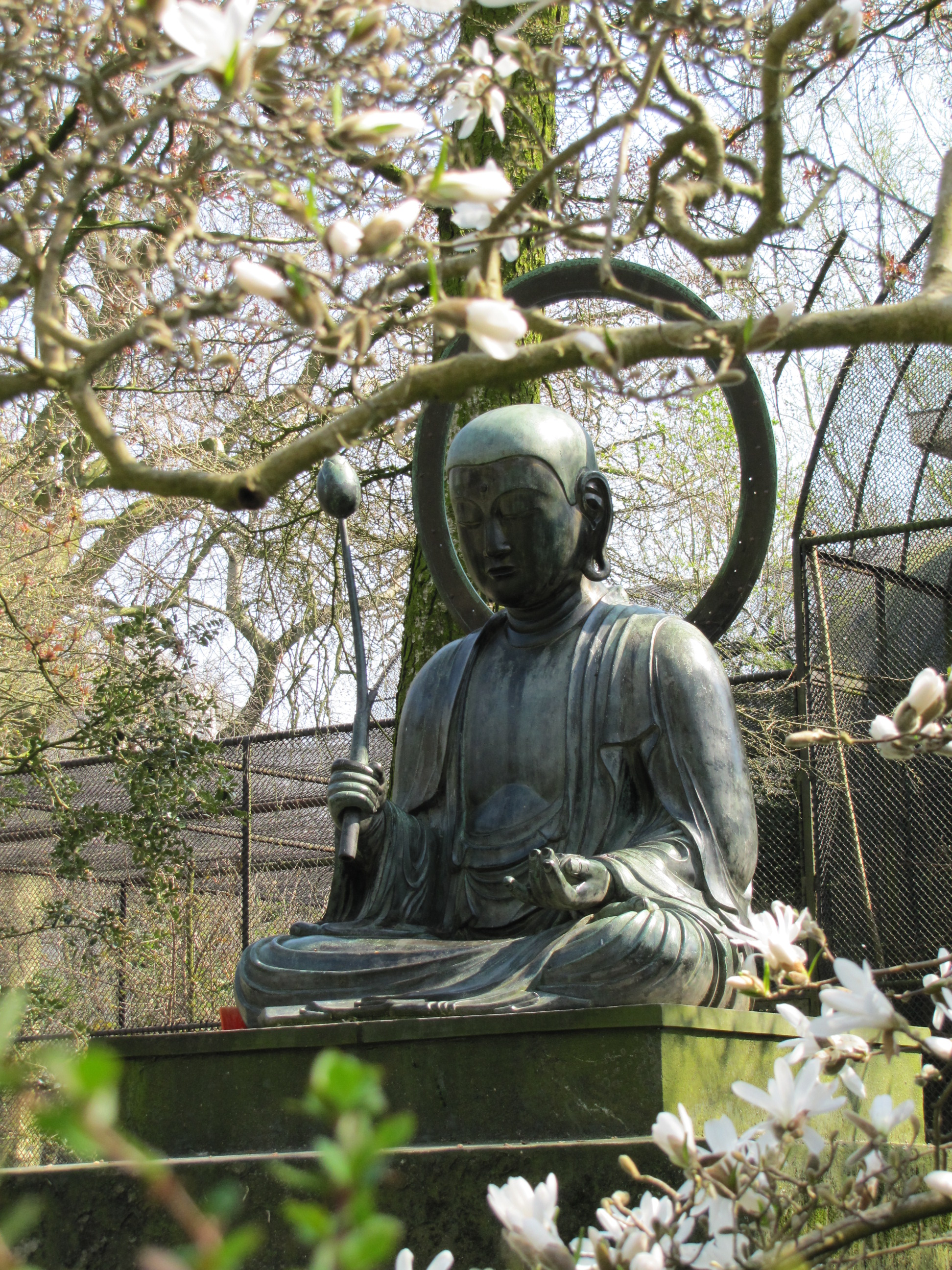
"Buddha among the blossoms." Statue in Artis Zoo, Amsterdam, The Netherlands, 12 April 2010.

Losar Tashi Delek!

Happy Tibetan New Year!

Jersey Devil Press announces its first-ever novella contest

Heads up, writers and readers: Jersey Devil Press, the magazine I work for, is announcing its first-ever novella contest. Which is awesome for two reasons: 1) Even though novellas seem to be coming back into vogue and lots of publishers are dabbling in contests of one sort of another, they still don’t get the attention they deserve. So we’re showing the form some love.

And 2) Even though lots of publishers are dabbling in the novella, every seems to want to be all high and mighty about it. Which is fine for them, but at Jersey Devil, we want to have fun while reading great fiction, so to hell with all that literary stuff. We’re doing fantastical, we’re doing sci-fi, we’re doing horror, we’re doing funny. Ideally, we’re doing all that in the same damned story.

So check out the guidelines for the contest at the Jersey Devil site (and stick to those guidelines!), and let’s settle in for some long-form awesomeness.

Photo blog 77*

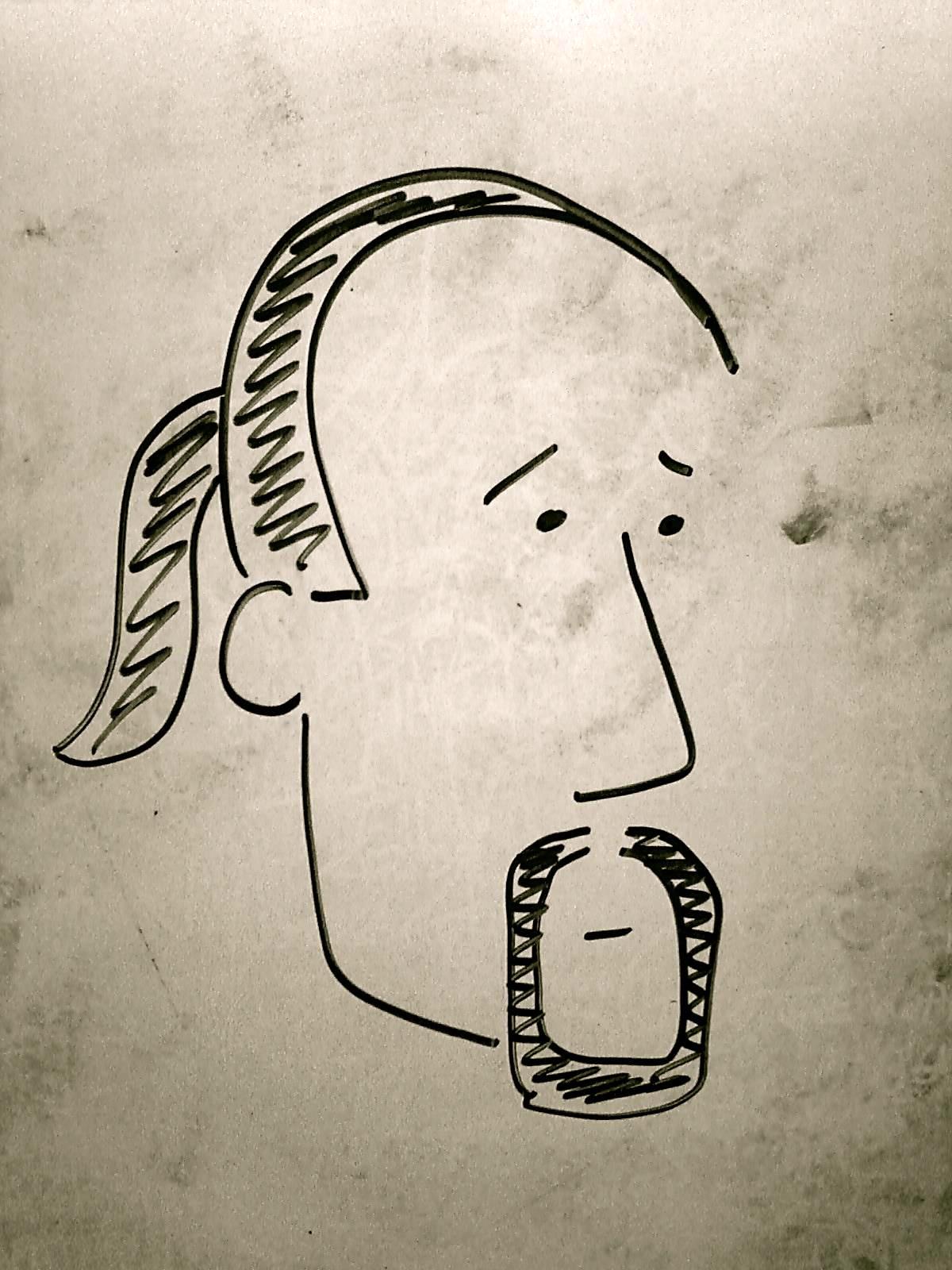
*This one isn’t so much a photo as a photo of a drawing, and I didn’t take it. But I love the image and it came to me today, so humor me:

"Whiteboard Sam." A caricature of me by writer and publisher Ryan W. Bradley. 15 February 2012.

Thanks, Ryan!


“I want them to bloom.”

A fellow writer — a beautiful writer, a brilliant writer — has composed a wonderful commentary on relationship abuse. It is well, well worth a read. The power and bravery she exhibits, the empowerment and courage she shares with women, the hope for women, is just astounding:

I want people to remember that it’s never okay. I want people to heal and become stronger than their attackers. I want them never ever think that they have to suffer anyone else’s violence ever.

I want them to forgive and not let that bitter taste eat them up. I want them to bloom.

But don’t forget, okay?

Thank you, yt sumner. You are heroic.

Everyone can draw but me

A couple of weeks ago, I was reading so many comics that I dreamed in comics. I’ve now read every Clutch McBastard comic that I can currently get my hands on (must visit the IPRC library soon), so I’m not dreaming in comics much (though I did just finish the most recent volume of The Walking Dead and had some really disturbing dreams last night), but my interest in the medium is still thriving.

Anyway, back to that post I wrote a couple of weeks ago: In it, I mentioned how other people seemed to be so much better at drawing than I was, and as examples, I posted a couple of caricatures that people have done of me. In reply, a regular reader and a very cool person, M, mentioned that her agent had seen the post and drew a quick caricature of me, too. Because, apparently, I’m the only person on earth NOT capable of doing this!

And then M sent me the sketch:

Caricature of me, by Paul Thompson. (Thanks, Paul!)

And it is AWESOME!

Thanks, Paul Thompson and M! You are both, as we say on the street,* da bomb. 🙂


* I am one of the least “street” people you will ever meet.

A Writer’s Notebook: travel fiction

This isn’t all new writing, but some of it is. This is, though, a response to an exercise, which I’ll explain below.

When Name was a child, his mother would tell him stories while his father and and older brother worked and the infant children slept. Some of the stories were local tales of the eternal fires in the eastern regions, or of the curious fairy chimneys with their great comical caps of solid stone, or of the holy Saint Nikola of Myrna in the south, and of the work he did for the poor and for the criminals, and how even after long days of service to God he would sneak into the starry night and leave gifts to children who were good. His mother told him that Saint Nikola did this still, even now some six centuries since his mortal death, because Nikola had become an angel of God. Sometimes he heard stories of Saint Basil the monk, and very very often he would learn the lessons of his faith, and he would be told the tales of Moses and of Jesus and of Saint Paul who was from Tarsus nearby. “Our faith was born in the deserts far below,” his mother would say, “but it matured in our own lands, away in the Tarsus mountains of Saint Paul, to the west in Ephesus where he preached, beyond in Antioch where the first church of Christian men was built, and even here in Kapadokya, up in Kaysari and over in Nicea. This is where Christianity has come to rest and prosper, my little Name, here where the old empire protected it, and this is where our Lord Jesus will return, you mark me. This is the land of the Parousia.”

But the tale that Name loved most, for the fury and the battles and the terror and the glory and the wonder of the thing, was the story of how his people had come to live beneath the earth in the carven tunnels and grand chambers hewn of stone by men long ago, in the great subterranian city of Derinkuyu. And this is the story his mother would tell him:

Many ages ago, when my grandmother’s grandmother was still a little girl, the Christians had not lived and thrived above the ground as they did now. In those days the land was wholly Roman, not beset by encroaching Persians and Seljuks as now, but the Romans then were heathens, not yet converted to the true word of God. Their many faiths denied that glorious word, and they hunted and persecuted our Christian brethren, Name, with citizens bullying citizens and with armies made of strong men used to fighting, and so the women and the younger of us, and also some of those who chose to turn their cheeks to war and live a peaceful life, we fled. We fled into these enchanted hills, where the rocks climb like holy saints in bishops’ hats to protect us. I know we call them the fairy chimneys, Name, but it is from a pagan time, and that is a pagan name. We believed otherwise. And we moved among them with faith in our hearts and we lived there happily for a short time.

But the Romans did not fear the rocks for long, so we retreated into the rocks themselves, carving homes and chapels into small stone pillars, and some even hewing great cathedrals out of the taller hills of stone. Some ways north of here there still is a great monastery, Name, carved into the living rock and so hidden from the eyes of many. But we were great in numbers and not all monks, and we needed a place to gather in numbers the way goats will herd for protection from the wolf. And that is when we found these rooms. They were here before us, it is true; some say the first levels were made in the time of the evil Pharaoh of Egypt, and it was from him those early peoples hid. But great and impressive and livable though they were, we needed more of them, and so we took to them and copied them and down we dug further still. We cut and hewed and planned and descended into the earth like Jesus into his tomb, knowing we would rise again to conquer.

We put up the great stone doors with the holes for spears, and the long shafts running into the cold winds for fresh air, and the deep wells from which to draw our water, water fit even for drink, Name. We were safe. And we have lived here these many years since, until my grandmother’s grandmother grew old and went to the Lord, and then my grandmother’s mother, and then my own mother’s mother, and then my mother, too. And no I am growing old in years, and here we live still, though the world above is safe and we have risen again from the tomb; we live here still, because this is our home. And that is the story of Derinkuyu.

A while back, Heather Wright posted a whole list of exercises on her site Writing Fiction: A Hands-On Guide for Teens. I like a lot of what’s there, but #18 caught my eye:

What place have you always wanted to visit? What attracts you to this place? What do you wish you could experience there?

I was thinking about this, and while there are plenty of places I would love to visit (Egypt, England, France, Germany, India, Italy, Japan, Tibet) and plenty of places I’d like to re-visit (Austria, British Columbia, The Netherlands, Prince Edward Island, Scotland, Thailand), one place in particular has been on my brain lately: Turkey. Maybe it’s because some friends of ours from the United Arab Emirates recently traveled there, or because I recently saw a photo from the Turkish edition of National Geographic making the rounds on Facebook, or because I’ve been reviewing some of my fiction that’s currently out on the market and one of my stories is set in Istanbul. But I do love Turkey, and one of my favorite places when I visited almost 15 years ago was the Cappadocia region.

All of that reminded me of a novel idea I had a couple of years after my trip to Turkey. It’s an historical novel, set during the 10th century in a monastery in the Cappadocia region. To write it fully will take me a LOT of research and, I hope, at least one more trip to Turkey to walk the locations again, but I have an outline for the general story, and a long time ago I’d started something like a first chapter for the book. This is an update and expansion of those first few hundred words.

You might notice that the main character’s name is Name. That’s just a placeholder — I don’t know what to call this guy yet, so rather than get bogged down in name research I just dropped in that moniker.

You might also notice that some of the spellings are weird. Cappadocia, for instance, shows up as Kapadokya in the passage. I don’t know if that’s accurate or if it’ll stay, but a lot of the Turkish maps and books I have refer to it by that spelling, so I’ll run with it for now.

And in case anyone’s curious: even though this novel is set in a monastery and the main character is going to become a monk, the book is supposed to be a love story. Just in time to celebrate another Christian saint….

Happy St. Valentine’s Day, everyone!